I can’t help but smile whenever I hear Laughing Kookburras’ raucous cackling, which is virtually every morning and evening. Kookaburras live in family groups and heartily ‘sing’ their territorial song at each corner of their territory. This afternoon I was with a family of four kookas who were making sure their neighbours knew where the virtual fences are. When my guys paused their neighbours called back.
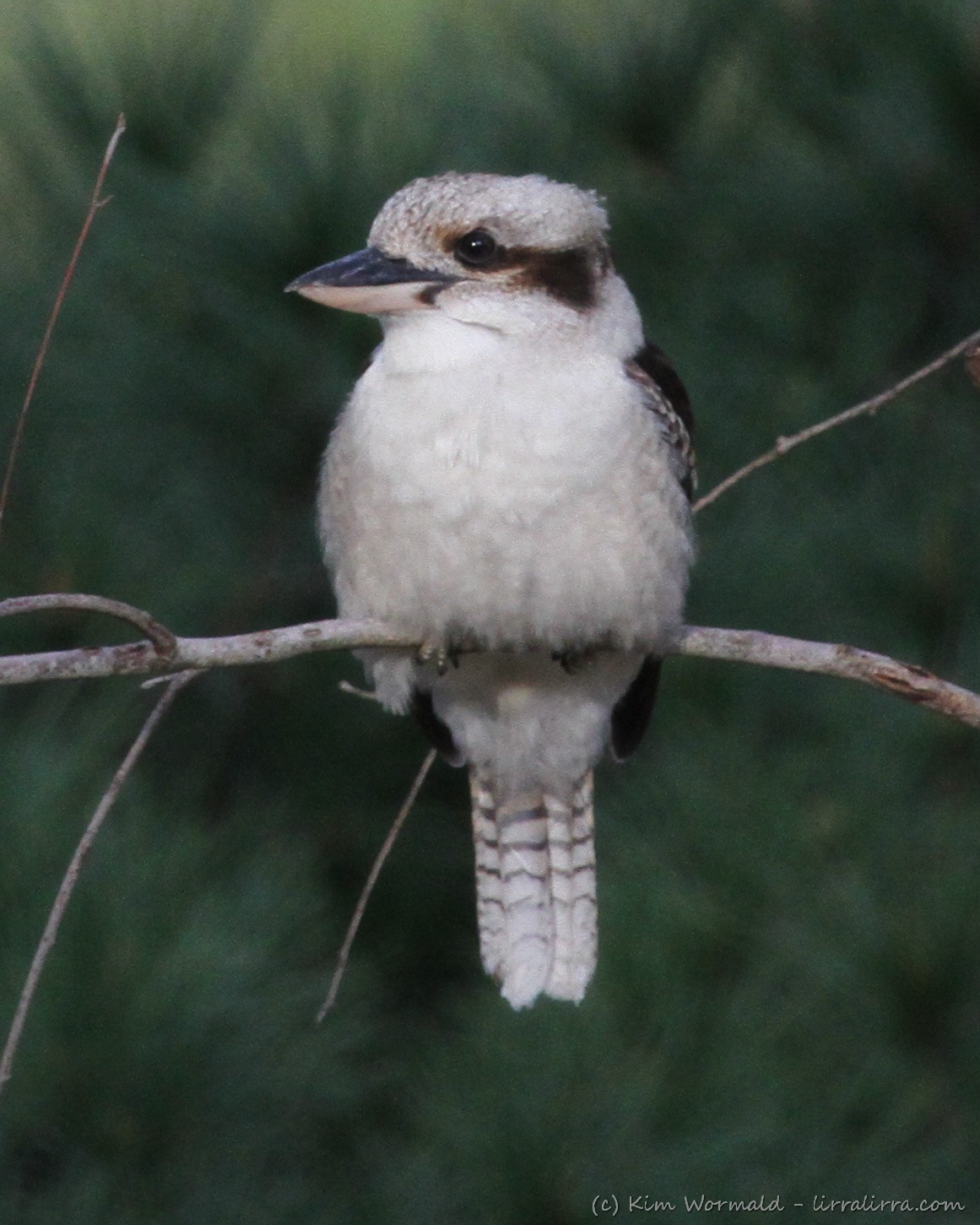
Laughing Kookaburra ( Dacelo novaeguineae) – I think this image looks like a painting
Canon 7D, 100-400mm L IS USM, AE priority f/5.6, handheld, natural light
It rained heavily during the night, the creek burst its banks and low lying areas became lakes. The rain continued during daylight hours and I ventured outside between showers with a plastic bag covering my camera and lens in case I was caught in a downpour. Kookaburras typically perch on fairly low branches or on fence posts while looking for food on the ground. They swoop down to catch insects, frogs, skinks and small snakes. In the image below the kookaburra’s tummy feathers are wet from landing on the ground to tug at a worm. In the image above, taken during the same session, the kookaburra’s feathers have fluffed beautifully as they dried.
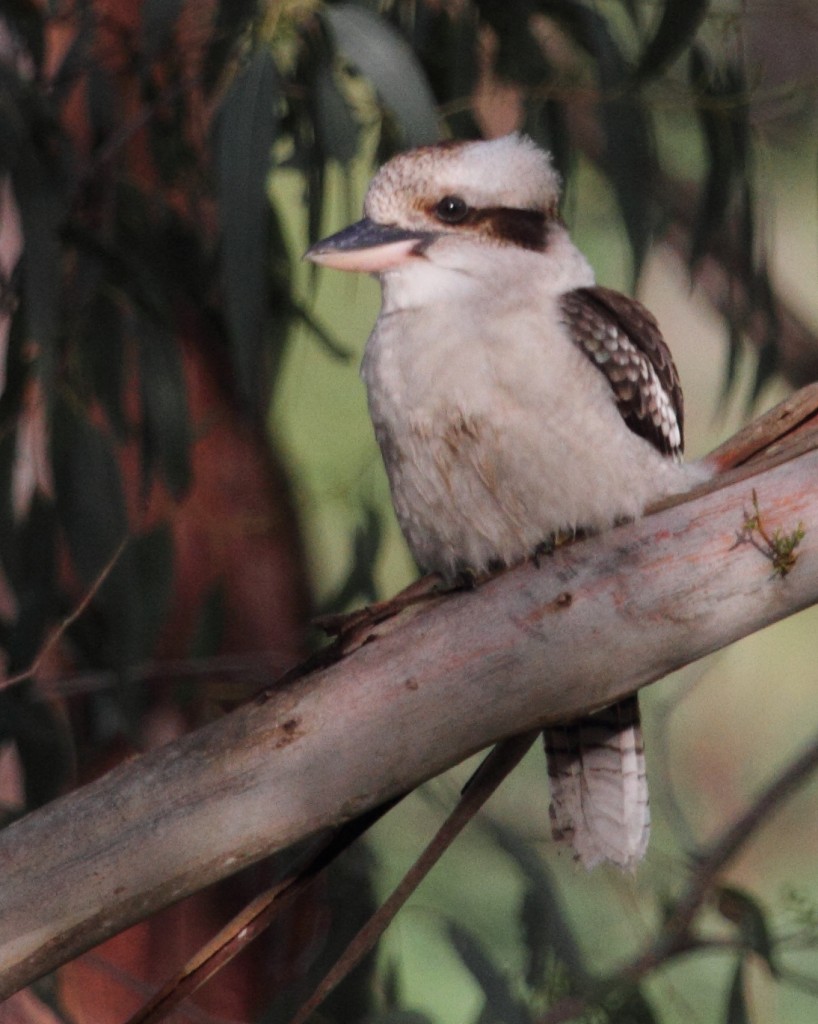
Laughing Kookaburra
Canon 7D, 100-400mm L IS USM, AE priority f/5.6, handheld, natural light
Earlier in the week I was walking around a local wetlands and almost passed two kookaburras sitting together on a low branch just a few metres from the path.
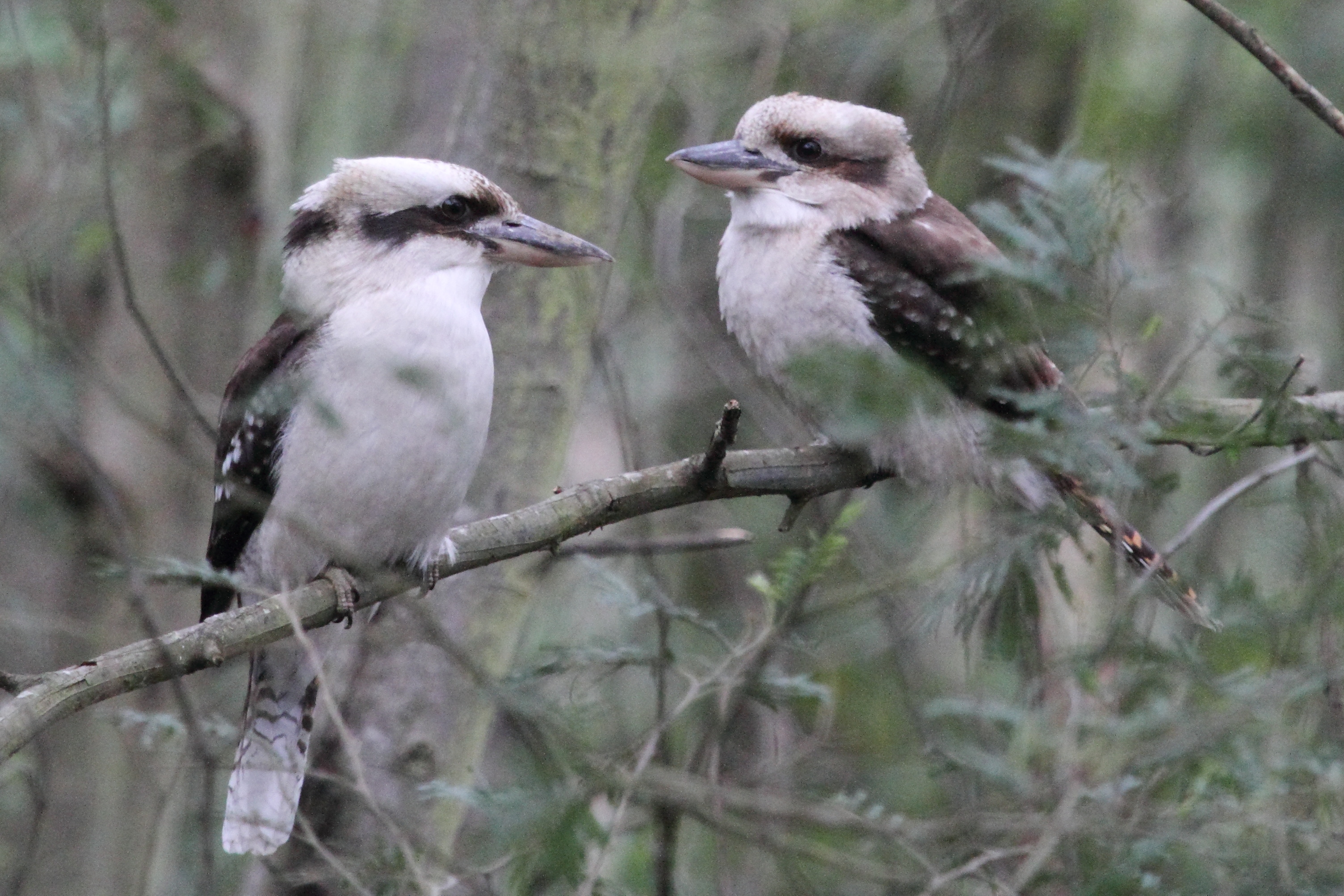
Laughing Kookaburra
Canon 7D, 100-400mm L IS USM, AE priority f/5.6, Exposure compensation +1, handheld, natural light
One kookaburra moved to another perch while the other stayed a while longer.
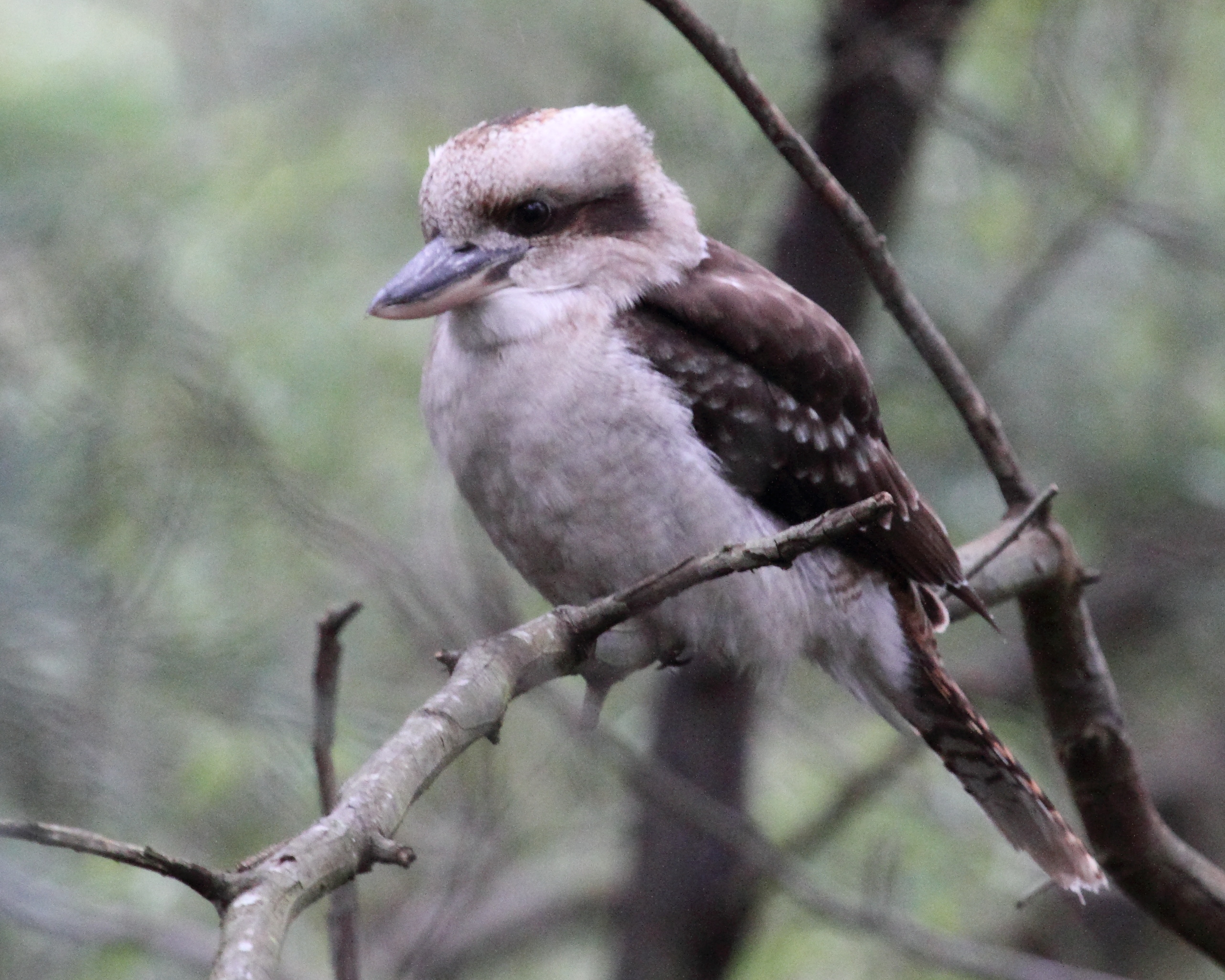 Laughing Kookaburra
Canon 7D, 100-400mm L IS USM, AE priority f/6.3, Exposure compensation +1, handheld, natural light
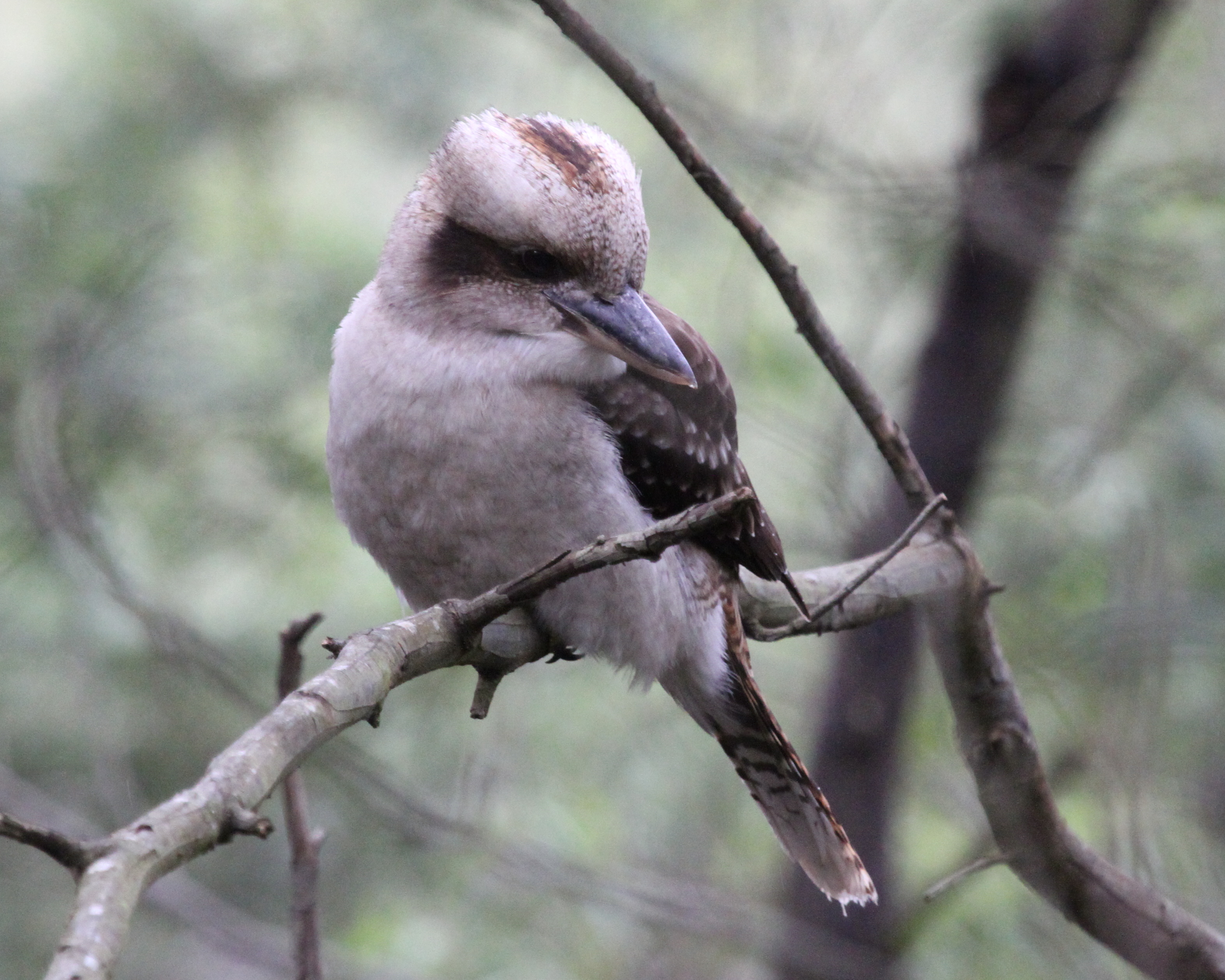 Laughing Kookaburra
I like the way kookaburras stare so intently when hunting. Sometimes their prey is several metres from their perch. While taking these images I wondered about the colouring of their bills: dark above and light below. It reminded me of the many sea creatures that have similar colouring to help camouflage them from predators above them and beneath them. Kookaburras don’t have many predators but they are often hassled, and even attacked, by smaller birds.
Happy birding, Kim
