200 years ago William Blake wrote “He who shall hurt the little wren Shall never be belov’d by men” – what a man!
Even though the weather is wintery these images of male Superb Fairy-wrens sprouting their breeding plumage make it clear that spring in on its way.
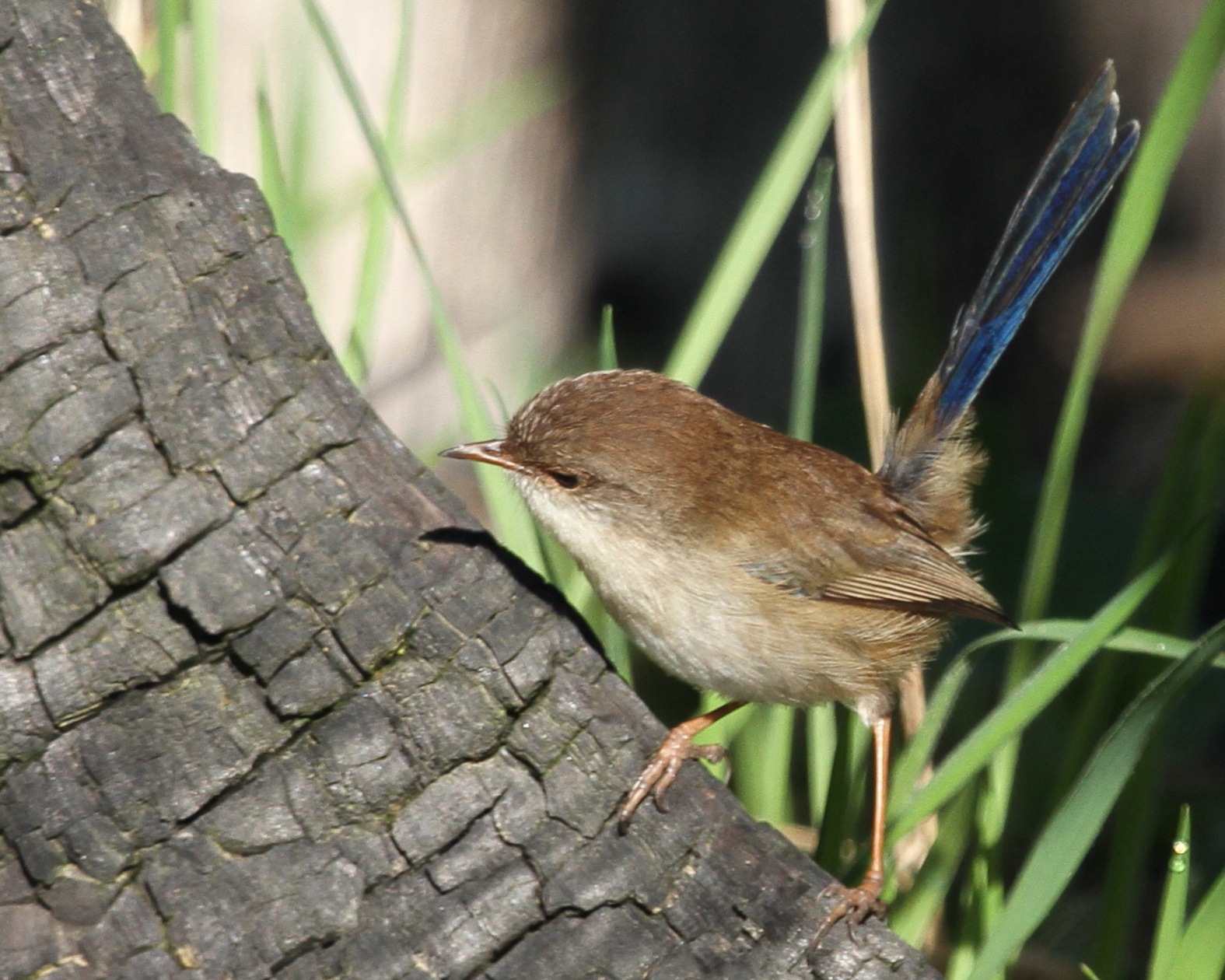
Superb Fairy-wren (Malurus cyaneus) – his tail is bluer than in early winter.
He was foraging on the trunk of a fire-damaged tree and hardly stayed still for a moment: I have as many images of his rear as I do of his front.
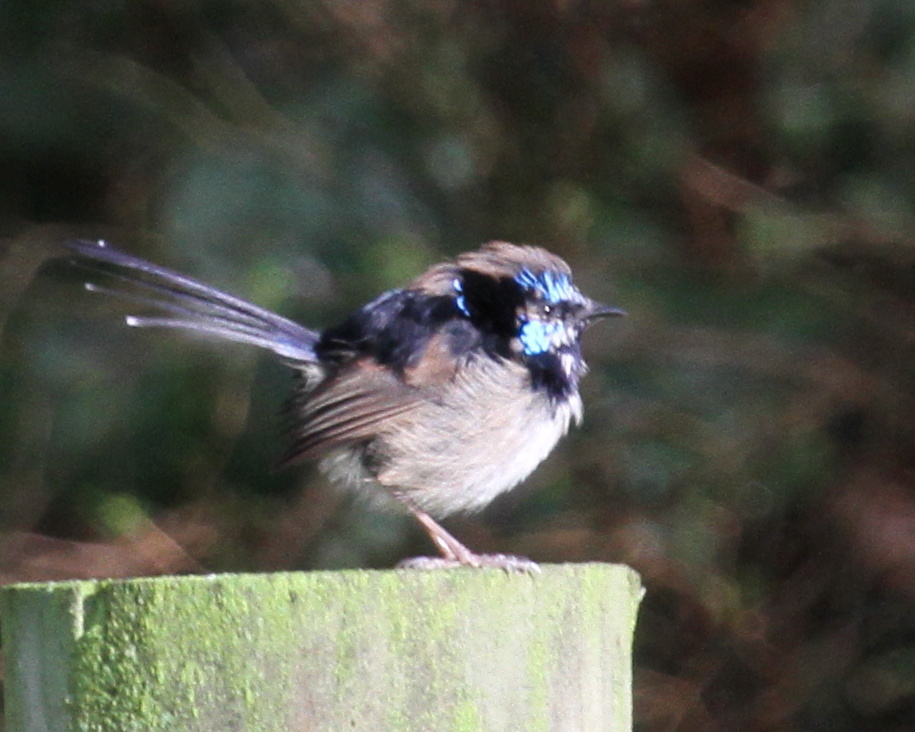 Superb Fairy-wren – looking ridiculously mottley as his breeding plumage starts to sprout
I took images of this mottley bird two days in a row but still didn’t nail the shot. I’m including this one to show how strange he looks and hopefully by this time next year I’ll be better with the camera.
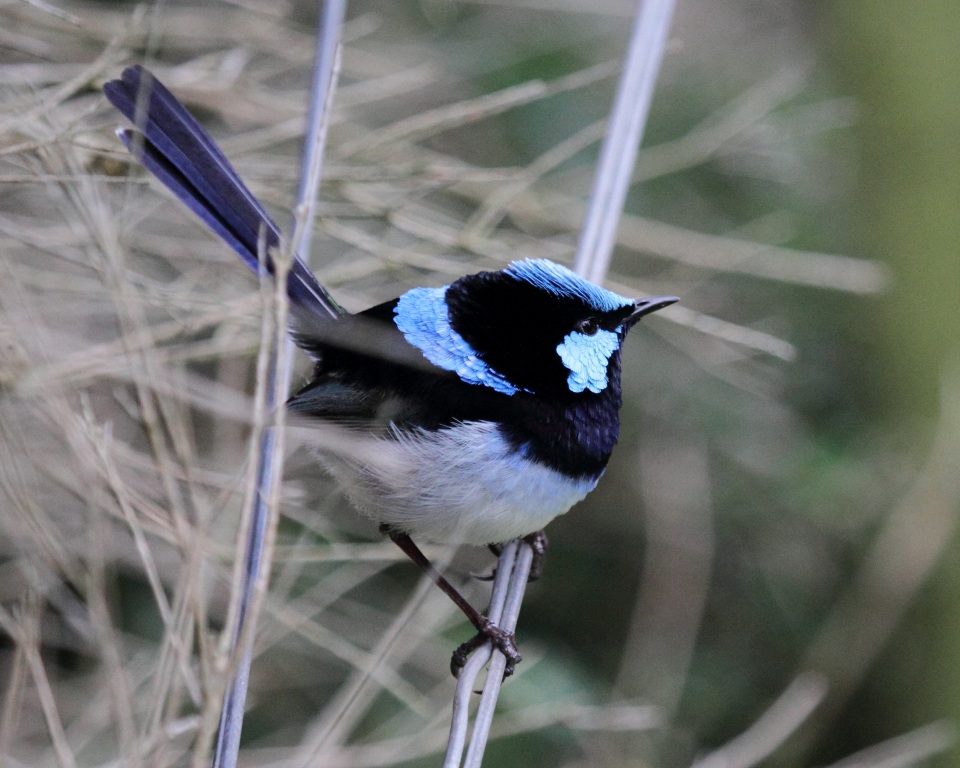
Superb Fairy-wren – dapper in his new suit
This handsome bird flew towards me, foraging on the ground before perching on the fence. I wish the wisps of grass weren’t there but love the way this image highlights his colour and the detail of his feathers.
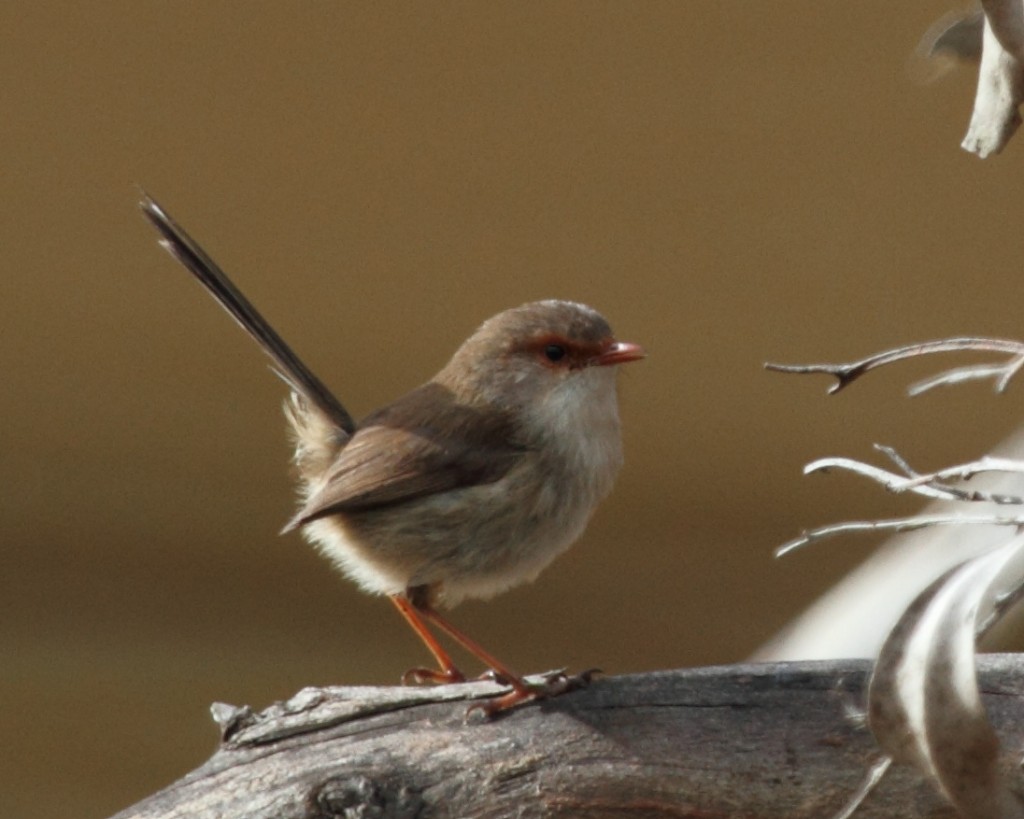
Superb Fairy-wren (female) – There is no hint of blue in her tail feathers and she has a russet eye-ring and lores.
The female wren was singing from her silt covered perch. I think it’s interesting that the first image shows a fire-damaged tree and this one shows the silt left behind after the creek had burst its banks.
These little wrens are one of my favourite species. They live together in small family groups with one obvious male and a few brownish birds and it’s easy to assume that it is a male and his harem: it is more likely to be a female and her entourage. Although males help raise the young they are rarely his biological offspring, instead females venture to the territories of other Superb Fairy-wrens before dawn to mate with the dominant male in the group. They have a fascinating social structure.
Happy birding, Kim
