These striking birds are rarely seen as they are critically endangered and the only specimens remaining in the wild occupy a tiny area in Victoria’s Yarra Valley. The following images are birds from the wild population of approximately 50 individuals – it was magical to spend time with them.
 Helmeted Honeyeater (Lichenostomus melanops cassidix)
Canon 7D, 100-400mm L IS USM, 1/640, f5.6, ISO 1000, focal length 380mm
The portrait above highlights the golden helmet of their name, whilst also showing their yellow ear tufts and a glimpse of tongue poking out. These Helmeted Honeyeaters were tricky to photograph, not only were they constantly moving but the weather was overcast and very dull, the birds were shaded further by the tree canopy and the contrast between their glossy black and bright yellow feathers made it hard to find the best settings. I’m glad I shoot RAW as I was able to tease a little extra detail from the files.
One bird was collecting nesting material and I took several shots, all of which are horribly blurred. I initially thought she’d captured a stick insect but thanks to my camera I could see she was pulling soft bark from a tree. Helmeted Honeyeaters often lay their first eggs of the season during early August.
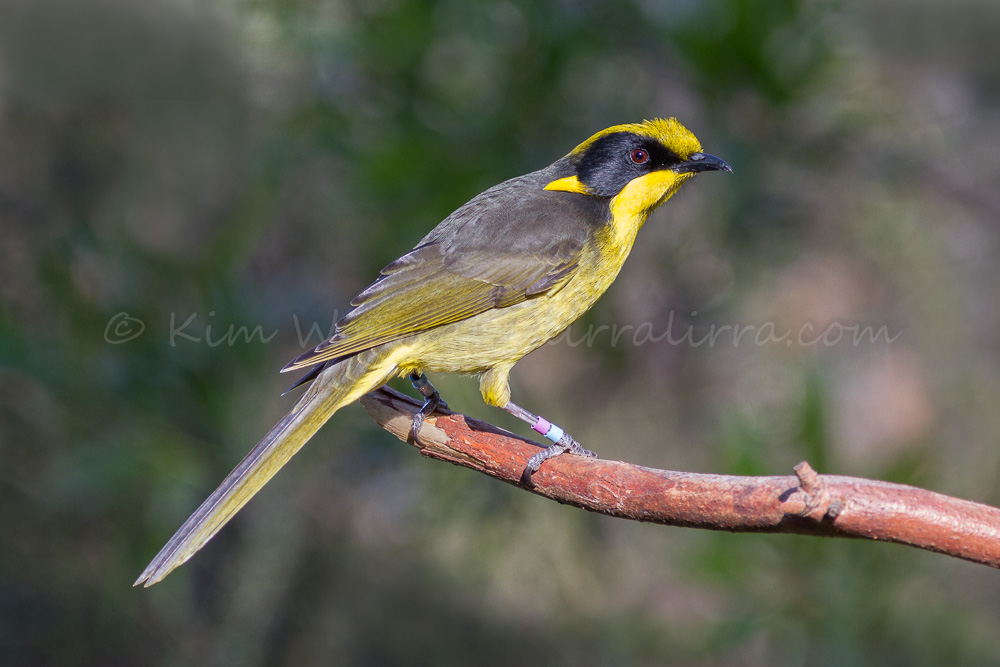 Helmeted Honeyeater (Lichenostomus melanops cassidix)
Canon 7D, 100-400 L IS USM, 1/250, 5.0, ISO 400, focal length 130mm
Helmeted Honeyeaters, affectionately known as hehos, are a sub-species of the smaller, duller Yellow-tufted Honeyeater which is found in the south-eastern corner of Australia. Hehos are Victoria’s avian emblem and only endemic bird, considerable effort is being taken to help them avoid extinction, including a captive breeding program at Healesville Sanctuary. Helmeted Honeyeaters can be ‘adopted’ by visiting Healesville’s Helmeted Honeyeater page or you might be interested in supporting the fantastic team at Friends of the Helmeted Honeyeater.
 Helmeted Honeyeater (Lichenostomus melanops cassidix)
Canon 7D, 100-400mm L IS USM, 1/320, f5.0, exposure compensation 1/3, ISO 1600, focal length 200mm
Habitat requirements for Helmeted Honeyeaters are specific: they need a creek or swamp, reliable rainfall, dense vegetation and prefer specific flora species including Mountain Swamp Gum, Swamp Gum, Prickly Currant-bush, Scented Paperbark and Woolly Tea-Tree. Many decades of habitat destruction due to agriculture resulted in a significant reduction of suitable habitat; there was a direct impact from clearing itself with a secondary impact caused by changes to drainage. Other threats are predators including raptors, feral cats and foxes, while rivalry between Helmeted Honeyeaters and Bell Miners over territory is believed to impact breeding success. The friends’ group helps support hehos in many ways including with extensive planting to improve and expand their dwindling habitat.
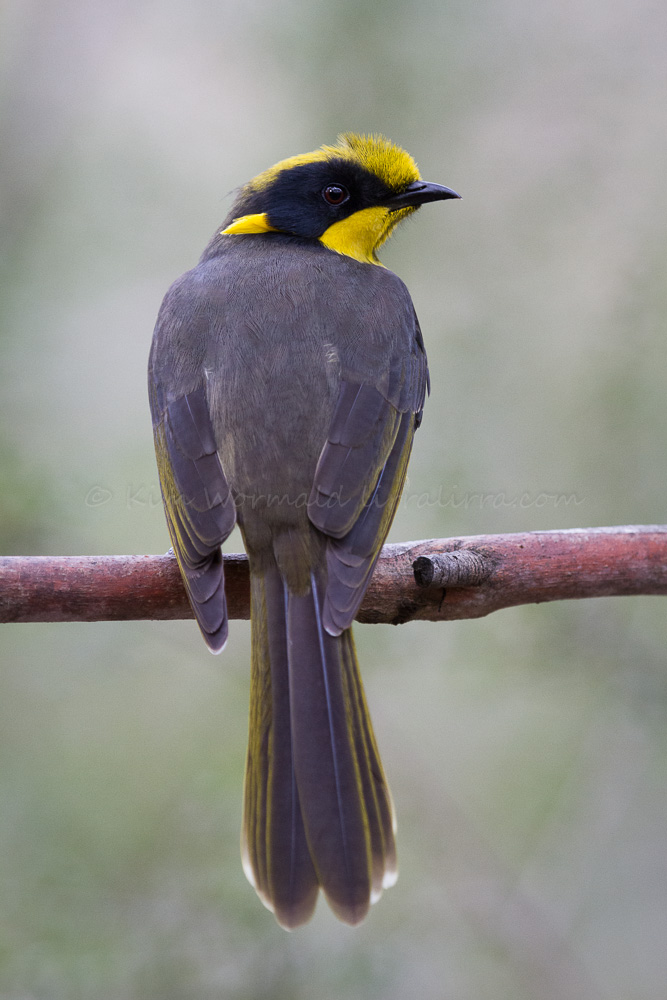 Helmeted Honeyeater (Lichenostomus melanops cassidix)
Canon 7D, 100-400 L IS USM, 1/250, f5.6, exposure compensation 1, ISO 1600, focal length 285mm
For some reason this over-the-shoulder look makes me think about the changes that have caused these birds such grief. With many volunteers and experts working towards increasing the number of Helmeted Honeyeaters there is hope for their future but at present the birds are so localised that a single catastrophe, including bushfire, could rewrite their plight without a happy ending. Attempts to establish a satellite population have been made but, so far, appear to have failed.
The image above shows the dark brown and olive colouring of their backs and their white-tipped tails. Helmeted Honeyeaters are about 20cm long, males are a fraction larger than females. Breeding pairs are monogamous and I hope, fervently, that one day I will be able to share images of juveniles thriving in the wild.
Happy birding, Kim
For more images of Helemeted Honeyeaters you may like to visit Time in the bush
NB It is now possible to get a weekly email letting you know that lirralirra has been updated – just add your address to the ‘Subscribe to email’ box, above right, and click on the hyper-link when your email arrives.
Also, I recently added a Facebook ‘like’ button. Thanks to all ‘likers’ – I like you too!
