House Sparrows were introduced to Australia during the mid 1800s by settlers desperately trying to recreate their homeland. Acclimatisation Societies introduced many species including rabbits, foxes, starlings, blackbirds, songthrushes, skylarks and noxious weeds: they wanted to hunt foxes and harvest blackberries while listening to familiar birdsong.
I was inspired to post House Sparrow images after reading that the serious and mysterious decline they have suffered in the UK equates to 50 birds being lost each hour – what are we doing to our world? The figure astounds me, especially as no one understands why, although cats and pollution have been implicated.
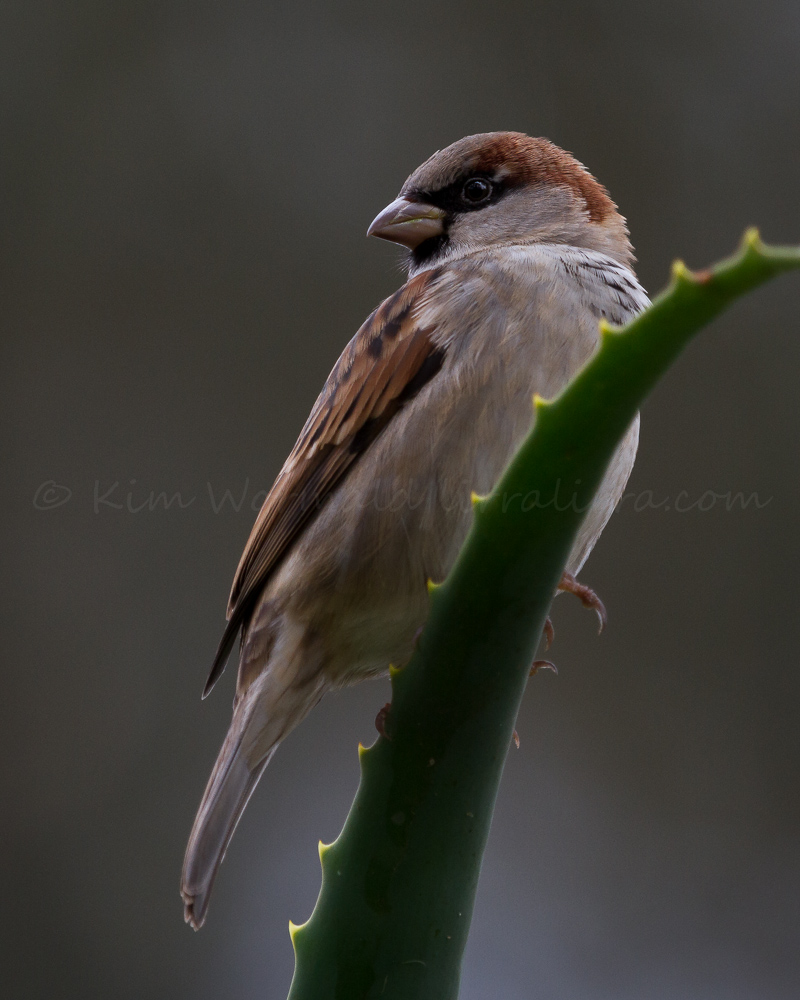 House Sparrow (Passer domesticus) – male
Canon 7D, 100-400mm L IS USM, 1/250, f5.6, ISO 400, focal length 330mm
House Sparrows are 15cm long and weigh 27g (that’s three times the weight of the Spotted Pardalotes in the previous post which you can visit here). Sparrows eat a wide range of foods and most of us have tossed crumbs to them when they join us at cafes. Male sparrows are boldly marked with a black face, black bib and upperparts of black and brown.
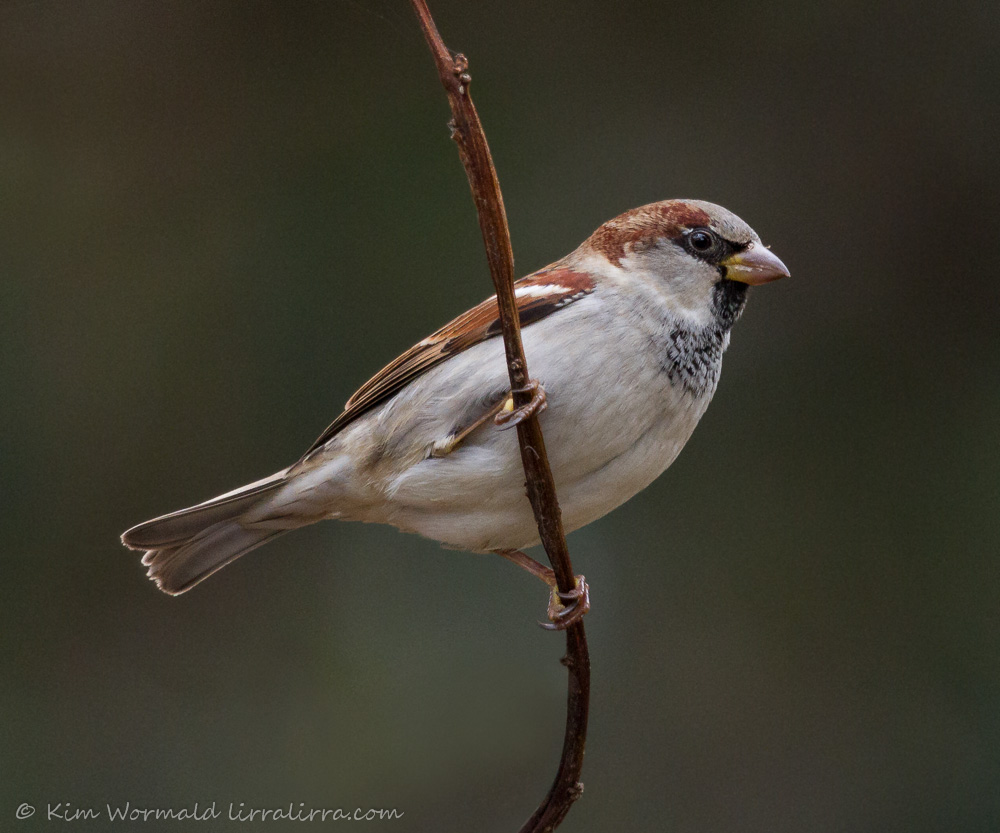 House Sparrow (Passer domesticus) – male
Canon 7D, 100-400mm L IS USM, 1/320, f5.6, ISO 1600, focal length 390mm
Sparrows are a well-established pest species in eastern Australia causing damage to orchards and market gardens. They are not present in Western Australia as the Nullarbor Plain has proved an effective barrier. House Sparrows prefer to live close to human habitation and are not inclined to cross vast open areas; any that have appeared in WA have been systematically destroyed.
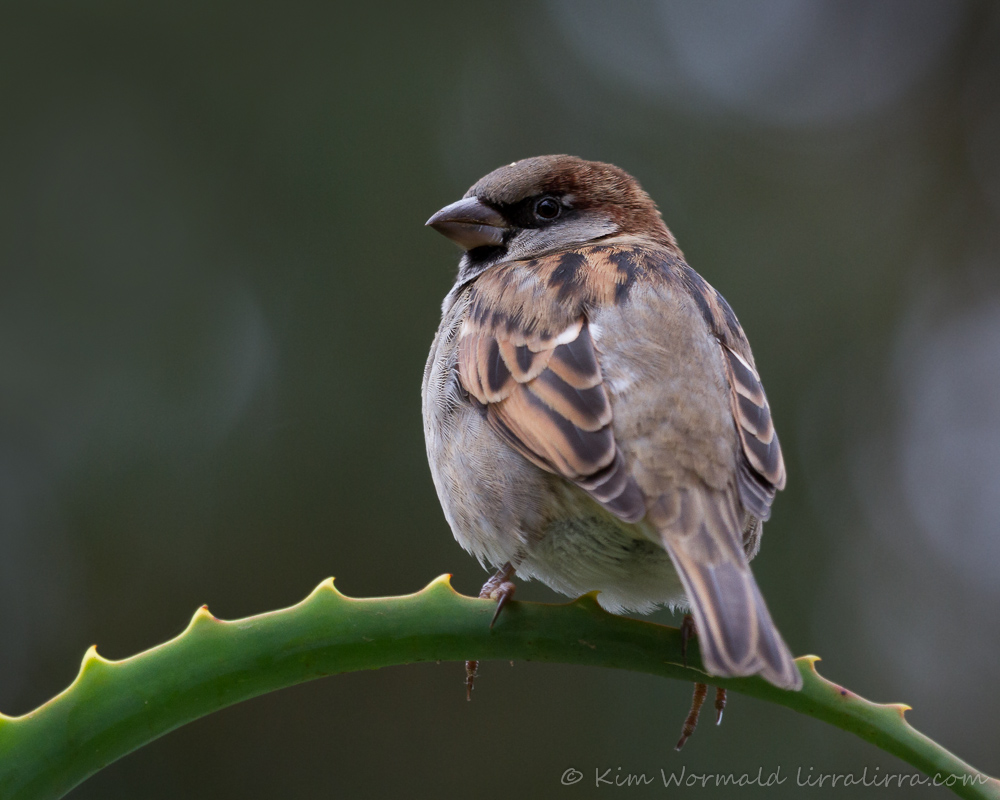 House Sparrow (Passer domesticus) – male
Canon 7D, 100-400mm L IS USM, 1/250, f/5.6, ISO 500, focal length 375mm
The male sparrow’s black bib is clearer in the image above. The bib extends during the breeding season at which time their bills turn black. When I was conducting regular surveys for the Atlas of Australian Birds I often saw House Sparrows in my garden but when neighbours removed an old stable the sparrows disappeared and have not returned.
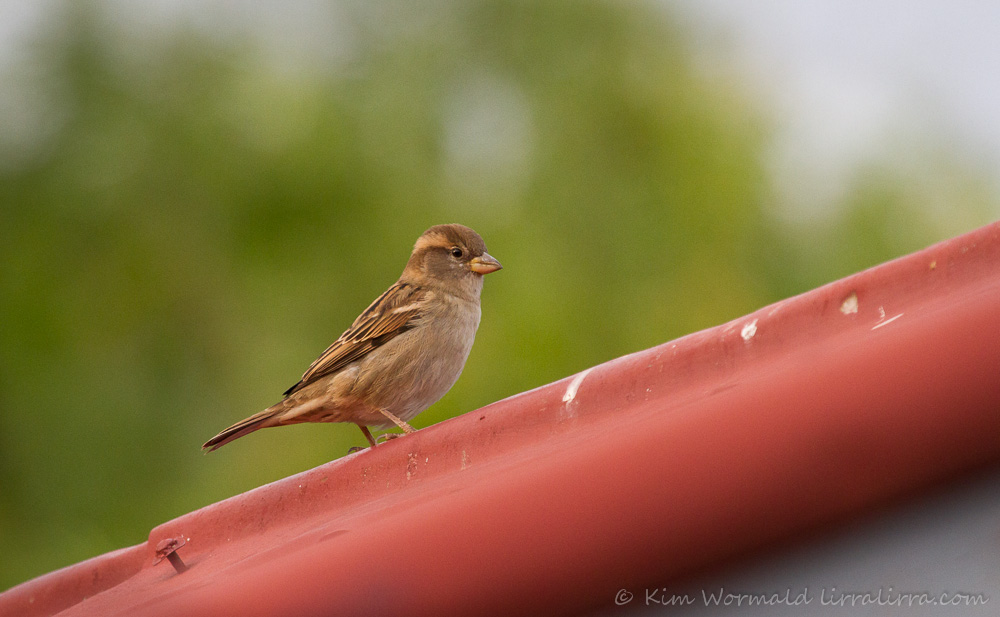 House Sparrow (Passer domesticus) – female
Canon 7D, 100-400mm L IS USM, 1/400, f7.1, ISO 1600, focal length 400mm
Female House Sparrows are paler and browner than males with a distinctive buff eye stripe. The image above was taken at the Woodlands Homestead where I tried to get images of sparrows on buildings that were brought over from the UK during the mid 1800s – they seemed to belong together.
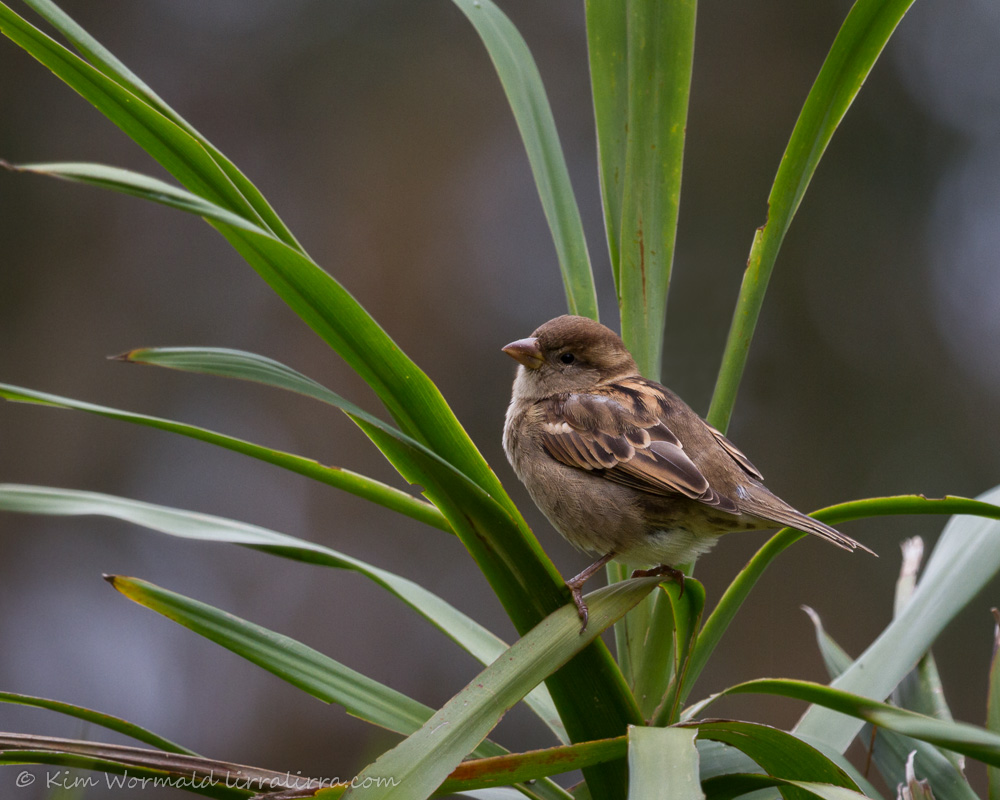 House Sparrow (Passer domesticus) – female
Canon 7D, 100-400mm L IS USM, 1/200, f5.6, ISO 500, focal length 400mm
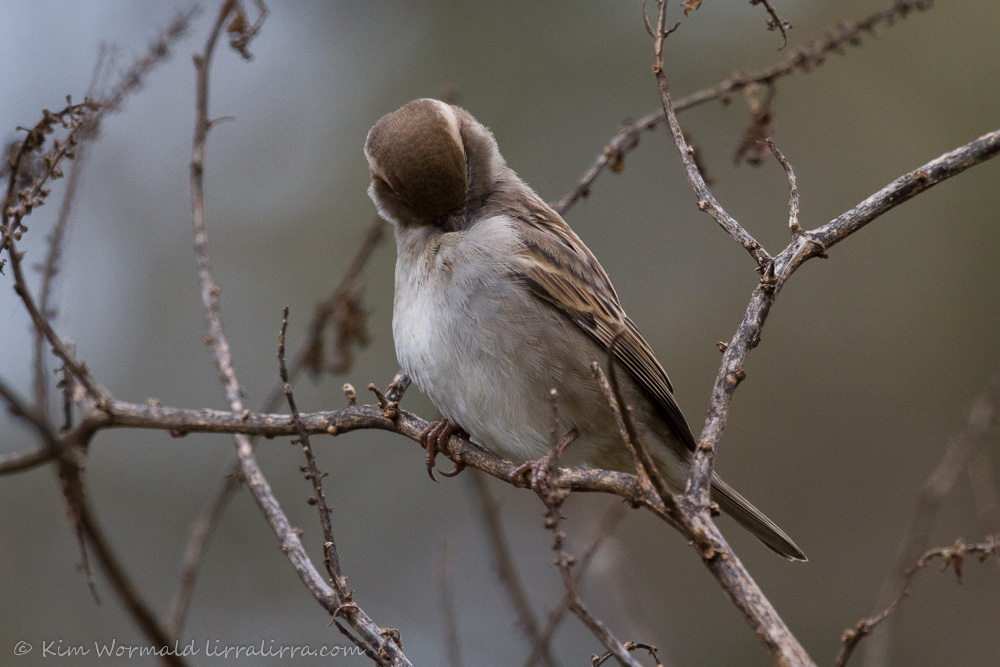 House Sparrow (Passer domesticus)
Canon 7D, 100-400mm L IS USM, 1/320, f5.6, ISO 1600, focal length 380mm
I like the misty look in the high ISO image above as the female preens herself. It seems ironic that these birds are in serious decline in one hemisphere and unwelcome in the other.
Happy birding, Kim
NB It is now possible to receive a weekly email letting you know that lirralirra has been updated – just add your address to the ‘Subscribe to email’ box above right.
Also, I recently added a Facebook ‘like’ button. Thank you to all ‘likers’ – I like you too!
