Superb Fairy-wrens are one of my favourite little birds. They are usually found foraging in small family groups at ground level or in low shrubs. Despite the males looking so bold in their breeding plumage it is female wrens that rule the roost. Today’s post illustrates the colouring of females, and of males as they move through basic and into full breeding plumage.
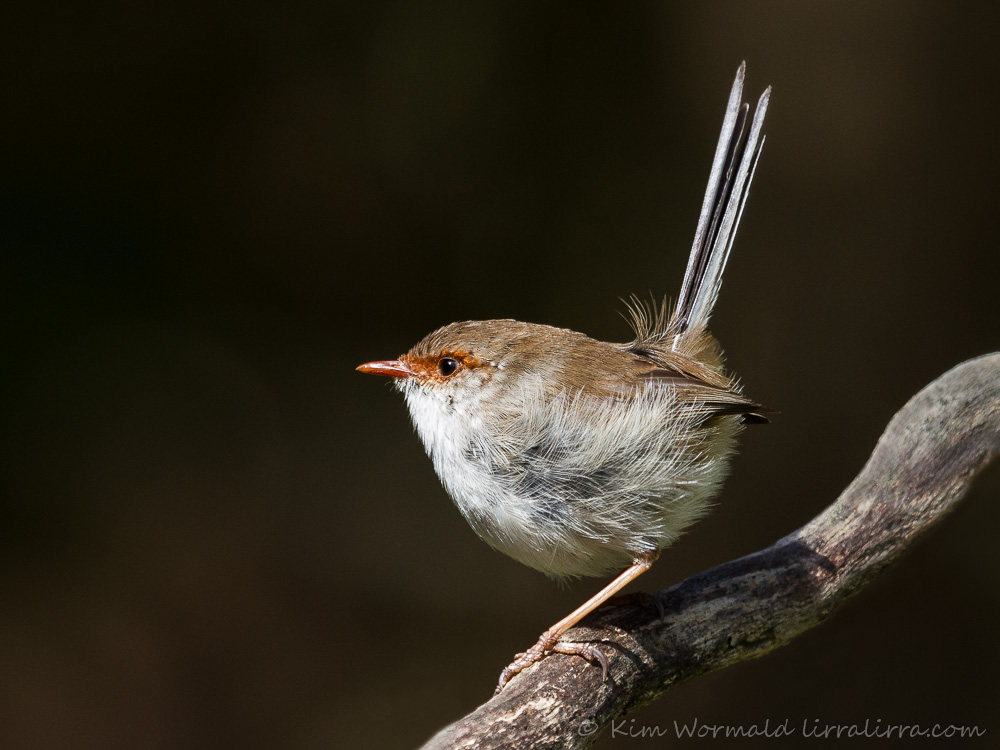 Superb Fairy-wren (Malurus cyaneus) – female
Canon 7D, 100-400mm L IS USM, 1/500, f/5.6, ISO 400, focal length 370mm
When you first start watching Superb Fairy-wrens it can be tricky to identify the females from the non-breeding males, especially as the females’ tails can also be bluish. The best way to confirm that you’re seeing a jenny wren is to note the orange around her eye, the orange lores (the area between the eye and the bill) and the brown bill.
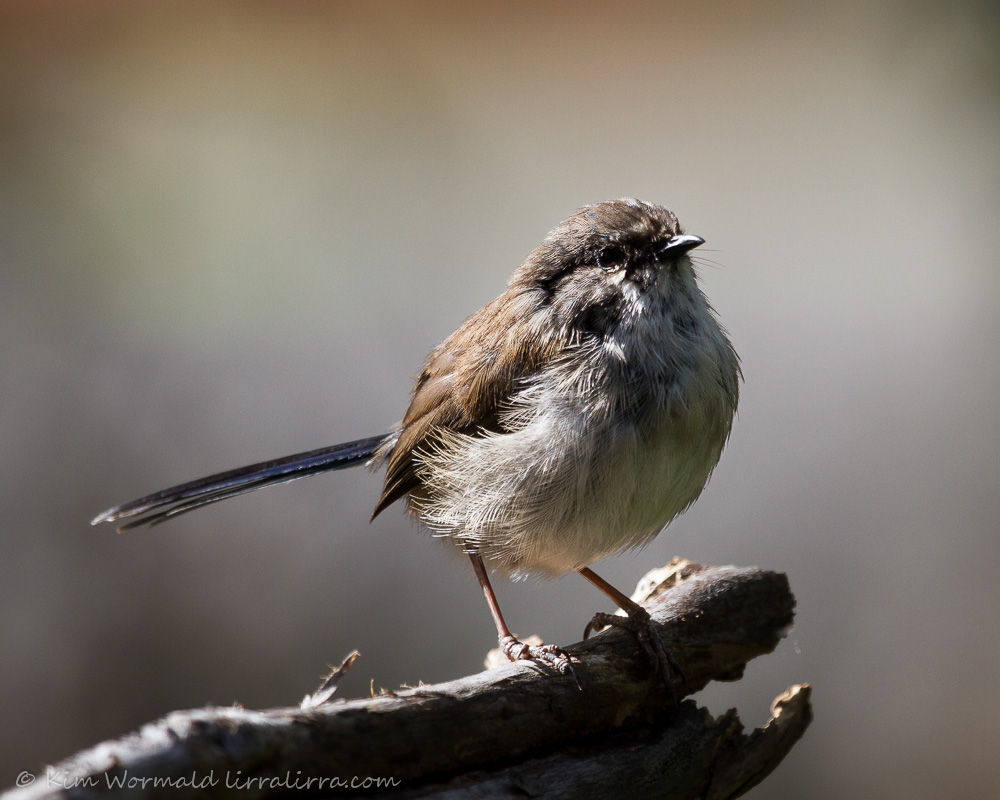
 Superb Fairy-wren (Malurus cyaneus) – non breeding male in basic plumage
Canon 7D, 100-400mm L IS USM, 1/640, f/5.6, ISO 640, focal length 400mm
The image above is an adult male in non-breeding plumage. His bill is black, juvenile males have brown bills. His tail is quite blue so either it’s the way the light is hitting it or he’s starting to come into breeding colours, or both. Tail colours can look very different depending on how the light hits them, sometimes they are luminescent.
 Superb Fairy-wren (Malurus cyaneus) – male
Canon 7D, 100-400mm L IS USM, 1/640, f/5.6, ISO 320, focal length 400mm
This little chap is just starting to get some blue feathers on his head, they are tiny but you’ll see them if you squint. There is one blue spot just above his eye and another at about 11 o’clock. I could have enhanced the blue to make it clearer but prefer natural images that aren’t over-saturated.
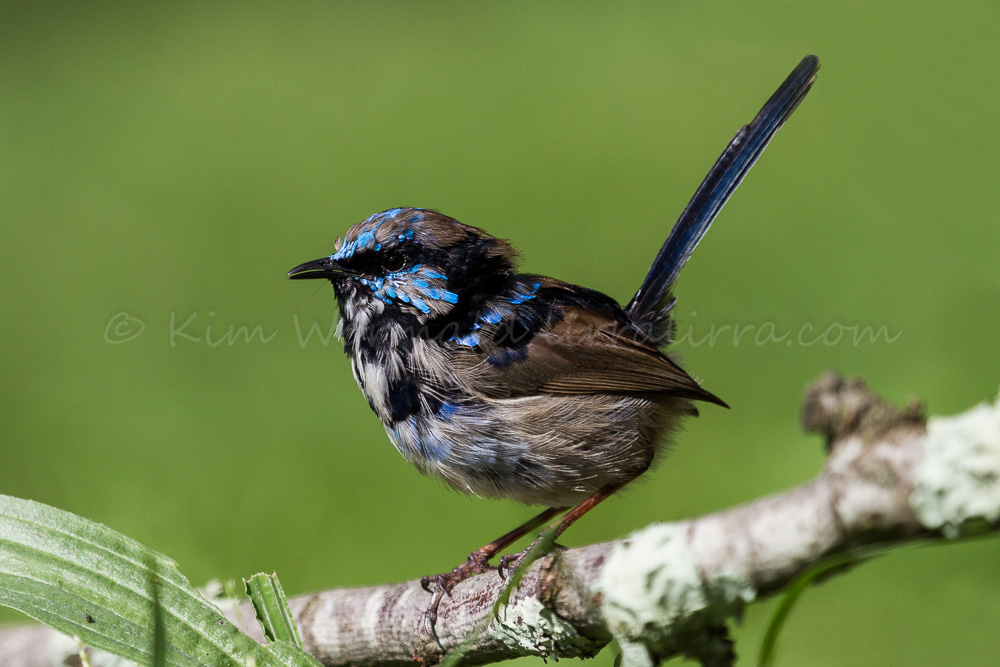 Superb Fairy-wren (Malurus cyaneus) – male
Canon 7D, 100-400mm L IS USM, 1/640, f/5.6, ISO 125, focal length 365 mm
This mottled fellow is about half way towards full breeding plumage; he looks so scruffy and interesting. The brown and buff colouring on his head and throat are being replaced with black and startlingly bright blue feathers. Just beneath his eye are two pin feathers that are close to unfurling and adding more blue to his cheeks.
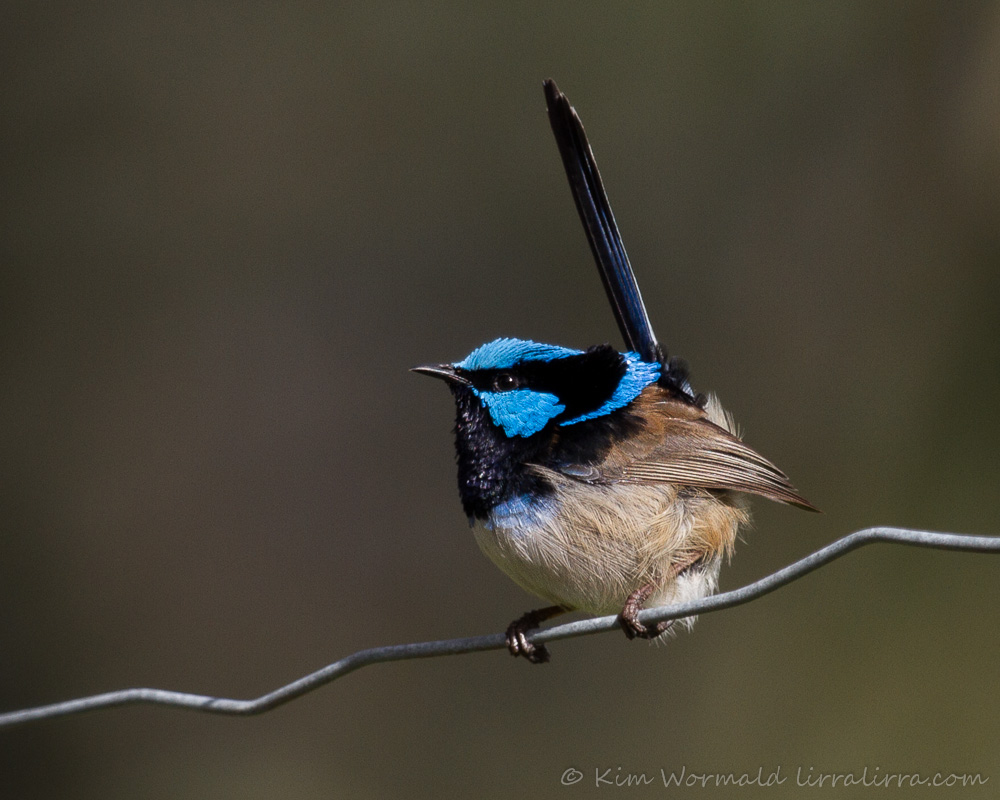 Superb Fairy-wren (Malurus cyaneus) – male, breeding
Canon 7D, 100-400mm L IS USM, 1/640, f/5.6, ISO 160, focal length 400mm
And finally this handsome fairy-wren is resplendent in full breeding plumage with bright blue and black head, purplish black throat and long blue tail. Studies have shown that female Superb fairy-wrens mate most often with males who do not live in their territory, and that they prefer males who attain full breeding plumage early in the season. Neither of those findings fit with the sightings I had this week of the mottled fellow mating several times with the jenny despite the bird pictured above being nearby. I’m lucky to share my garden with Superb Fairy-wrens, I never tire of watching them.
When I’m out with my camera I notice backgrounds as quickly as I notice birds. Sometimes I want an image that includes the bird’s environment but more often I aim for images that are free from distractions, ideally with a pleasant perch and a blurred background. Often all it takes is to move slightly left or right, or up or down to exclude a distracting area of light or colour behind a bird. These fairy-wren images show four out-of-focus backgrounds and one collection of leaves. Shady areas, trees, grass that has gone to seed and distant bushes can all produce pleasing backgrounds. I aim to get the image right in camera as nature photography focuses on reality rather than post-processing.
Happy birding, Kim
NB It is now possible to receive a weekly email letting you know that lirralirra has been updated – just add your address to the ‘Subscribe to email’ box above right.
Also, I recently added a Facebook ‘like’ button. Thank you to all ‘likers’ – I like you too!
