I saw an Eastern Yellow Robin catch a moth. I watched through the long lens, I saw the moth trapped in the robin’s bill, I saw it waving its legs and antennae, I saw the fairy dust flying. It wasn’t a fair fight.
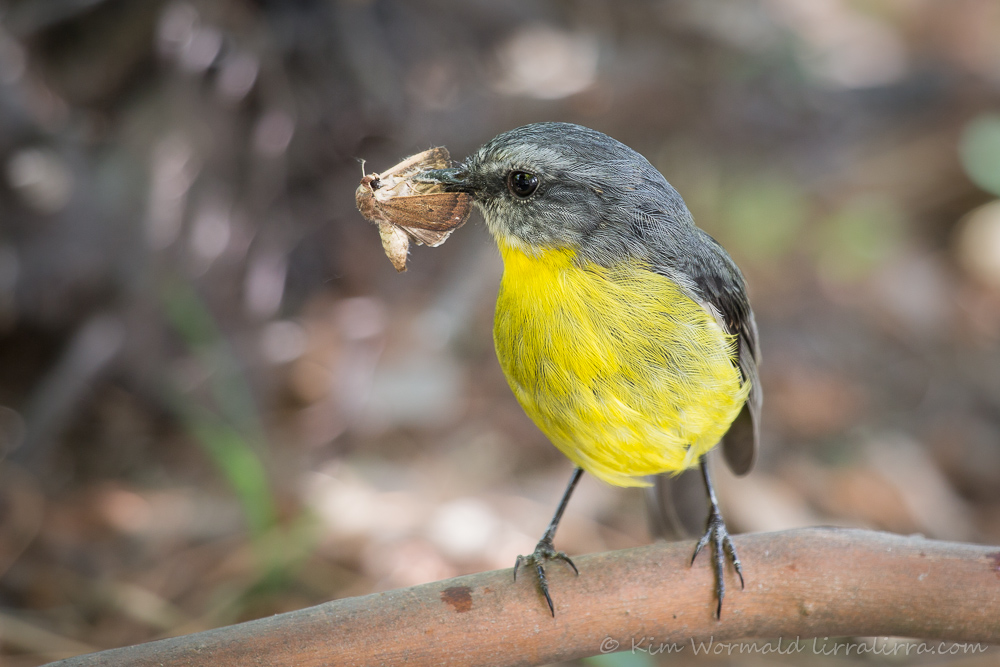 Eastern Yellow Robin (Eopsaltria australis)
I’m captivated by the way predator and prey are looking into each other’s eyes. The moth raised itself up to face the robin in a valiant final bid for survival. Some fairy dust can be seen tufting up from the moth’s left antenna as other tiny patches of dust float away on the breeze. The scene made me think about the Eastern Yellow Robin I saw being eaten by a Collared Sparrowhawk; that wasn’t a fair fight either. Small birds have to be super alert, they have to forage busily throughout the day while maintaining a constant vigilance to avoid becoming prey themselves. This is especially true for Eastern Yellow Robins that often forage alone. More social birds, like last week’s Red-browed Finches, share the load by looking out for each other.
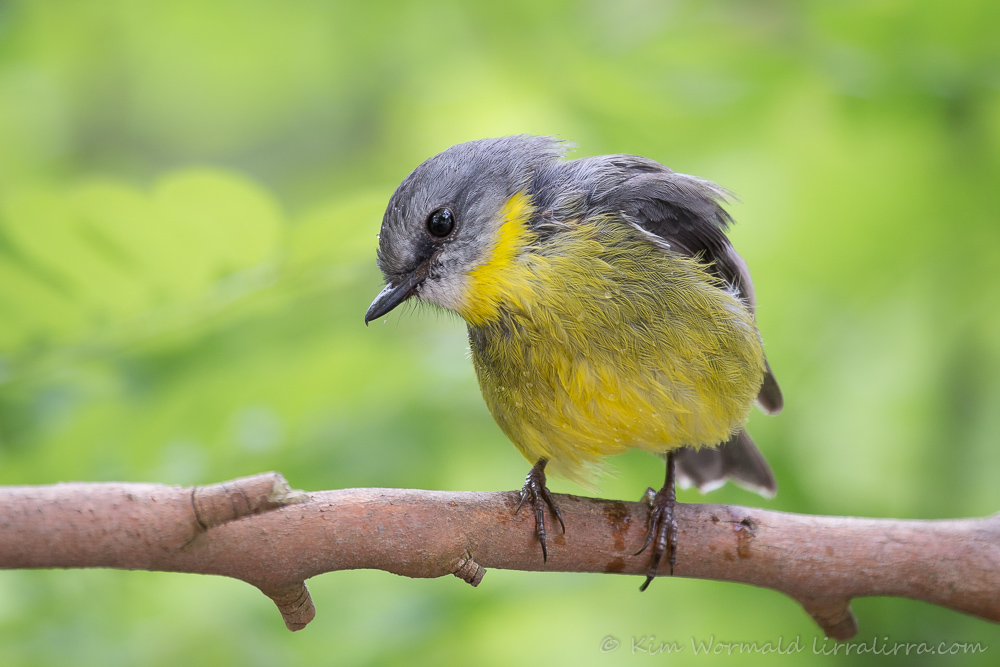
Eastern Yellow Robin
Various species of robin have the same approach to foraging, they ‘perch and pounce’. They stare intently at the ground, as the robin is in the image above, before diving to capture insects, spiders and other bugs. They must have remarkable eyesight as they often fly several metres from their perch to capture their prey.
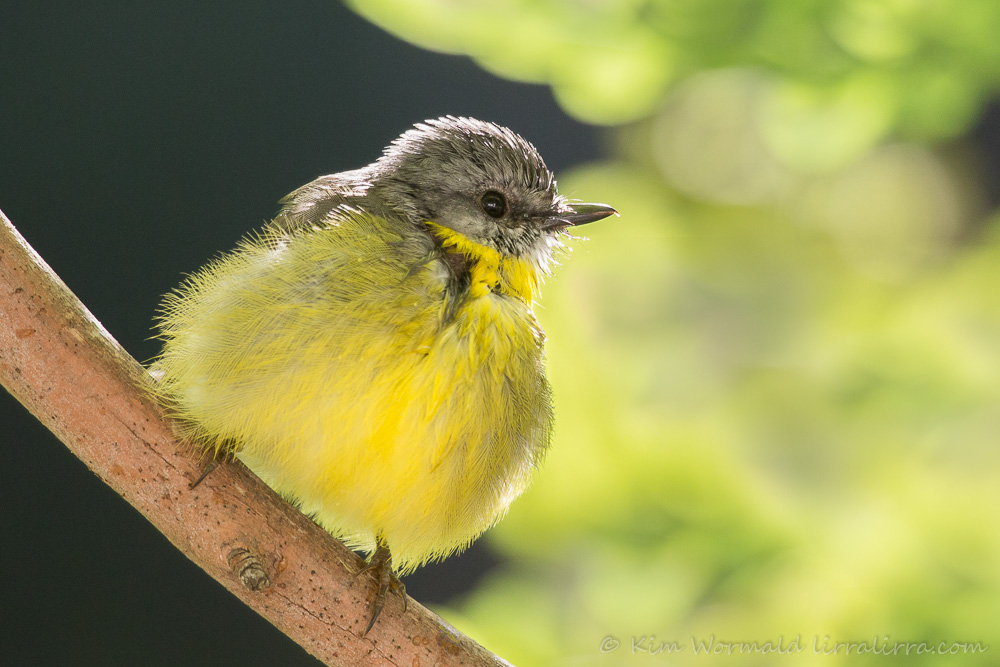
Eastern Yellow Robin
I think the robin above looks like a fluffy pompom, quite a different look from the intent stare of the other images.
My internet connection has been extraordinarily intermittent today and I’m going to sign off before the post is lost completely.
Happy birding, Kim
PS The Equipment page has been updated to include the 5D Mark III and various other items.
It is possible to receive a weekly email informing you that lirralirra has been updated – just add your address to the ‘Subscribe to email’ box above right.
Thank you Facebook ‘likers’, button above right – much appreciated.
