It was cold and windy so off I went to The Nobbies at Phillip Island to look for Silver Gulls and raptors in flight but there wasn’t a bird to be seen except a lone Willie Wagtail that swooped across the far end of the car park and disappeared. The only bird I might get to photograph would be a Little Penguin, if one was kind enough to be hiding under the boardwalk or … or peeking out of its burrow!
 Little Penguin (Eudyptuia minor)
Canon 5D Mk III, 100-400mm L IS USM, 1/1600, f/5.6, ISO 1600, focal length 400mm
The boardwalk curves down and around the headland and any hint of a sea breeze makes itself well known to walkers and birds. Raptors and gulls can cope with strong winds (see Gale Force Gulls for images of amazing fliers) while Little Penguins tuck themselves away in their burrows during the day unless they are fishing out at sea. Little Penguins are about 33cm tall and are also known as Blue Penguins and Fairy Penguins. They are sleek birds with wings that are used as flippers to propel them through the water. I don’t always like the look of pale irises but I do like the eyes of Little Penguins.
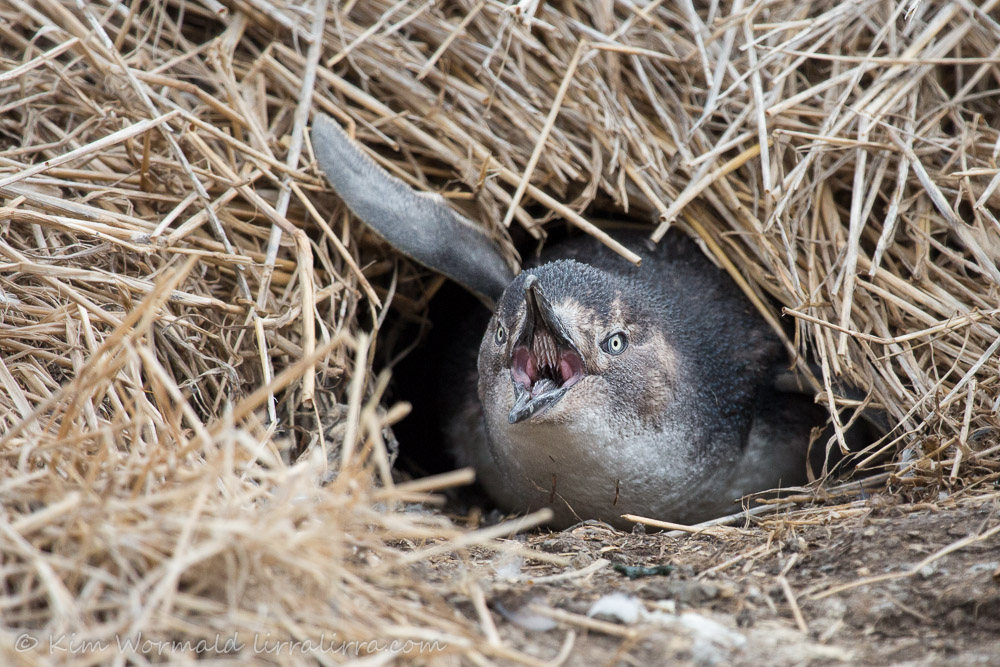 Little Penguin
Canon 5D Mk III, 100-400mm L IS USM, 1/1600, f/5.6, ISO 1600, focal length 400mm
It would be easy to invent an interesting story about the image above, “Little Penguin squeals as fox/cat/snake/human gets too close to its burrow”. In fact the penguin was having a stretch and a quiet yawn. I was lucky to be looking at it through the lens and was fascinated to see the strange serrations inside its bill which must help it grip the small fish and squid that form a large part of its diet. Its wing looks very flipper-like in this image.
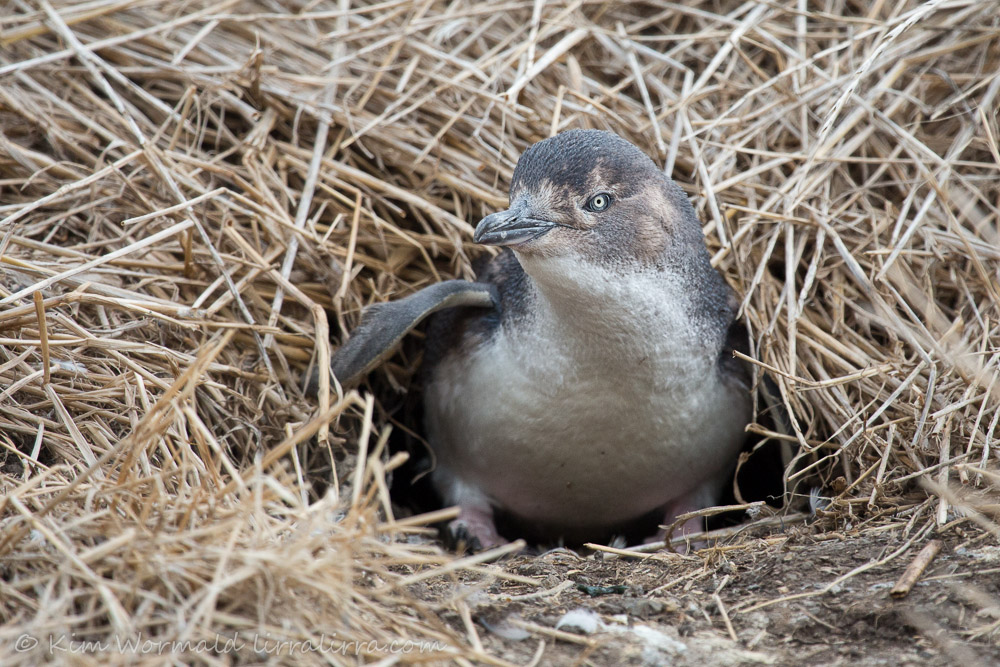 Little Penguin
Canon 5D Mk III, 100-400mm L IS USM, 1/1600, f/5.6, ISO 1600, focal length 400mm
Just when I thought it was about to tuck itself back into the darkness of its burrow the Little Penguin took a couple of waddling steps towards me on its little pink feet.
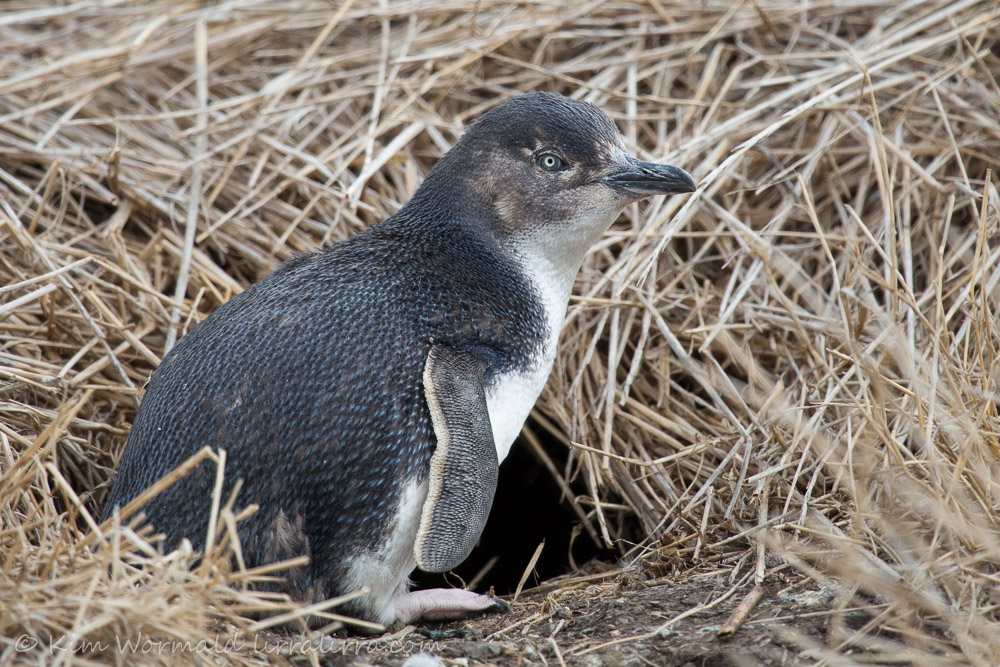 Little Penguin
Canon 5D Mk III, 100-400mm L IS USM, 1/1600, f/5.6, ISO 1600, focal length 400mm
Then the sweet bird emerged from its burrow and posed for a profile shot that showcases its colouring, the density of its feathers, its pink feet and strong bill. Even though the lighting was overcast the blueness of the feathers on the penguin’s back is obvious. Little Penguins are able to dive for up to one minute to depths of around 30m although most of their dives are about 2m. Their dark backs and light bellies help protect them from predators as when viewed from above they blend with the darkness of the sea beneath them and when viewed from below they merge with the lightness of the sky above.
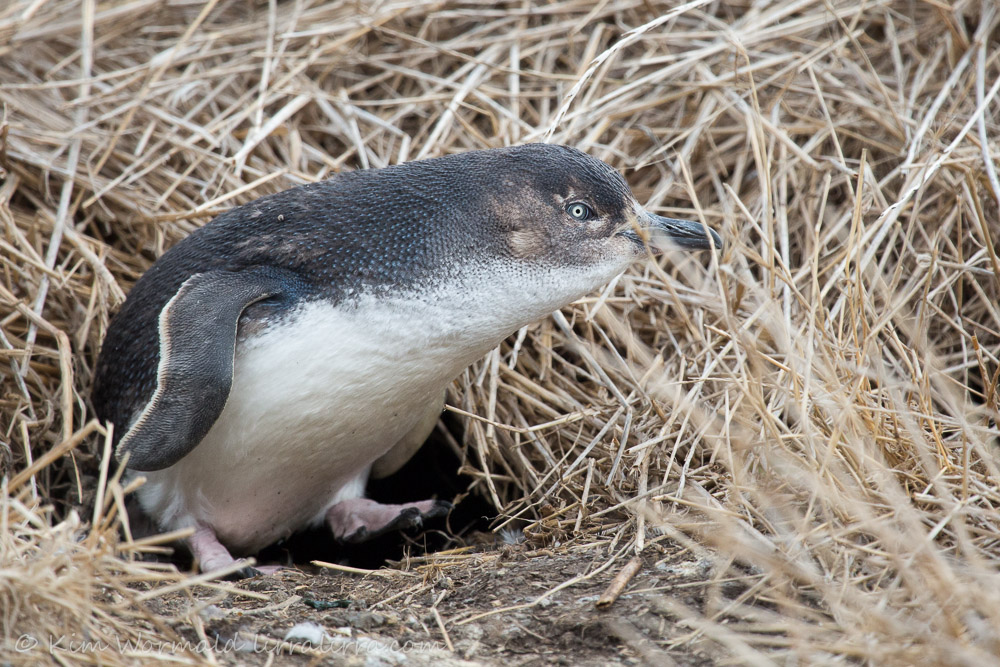
Little Penguin
Canon 5D Mk III, 100-400mm L IS USM, 1/1600, f/5.6, ISO 1600, focal length 400mm
The image above is less flattering but I liked the determined way the penguin decided to leave its burrow and head off through the drought-stricken grass.
Several years ago I helped with some Little Penguin surveys when we carefully caught, measured and released the birds. Taking these images brought back good memories and a reminder to thank all the dedicated nature lovers out there who continue to help our wildlife in whatever ways they can.
Happy birding, Kim
PS The Equipment page has been updated to include the 5D Mark III and various other items.
It is possible to receive a weekly email informing you that lirralirra has been updated – just add your address to the ‘Subscribe to email’ box above right.
Thank you Facebook ‘likers’, button above right – much appreciated.
