Looking through my Willie Wagtail images I realised I have shots of them in deserts, gardens, woodlands, around rockpools, at the beach and in paddocks. They are everywhere!
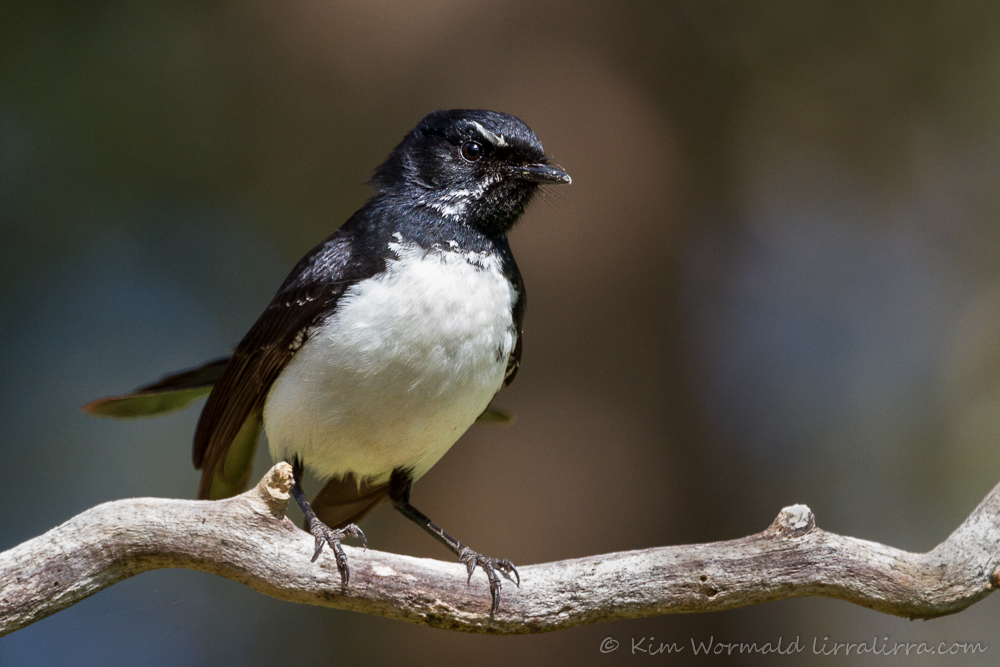
Willie Wagtail
Out of interest I looked them up in the ‘New Atlas of Australian Birds’. In surveys conducted between 1998-2002 Willie Wagtails were the second most commonly recorded species after the Australian Magpie. Wagtails are more widespread over mainland Australia than magpies, but are surprisingly absent from Tasmania.
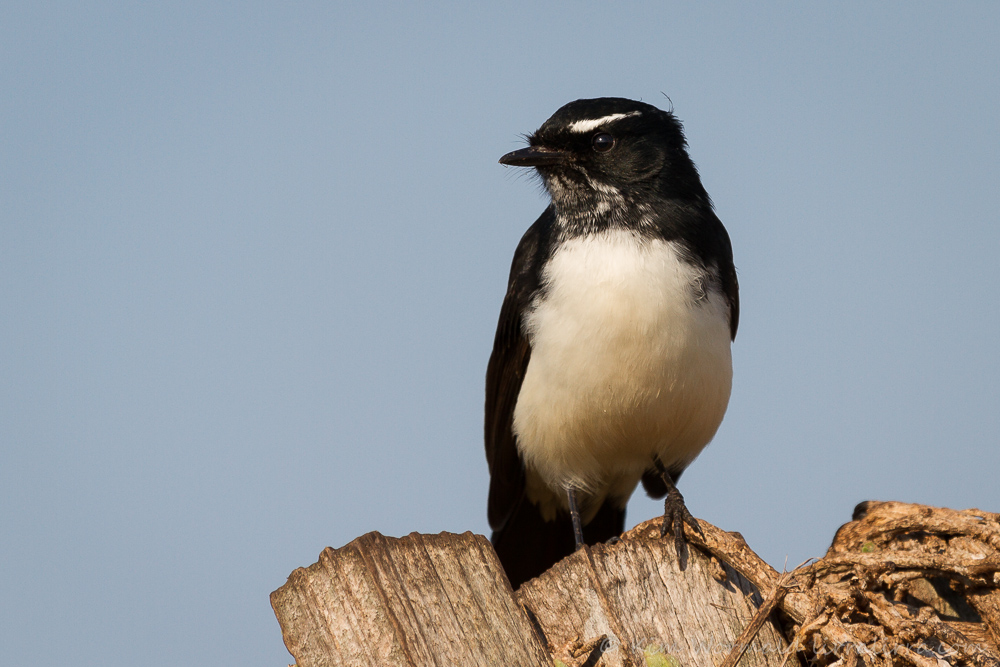 Willie Wagtail
Willie Wagtails are strongly marked with black plumage on their backs, heads, throats and tails, and bold white eyebrows, whiskers and bellies. Looking at still images of them it’s impossible not to imagine the continual sideways wagging of their tails.
 Willie Wagtail
.
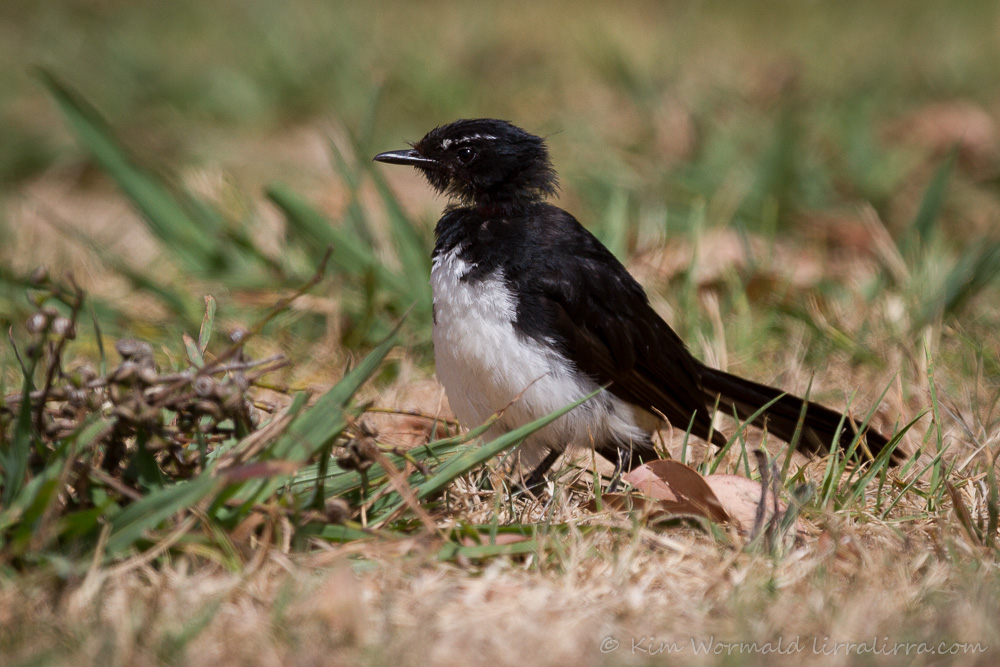
Willie Wagtails are often seen in paddocks, sometimes perched on fences or on the backs’ of grazing animals and sometimes foraging on the ground. The image above makes me smile as its neck looks so tiny and its feathery head looks comical.
.
 Willie Wagtail
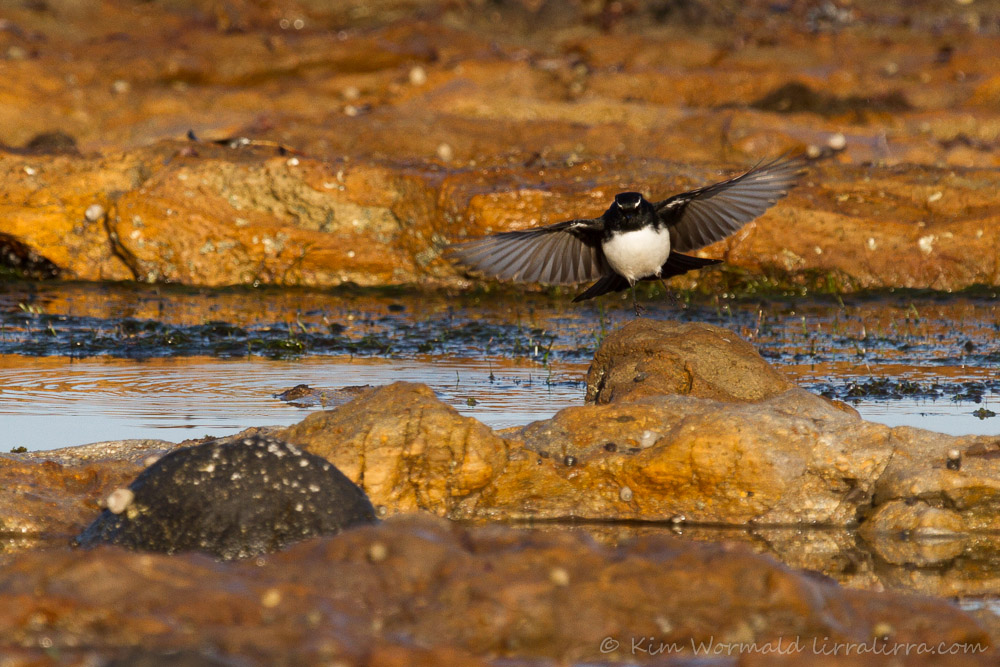
Foraging amongst the rockpools above, and amongst beached seaweed below.
.
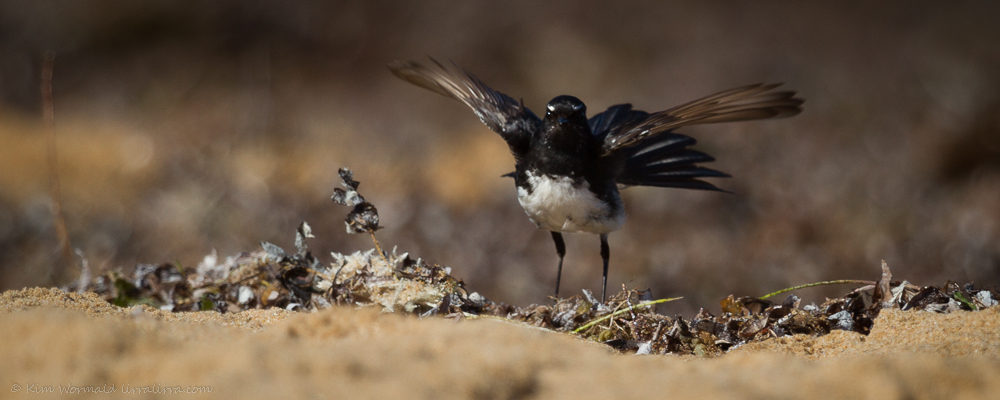 Willie Wagtail
.
Willie Wagtails are in the same family as Grey Fantails and Rufous Fantails. They are about 20cm in length with a weight of about 20g. They nest at any time of the year and usually lay three eggs.
.
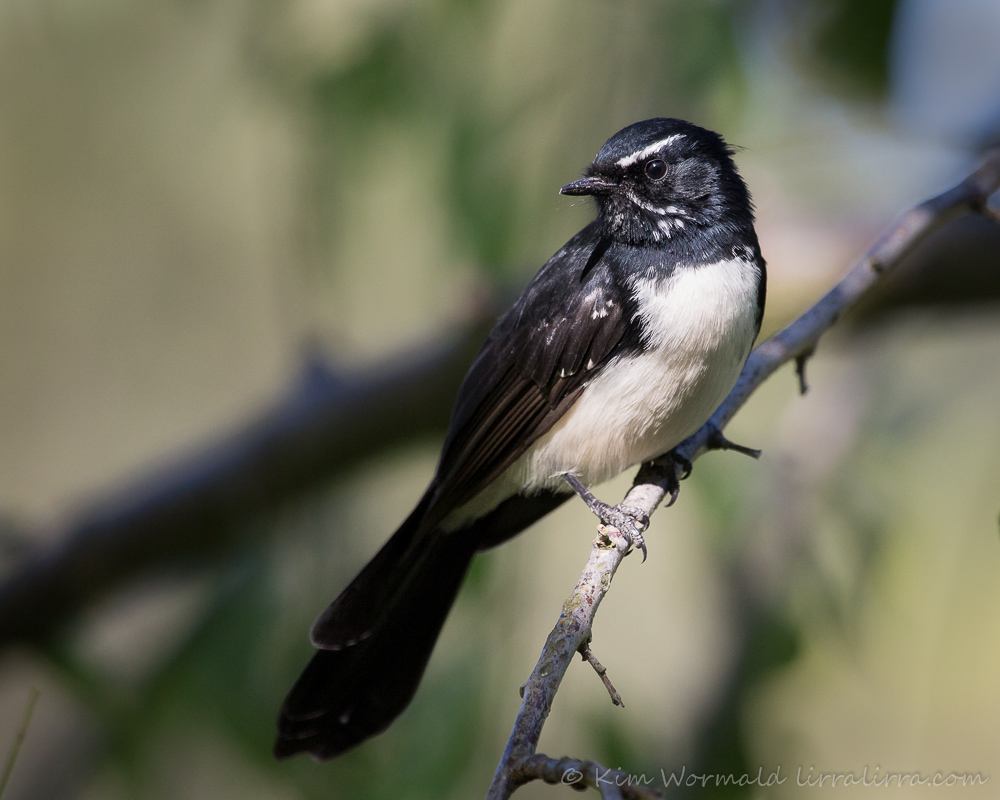 Willie Wagtail
There’s something cheerful about these noisy little tail waggers. They feature strongly in Aboriginal culture where they are often believed to eavesdrop on conversations and pass on what they hear. ‘Aboriginal Words and Place Names’ by AW Reed lists several words for Willie Wagtail including: tityarokan, mugana, jenning-gherrie, deereeree and gumalkoolin. A name I am more familiar with is tjinjiri tjinjiripa, pronounced almost ‘gingery gingerypa’; I’ve been known to whisper things to Willie Wagtails that I’d like to have spread around!
Happy birding, Kim
Thank you for your visit and comments.
If you’d like to receive a weekly email informing you that lirralirra has been updated please add your email address to the ‘subscribe’ box above right.
