It’s not every day you see a lifer, especially so close to home. Watching White-winged Black Terns being chased by Welcome Swallows was perfect after last week’s upsetting morning.
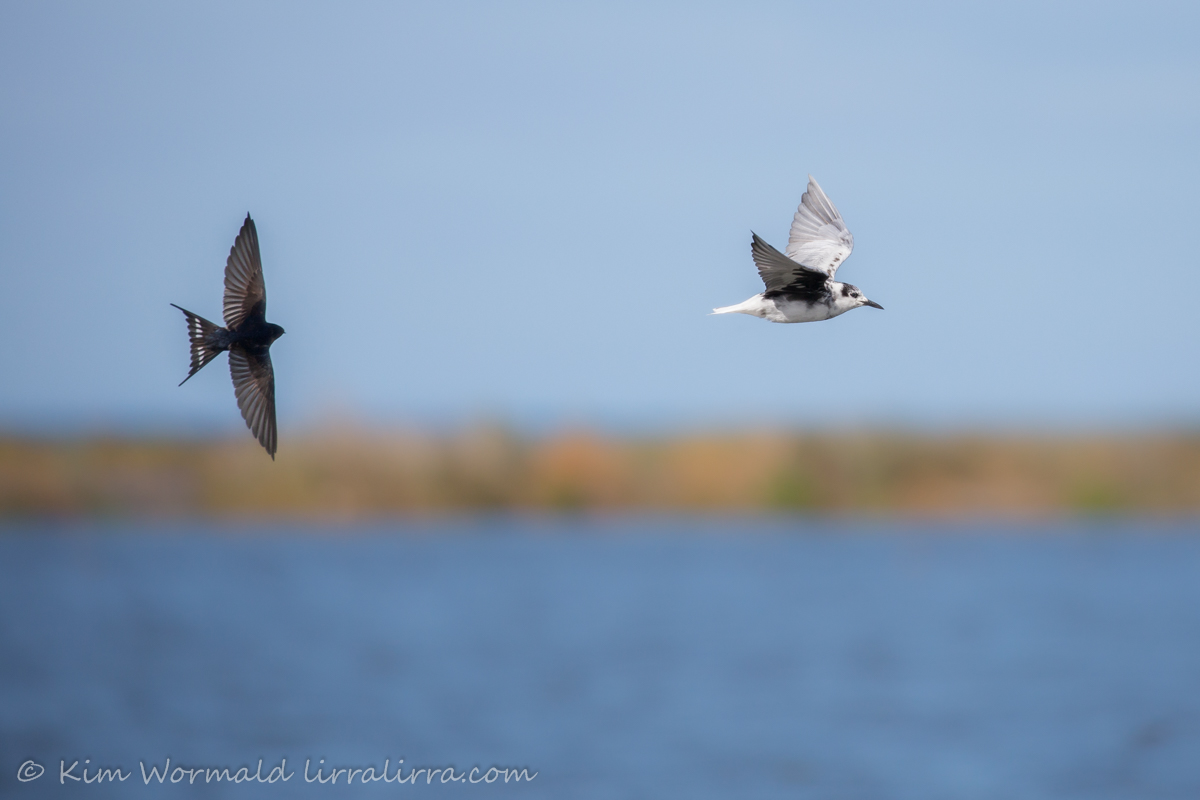
Welcome Swallow, White-winged Black Tern
White-winged Black Terns are the smallest of the marsh terns and measure 20-24cm, compared with 15cm for a Welcome Swallow. Both species hunt for insects on the wing but the terns are also known to dive just below the surface of the water. These terns and the swallows have similar fast, acrobatic flying patterns that made it tricky to focus on them as they zoomed across the sewage ponds.
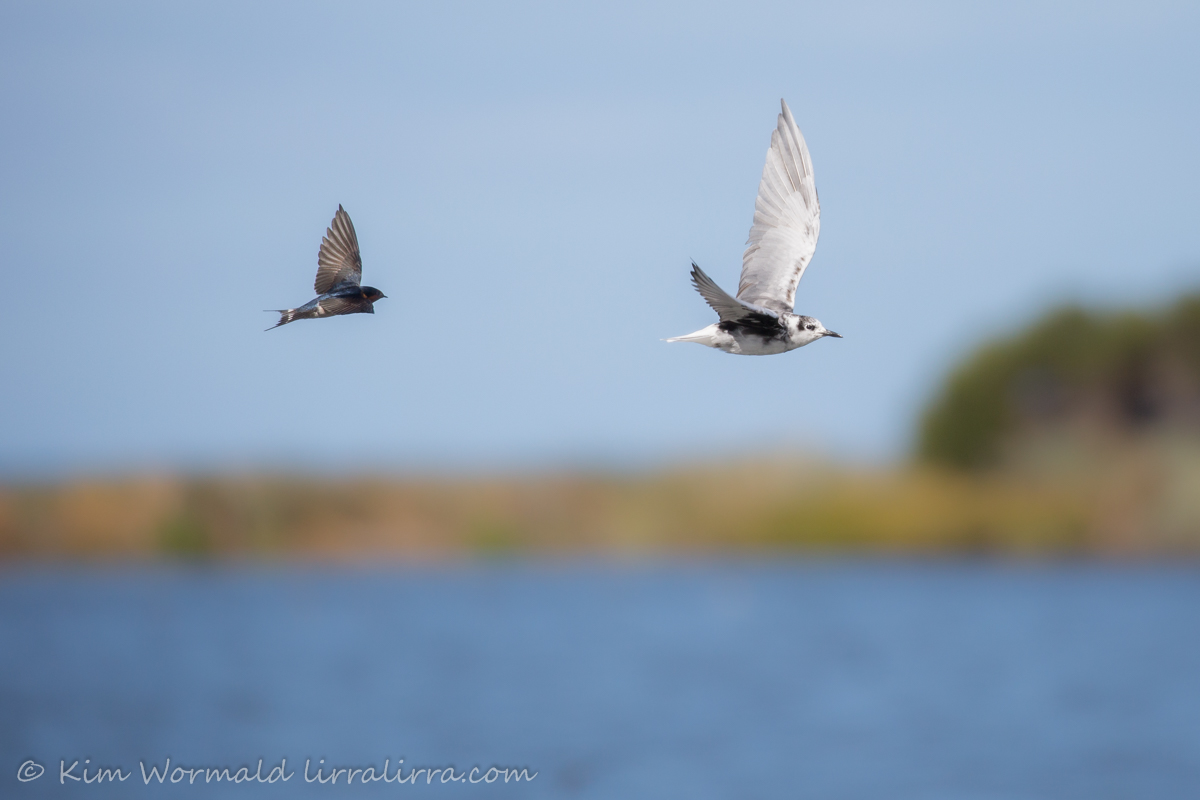
Welcome Swallow, White-winged Black Tern
White-winged Black Terns were listed as Near Threatened in Victoria in 2013, Birds in Backyards say they are ‘not present’ in Victoria, while Birdline Victoria lists several sightings which I was pleased to note before I started doubting my ID. There are a few sightings recorded in the New Atlas of Australian Birds and most of those were in northwest WA but the government environmental site says that tens of thousands used to over-winter in Australia during the 1980s and 1990s. If anyone can help with recent figures I’d be grateful.
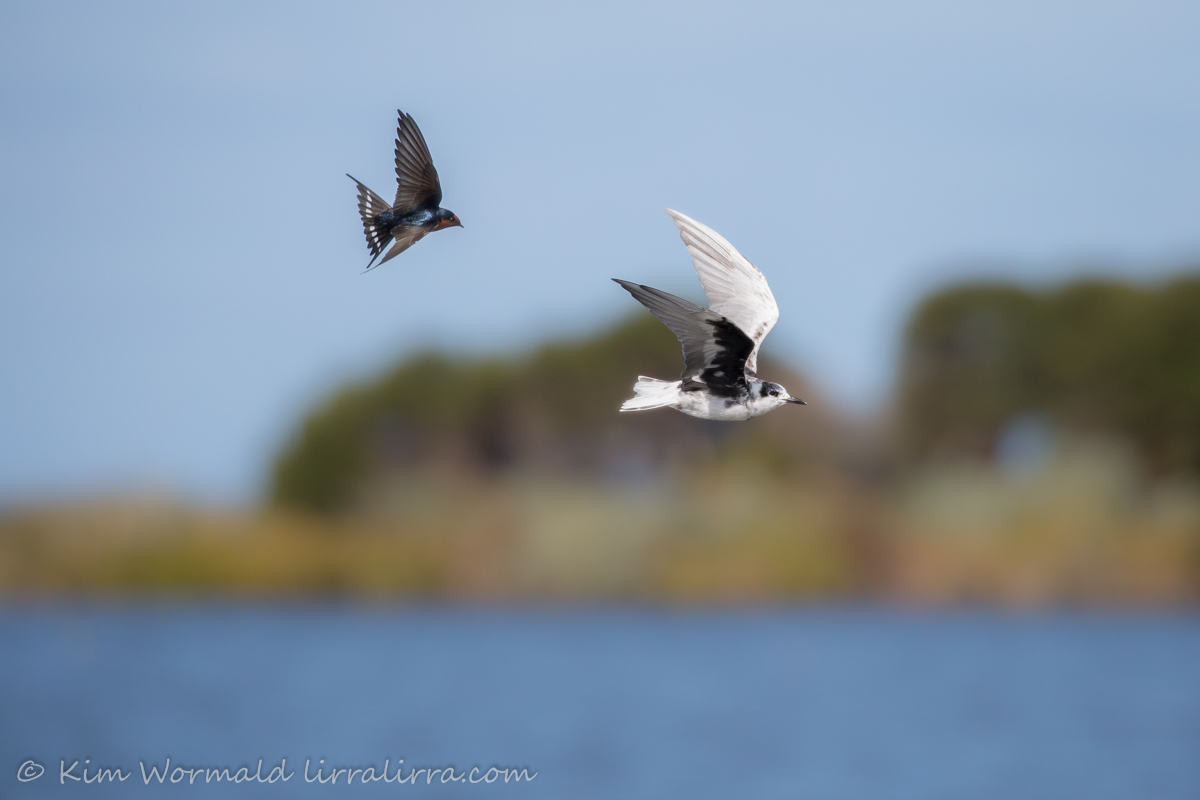
Welcome Swallow, White-winged Black Tern
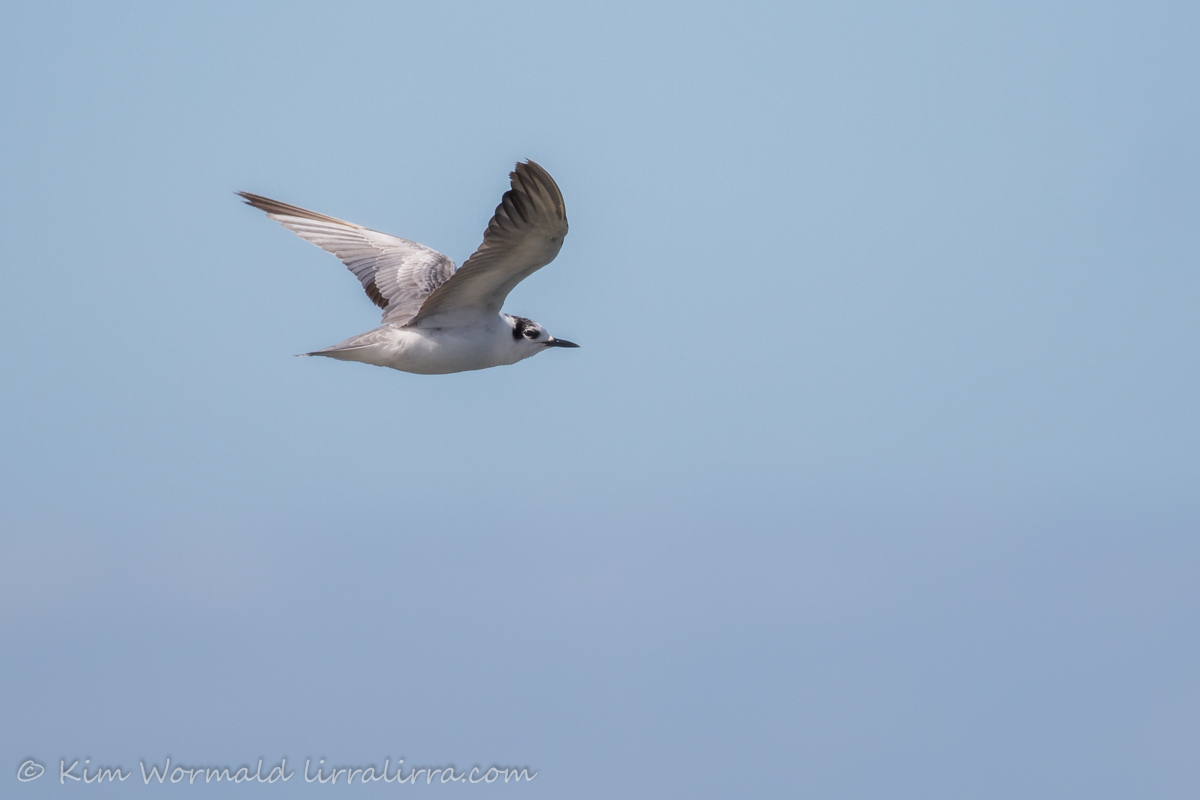
The White-winged Tern in the series of images above is beginning to darken into its breeding colours before migrating to the northern hemisphere to breed. The non-breeding plumage is predominantly grey with whitish plumage beneath the wings.
White-winged Black Tern
I think the bird above could be a juvenile as its upper wings appear quite dark and mottled, its rump is grey and the outer primaries are black. Adult birds in non-breeding plumage look similar but are paler on their upperparts.
 White-winged Black Tern
Seeing the White-winged Black Tern colouring up nicely was a treat; what a spectacular little species.
White-winged Black Terns
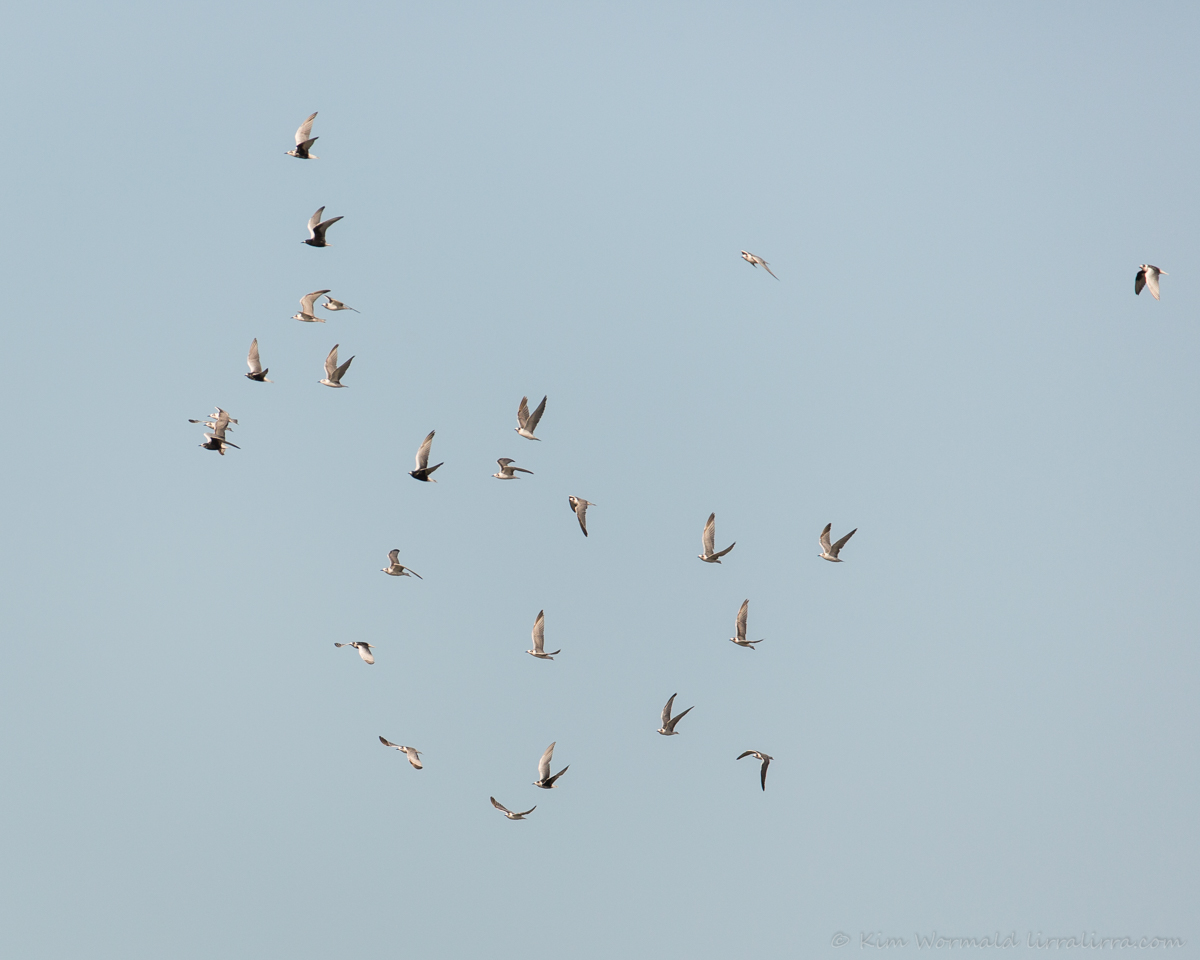
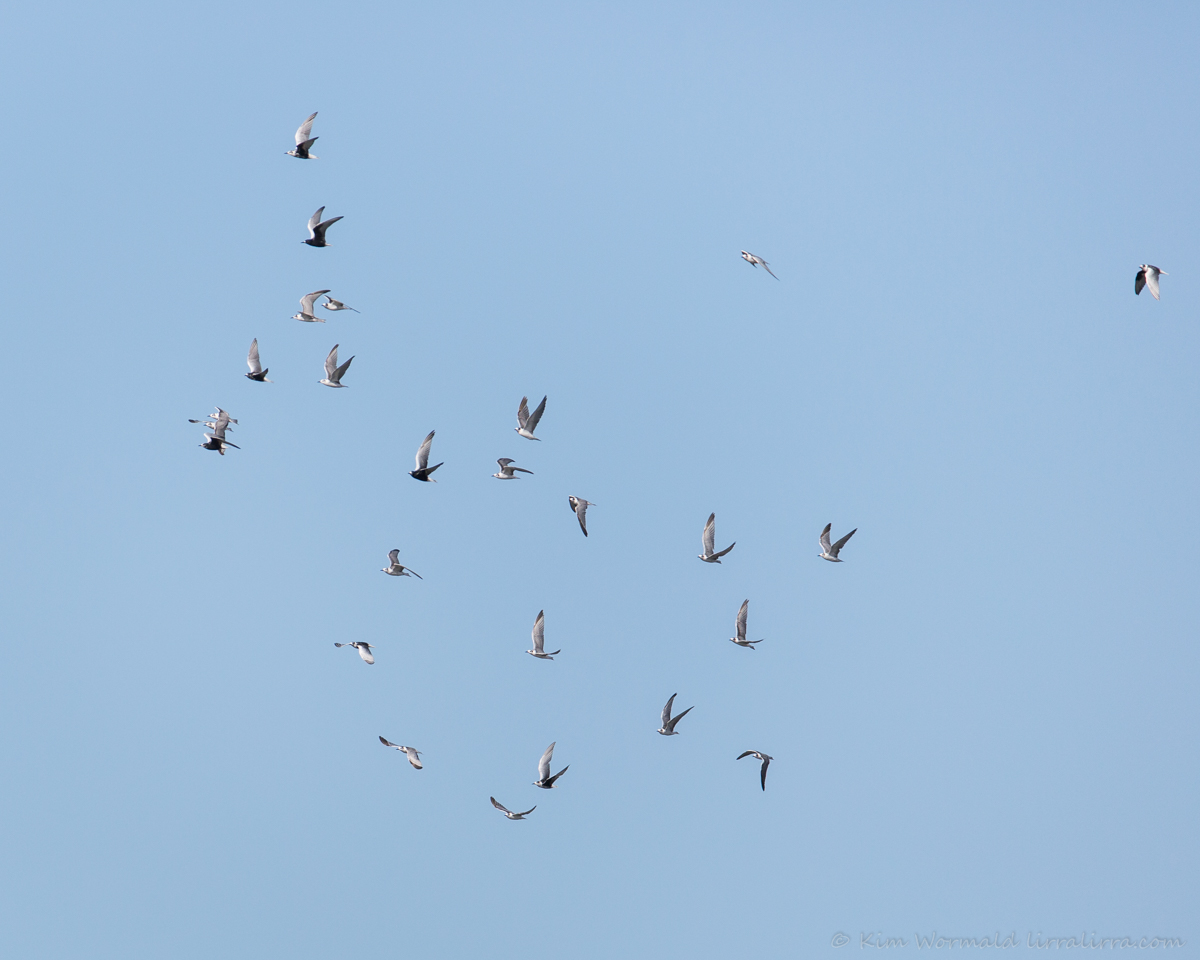
After a few minutes the terns tired of being hassled by Welcome Swallows and the birds that had been foraging across a couple of ponds gathered together and left the area. I was glad to get a shot of the group as they flew and the chance to look at the variances in their breeding colours. Hopefully they’ll have a successful breeding season somewhere between central Europe and eastern China and they’ll be back later in the year.
My heartfelt thanks to everyone who cares about native waterbirds and who wrote to politicians, contacted me, liked, shared and tweeted regarding last week’s post. I hope our government continues to hear from people who care and that it soon puts itself on the right side of history and bans recreational duck shooting in Victoria.
Happy birding, Kim
PS Some updates have been made to lirralirra during the past week. Most pleasing is that the ‘previous/next’ post buttons (above the title) are now working. Many thanks to Joy from feralart for her help – check the links page if you need help with community book design or similar projects.
~ Thank you for your visit and comments.
~ If you’d like to receive a weekly email informing you that lirralirra has been updated please join the growing list of subscribers and add your email address to the ‘subscribe’ box above right.