Barn Owls and blood moons are both mystical and magnificent and it seems right to share these images in the same post.
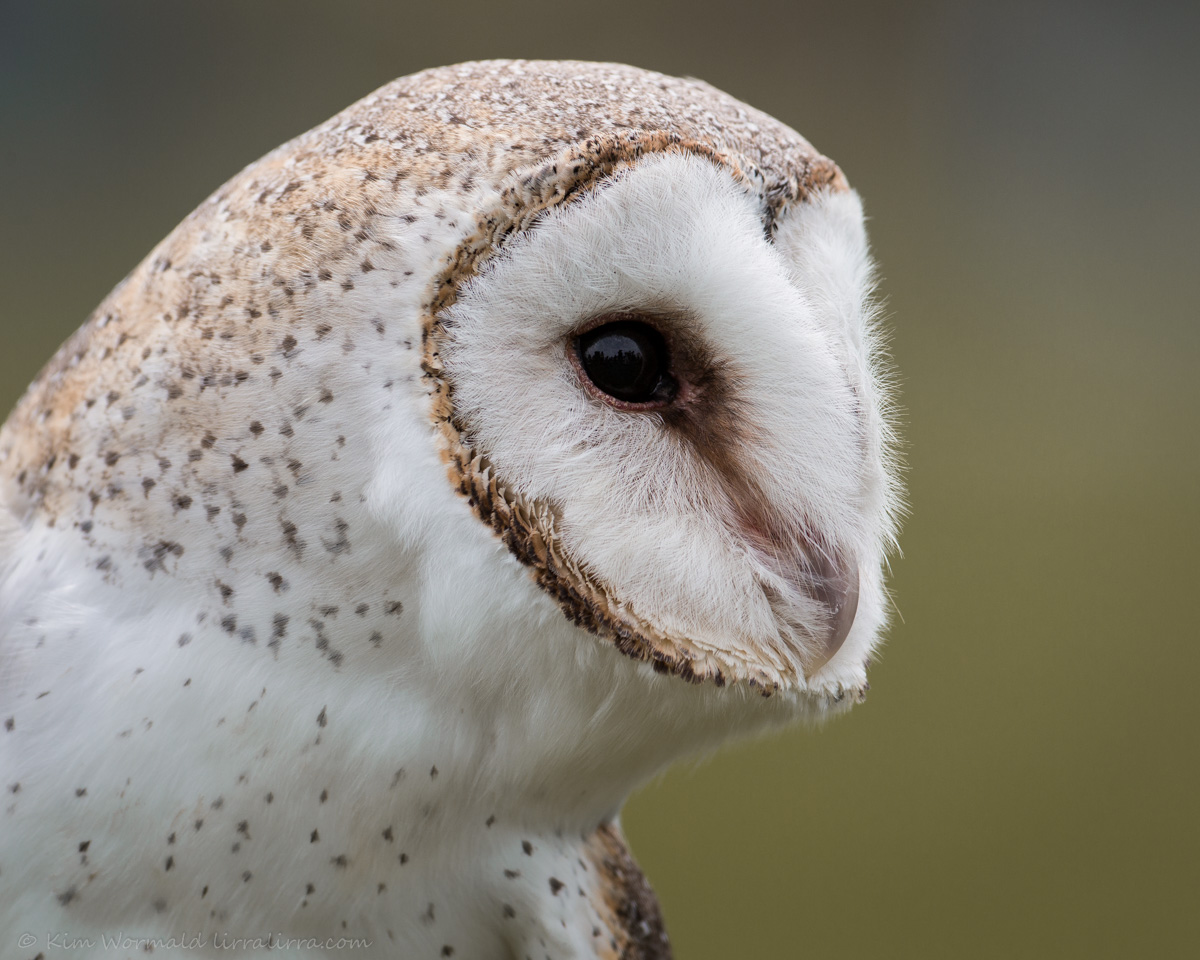 Barn Owl (Tyto alba)
Barn Owls can be found across Australia and are believed to be the most widely distributed land-based bird in the world with their presence known in each continent apart from Antarctica. They used to be common but are under threat in parts of Europe and the USA as habitat loss and secondary poisoning from rodenticides take their toll. They roost in dense trees and I’m sure they see us more often than we see them. I have seen them flying at night when the whiteness of their feathers is exaggerated and they look breathtakingly magical. They measure about 30-40cm and hunt in flight, locating prey with their exceptional hearing and offset ears that enable them to precisely pinpoint prey even in complete darkness.
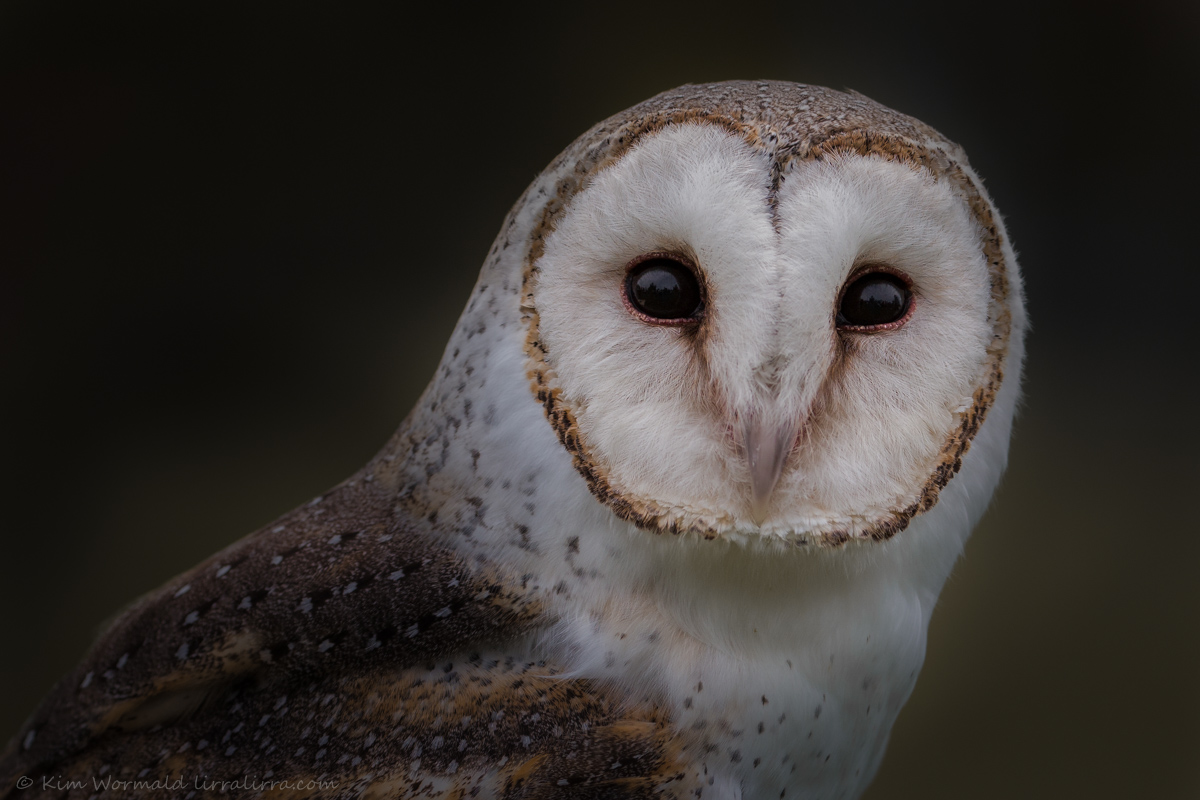 Barn Owl (Tyto alba)
Like all birds of prey Barn Owls have an intense stare that makes me glad I’m not a mouse. The sandy, spotty plumage of Barn Owls is striking while the heart-shaped facial disk is endearing but also useful as it channels sound towards the owl’s ears. Owls fly in silence with slow wing beats. The leading and trailing edges of their feathers are ‘fringed’ which reduces the noise made by their wings to a level that is undetectable by people and prey.
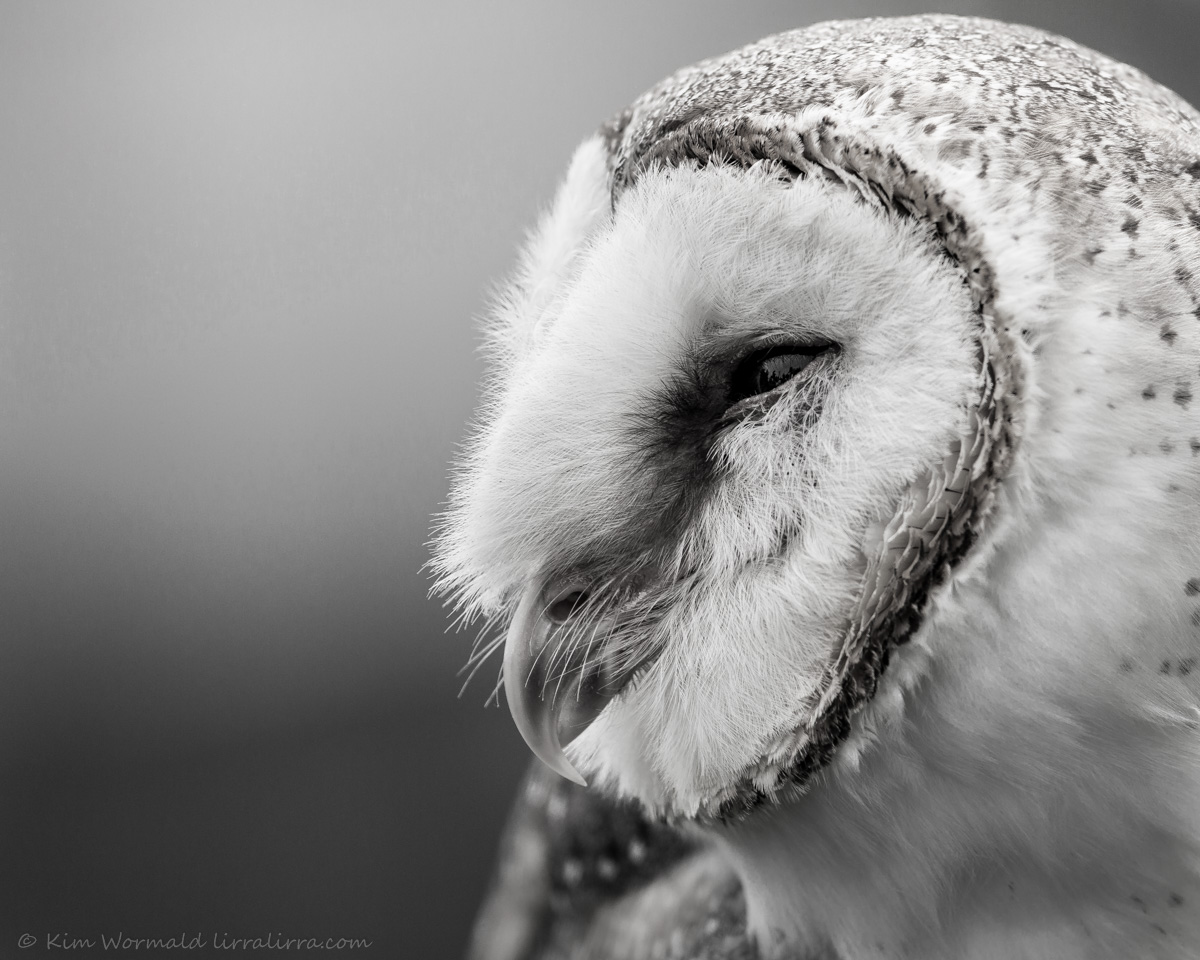 Barn Owl (Tyto alba)
I experimented with a monochrome owl image, sometimes I like it but I miss the rich colours that make the Barn Owl such a distinctive bird. Barn Owls breed whenever conditions are suitable, which could be the only positive aspect of a mouse plague. They usually raise between three and six young but broods of up to twelve have been recorded – the sight of twelve little fluff balls would be seriously cute.
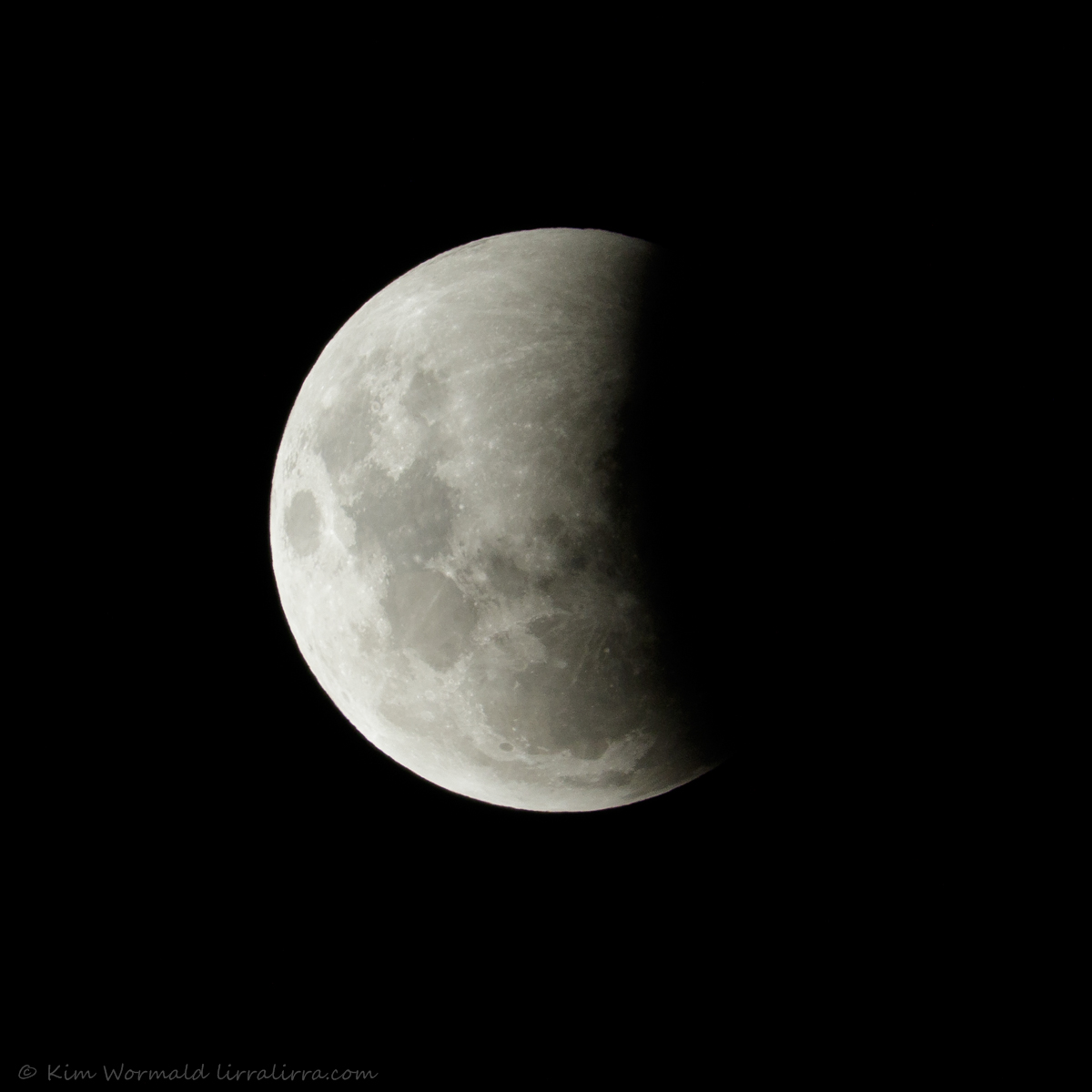 The lunar eclipse 1 – April 2015
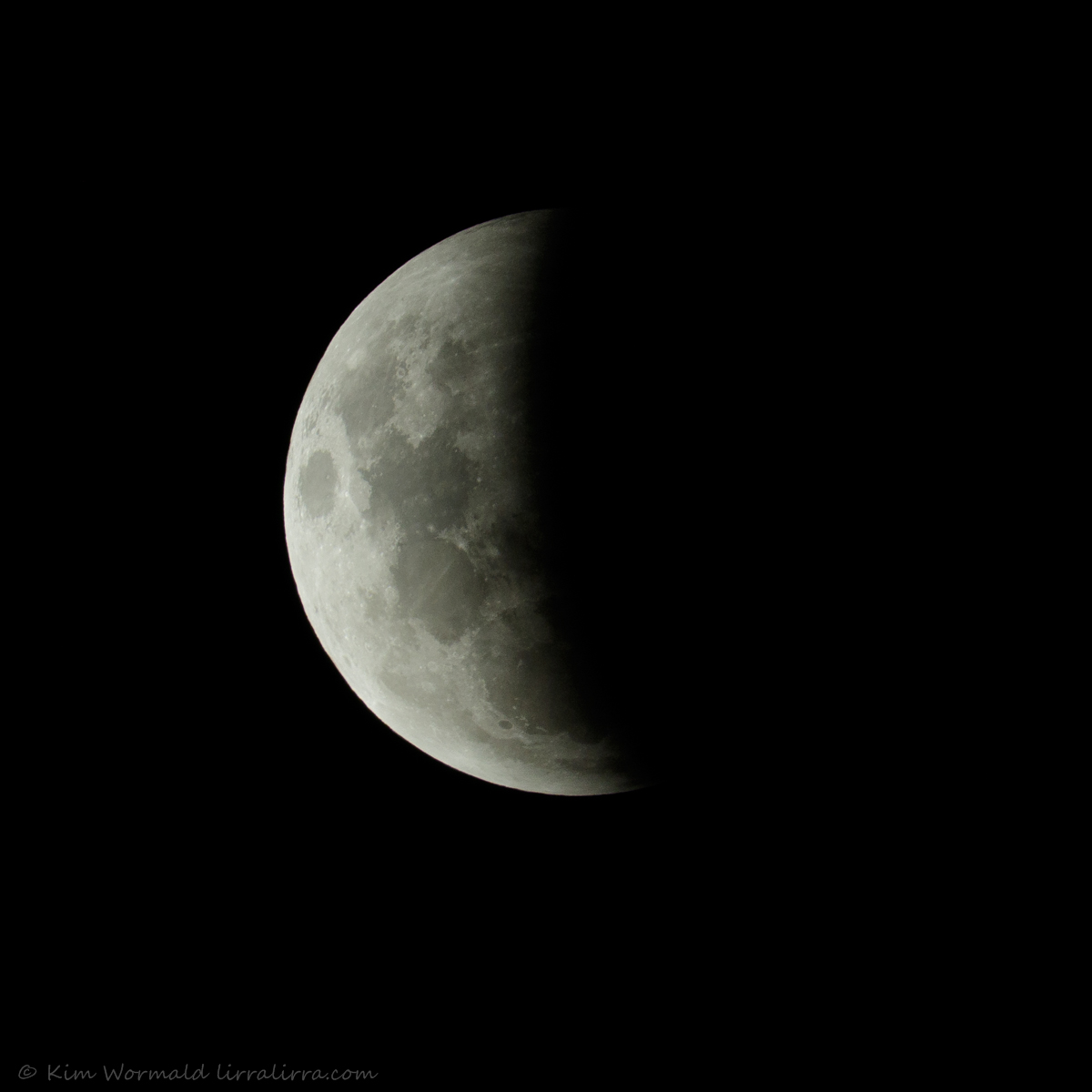 The lunar eclipse 2 – April 2015
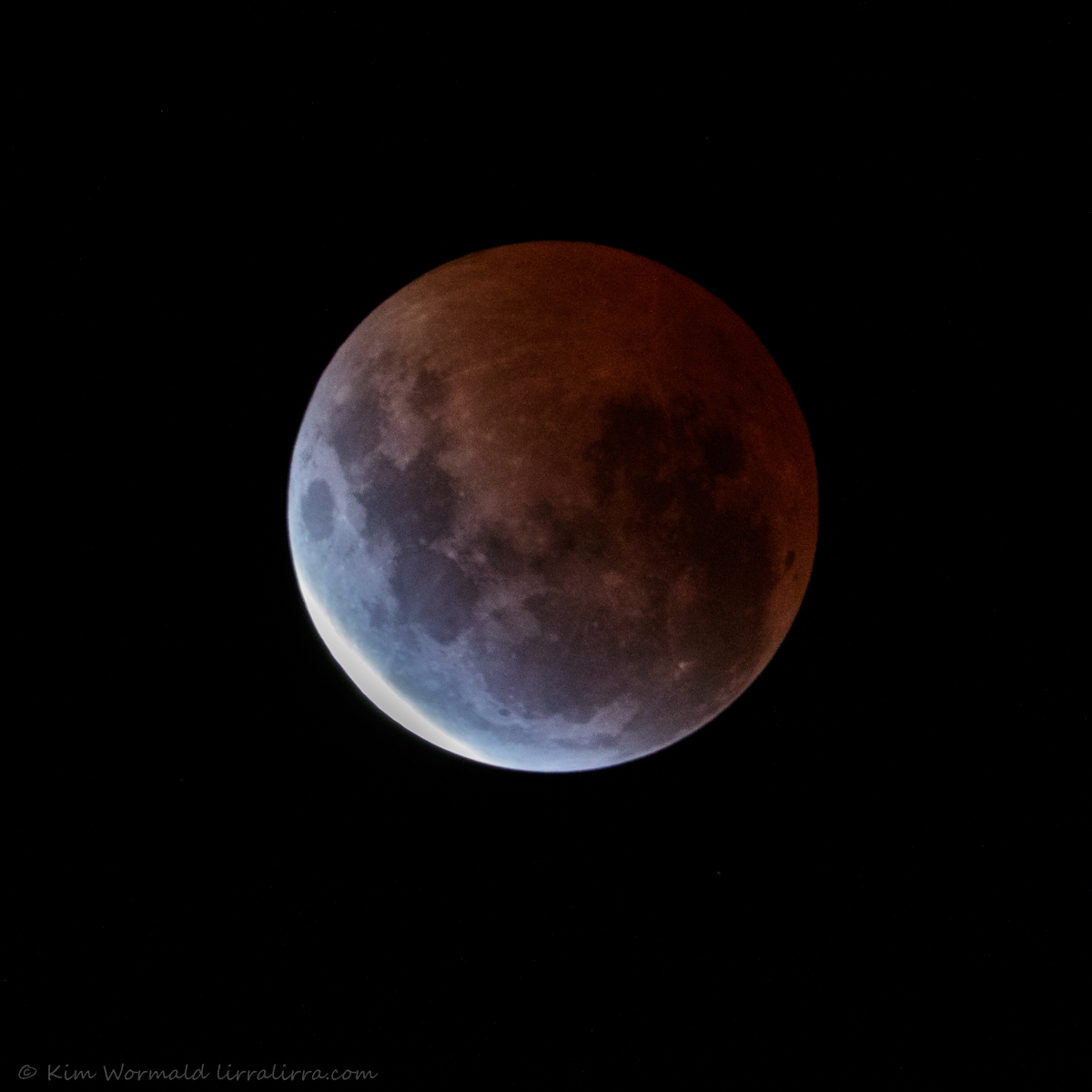 The lunar eclipse – Blood Moon – April 2015
With the sun, the Earth and the moon in alignment the Earth cast its shadow on the moon which gradually became red as it was lit by light scattered by the Earth’s atmosphere. It would have been stunning to see an owl fly in front of this moon.
Happy birding, Kim
Duck Shooting update: Last weekend I went out with the wildlife rescuers and had the sad experience of photographing birds that had been shot, including a Whistling Kite, Australian Pelican and coot. I met with James Merlino MP on Tuesday and presented information about the social and environmental cost of the duck shooting season. He listened with interest but apparently the issue is not currently being discussed by the ALP – what more can we do?
~ Thank you for your visit and comments.
~ If you’d like to receive a weekly email informing you that lirralirra has been updated please join the growing list of subscribers and add your email address to the ‘subscribe’ box above right.
