I have just seen my first hoodie chicks of the year – it was love at first sight and I’m sure you’ll understand why.
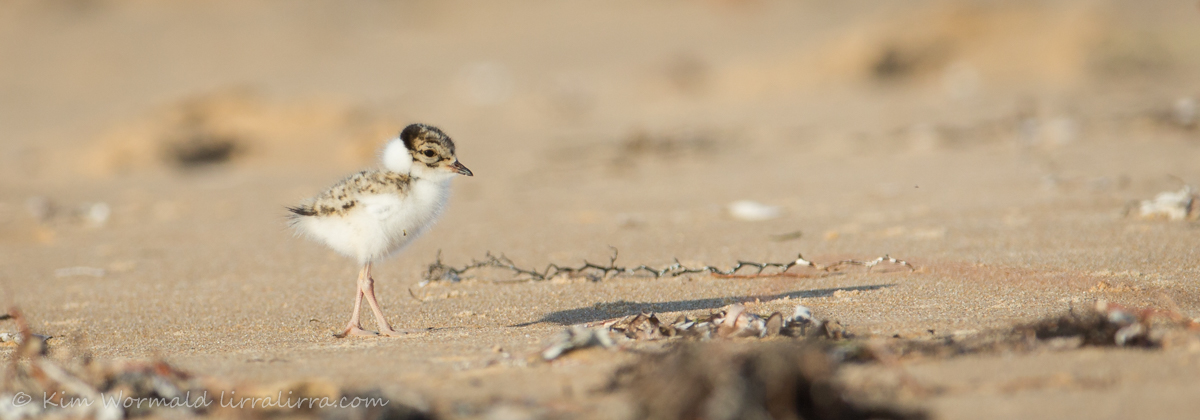
Hooded Plover chick – endangered on Phillip Island
I was 15m from this chick which was about the size of a ping pong ball, and moving just as rapidly as it darted to and fro while foraging. Hooded Plover nests are a shallow scrape in the sand created by the parent birds. Female hoodies typically lay three tiny eggs that are incubated for four weeks before hatching. This little sweetheart and its siblings were about one week old when I saw them racing along the beach like tufts of rabbit fluff scudding in the breeze.
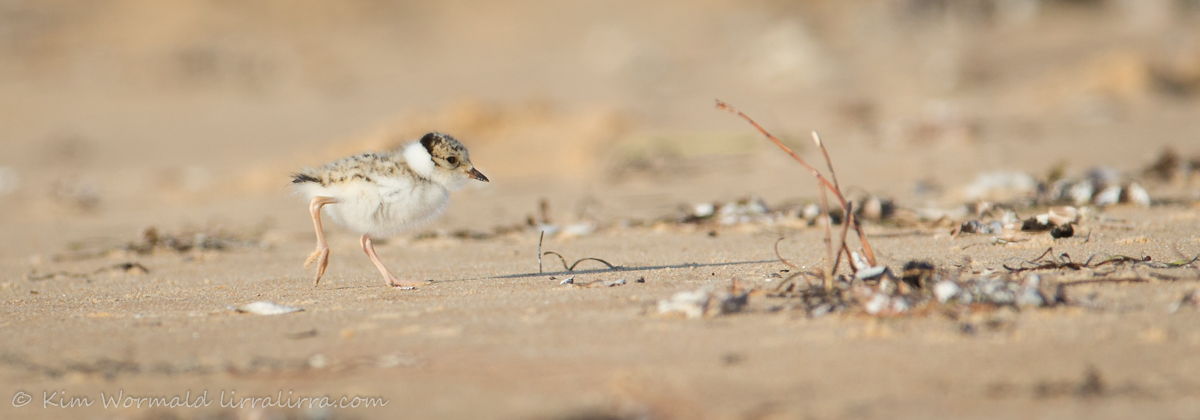
Hooded Plover chick – endangered on Phillip Island
It’s remarkable that something so tiny can run so quickly, those sturdy, long legs are perfect for sprinting.
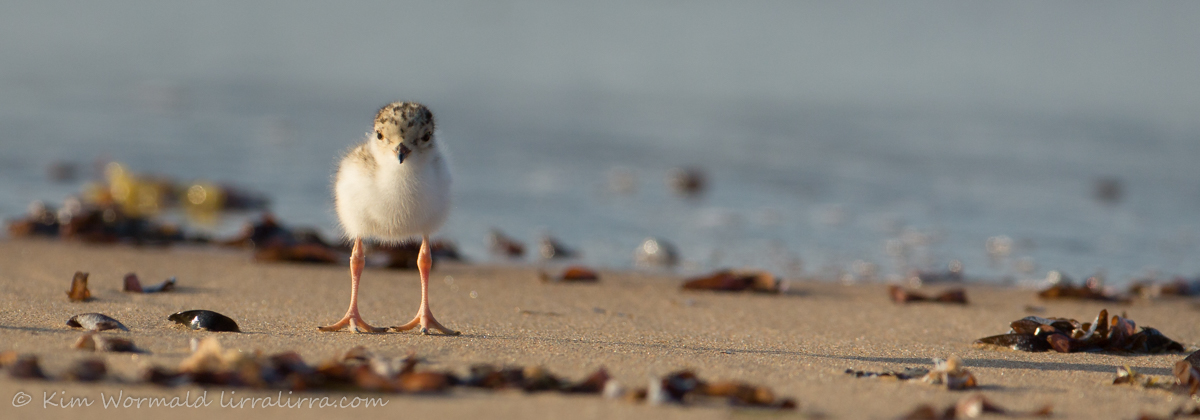
Hooded Plover chick – endangered on Phillip Island
The specks of seaweed in the images above and below would be best photographed with a macro lens, this is a world of miniature.
These tiny chicks forage for themselves, the parent birds are watchful and protective but never feed their chicks.
Even the parent birds are hard to spot on a beach but if you do see one and its running from you, as though leading you along the beach, follow it as it could be leading you away from the possibility of injuring chicks. The chicks, and sometimes the adult birds, flatten themselves to the sand when they are concerned. This makes them almost impossible to see, so please be careful to watch every step you take.
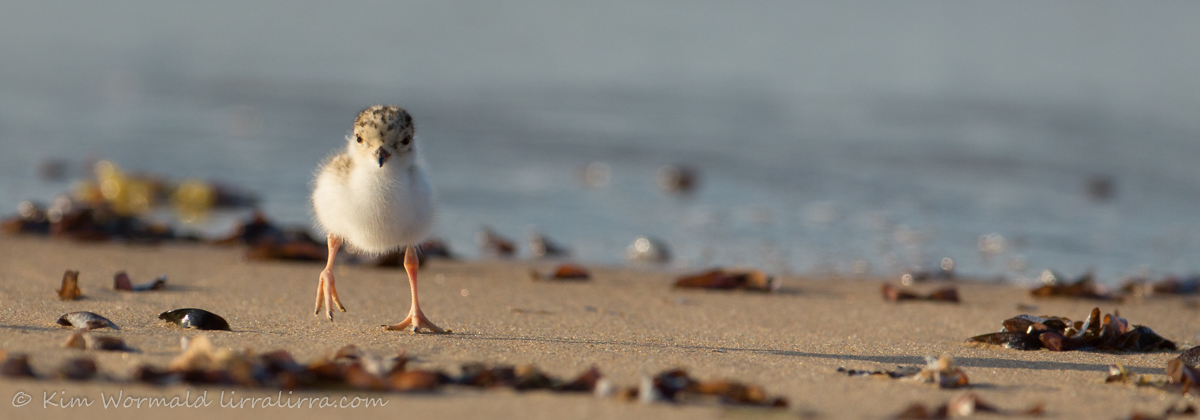
Hooded Plover chick – endangered on Phillip Island
When I first arrived at the beach with Sue we saw a magpie lurking too close to the chicks for comfort; we were relieved when it flew away. Hoodie chicks are extremely vulnerable for their first five weeks as they are unable to fly. Off-leash dogs are a major threat; owners wouldn’t even know that their dog had scooped up (or trodden on) a tiny bundle of fluff. The mere fact of people being on the beach can mean that the chicks go to ground for so long that they die of exposure or starvation. It’s great that Sue and many other dedicated volunteers and rangers patrol the beaches to ensure that beach-users and dog-walkers are given information about hoodies and are aware of the regulations.

Hooded Plover chick – endangered on Phillip Island
Hopefully this little chick will get to flap those wings in four weeks time and keep itself safe.
I returned to the beach before sunrise the following morning with my cousin. We watched the chicks but they foraged away from us and I didn’t want to disturb them by trying to get more images.
Two groups of dog-walkers turned up that morning and both were delighted when I showed them the hoodies. Both groups spontaneously decided to turn around to avoid disturbing the foraging chicks – what awesome people! One gentleman was adamant that the beach should be closed to dogs during the Hooded Plover nesting season – now wouldn’t that be a brilliant idea.
Happy birding, Kim
~ Thank you for visiting and commenting
~ If you would like a weekly email letting you know that lirralirra has been updated please use the ‘subscribe’ box above right
PS A couple of weeks ago a comment from Alison pointed out that if you are looking at lirralirra on a phone you can click an image to see it without it being obscured with text – thanks Alison!
