I stalked a group of pelicans: they were at a lake rather than the beach and they looked awesome with the dark background. I took several photos and checked the images on screen before realising some of them had pouches that looked as though they had been painted by a child with a wonderful imagination.
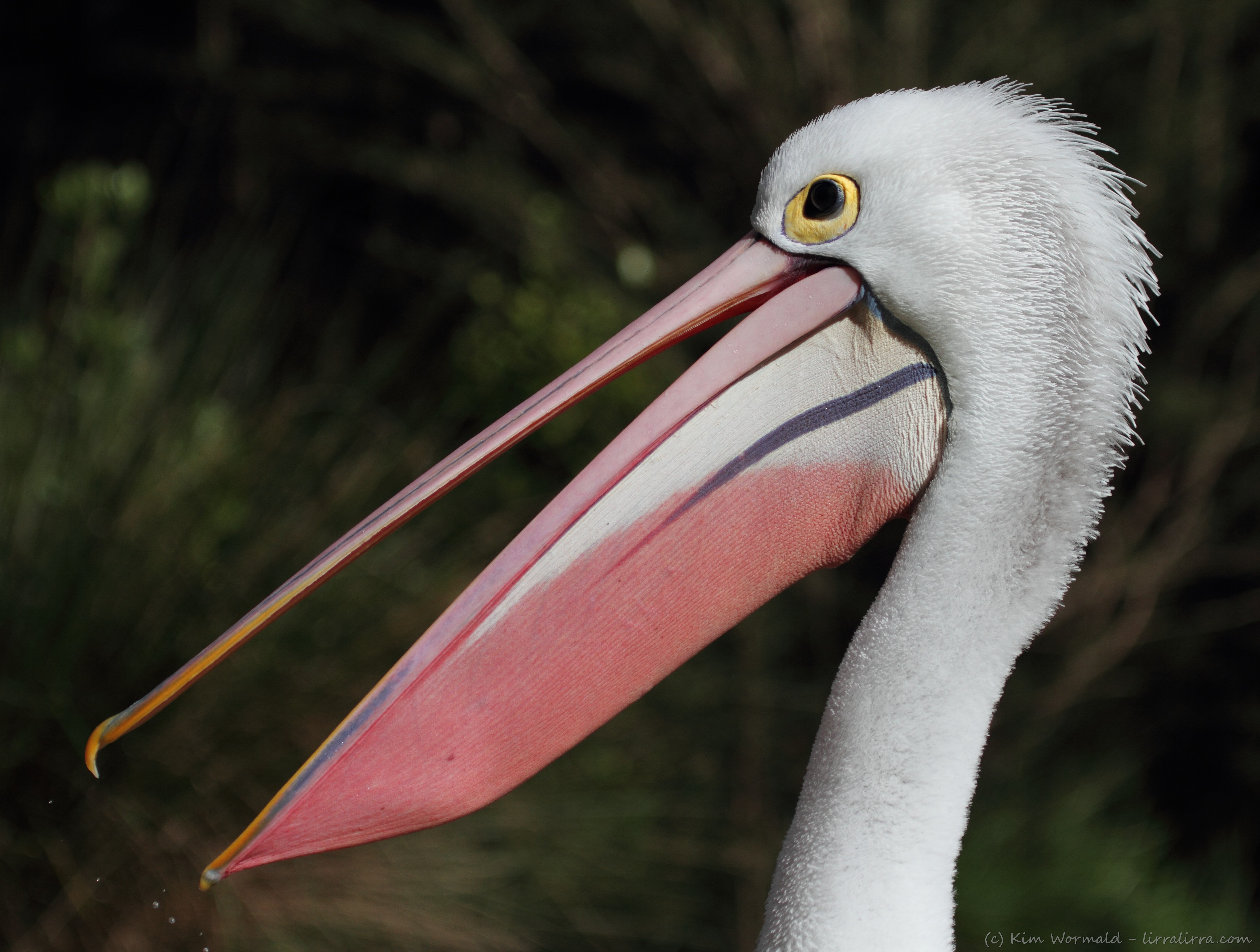 Australian Pelican (Pelicanus conspicillatus) – in breeding plumage, or should that be ‘pouchage’
Pelicans can breed at any time of the year depending largely on rainfall. During the courtship period their pouches and bills become brightly coloured but fade rapidly once the deed is done. The clutch size is 1-3 eggs but the first hatchling is far larger than any others and can be the only survivor as it is not adverse to attacking and killing its siblings.
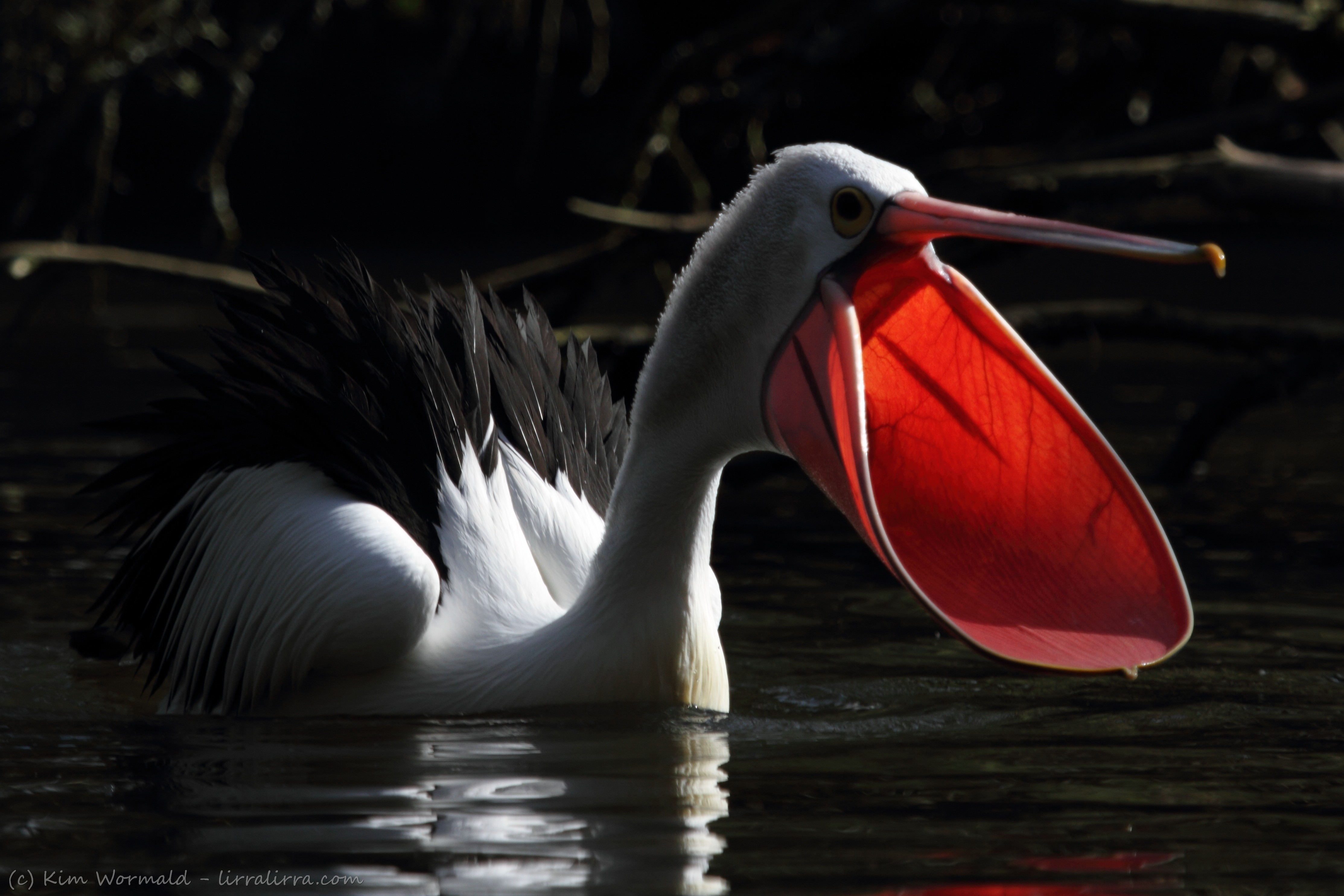 Australian Pelican
Pelicans can be quite intimidating and the size of that pouch makes me believe that stories of tiny dogs being taken could be more than urban myths. I like the way the lighting shows the pouch’s blood vessels and highlights the hook at the end of the bill.
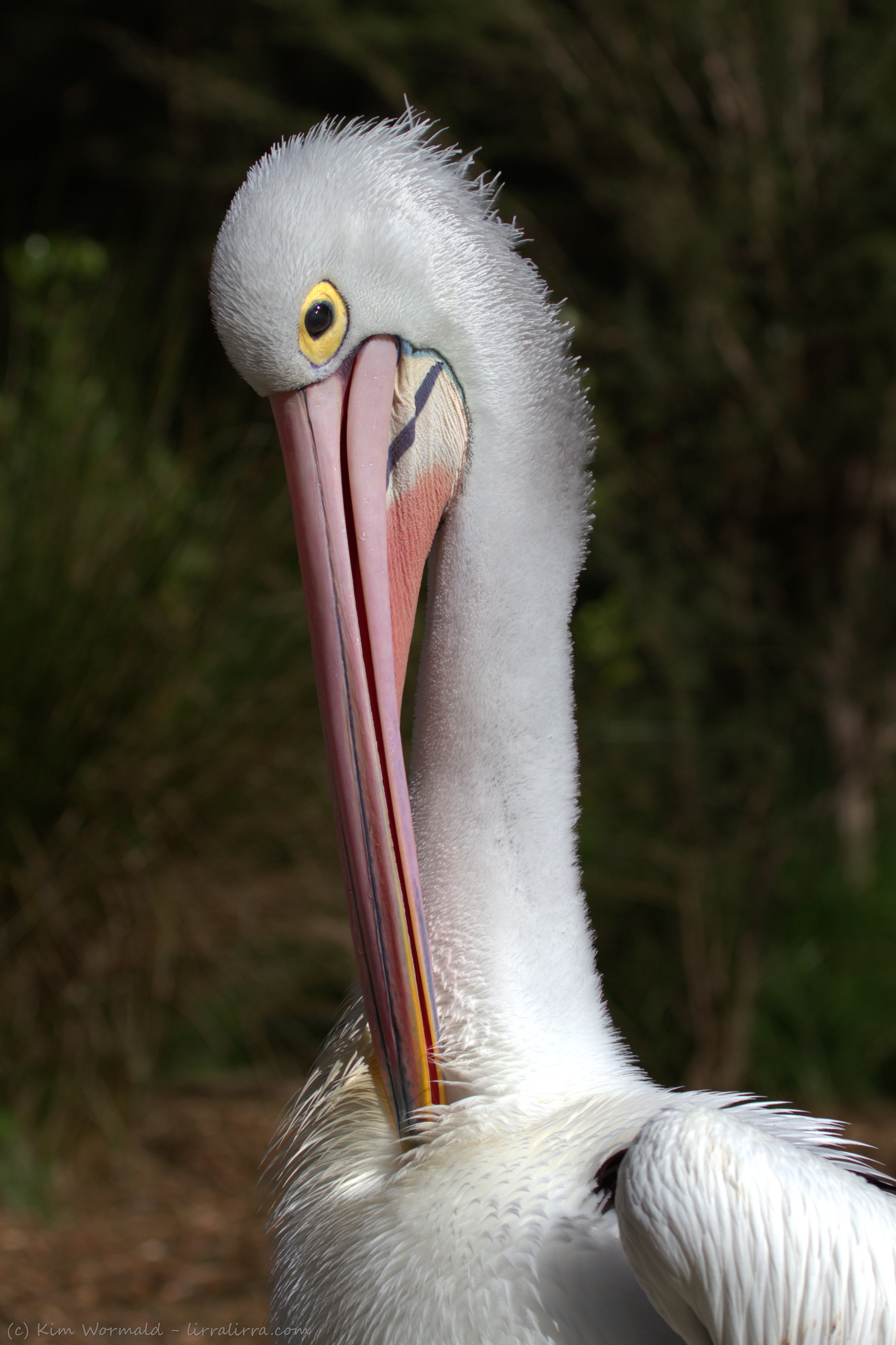 Australian Pelican
This pelican has two catch-lights in its eye, which is unusal unless there are two light sources used when the image is taken. I do not use a flash when photographing birds so was puzzled until I enlarged the image and realised that the upper catch-light is the sun’s reflection on the pelican’s eye and the lower light is the reflection on the pelican’s partly raised nictitating membrane, or third eyelid. As birds do not blink they rely on the nictitating membrane to clean and lubricate their eyes and to protect them from harsh light and strong wind – I could use a set of them myself.
Happy birding, Kim
