The Cape Barren Goose is one of the world’s rarest geese having clawed its way back from the brink of extinction during the 1950s. They live on off shore islands in southern Australia where they are still rated as vulnerable. They are striking birds growing up to 1 metre with wingspans of almost 2 metres.
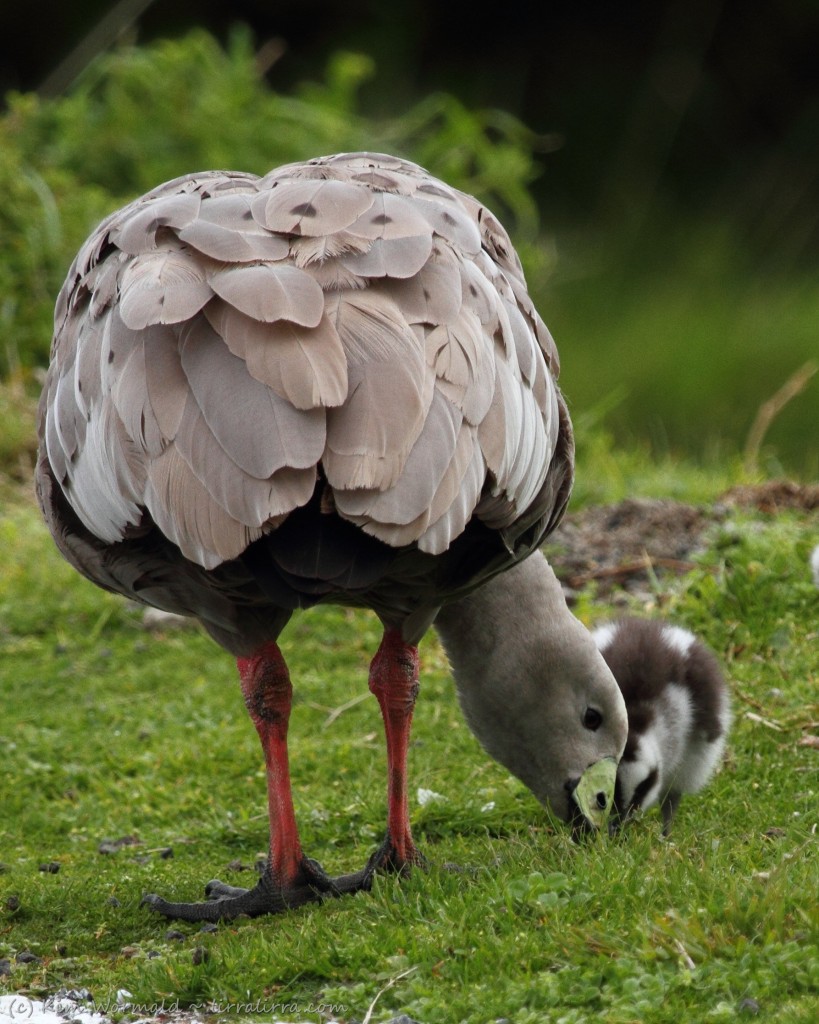
Cape Barren Goose (Cereopsis novaehollandiae)
Canon 7D, 100-400mm L IS USM, Av priority, handheld, natural light
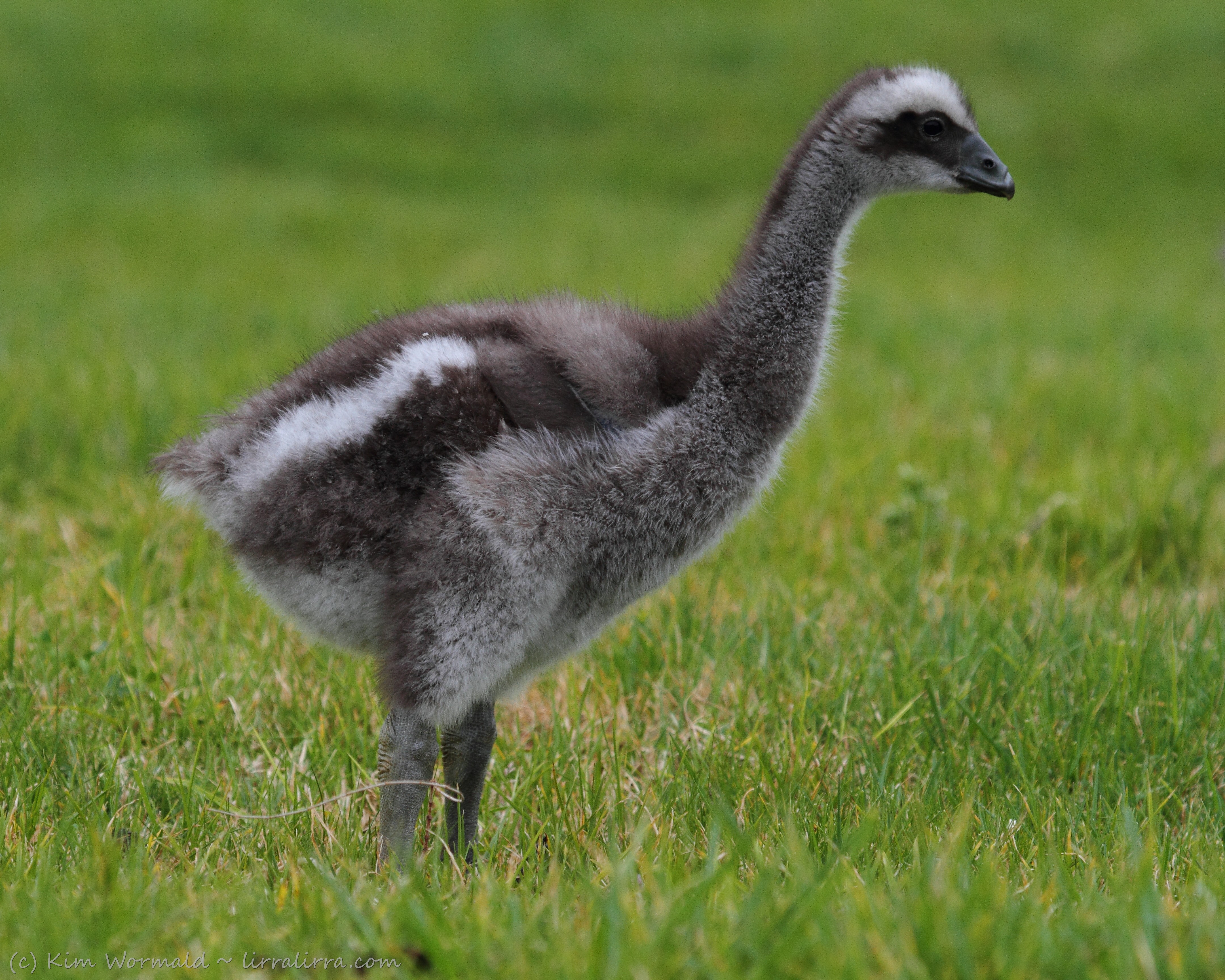
It’s hard to believe that this little fluff-ball, no bigger than its parent’s head, has the potential to grow into a massive goose.
 Cape Barren Goose
 Cape Barren Goose
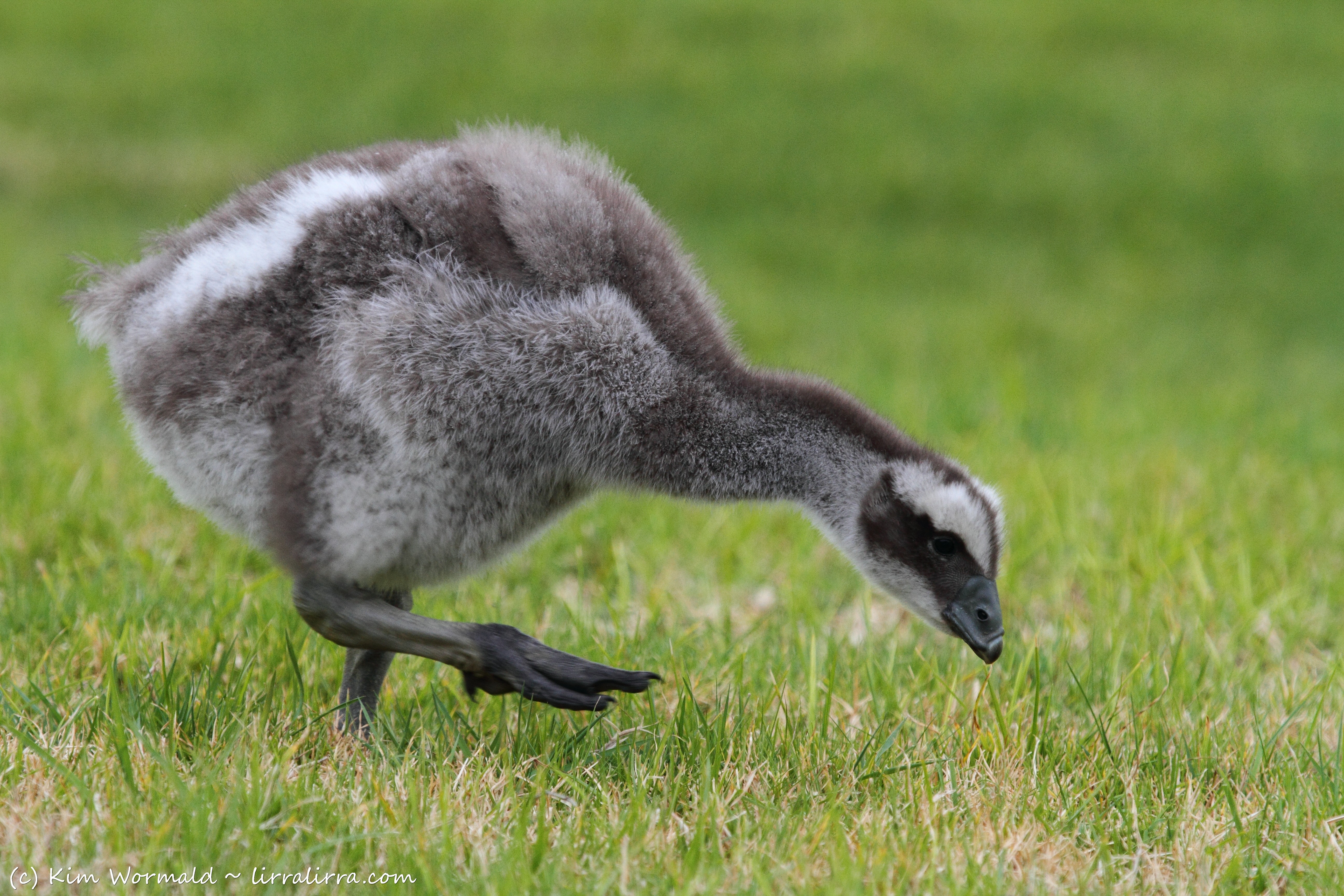
This gosling’s foot reminds me of a puppy with huge paws. Cape Barren Geese are grazers and this little fellow looks as though it has its eye on a tasty blade of grass. Sometimes when they are grazing they look more like goats than geese to me. As the goslings grow their legs turn to the pink/deep red colour of the adult birds’ legs, their feet remain black. Their ceres become bright greenish-yellow quite quickly and once their feathers sprout they will be predominantly grey with large black spots on their wings and shoulders.
 Cape Barren Goose
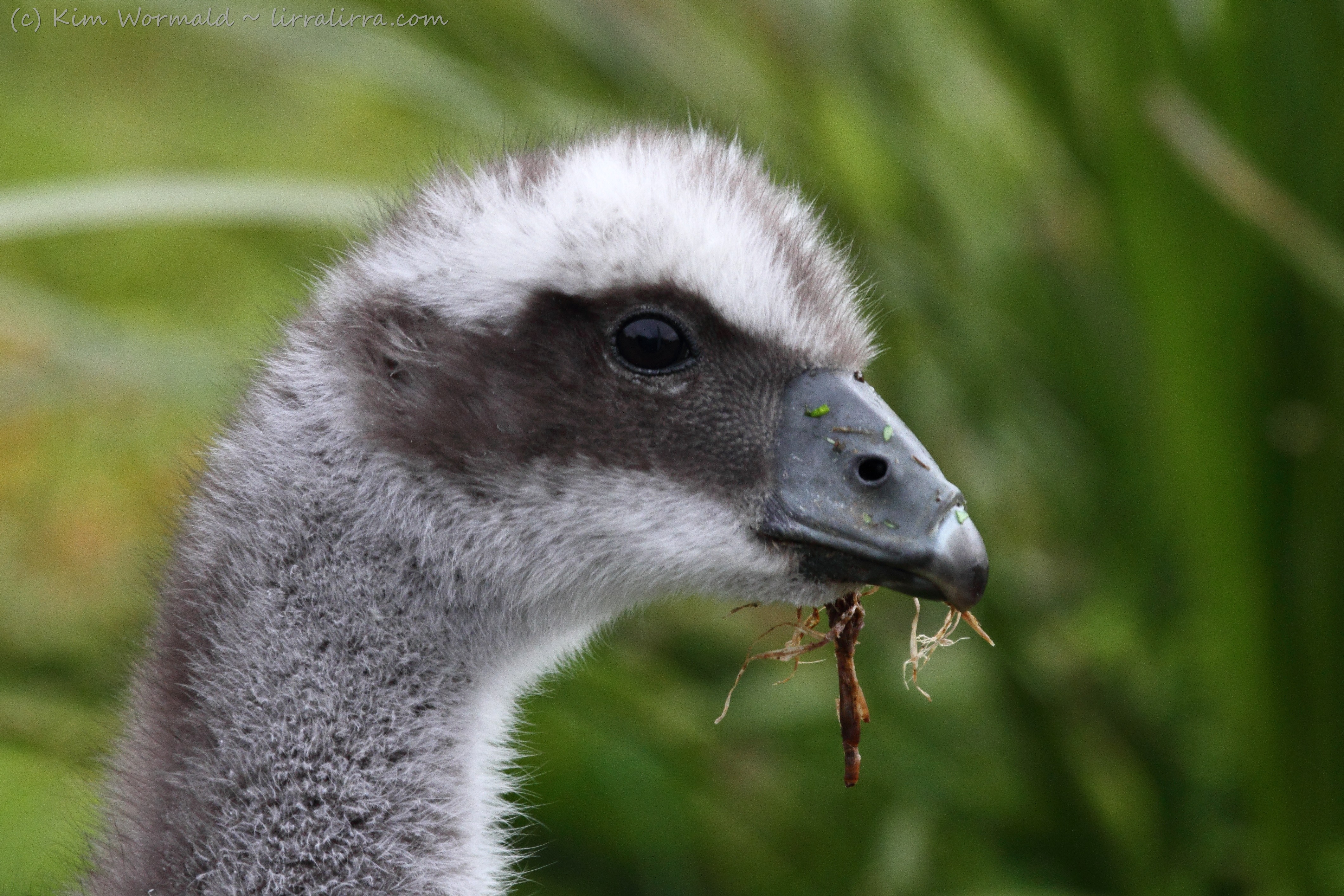
I can’t help but smile at the sight of this juvenile with food dangling from his bill and bits of grass on his cere.
 Cape Barren Goose
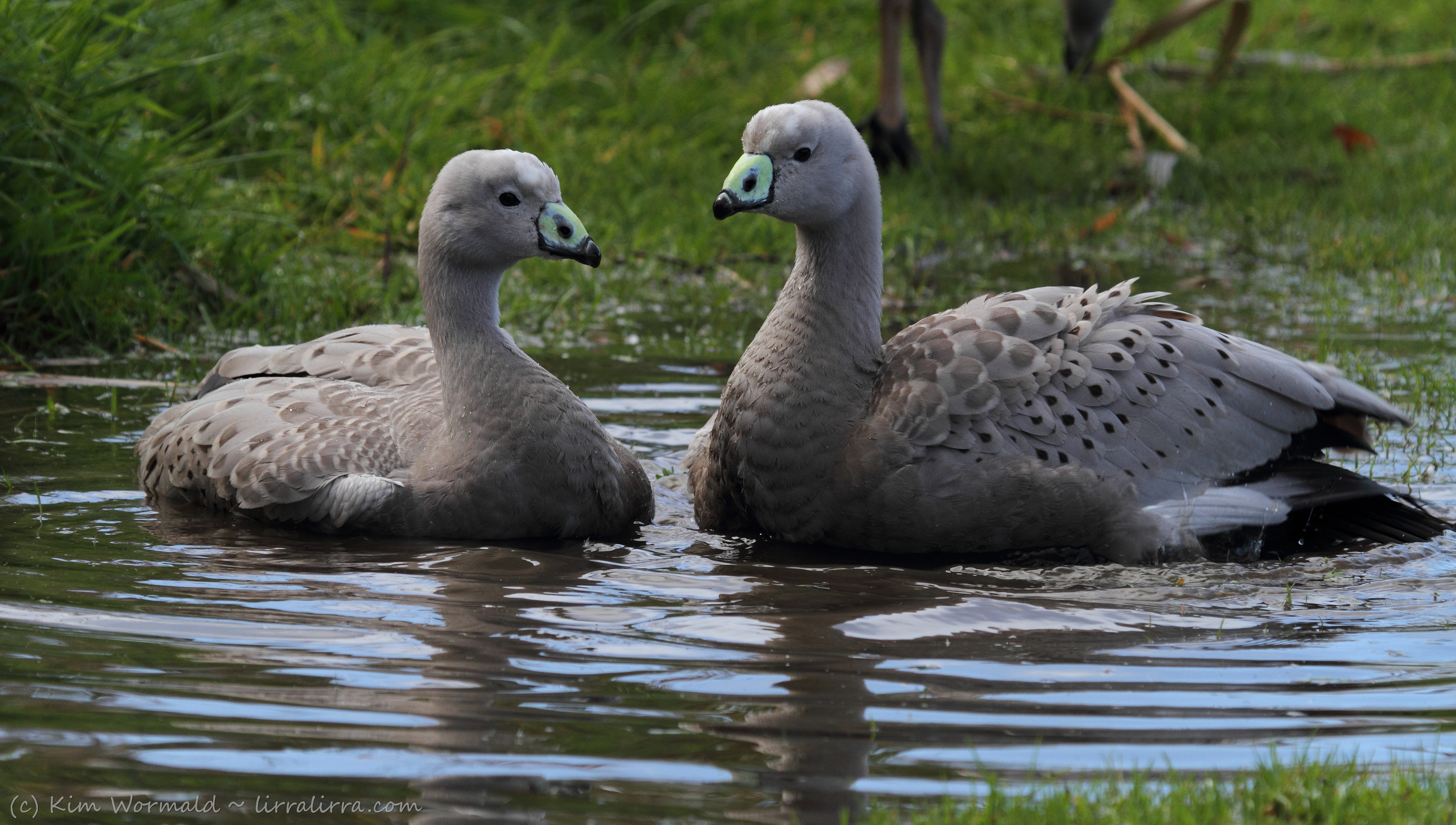
These juveniles were enjoying a swim in a puddle after having splashed around in it for the best part of an hour. The Cape Barren Goose swims only rarely, preferring to graze in paddocks, areas of tussock grass and heath-lands. I must be in a sentimental mood because I can see a heart shape formed by the necks and heads of these siblings.
Cape Barren Goose
Canon 7D, 100-400mm L IS USM, Av priority, handheld, natural light
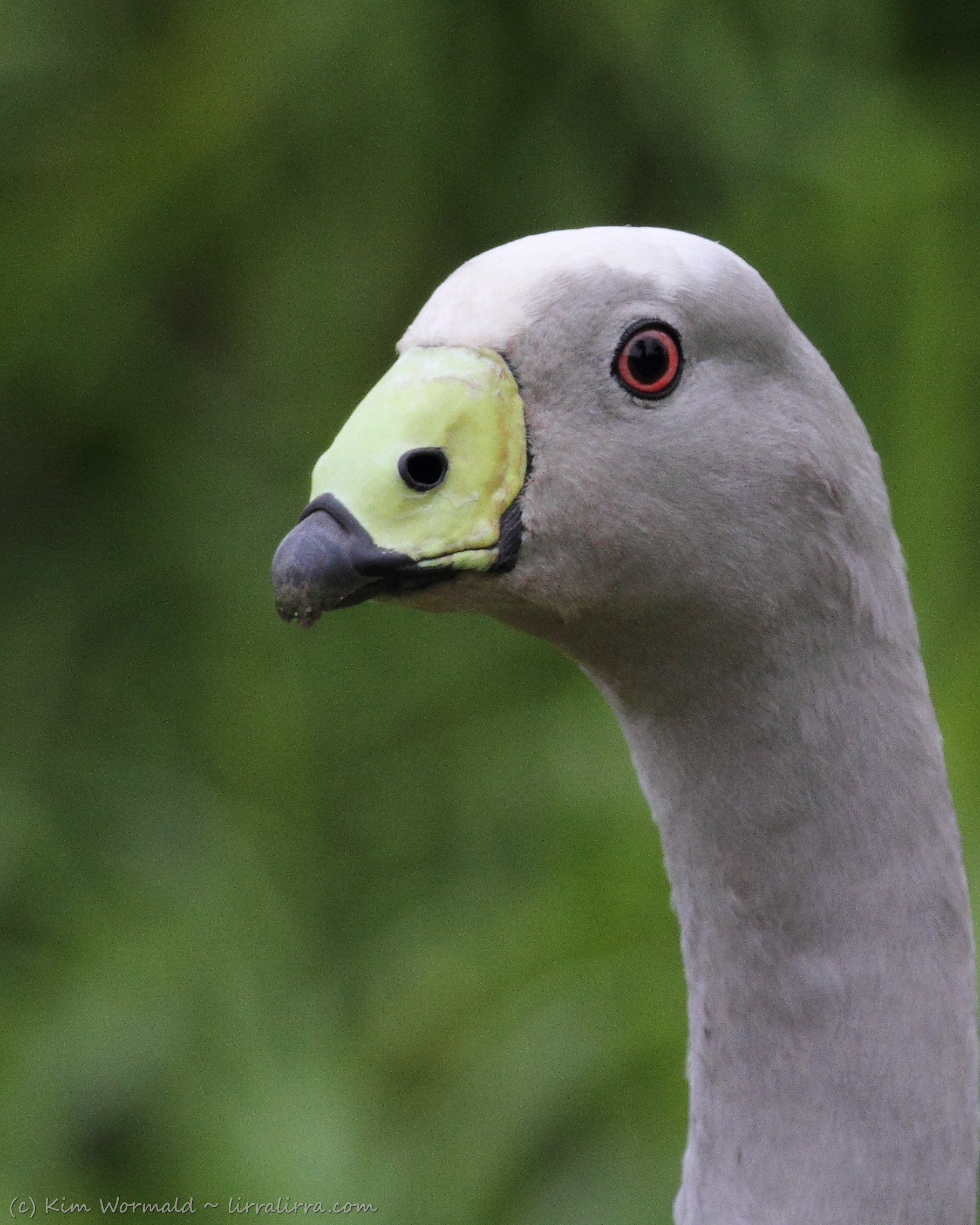
This beautiful image is a sad one to end with but maybe including it will remind us all to help spread the word about driving with wildlife in mind. Glenn and I were on Phillip Island when a goose crossed the road in front of an oncoming car. Despite having ample time to safely stop the driver ploughed into the bird and drove on. The expression on the driver’s face was one of astonishment, as though she couldn’t believe what she was seeing let alone think to press the brake. We stopped, as did two young women who were distraught. Glenn gently lifted the dead goose to the side of the road while I watched the goose’s partner as it surveyed the scene: I can’t help seeing sadness in its expression. These birds mate for life. They choose nesting sites together, defend them vigorously, the female incubates the eggs and both partners share brooding duties. This goose was looking at a scene that changed its life all because one driver wasn’t keeping an eye out for wildlife.
Happy birding and safe driving, Kim
