Every day or so I tiptoed to the edge of the bushland to spy on a Grey Fantail nest. I tucked myself amongst the Swamp Paperbark and watched the parent birds binding the fine grasses of their nest with bills full of cobwebs. The nest is 2 metres above ground, snuggly attached to the fork of a tree, with a tapering stem that gives it a wine glass shape and helps disguise it as a bundle of vegetation caught on a branch.
I stayed well away from the nest while the eggs were being incubated. After a couple of weeks I looked again, from a distance, and saw a soft mound of feathers peeking over the rim of the nest.
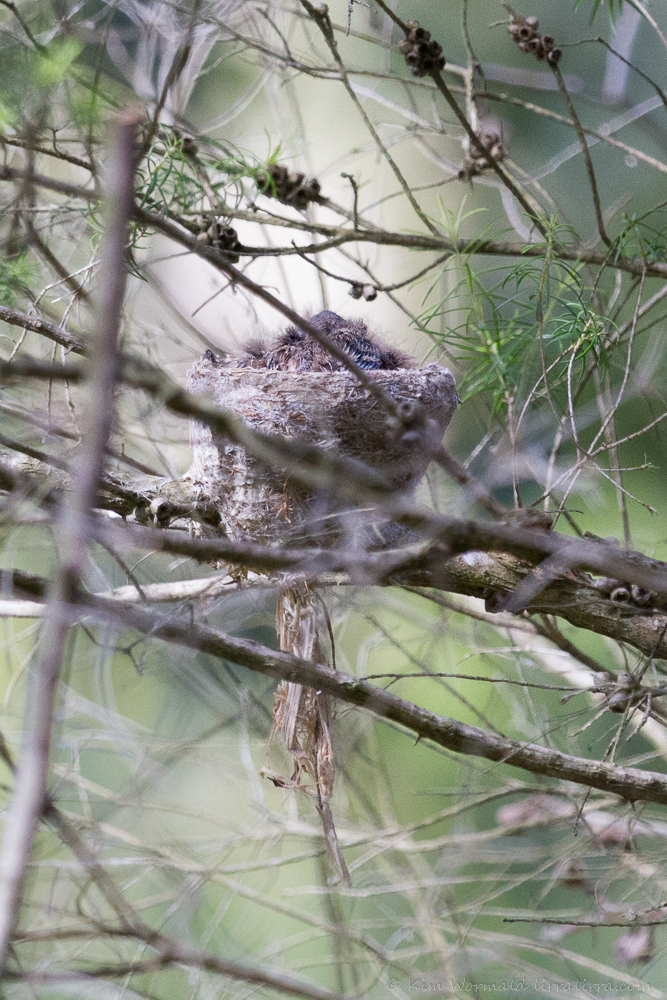 Grey Fantail (Rhipidura albiscapa)
Canon 7D, 100-400mm L IS USM, 1/250, f/5.6, ISO 1600 (set as max), monopod
(heavily cropped)
The conditions were not ideal for photography as the subject was small, the lighting was poor and the scene was cluttered with branches but I believe whole-heartedly in the bird photography code of ethics and was extremely vigilant about not disturbing the nest, not causing the birds any anxiety and not using a flash. I was able to get close enough to take images as the nest is in my garden and the resident fantails are familiar with me roaming around. It’s along a pathway that usually gets a lot of use but which I didn’t use at all for a month. The moment I noticed the beginnings of the nest I kept away, only looking at the nest through binoculars or using the 100-400mm lens. Nesting birds are extremely vulnerable and ensuring their safety and well-being was my top priority.
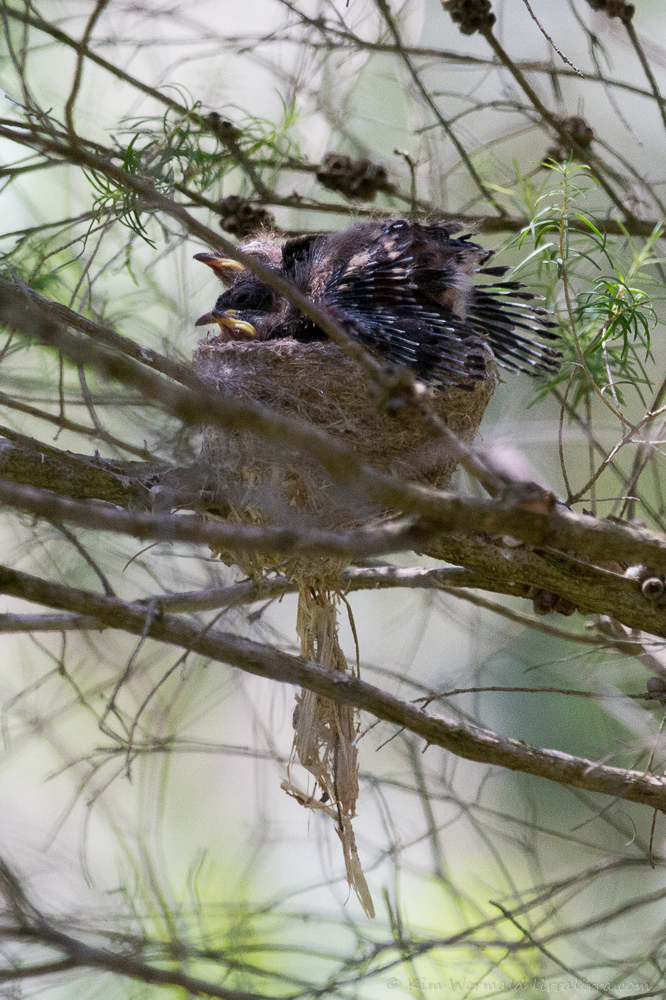 Grey Fantail
Canon 7D, 100-400mm L IS USM, 1/400, f/6.3, ISO 1600, exposure compensation 1/3, monopod
(heavily cropped)
The nestlings occasionally stretched their wings, an activity which increased in frequency as they developed. The image above shows the emerging feathers, called pin feathers, which grow from a follicle in the skin. The shiny sheaths covering each feather are clear in this image. The nestlings remove the sheaths by preening as their feathers grow.
I visited every day or so, only staying for a few moments each time. The parent birds visited every few minutes to transfer bugs of all kinds to the waiting nestlings. Each transfer of food lasted only a second or two. The monopod was ideal as without it I would have been holding the camera ready for each shot and I’m sure the parent birds would have arrived the moment I took a rest. I experimented by taking images at different times of the day with different depths of field and levels of exposure compensation. I increased the exposure during post-processing.
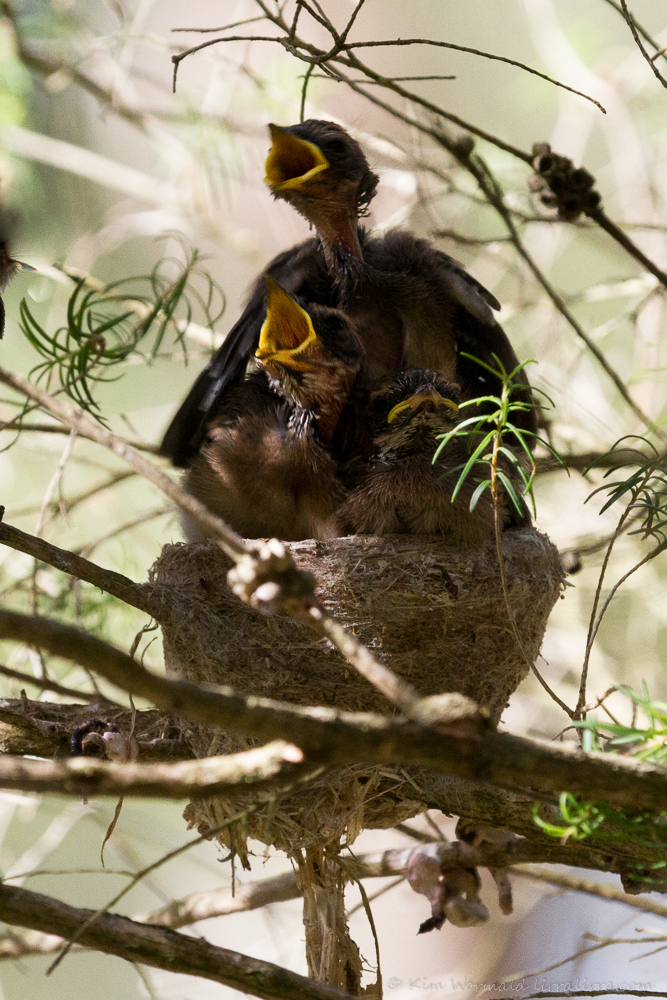 Grey Fantail nestlings
Canon 7D, 100-400mm L IS USM, 1/320, f/8, ISO 1600, exposure compensation 1/3, monopod
(heavily cropped)
The nestlings stayed still until a parent arrived when they would perk up, quivering as they begged. The image above shows a hint of the flurry of movement that punctuated the lulls.
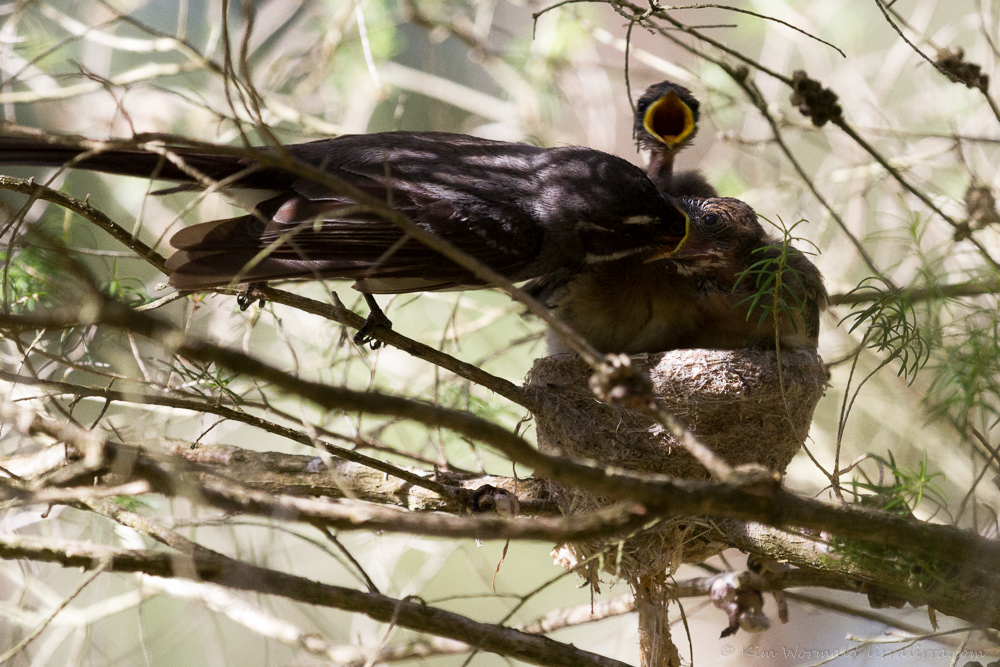 Grey Fantail
Canon 7D, 100-400mm L IS USM, 1/400, f/7.1, ISO 1600, exposure compensation 1/3, monopod
(heavily cropped)
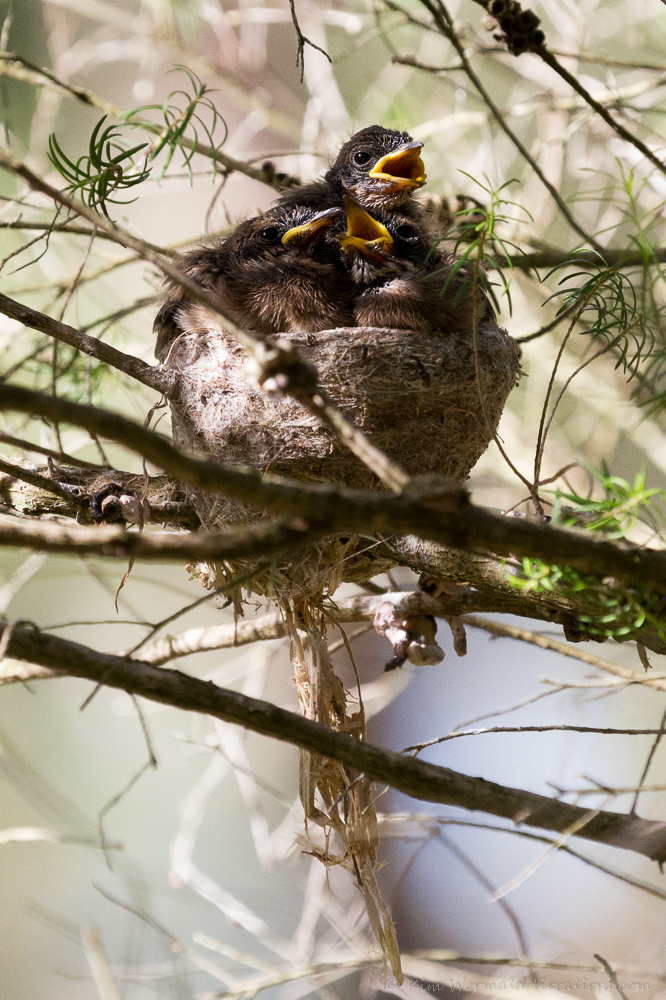 Grey Fantail
Canon 7D, 100-400mm L IS USM, 1/400, f/8, ISO 1600, exposure compensation 1/3, monopod
(heavily cropped)
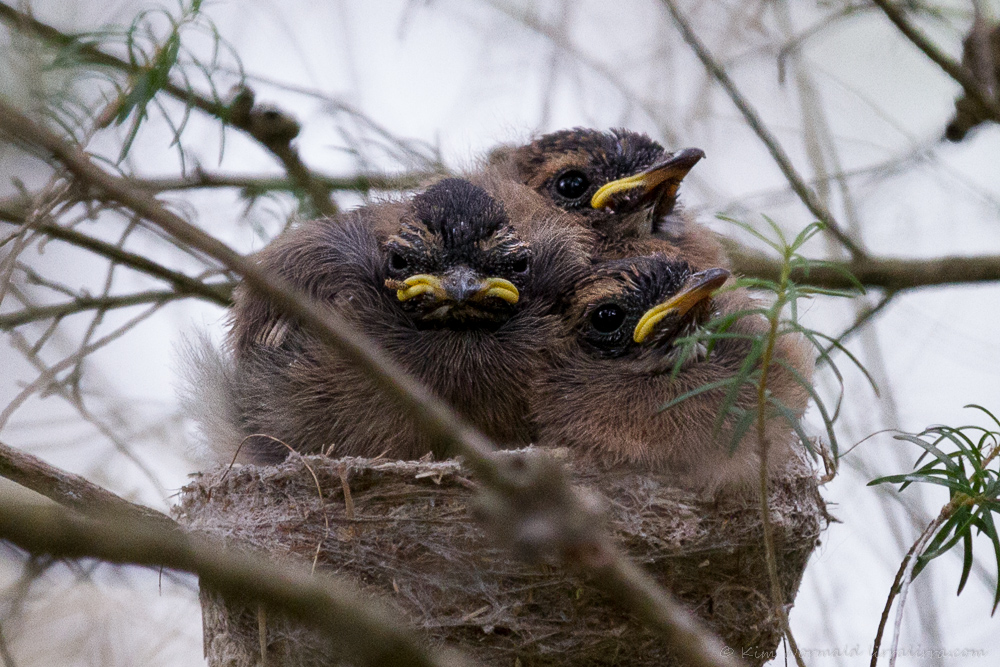 Grey Fantail
Canon 7D, 100-400mm L IS USM, 1/250, f/6.3, ISO 1600, exposure compensation 1/3, monopod
(heavily cropped)
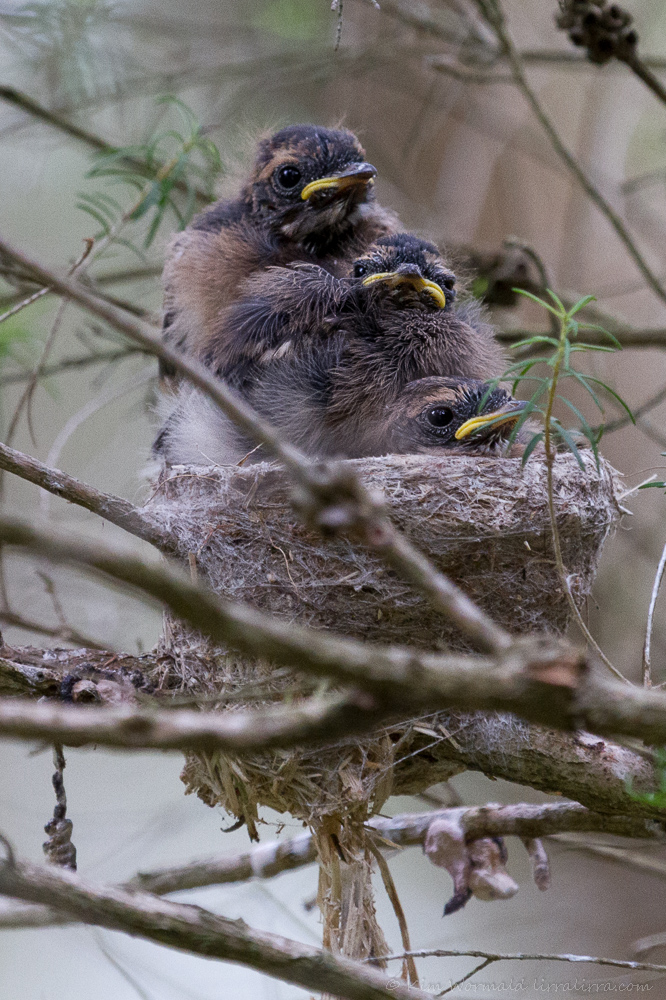 Grey Fantail
Canon 7D, 100-400mm L IS USM, 1/200, f/7.1, ISO 1600, exposure compensation 1/3, monopod
(heavily cropped)
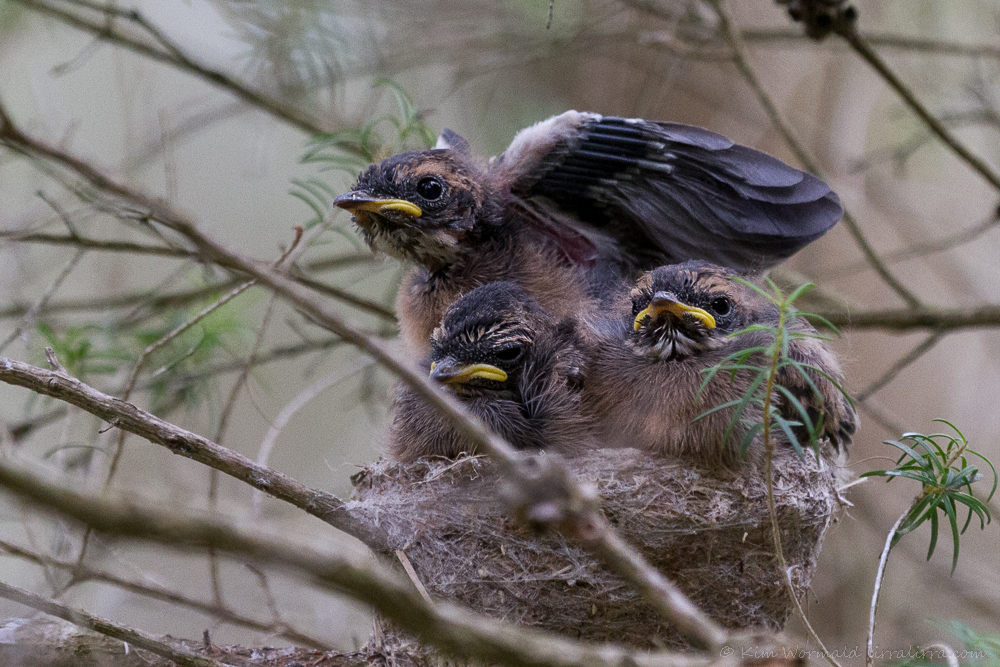 Grey Fantail
Canon 7D, 100-400mm L IS USM, 1/250, f/7.1, ISO 1600, exposure compensation 1/3, monopod
(heavily cropped)
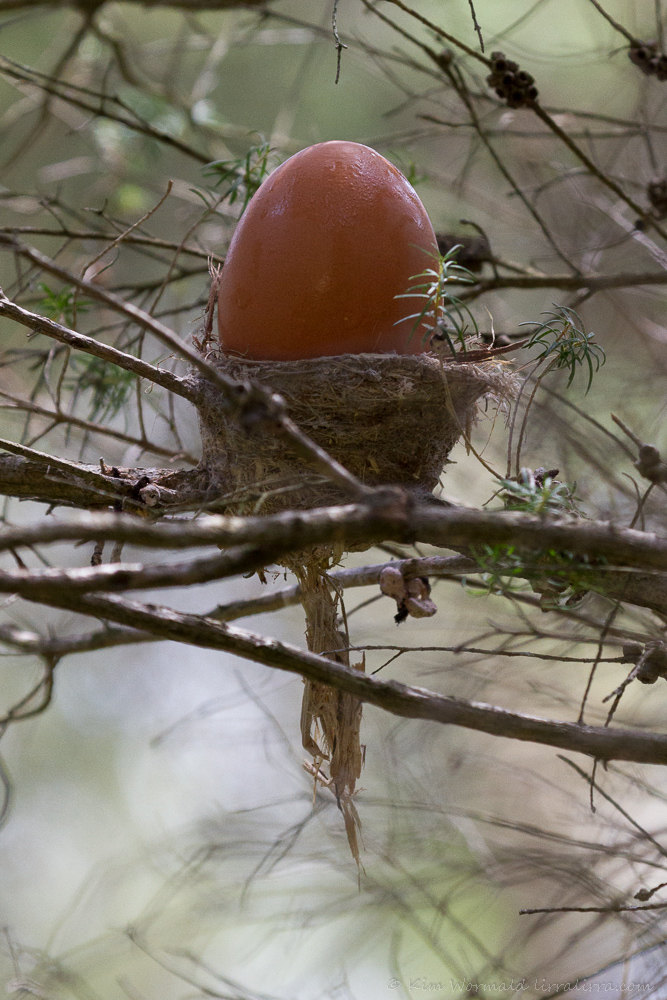 Grey Fantail nest with hen’s egg
Canon 7D, 100-400mm L IS USM, 1/250, f/7.1, ISO 1600, exposure compensation 1/3, focal length 370mm, monopod
After only looking at the nest through my camera or binoculars for a month it was lovely to take a closer look when the fantail babies had left. I wondered how I could best show the size of the nest and decided to take an egg from my fridge, even I was surprised by how snugly it fit.
I wondered about sharing these images because I would hate anyone to think they could have been taken without a long lens and then heavily cropped. NESTS SHOULD NEVER BE APPROACHED – parent birds are likely to abandon a nest if they are disturbed and predators can be attracted to nesting sites by the presence or smell of humans. Even though I vistited rarely and stayed well away from the nest I left the area completely if I heard ravens or butcherbirds calling. Since taking these images I have seen the fledglings being fed in other parts of the garden and I look forward to the next generation of Grey Fantails swooping around my head to catch flying insects as I walk around the paddocks.
Happy birding, Kim
