This week’s birding was significantly reduced thanks to my appendix. I did manage to get outside but instead of roaming I hid amongst bushes and waited. The surgeon said my camera is too heavy so I propped it on my monopod – I’d have hobbled away from A&E if he’d mentioned that side effect!
I managed to get some sweet shots of Red-browed Finches and a juvenile Spotted Pardalote and will also share some post-processing I trialled on last week’s posing dotterel image.
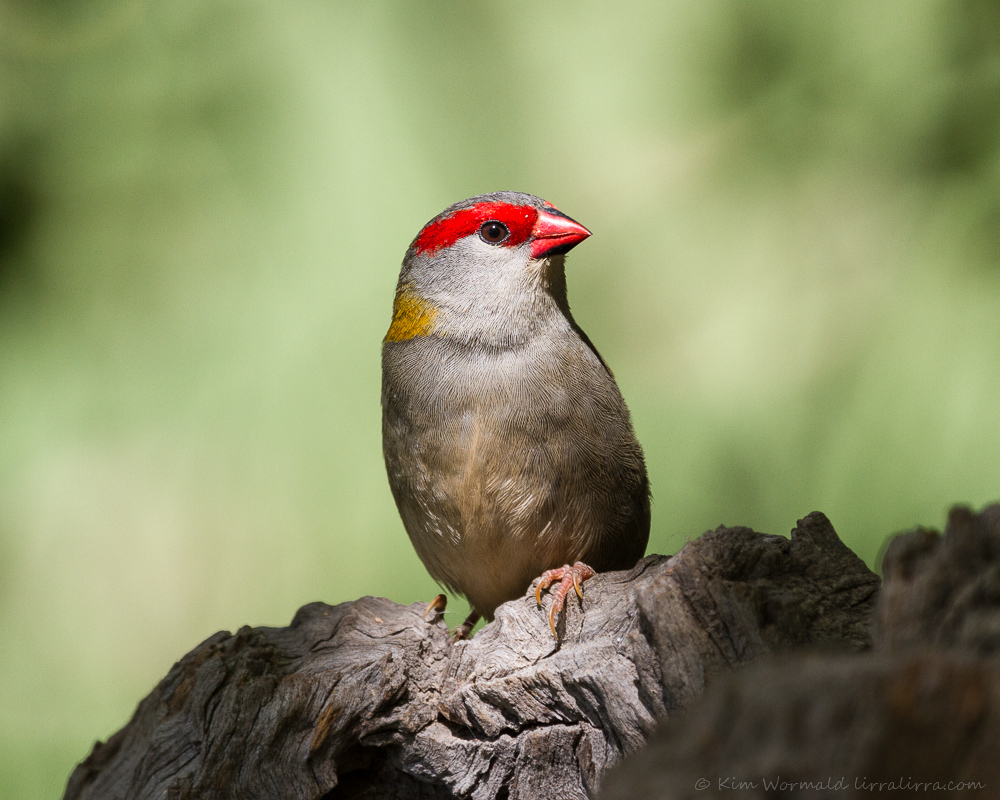 Red-browed Finch (Neochmia temporalis)
Canon 7D, 100-400mm L IS USM, 1/400, f/7.1, ISO 200, focal length 400mm
Red-browed Finches are tiny birds that can been seen in small flocks feeding on grass seeds, either pottering around on mown grass or perched on stems to reach longer seed-heads. At 11cm in length and 11g in weight even a flock of thirty can be difficult to see unless the grass has been cut short. Their underparts and heads are grey, their bills are red and black, they have golden patches on the sides of their necks and bold red eyebrows. According to Morcombe’s field guide males and females can be determined by whether the eyebrow tapers at the nape or is more square-cut. If anyone can tell if this bird is male or female please let me know via the comments section or email.
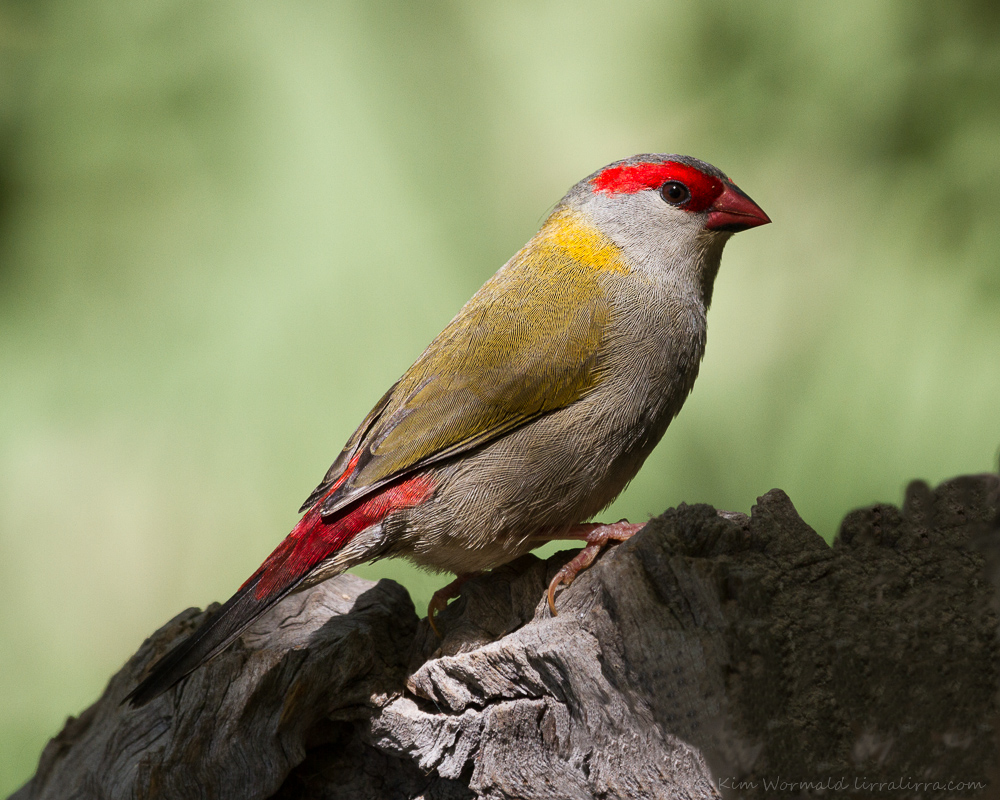 Red-browed Finch (Neochmia temporalis)
Canon 7D, 100-400mm L IS USM, 1/400, f/7.1, ISO 200, focal length 400mm
I liked how this pose shows the Red-browed Finch’s back and perfectly illustrates the reason they used to be called Red-browed Firetails (a name I prefer). Their rumps and upper-tail coverts are bright red. Despite the amount of colour on their plumage these little finches are often difficult to see, their olive backs camouflage them well. When flushed from grass they’ll keep low as they fly for cover. Even their call is not always easy to hear as it is a high-pitched, thin squeak.
 Spotted Pardalote (Pardalotus punctatus) – juvenile
Canon 7D, 100-400mm L IS USM, 1/500, f/5.6, ISO 320, focal length 340mm
Spotted Pardalotes are arguably Australia’s most beautiful bird. This juvenile is yet to get the exquisite plumage it will have as an adult but I still find it totally adorable. This little fellow is about 8-10cm long and 8g, you could gently close your hand around it without hurting it.
 Black-fronted Dotterel (Elseyornis melanops)
Canon 7D, 100-400mm L IS USM, 1/640, f/5.6, ISO 100, focal length 400mm
Now for the post processed dotterel image: I haven’t changed the bird itself but I used Photoshop Elements 11 to clone and heal a few distractions that spoiled the image I posted last week in Dotterels posing, mating and displaying.
It’s like a ‘spot the difference’ game now – if you click on the link above you can toggle back and forth between the two images. How many differences can you see? I removed bits and pieces including rocks, particularly a large rock that spoiled the outline of the dotterel. I also changed the crop to a more pleasing 4×5 ratio which shows more foreground and improves the balance. In last week’s shot there is a hint of whitewash at the bottom edge, it was part of a large dollop of whitewash that needed to be removed when I changed the crop. The foreground was dull with the bird poop covered so I added a few sparkles.
I don’t plan to use Photoshop Elements often but I am excited about the potential to improve images with fairly minor distractions. Being more house-bound this week was an ideal time to practise and I’d appreciate feedback as I start fiddling about with cloning and healing tools.
Happy birding and healthy appendixes, Kim
