These juvenile Tawny Frogmouths don’t need Harry Potter’s Cloak of Invisibility when they are virtually invisible with their bark-patterned feathers.
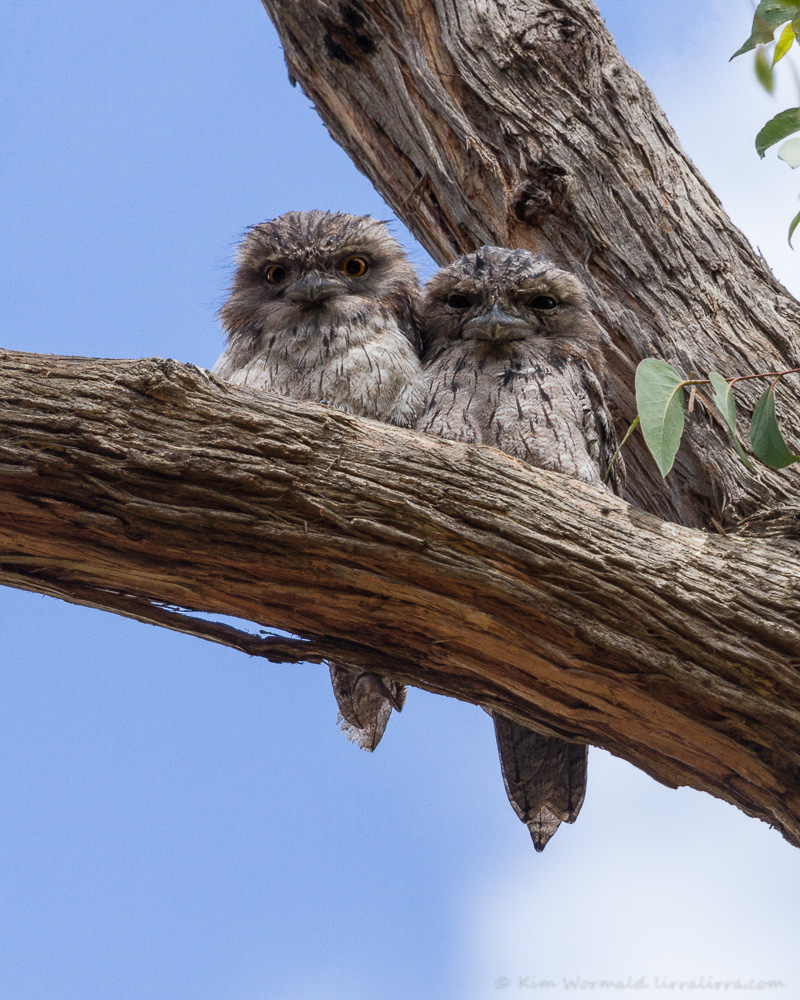 Tawny Frogmouth (Podargus strigoides)
Canon 7D, 100-400mm L IS USM, 1/640, f/5.6, ISO 320, focal length 380mm
Without my eagle-eyed friend noticing bumps on a branch I would not have seen these little tawnies roosting during the day. With their owl-like faces and nocturnal habits it’s not surprising many people assume they are owls although they are actually more closely related to nightjars.
Adult tawnies pose to mimic the jagged end of a broken branch by holding their feathers close to their sides, stretching their necks and staying remarkably still. These juveniles are still practising, they weren’t streamlined and they fidgetted more than an adult bird would tend to. Adult birds often look at the world with narrowed eyes, like the little one on the right is doing in the image above, as opposed to its wide-eyed sibling on the left.
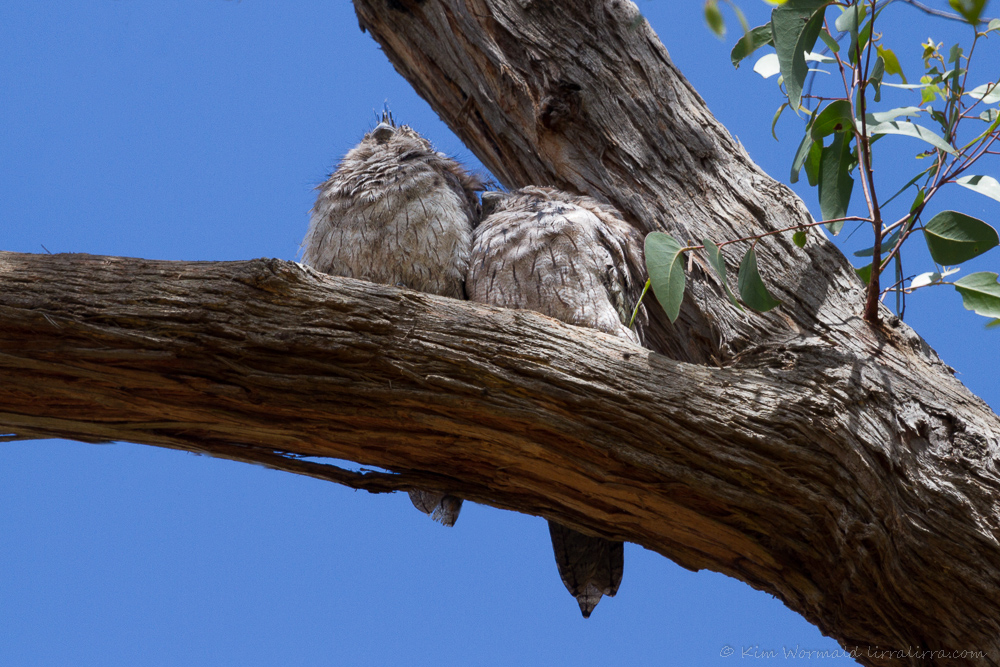 Tawny Frogmouth (Podargus strigoides)
Canon 7D, 100-400mm L IS USM, 1/640, f/5.6, ISO 160, focal length 370mm
In the image above the bristles that extend past the Tawny Frogmouth’s bill can be seen. The sun was high in the sky and I was concerned there would be too much contrast for good images but the partial cloud cover was helpful, softening the light while still allowing for a blue sky to give a pleasant background. Tawny Frogmouths often roost on fairly low branches but these scallywags were about 7 metres above ground. I toyed with the idea of hiring a cherry picker or seeing if the local fire brigade would bring ladders to the park.
Unlike owls Tawny Frogmouths eat mainly large insects that they take from the ground, swooping from a low perch to catch their prey. They also eat frogs, spiders, small mammals and, disconcertingly, ground birds: it seems uncomfortably cannibalistic when birds eat birds but a surprising number of species do.
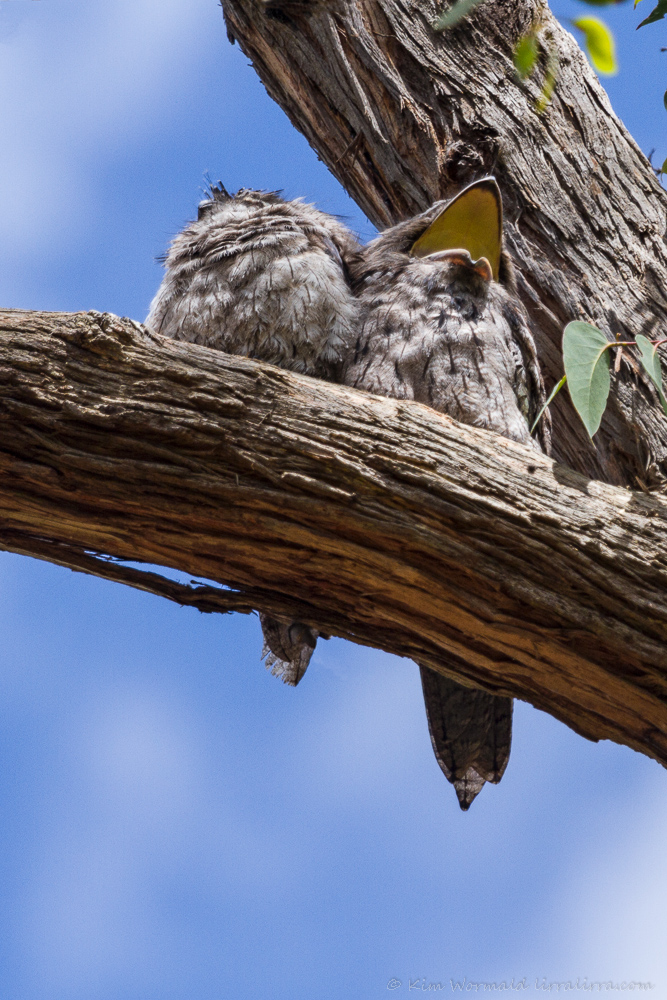 Tawny Frogmouth (Podargus strigoides)
Canon 7D, 100-400mm L IS USM, 1/500, f/5.6, ISO 200, focal length 380mm
I couldn’t believe my luck when one of the little fellows displayed the inside of its yellow mouth while I had the lens pointed and focused.
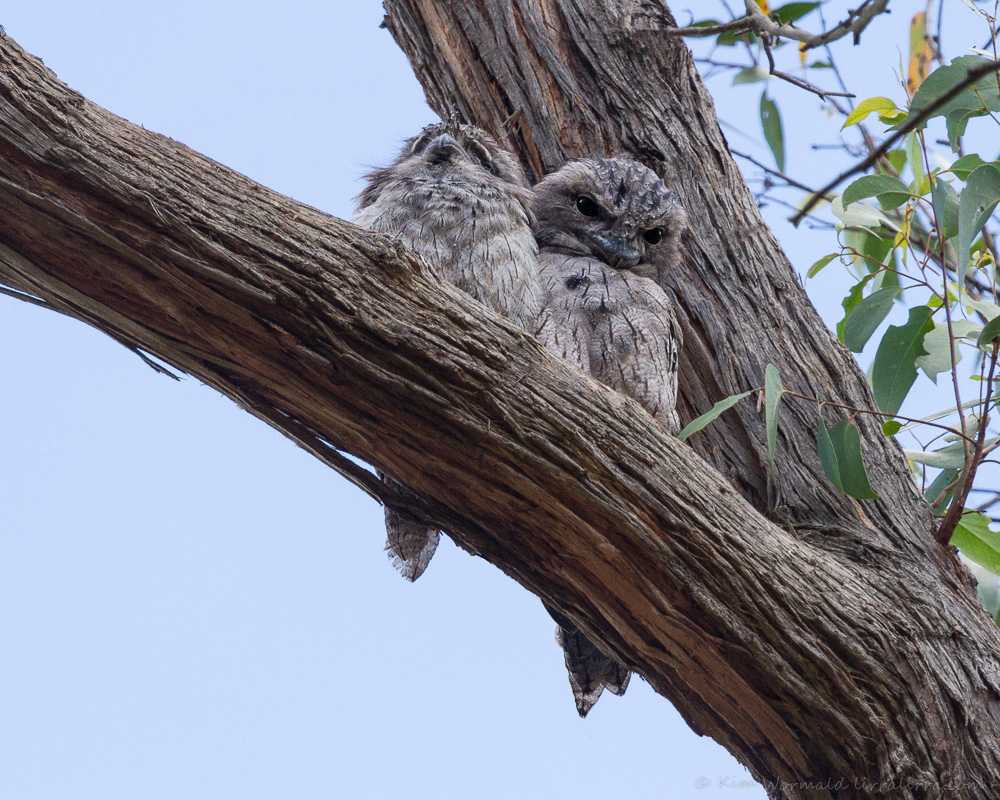 Tawny Frogmouth (Podargus strigoides)
Canon 7D, 100-400mm L IS USM, 1/640, f/6.3, ISO 800, focal length 390mm
The increasing level of cloud cover makes quite a difference to the image but the tawnies are still cute!
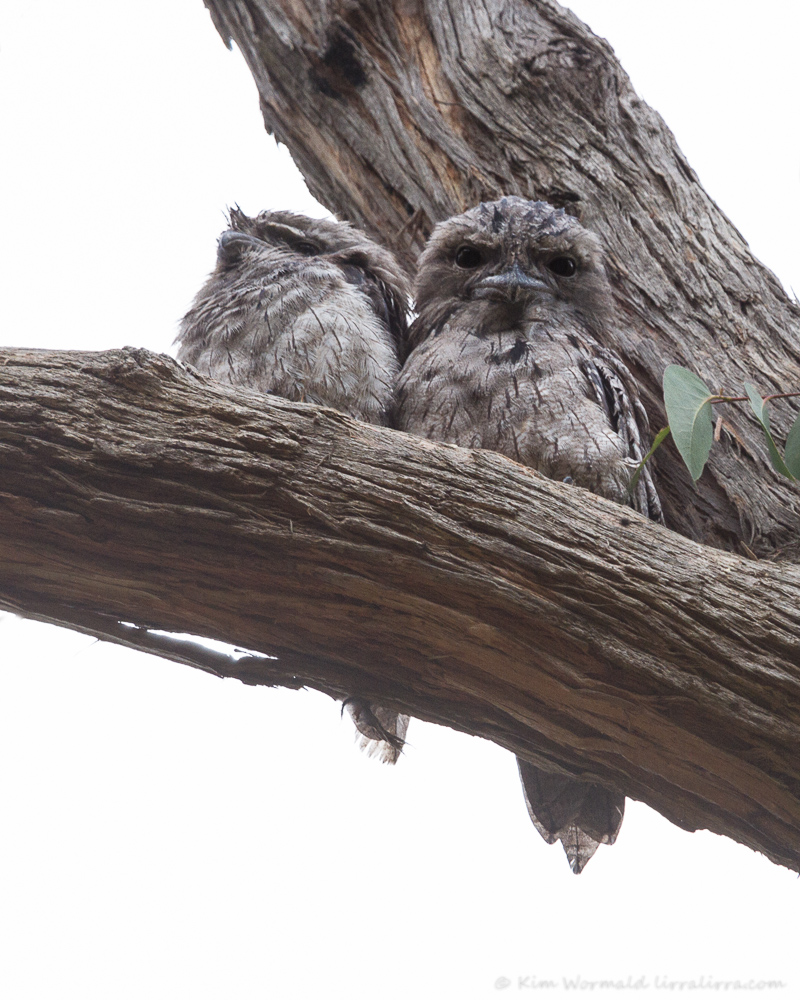 Tawny Frogmouth (Podargus Strigoides)
Canon 7D, 100-400mm L IS USM, 1/640, f/6.3, ISO 250, focal length 375mm
Even though the birds are just as cute in this image I find the cloudy background less pleasing. It’s interesting to have the chance to take similar photographs with different backgrounds; I wonder if it’s just me that prefers the backgrounds with blue skies.

Tawny Frogmouth (Podargus strigoides)
Canon 7D, 100-400mm L IS USM, 1/640, f/5.6, ISO 160, focal length 380mm
The tawny’s expression in the image above is so comical! It looks ridiculously like a Muppet character.
I’m pleased with the focal length of these images being between 370-380mm. One of the first tips I heard was that lenses are a little less sharp at the end of their range. I always try to remember to pull back a fraction but rarely get it so consistently right.
I keep looking at these images to update my ‘cute fix’ and don’t mind the cloudy background as much as I did to start with.
Happy birding, Kim
