Ambling along the beach before sunrise is an incredible experience. As the day gradually brightens the world opens up, sunbeam by sunbeam and if I’m lucky it shines on birds foraging in the shallows.
 Red-necked Stint (Calidris ruficollis)
Canon 7D, 100-400mm L IS USM, 1/500, f/5.6, ISO 125, focal length 400mm
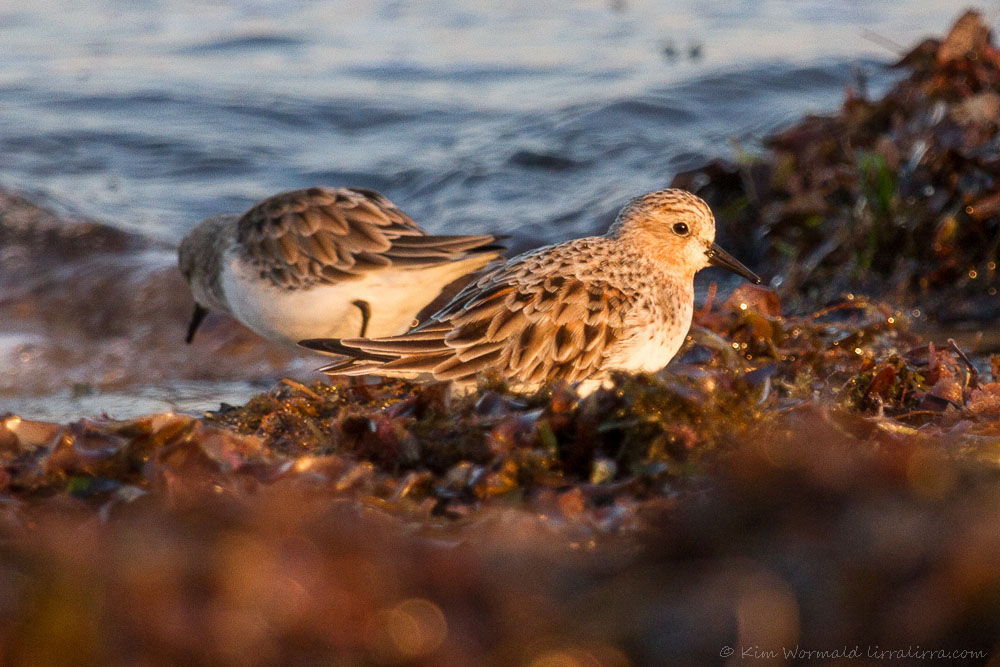
Canon 7D, 100-400mm L IS USM, 1/640, f/5.6, ISO 500, focal length 380mm
The stints in the images above have a hint of the red around their necks that is all that is left of their breeding plumage.
 Red-necked Stint (Calidris ruficollis)
Canon 7D, 100-400mm L IS USM, 1/640, f/5.6, ISO 160, focal length 400mm
I liked seeing the Red-necked Stint having a scratch while its buddies are still playing hide and seek. Despite their tiny size these birds breed in Alaska and Siberia. They leave Australia during March and the first part of April and return in late August and September. Once again I am completely in awe of nature.
The endangered Hooded Plovers occasionally forage with Red-necked Stints and people sometimes believe that the stints are hoodie chicks. It’s an understandable mistake. Recently I had two lots of people tell me that the hoodies had brilliant success with nesting this year as there were about twenty chicks foraging with them. Unfortunately not. The hoodies did not raise a single chick at that beach this year. The multiple threats of high tides, dogs, people, foxes, magpies, ravens and gulls took a high toll. Last year the hoodies raised three chicks, hopefully they’ll have more luck next year. If you’d like to see images of Hooded Plovers and read more about them you could visit my previous posts Miracle birds and It’s all about the light.
Happy birding, Kim
