Minus two degrees doesn’t belong anywhere outside of a fridge but there it was, glaring from the dashboard of my car as we headed out to feed the Helmeted Honeyeaters.
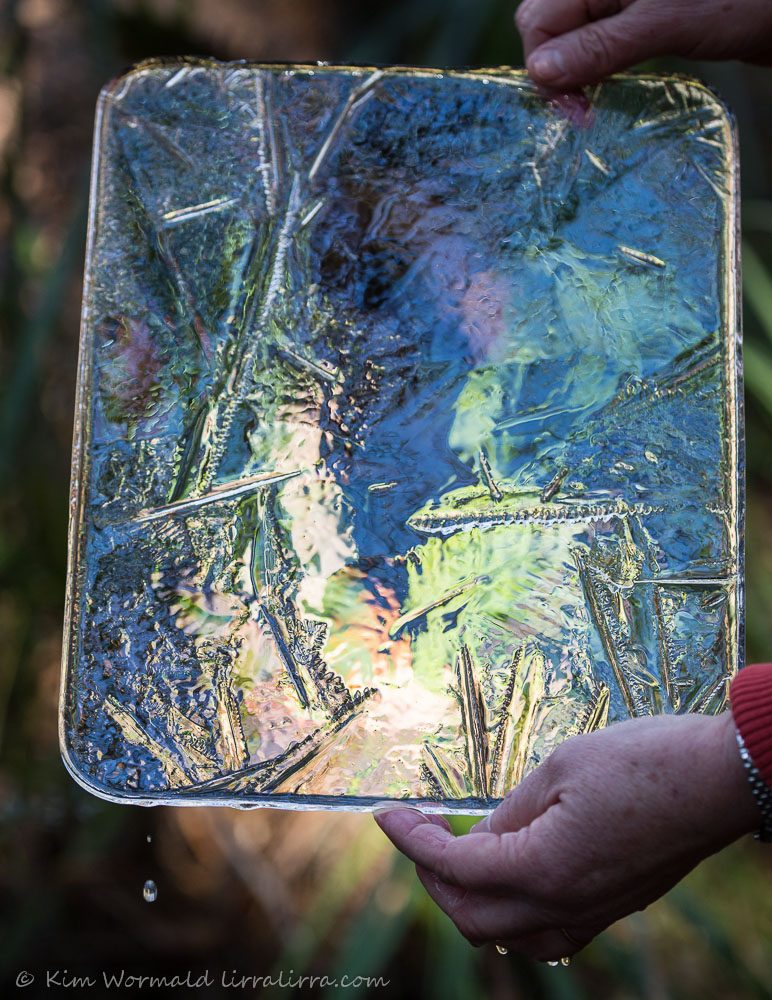 Ice from the Helmeted Honeyeaters’ water bowl
We tucked our trousers into our socks (to baffle the leeches), put on our pathetically inadequate jackets, pulled on our woolly fingerless gloves and set off with heho food across the frost-crunchy leaf litter. We check the water bowls during each visit, in the height of summer when the temperatures can reach above 40 degrees Celsius (104f) the bowls are refilled daily to compensate for evaporation but this was the first time I’d peered into a bowl and seen a little sea of strange reflections.
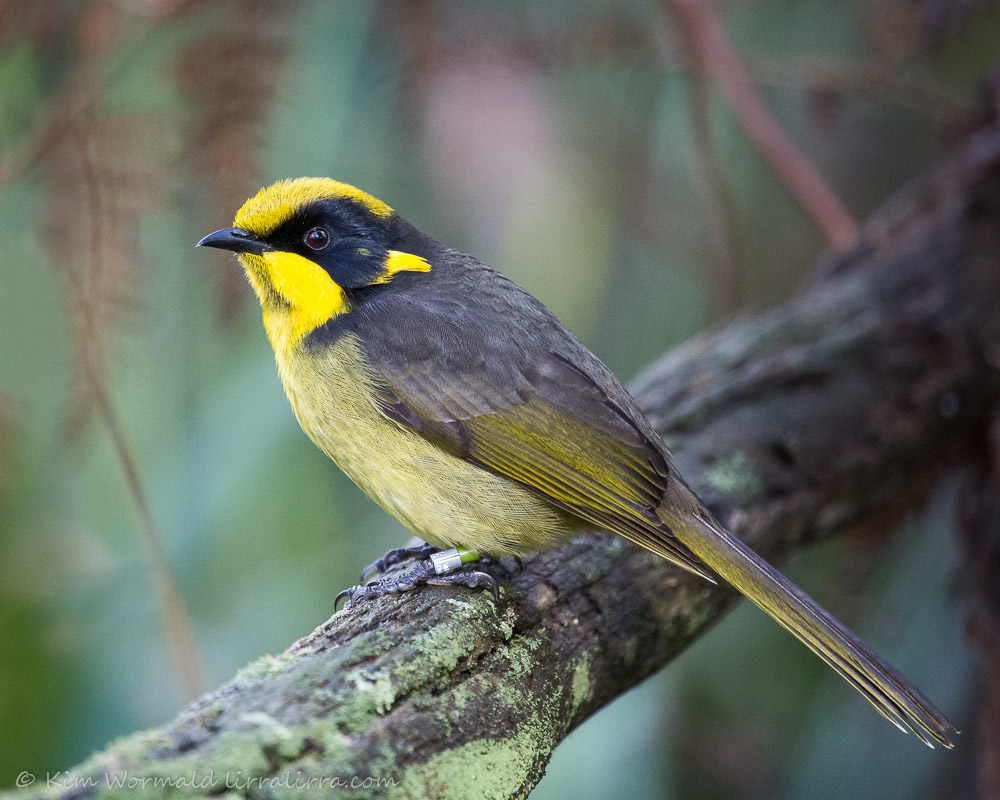 Helmeted Honeyeater
In some of the honeyeater shots their heads were decorated with frosty crystals. How do birds survive such extremes of temperature? They don’t pull on extra clothing, or go home and crank up the heater. The insulation quality of their feathers must be remarkable, as I guess we know if we’ve ever slept snuggly under a down quilt on a winter’s night. Do they hunker down to sleep covering their legs and feet, do they tuck their heads under their wings, do they huddle together? And how do they keep their 30g safe in gale force winds, and themselves cool when the temperature reaches 46 degrees Celsius?
 Helmeted Honeyeater
One thing I’m sure of is that keeping warm means they use a lot of energy as the birds were frantic for food that cold morning … and so were we.
Happy birding and roll on spring, Kim
~ Thank you for your visit and comments.
~ If you’d like to receive a weekly email informing you that lirralirra has been updated please add your email address to the ‘subscribe’ box above right
