What do Whistling Kites, spoonbills, ibis, Long-billed Corella, ducks (including Freckled Duck), cormorants, grebes, Cape Barren Geese, teals, avocet, Welcome Swallows and Black Swans have in common? They are all species that have been shot by duck hunters; it is sickening that yet another shameful duck hunting season is scheduled to begin in Victoria this weekend.
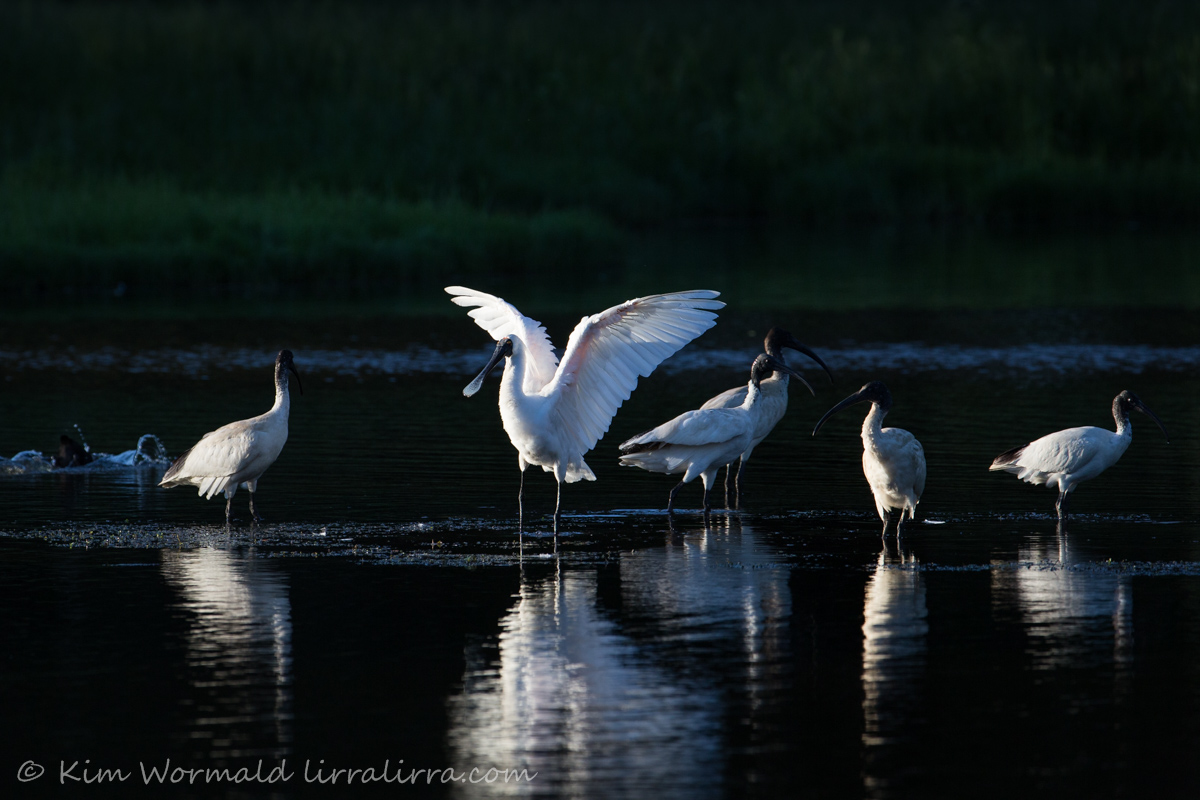 Royal Spoonbill, Australian White Ibis
I took the above image just before sunset at a beautiful wetlands. The light would look similar first thing in the morning as hunters, dressed in their camouflage gear, line up with their shotguns aimed at our native waterbirds. This year’s shooting season goes for 12 weeks and hunters are permitted to shoot from before sunrise to after sunset each day.
– Spoonbills and ibis are not included on the list of species hunters are licensed to shoot.
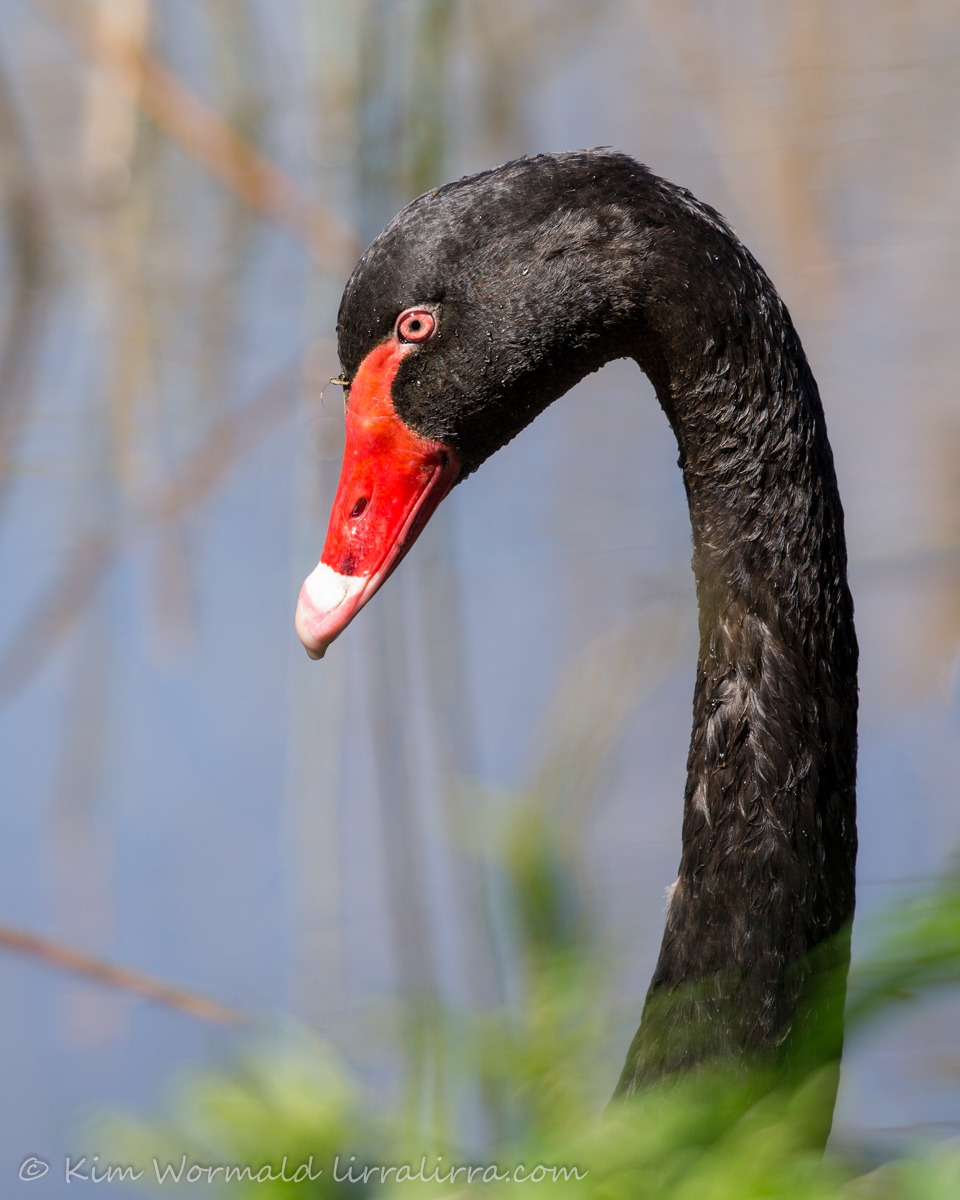 Black Swan
Black Swans are elegant birds that grace our waterways. They are an Australian species that has been introduced to nearby countries. This swan has something above its bill that could be fishing related, if you know what it is please let me know. I contacted the local ranger and wildlife rescue group but neither could help as the bird is active. It was of concern at the time but in terms of the upcoming slaughter it seems inconsequential.
– Black Swans mate for life and are not included on the list of species hunters are licensed to shoot.
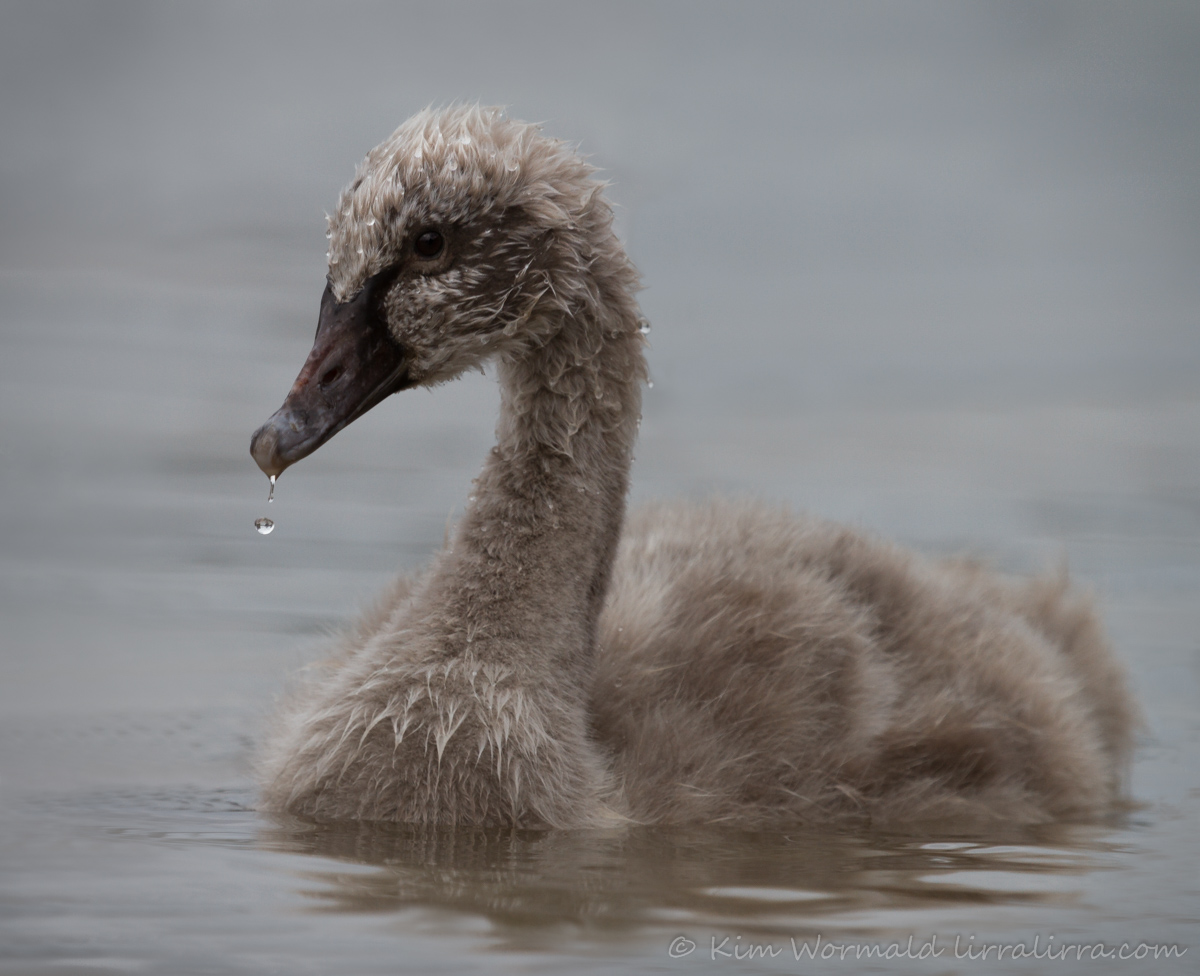 Black Swan cygnet
Black Swan cygnets are particularly delightful; swans deserve to be protected from indiscriminate shooters.
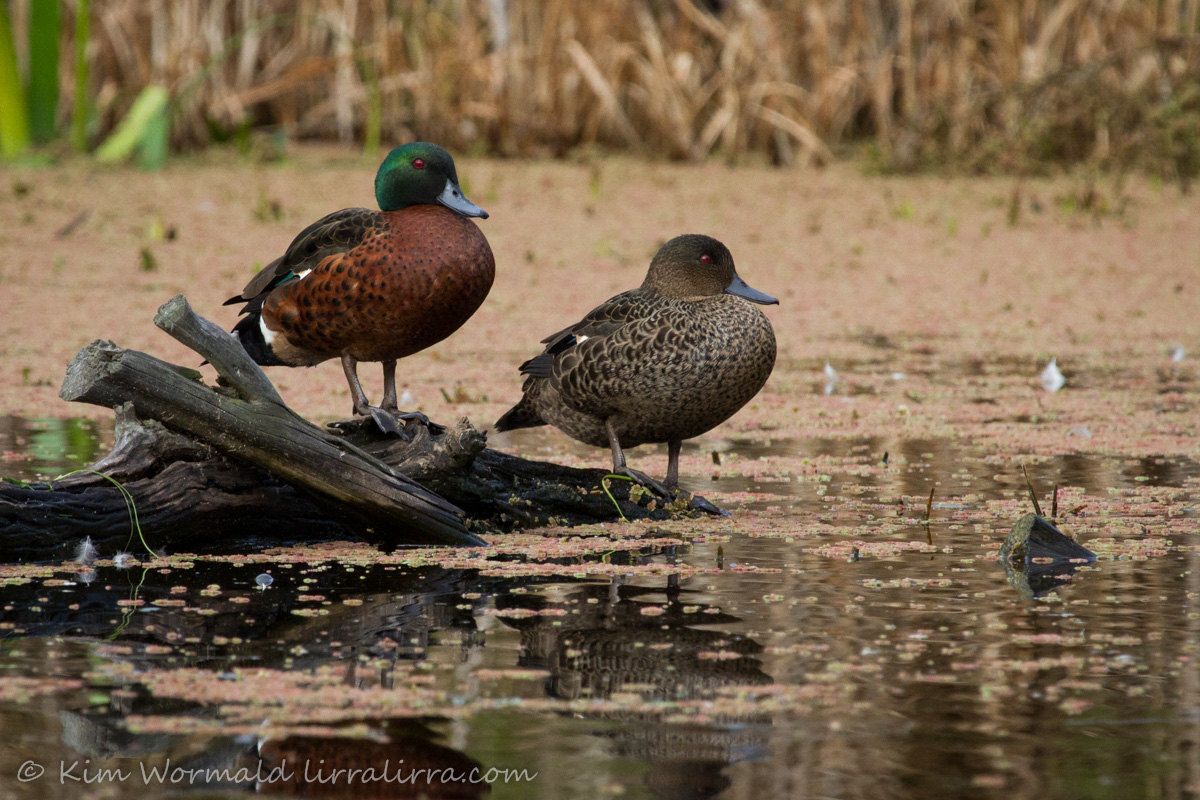 Chestnut Teal, male and female
Chestnut Teal are small dabbling ducks whose wetland habitats have been impacted by draining and development. Male Chestnut Teal are strikingly coloured with iridescent green heads while the females look similar to Grey Teal.
– Chestnut Teal mate for life and are considered ‘game ducks’ that shooters are permitted to kill.
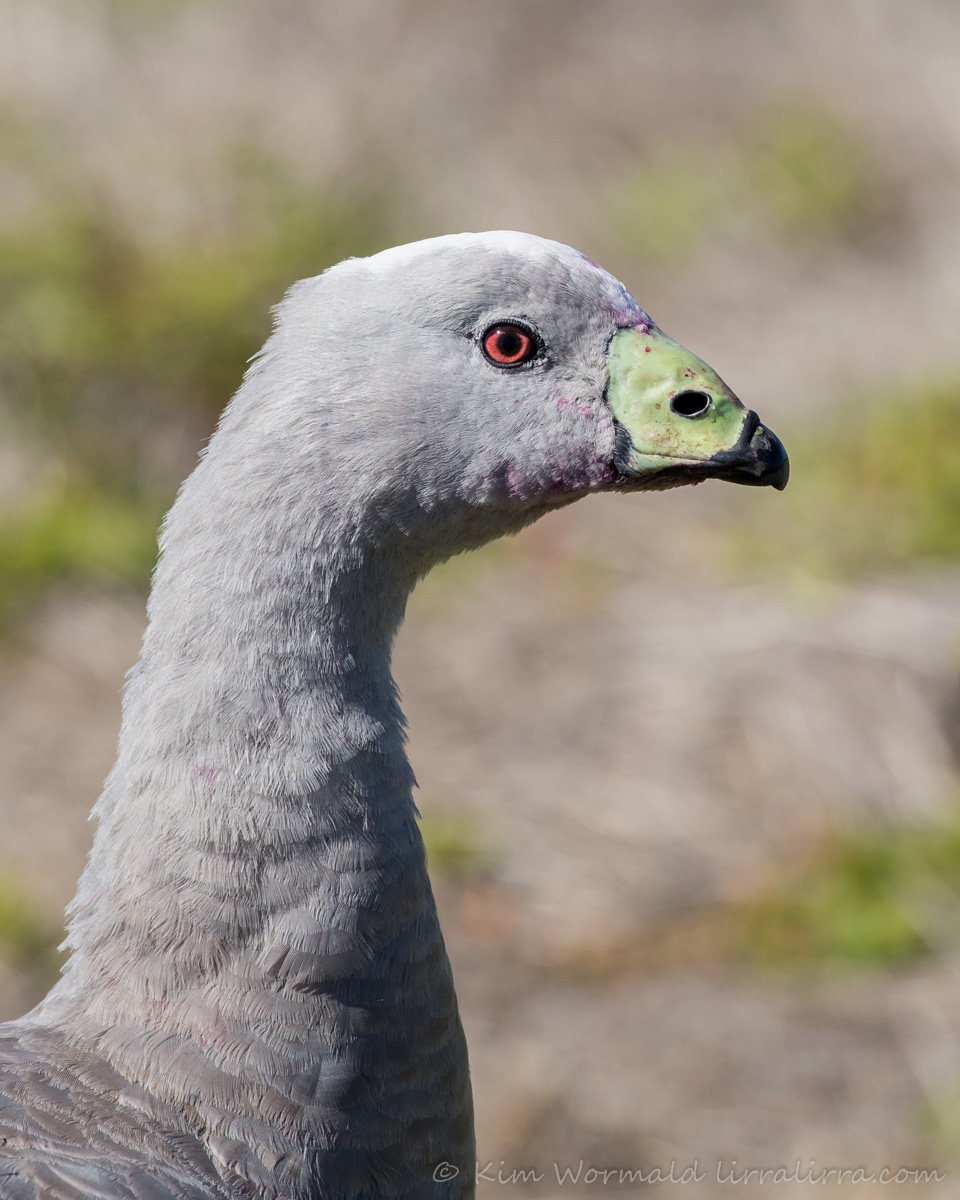 Cape Barren Goose
Cape Barren Geese are large geese that live on offshore islands across southern Australia. In recent decades they faced extinction but conservation strategies helped their numbers improve. They graze on grasses and succulents and the purple splodges on the bird in the image above show that it has been feeding on Berry Saltbush.
– Cape Barren Geese mate for life and are not included on the list of species hunters are licensed to shoot.
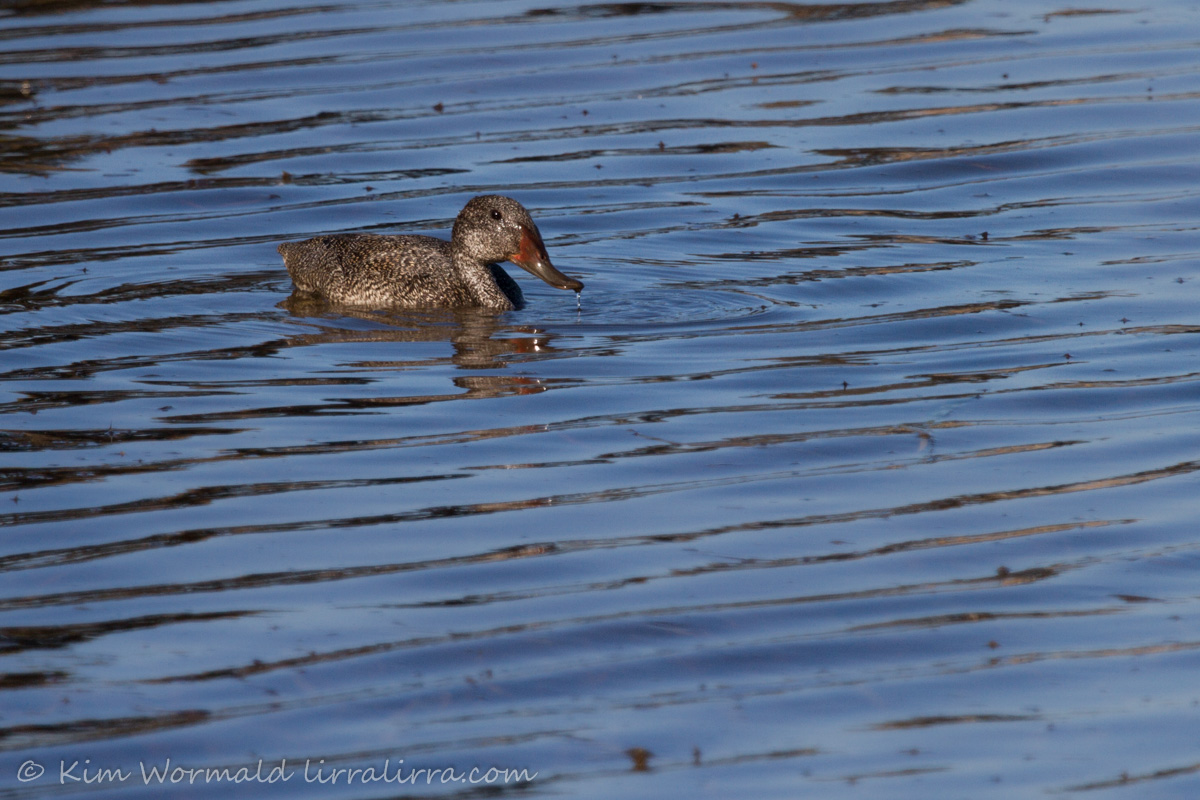 Freckled Duck
Freckled Duck are unique to Australia and one of the rarest waterbirds in the world. Despite being an endangered species numerous Freckled Duck are shot and discarded by shooters every hunting season. During the 2014 season 33 Freckled Duck were killed and left to rot where they dropped at Lake Lonsdale near Stawell, a further four birds were treated by veterinarians. During the Box Flat massacre in 2013 over 100 Freckled Duck were killed near Boort and over 700 other ducks were shot and left to rot in the water. Despite an ongoing ‘investigation’ the government steadfastly refuses to release documents relating to the massacre and to date no one has been charged.
– Freckled Duck are Endangered and are not included on the list of species that hunters are permitted to shoot.
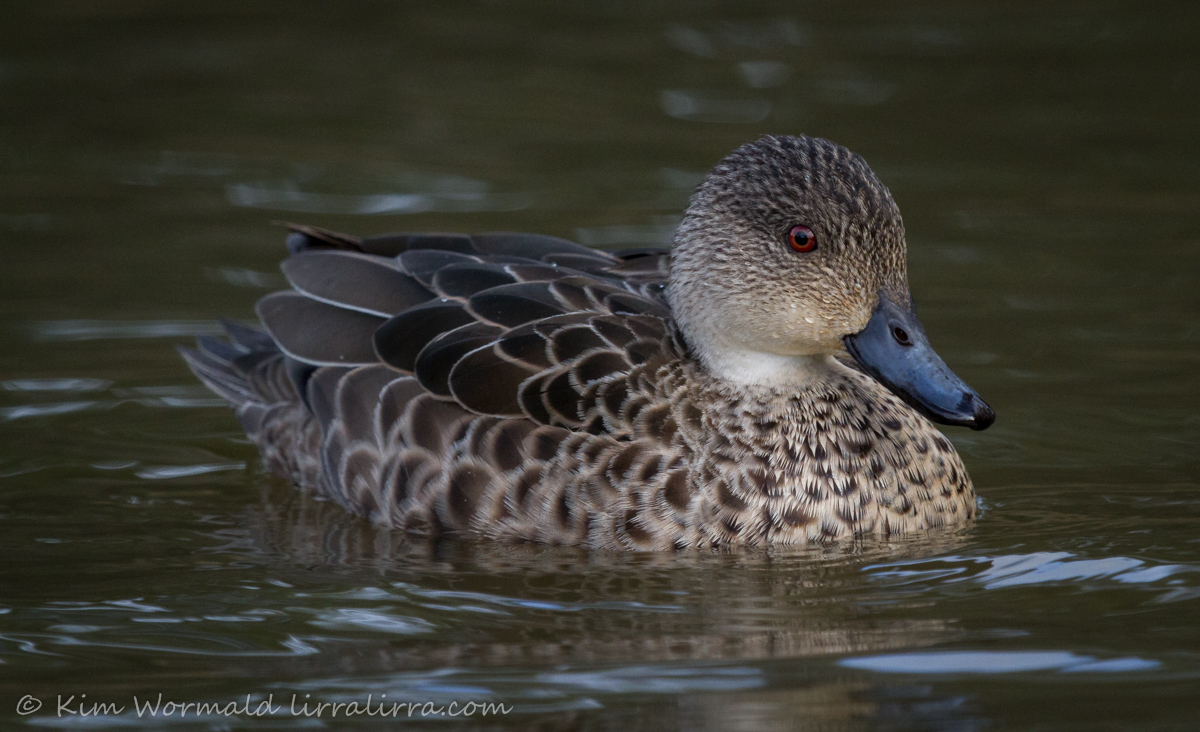 Grey Teal
Grey Teal are small ducks that feed by dabbling and by up-ending and foraging. They are found across Australia and can be distinguished from Chestnut Teal by their white throats.
– Grey Teal parents share the care of their ducklings and are considered ‘game ducks’ that shooters are permitted to kill.
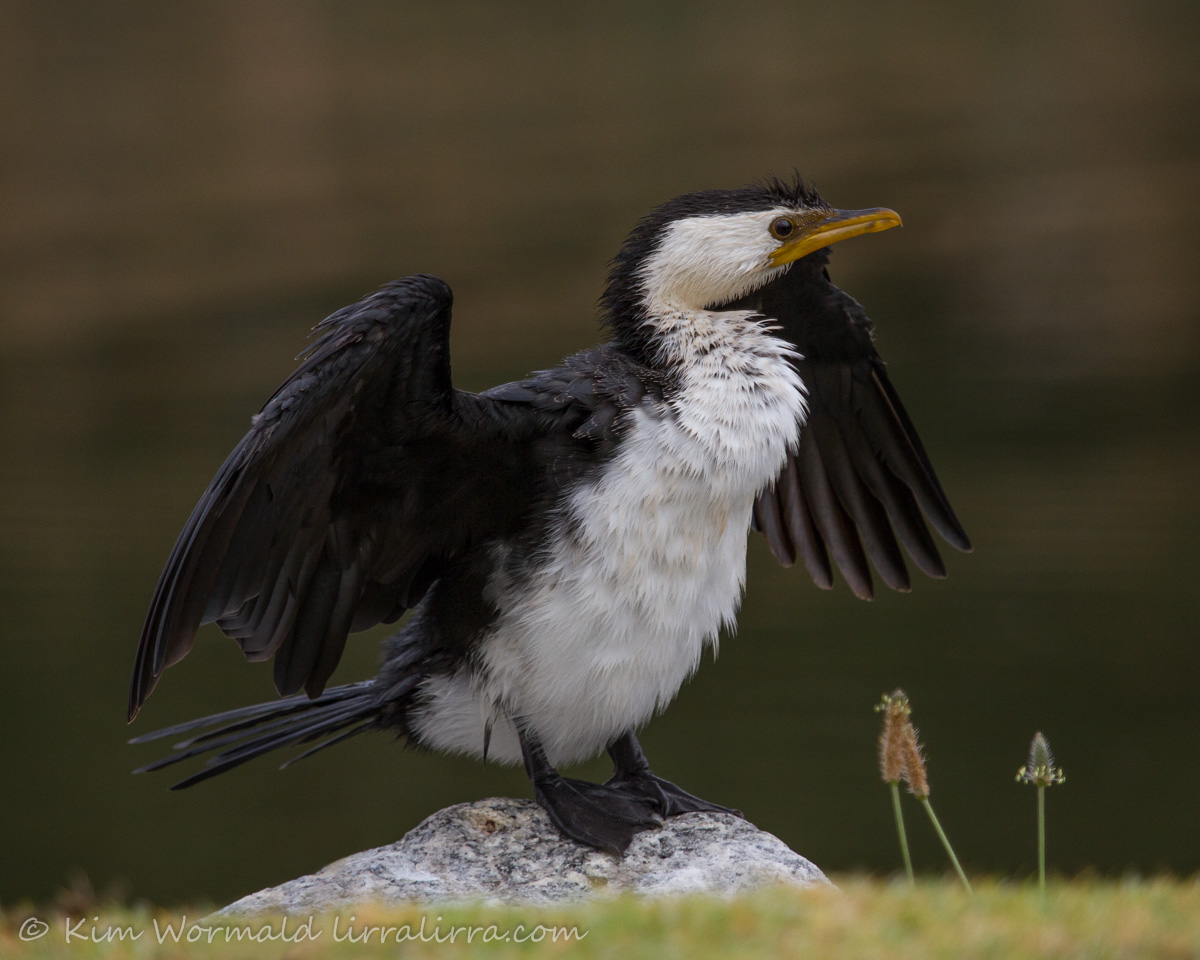 Little Pied Cormorant
This Little Pied Cormorant represents the cormorant species that are indiscriminately shot during the duck hunting season. They are the smallest of the five cormorant species found in Victoria; the other species are Pied Cormorant, Great Black Cormorant, Little Black Cormorant and Black-faced Cormorant.
– Cormorants are not included on the list of species that hunters are permitted to shoot.
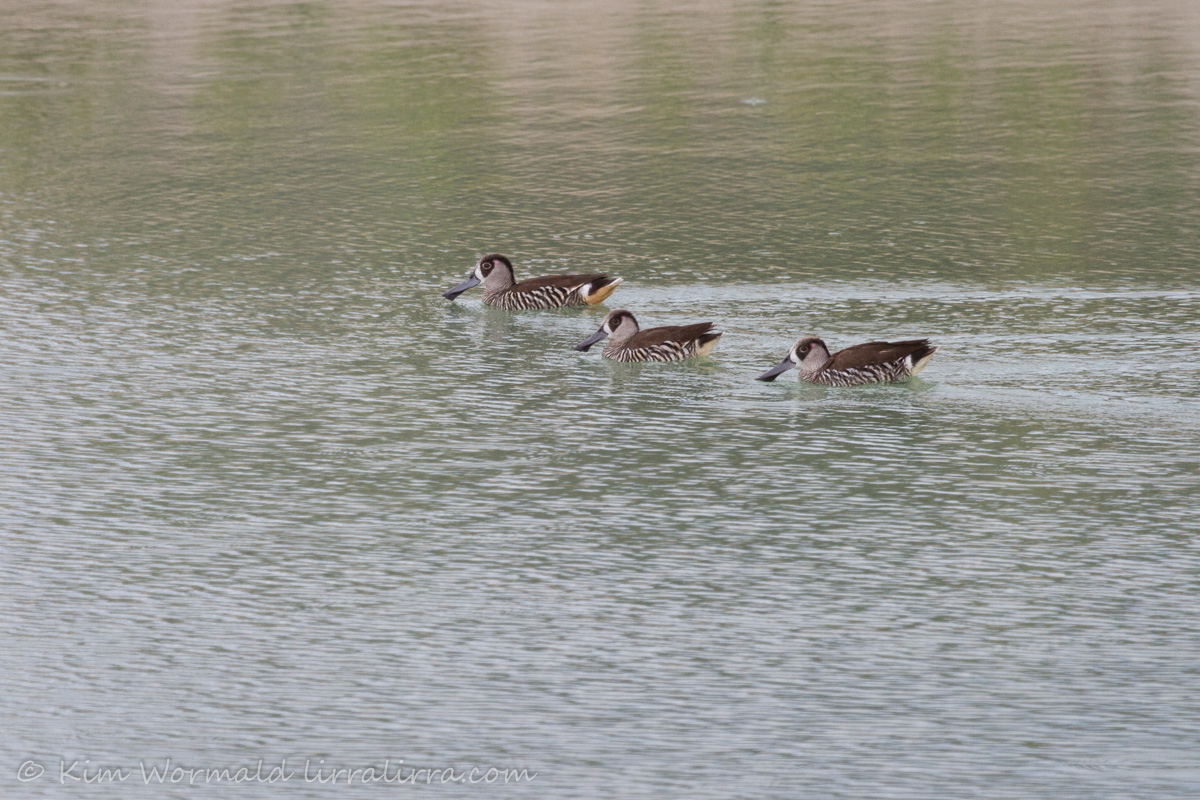 Pink-eared Duck
Pink-eared Ducks are striking birds with distinctive markings, including the small pink patch behind their eyes which gives them their name. They have a delightful chirruping song which they sing while in flight and on the water. They are often shot and discarded by hunters as they contain little meat.
– Pink-eared ducks mate for life and are considered ‘game ducks’ that shooters are permitted to kill.
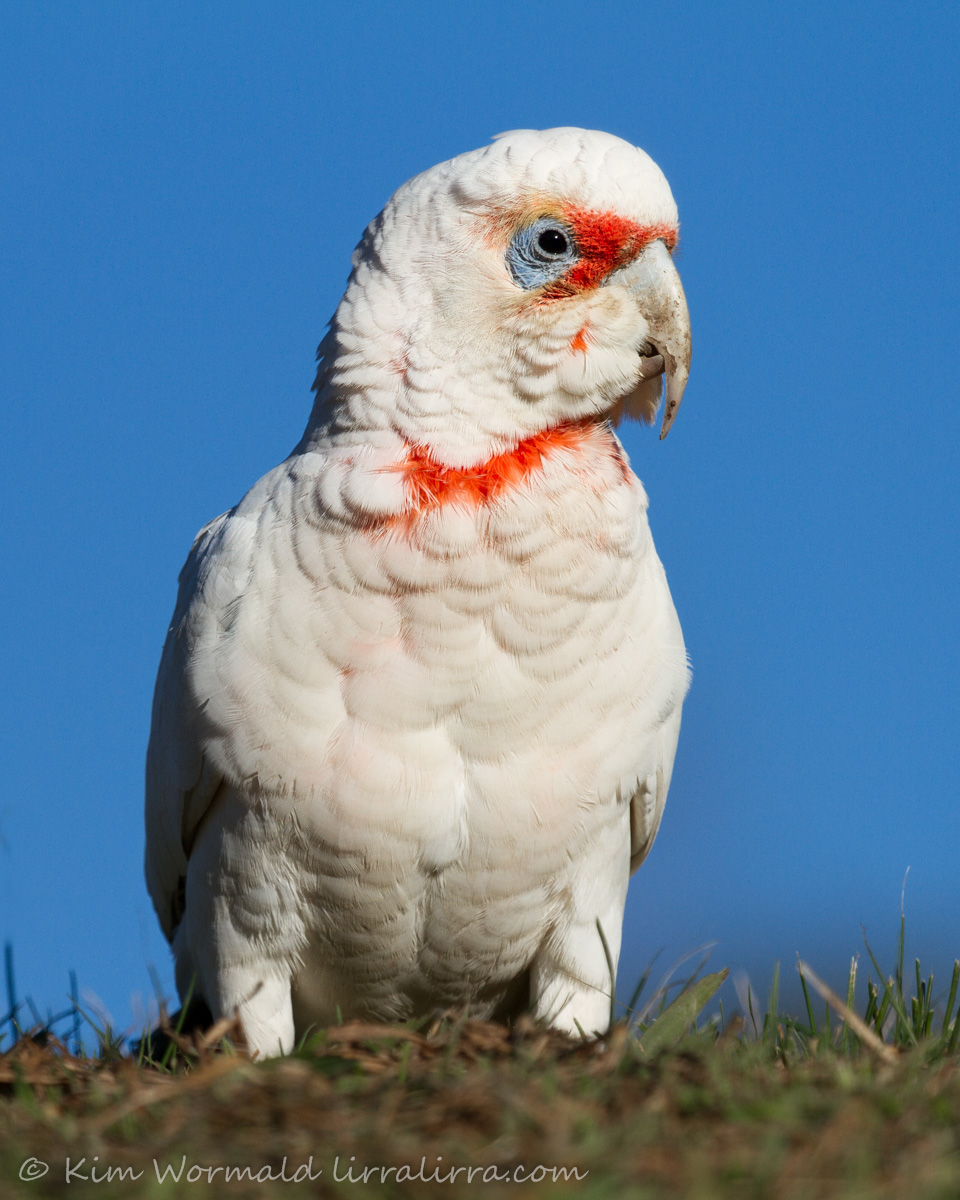 Long-billed Corella
– Long-billed Corellas are monogamous cockatoos that are not included on the list of species that hunters are permitted to shoot.
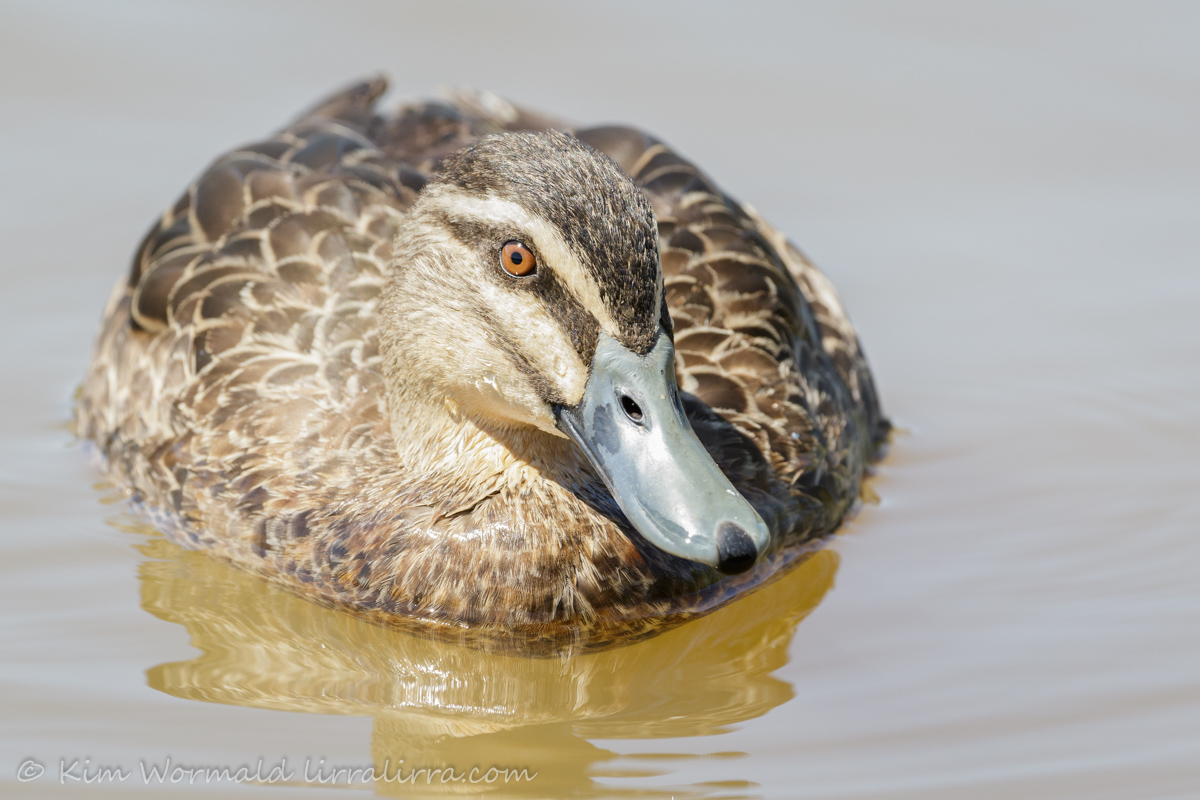 Pacific Black Duck
Pacific Black Ducks are widespread across Australia. They are shy in areas where they rarely see people but can become quite friendly in urban waterways.
– Pacific Black Ducks are predominantly vegetarian which apparently makes them taste better than some other species, they are considered ‘game ducks’ that shooters are permitted to kill.
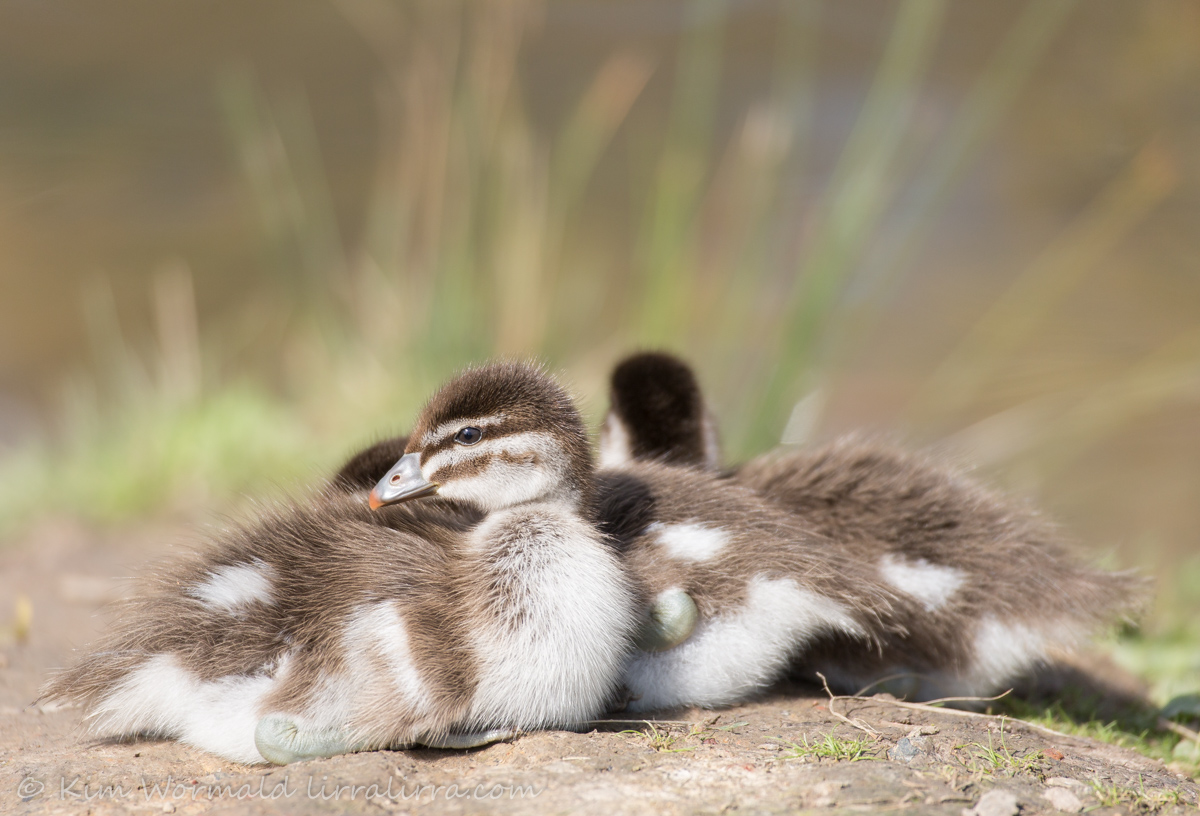 Australian Wood Ducklings
Australian Wood Ducks are beautiful birds that lay their eggs in tree hollows and can often be seen shepherding their chicks from place to place in a long line with an adult at the front and the rear.
– Australian Wood Ducks mate for life and stay together all year, they are considered ‘game ducks’ that shooters are permitted to kill.
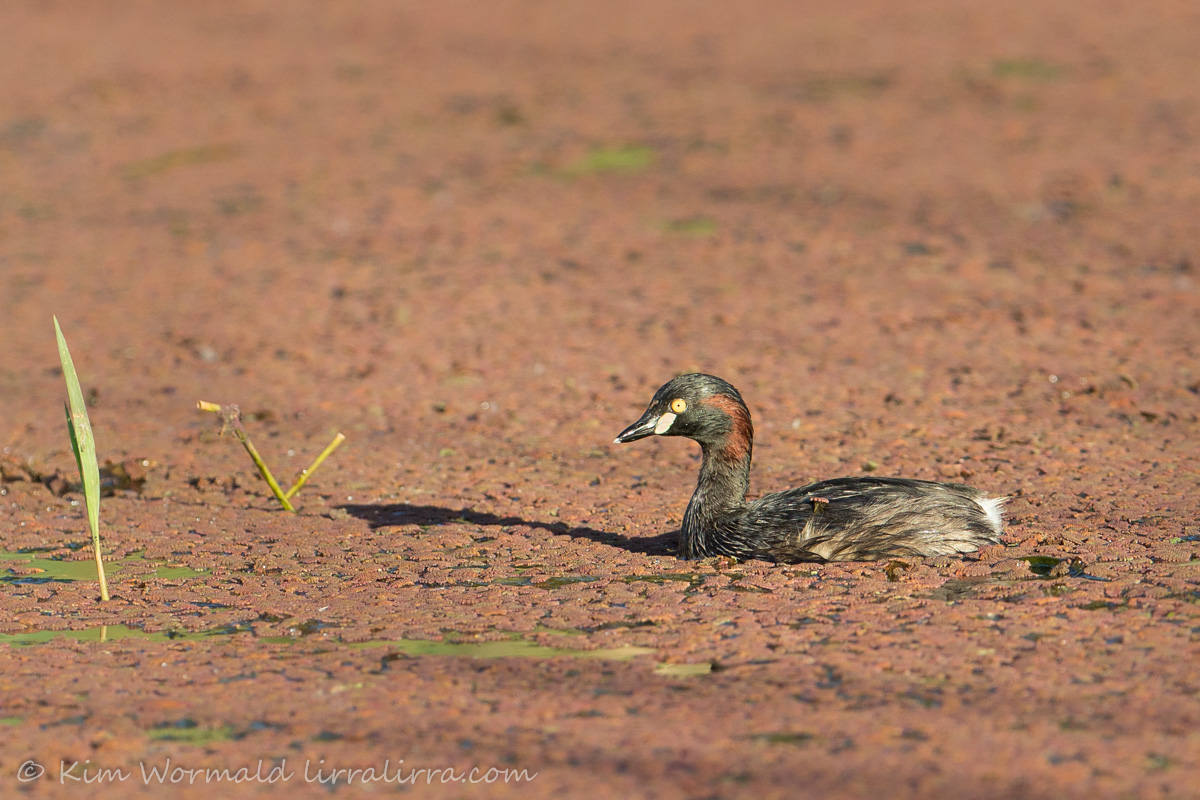 Australasian Grebe
The grebe above represents the three grebe species that live in Victoria; the other species are the Hoary-headed Grebe and the Great Crested Grebe.
– Grebes are not included on the list of species that hunters are permitted to shoot.
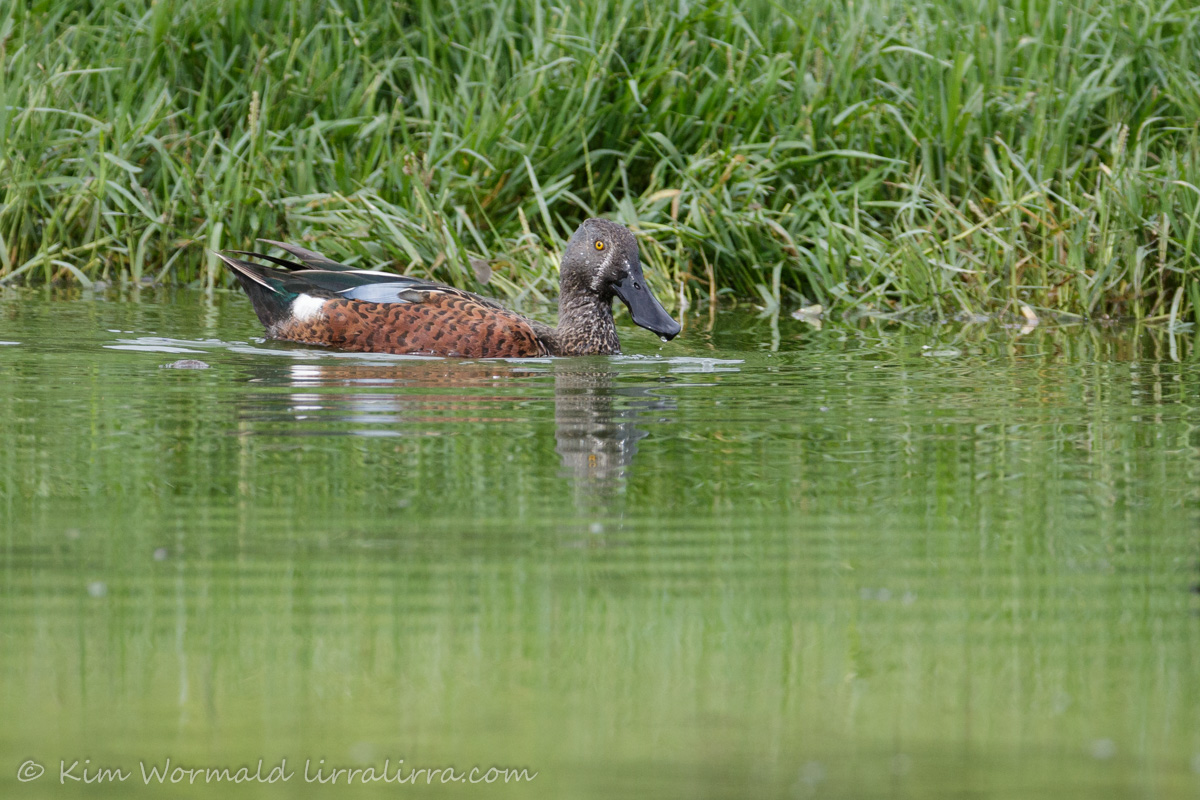 Australasian Shoveler
Australasian Shovelers are magnificent birds with striking colours. Their numbers have seriously depleted and they were removed from the shooters’ game list, surprisingly they were re-added to the list in 2006 despite their numbers still being of concern.
– Australasian Shovelers are considered ‘game ducks’ that shooters are permitted to kill.
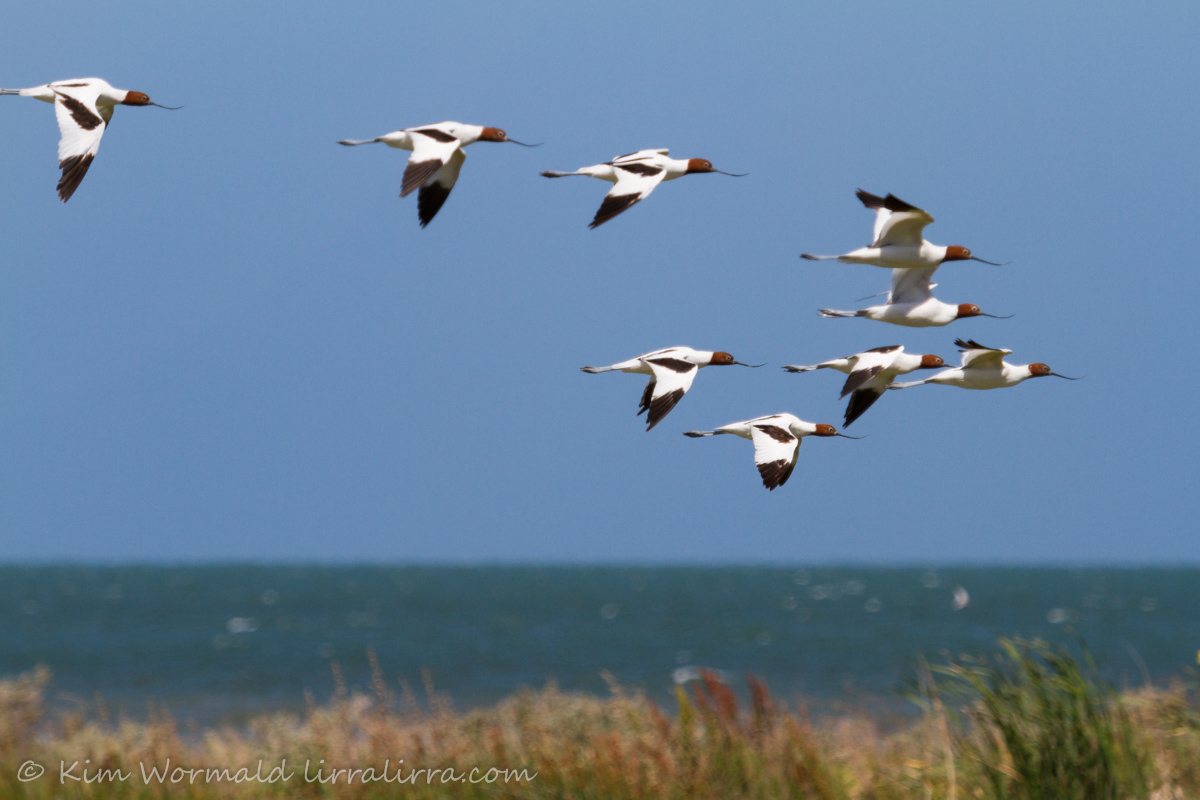 Red-necked Avocet
Red-necked Avocet wade in shallow waters to feed. They are distinctive white birds with chestnut heads and long, curved bills.
– Red-necked Avocet are not included on the list of species that hunters are permitted to shoot.
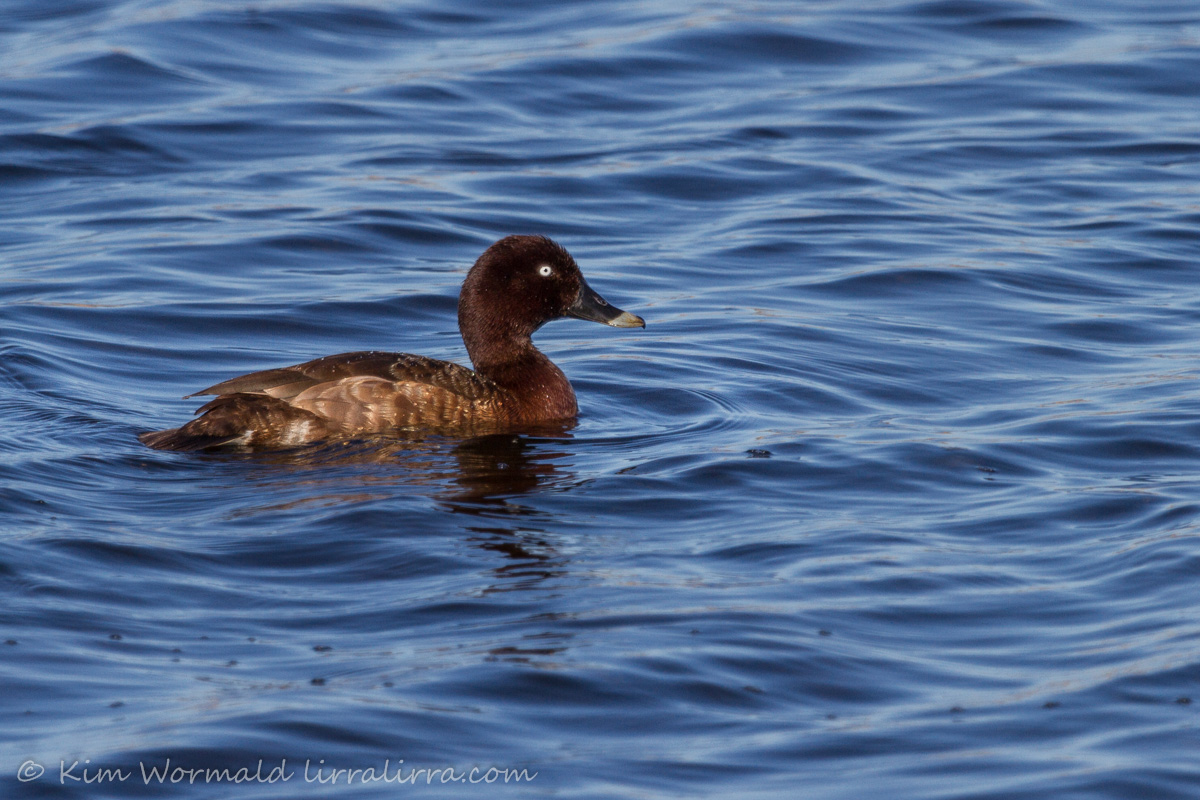
Hardhead
Hardheads are true diving ducks that are found across Australia; their numbers have declined in areas where drainage and water diversion have taken place. The male has a distinctive white eye.
– Hardheads are considered ‘game ducks’ that shooters are permitted to kill.
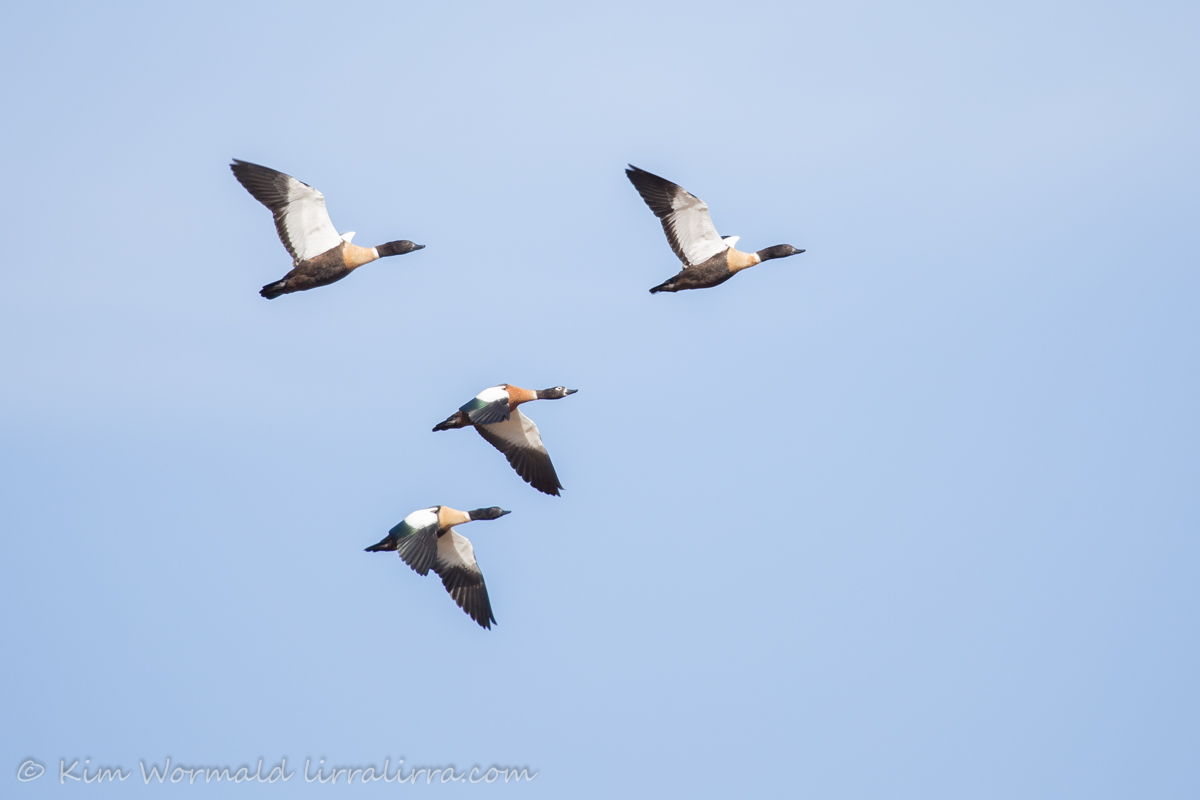 Australian Shelduck
Australian Shelduck are large, brightly coloured ducks that are found in south-eastern and south-western Australia.
– Australian Shelduck are considered ‘game ducks’ that shooters are permitted to kill.
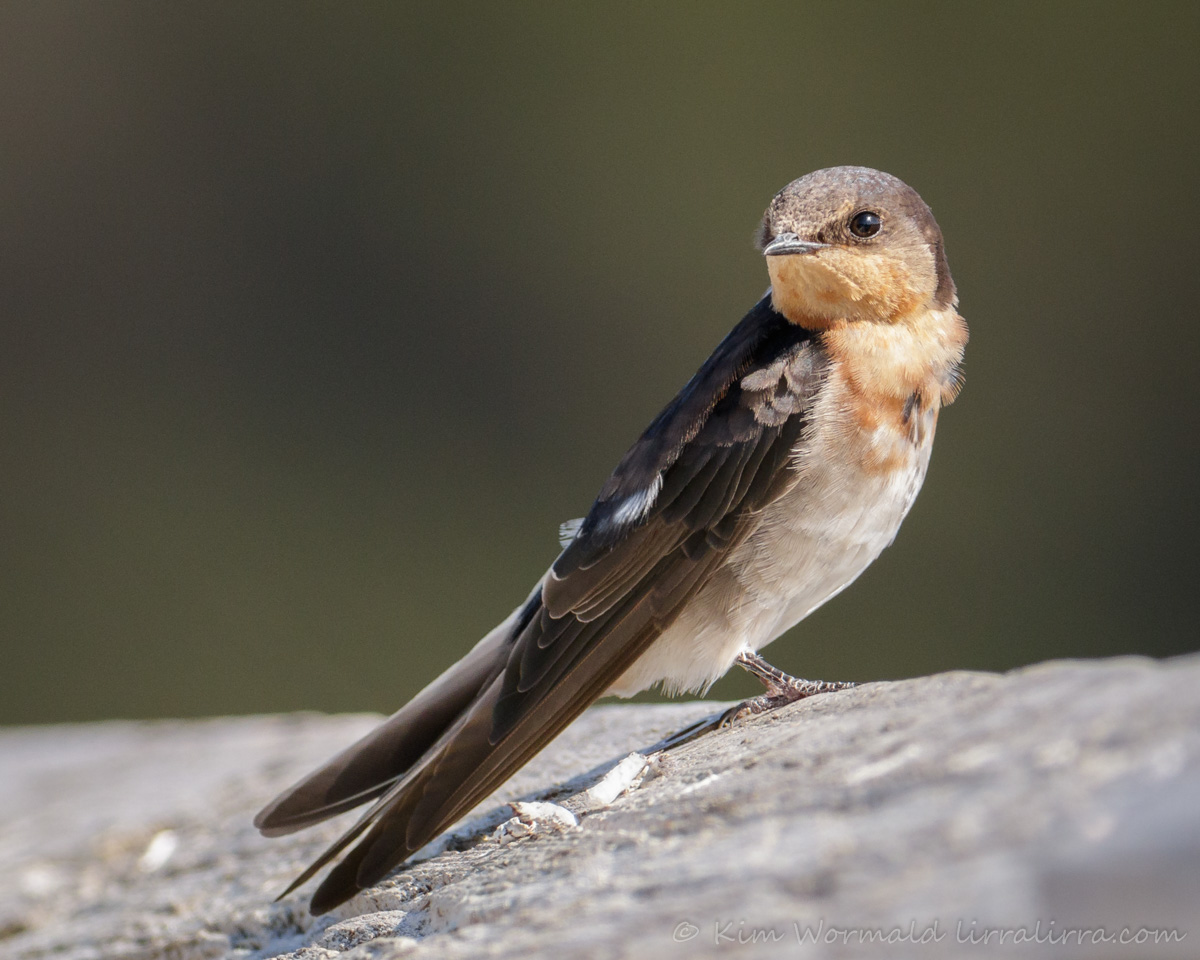 Welcome Swallow
Tiny Welcome Swallows can be caught in the spray of pellets that indiscriminately kill and injure birds other than the target bird.
– Welcome Swallows are not included on the list of species that hunters are permitted to shoot.
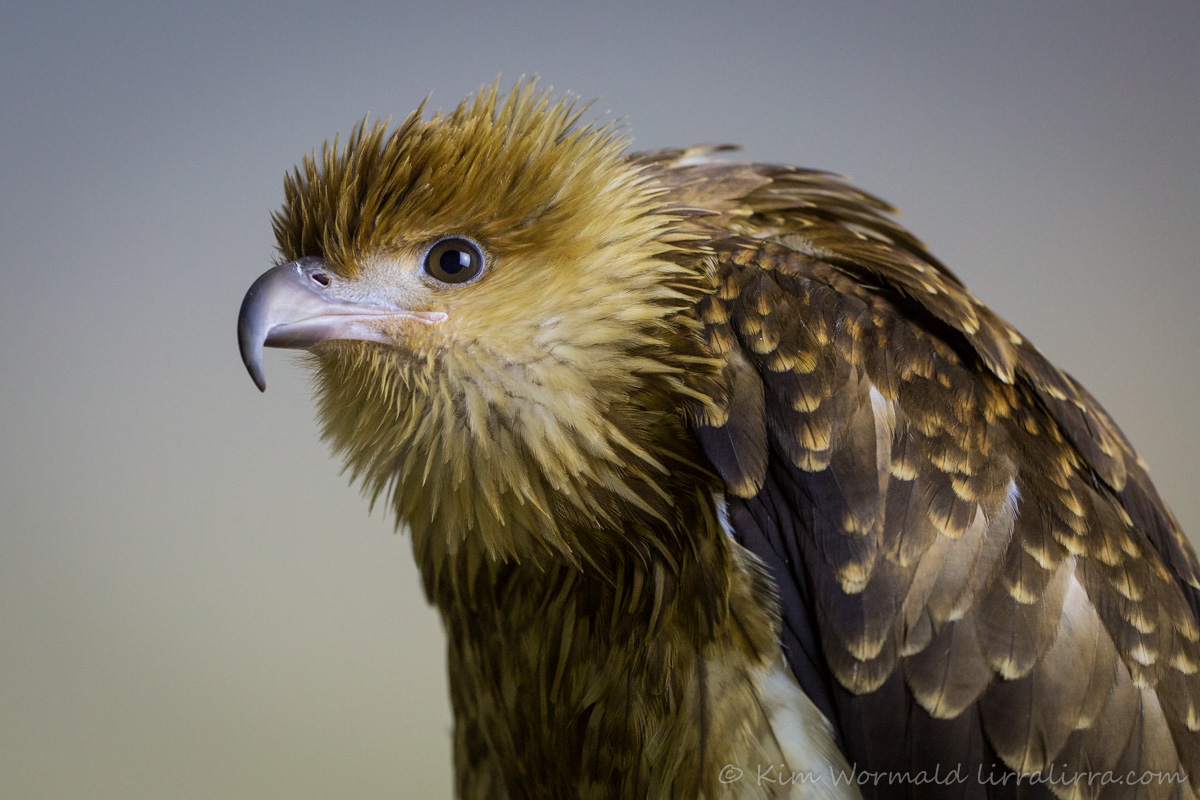 Whistling Kite
The Whistling Kite above is a bird that is used for education and conservation purposes and the image was taken indoors, as always I chose not to use a flash. Whistling Kites are magnificent shaggy raptors that particularly like to forage around wetlands.
– Whistling Kites and other raptors are not included on the list of species that hunters are permitted to shoot.
In order to be issued with a shooters’ licence applicants need to pay a Game Licence Fee, apart from 12 to 17 year olds who do not need to pay. I find it impossible to comprehend why 12 to 17 year olds are given guns and encouraged to glorify in the death of our native waterbirds.
Agriculture Minister Jaala Pulford stated, “Anyone wishing to take part in the 2015 duck season must have passed a Waterfowl Identification Test to demonstrate that they can correctly identify which species are allowed to be hunted”. Unfortunately the test is flawed. The test has 22 questions with a choice of 4 multiple-choice answers; correct answers are worth 3 points. There is also a ‘not sure, don’t shoot’ answer which is worth 1 point. A pass rate of 75% is required which falls to 64% as an applicant only needs to answer 14 questions correctly along with 8 ‘not sures’ in order to pass. This is horribly low when the consequence of incorrectly identifying species results in endangered or non-target species being injured or killed. But much of the ‘mis-identification’ seems more like wilful killing as it’s impossible to believe that anyone could accidentally shoot species featured in this post.
Native waterbirds across Australia are in serious trouble and have been enticed to refuge in wetlands that have been artificially filled prior to the Victorian duck shooting season. Not only is duck hunting a sickening assault on our wildlife but there is definitive evidence, collected by the Coalition Against Duck Shooting, of rule breaches including:
- bag loads of dead birds being discarded if more desirable species are shot
- injured birds being left to die, suffering incorrect twisting of the neck and being shoved into bags while still alive
- non game birds being injured and killed
- physical and verbal assault of wildlife rescuers
Hundreds of thousands of native waterbirds will be killed in Victoria this season. If you would like duck hunting to be banned please look at the Coalition Against Duck Shooting website, add your name to the petition and write to the Victorian Premier at daniel.andrews@parliament.vic.gov.au You may also like to be inspired by Daniel’s Gregory’s song Lay Down Your Guns
My youngest daughter is heading out, as I write, to help support the wildlife rescuers. I hope that all goes well for her and the inspiring teams that are caring for our native waterbirds in the face of this year’s season of shame.
Happy petition signing and email writing, Kim
~ Thank you for your visit and comments.
~ If you’d like to receive a weekly email informing you that lirralirra has been updated please join the growing list of subscribers and add your email address to the ‘subscribe’ box above right.
