Hooded Plovers (Thinornis rubricollis rubricollis – Eastern) are threatened on Phillip Island. They are small beach-nesting shorebirds that face grave dangers when trying to raise their chicks. I was totally blessed to see this little family at Surfies Point recently.
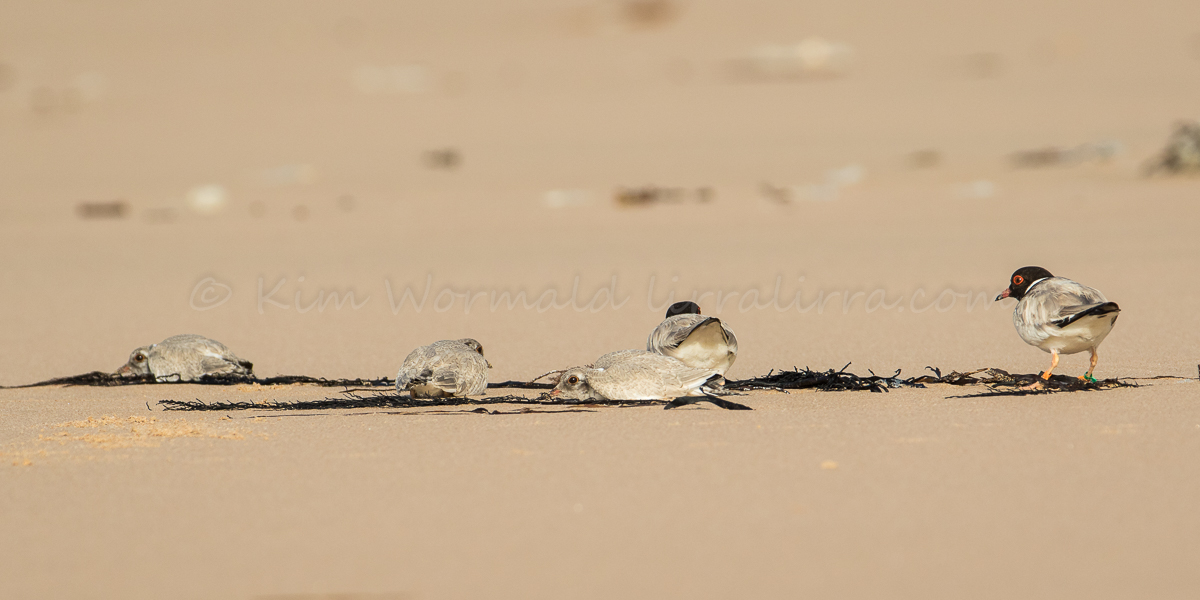 Hooded Plover family (Thinornis rubricollis rubricollis) – stashed
I spent many hours watching this family as they approached the critical fledging time. Hooded Plover chicks fend for themselves from day one but they are unable to fly to safety until they reach five weeks. The only defense they have against potential predators is to ‘stash’ or go to ground. When I’m watching hoodies I can tell, to a certain extent, what is happening behind me by their behaviour. When they stashed the chicks this time it was because someone was walking along the beach with an on-lead dog at the edge of the water, about 50m away. They stayed stashed for several minutes. If multiple visits are made to their territory the chicks can be stashed for long sections of the day which can be disastrous if the weather is very hot or cold. It also causes problems by reducing their foraging time which in turn affects their health and growth-rate.
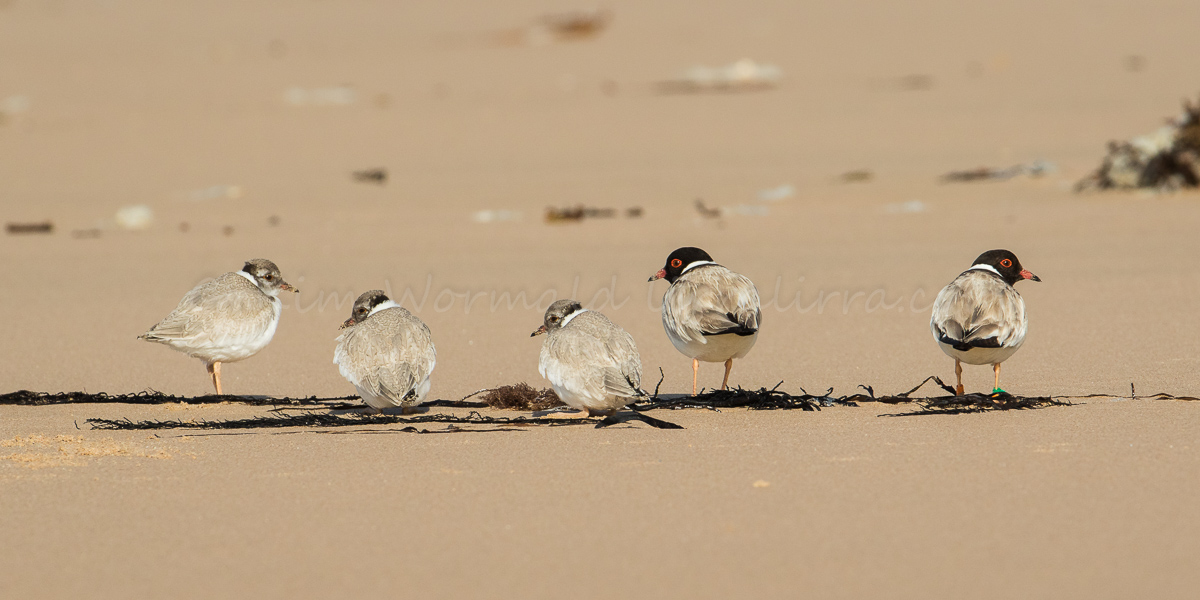 Hooded Plover family (Thinornis rubricollis rubricollis) – stashed
I like the way they stashed themselves on sprigs of seaweed to enhance the camouflage of their own disruptive colouring. Even from a few metres away they are incredibly difficult to see. When the hoodie parents feel that the danger has receded they slowly stand and the chicks follow suit.
It was super lucky that this stash occurred on the focal plane of my camera as none of the birds were in the background and therefore out of focus. The background and foreground blur is what makes the birds stand out in these images, without the selective focus their browns, whites and blacks would be lost among the browns, whites and blacks of the beach itself.
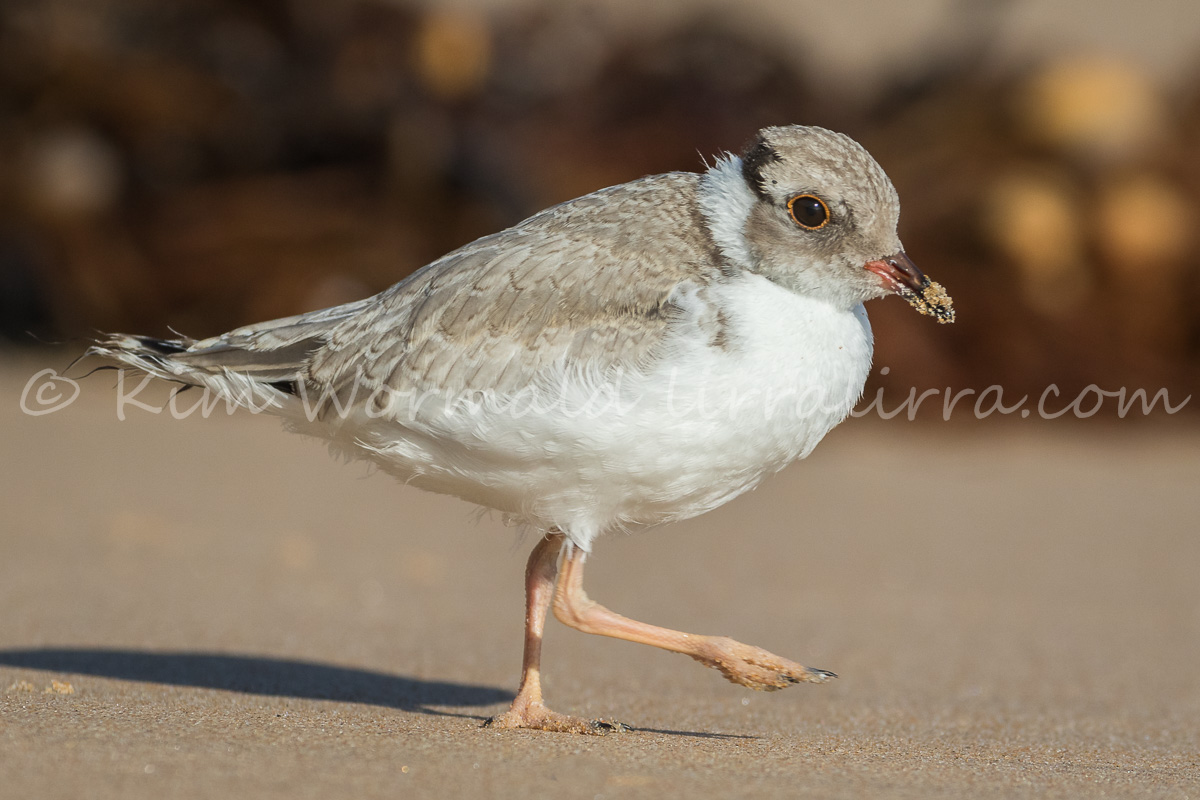 Hooded Plover (Thinornis rubricollis rubricollis) – chick
When I photograph birds I tend to stash myself (I’ve never thought of it that way before, how funny!) and hope that the birds will evenutally feel comfortable enough to come towards me. When the three little chicks in this family started running towards me I held my breath and went into a zone where I pulled together everything I’ve learned about bird photography. The image above is one of the series I took while being feasted on by March flies. I love the detail I was able to capture, especially the twirly feathers at the end of its tail, the grains of sand on its bill, the dark feathers emerging on its head, the softness of its tummy feathers, the detail of its tiny nails and the twinkle in its eye.
Please excuse the more obtrusive watermarks but I’m extra-specially fond of these images. I am, however, happy for them to be used on request for conservation purposes. The second image has already been used at a recent Dogs’ Breakfast to help island beach users learn more about the vulnerable hoodies.
On Phillip Island this nesting season 43 nests were started (several were 2nd, 3rd and even a 4th attempt to raise chicks). Hooded Plovers usually lay 3 eggs per nest, which would have resulted in about 129 eggs. Instead only 70 eggs were laid, but most of those eggs were lost and only 23 chicks hatched. Of those 23 chicks just 12 survived. As grim as those figures sound this was a good year for hoodies on the island, as good or better than during the previous 23 years – many thanks to the rangers, volunteers and mindful beach users.
Happy birding, Kim
~ Thank you for your visit and comments.
~ If you’d like to receive a weekly email informing you that lirralirra has been updated please join the growing list of subscribers and add your email address to the ‘subscribe’ box above right.
