The Canon 7DII got a workout at the beach while a Pacific Gull vigorously devoured its breakfast at the water’s edge. It’s been one of the only workouts so far where I’ve been happy with the results.
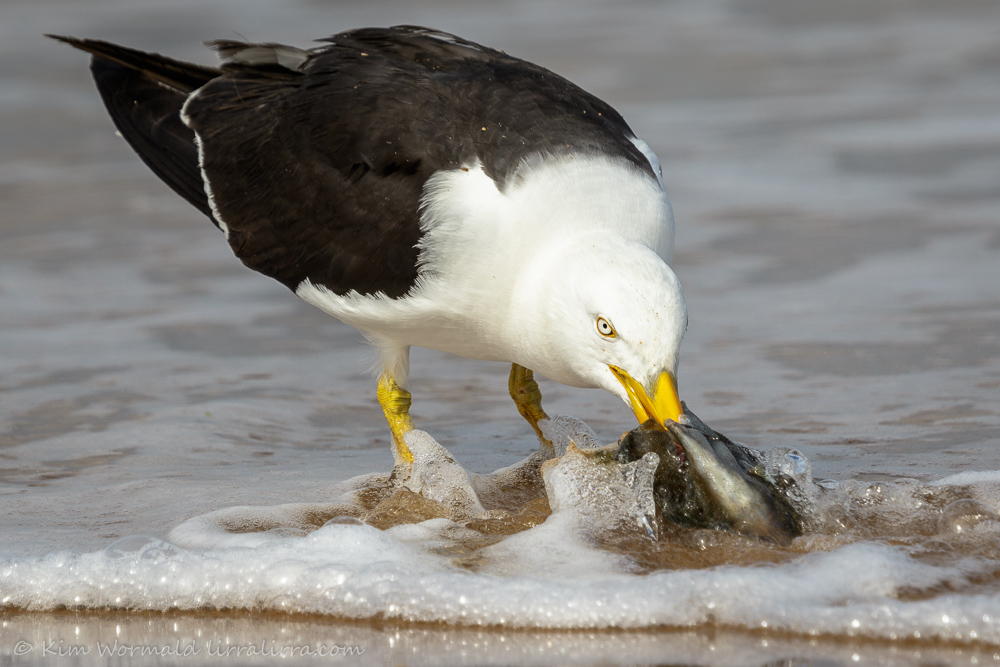 Pacific Gull (Larus pacificus)
Canon 7DII, 100-400mm L IS USM, 1/1000, f/6.3, ISO 200, focal length 320mm
Wandering along deserted beaches is such fun; nothing stays the same and I never know what I’ll see. This particular morning a Pacific Gull was tugging at an unfortunate leatherjacket. Identifying the fish was easy due to its ‘unicorn horn’ and strange teeth but there are over 100 species of leatherjacket and despite looking at 73 images (on the Australian Museum site) I am none the wiser as to which species the gull was eating. If anyone can solve the mystery please let me know.
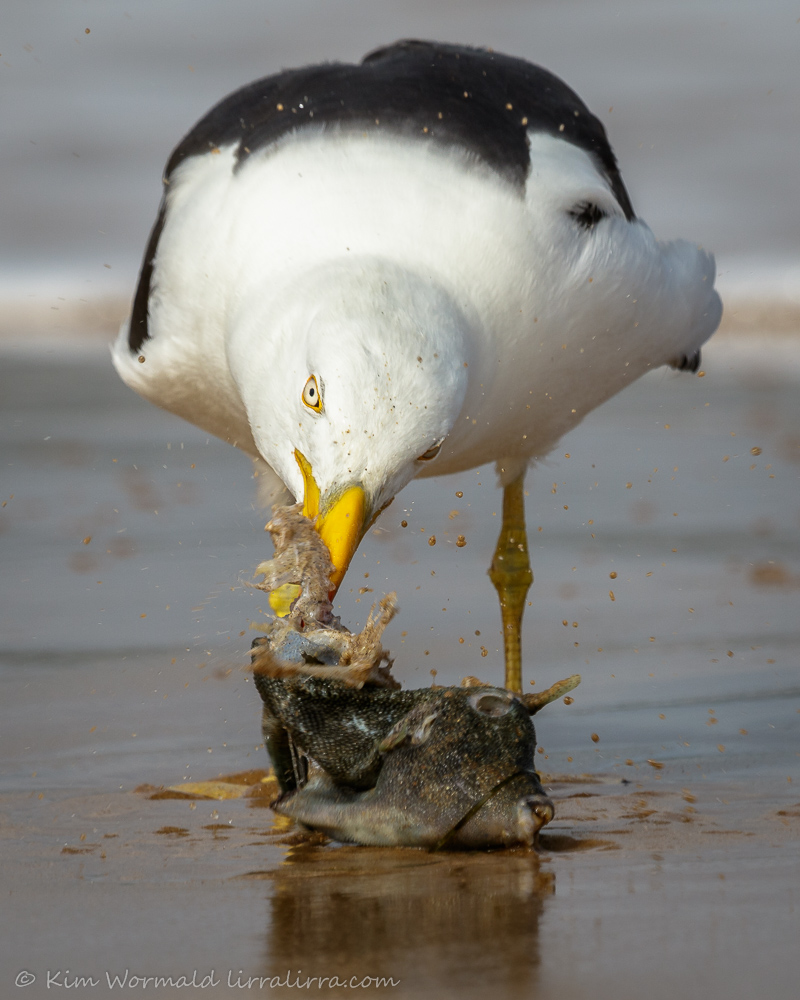 Pacific Gull (Larus pacificus)
Canon 7DII, 100-400mm L IS USM, 1/1000, f/6.3, ISO 200, focal length 400mm
The gull fed frenetically, constantly flipping and prodding at the fish causing sandy droplets to fly. The incoming tide changed the look of the images, sometimes bubbling around the fish and sometimes showing reflections but the intensity of the gull’s expression didn’t alter.
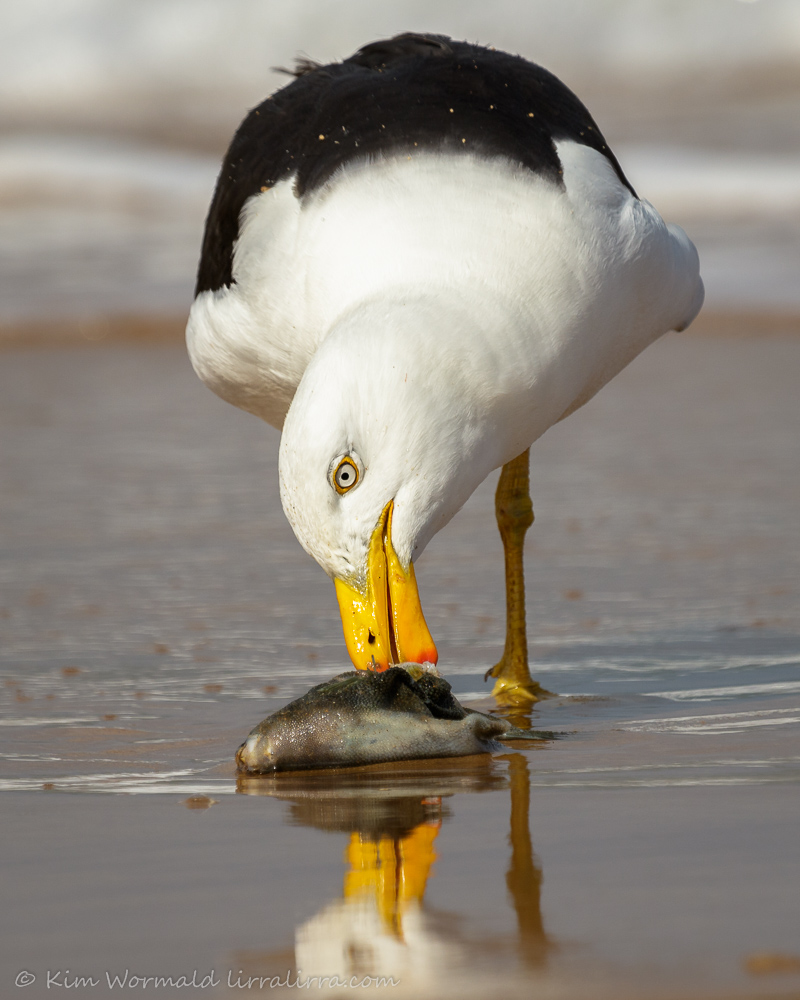 Pacific Gull (Larus pacificus)
Canon 7DII, 100-400mm L IS USM, 1/1250, f/7.1, ISO 200, focal length 380mm
Pacific Gulls are large birds measuring about 65cm and weighing about 1kg. They have impressively large bright yellow bills that are tipped with scarlet, which looks like blood in the image above. They often forage on sandy beaches away from human habitation where they eat fish, molluscs and are one of the natural threats to the endangered Hooded Plovers (see Hooded Plover Chicks, The whisper of a child, Beach-nesting Hoodies).
Happy birding, Kim
~ Thank you for visiting and commenting
~ If you’d like to receive a weekly email informing you that lirralirra has been updated pleased add your address to the ‘subscribe’ box above right
