Swooping magpies are in the news again. Every spring male magpies become protective of their nestlings and a small percentage swoop pedestrians and cyclists, occasionally causing injury.

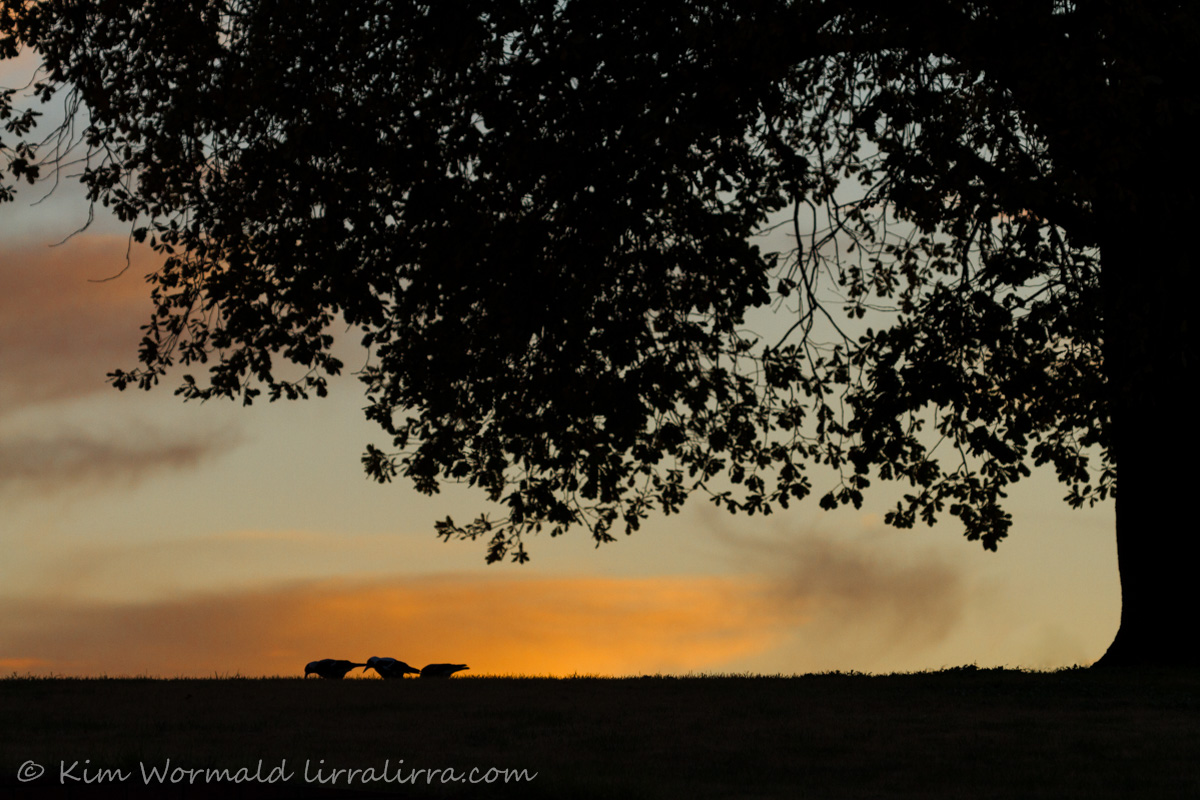
Magpies at sunset
This is one of the images I’d overlooked in my pixel-peeping quest for detail. I’m enjoying experimenting with environmental shots, especially when the lighting is poor and the birds are distant.
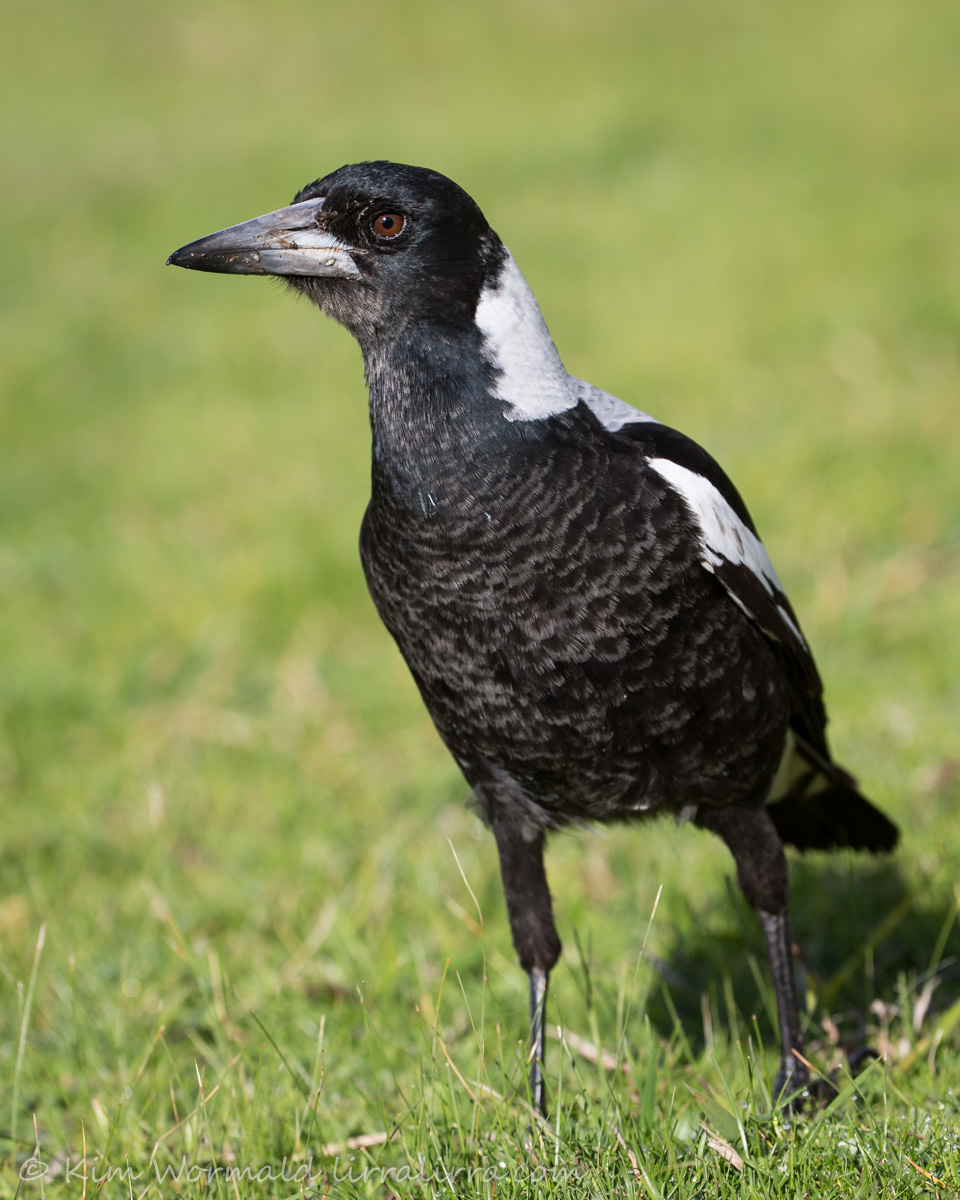
Australian Magpie (Cracticus tibicen)
Magpies are ubiquitous across Australia, apart from the top end and the driest deserts. Their plumage varies across their range; the bird above is a white-backed magpie and from its grey back it looks like a female. The white-backed males have bright white backs.
I was flat on the ground when taking the image above, it’s virtually a worm’s eye view of a magpie. With that intense stare and sturdy bill the bugs and critters would have little chance of surviving once spotted.
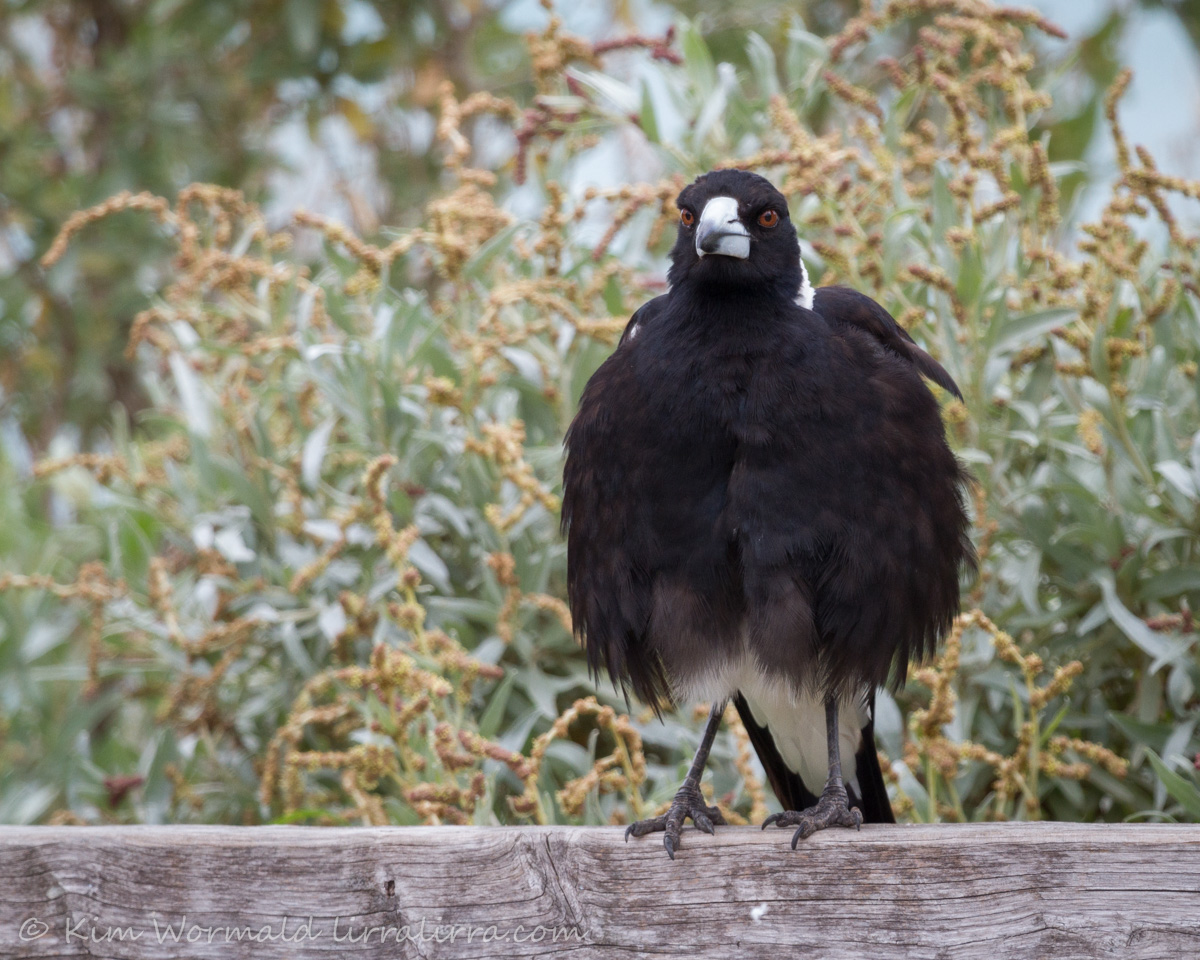
Australian Magpie
Young magpies are mottled brown-grey, they have black eyes which turn red-brown as they mature. This bird looks fluffy and brownish and at first glance it looked like a young bird but closer inspection shows the adult eye colour.
I have not been swooped by a magpie, and hopefully never will be. The pair that nest in my garden re-use a rough nest of sticks that is about 20 metres up a gum tree. Each year they gather vast amounts of dog hair that I put outside after brushing my Golden Retrievers.
Dr Darryl Jones from Griffiths University has studied swooping magpies and said, “There are magpies who specialise on pedestrians, which is most of them, the postie birds and the cyclist birds” (ABC News 1.9.2015). Apparently males that swoop pick on people they see as a threat, which can even be someone who has tried to rescue a juvenile. Sometimes people throw sticks and stones at the magpies to try to deter an attack … which makes things worse. Sometimes, most unfairly, magpies will swoop someone who looks like a person who bothered them. For a while people put fake eyes on the back of bike helmets which didn’t seem to deter attacks. Then cyclists tried gluing a few cable ties to their helmets but this was also unsuccessful, apparently it takes a vast number of cable ties to be effective, a spread that makes the helmet look more like an echidna than a hat. Another option is to wear a hideous mask, facing backwards.
The Queensland Government lists these tips to protect yourself:
- Move quickly through the area but do not run
- Wear a hat or carry an umbrella
- Wear sunglasses for eye protection
- Bike riders should dismount and walk
- Do not act aggressively
- Remember the magpies are protecting their young
Several other bird species are known to swoop, including Masked Lapwing, Laughing Kookaburra, Magpie Lark, Grey Butcherbird and the Red Wattlebird.
Although magpies are ubiquitous their numbers are dropping, along with several other common species. Birdlife Australia has published a report, The State of Australia’s Birds, that shows that magpie numbers have decreased significantly and consistently throughout the east coast. Hopefully a cause will be found before their decline becomes too serious and we are no longer charmed by their familiar and fantastic warble.
Happy birding, Kim
~ Thank you for visiting and commenting
~ If you would like a weekly email letting you know that lirralirra has been updated please use the ‘subscribe’ box above right