They’re not the prettiest of birds, they’re not the kindest of birds and their call is a raucous racket but I am staggered to realise that I haven’t featured Red Wattlebirds in a lirralirra post until today, and they live in my garden!
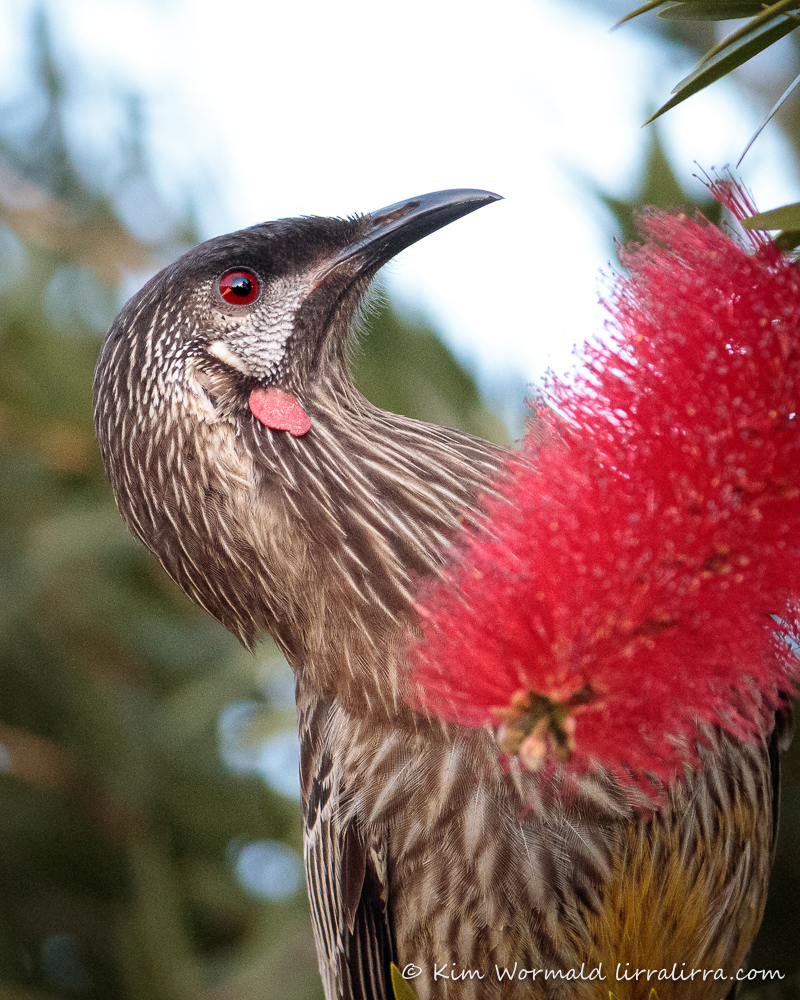
1/800, f/5.6, ISO 3200
Canon 5DSR, Canon 200-400m L IS USM EXT
Red Wattlebirds are the largest of the mainland honeyeaters, only Tasmania’s Yellow Wattlebird is larger. They are about 35cm and 111g. They aggressively protect their territory, chasing other birds including honeyeaters and larger birds like magpies and ravens. I’m lucky to have a large enough property that plenty of other honeyeaters are able to live here too, at least six other honeyeater species in the past few days. They forage for nectar and often take insects.
The bird in the image above is an adult Red Wattlebird, it has red eyes and a largish red wattle dangling on each side of its neck. Its brownish feathers are streaked with off-white and it has a large, bright yellow patch on its lower underparts (that can just be seen in the image).
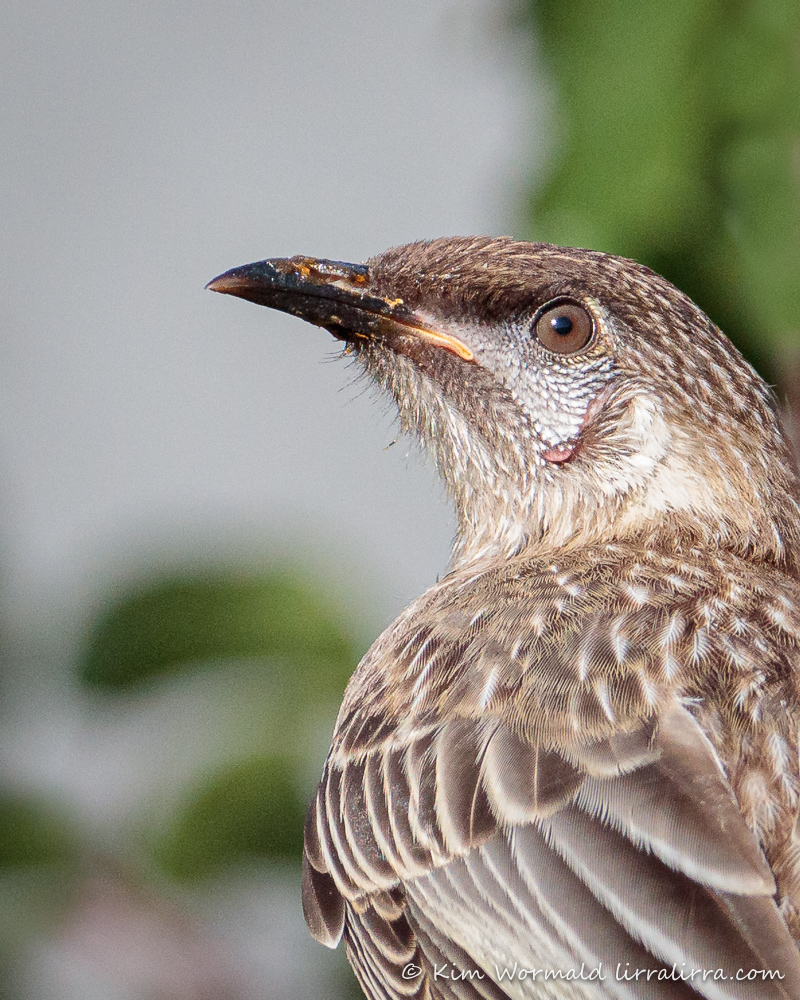
1/2000, f/7.1, ISO 1600
Canon 5DSR, Canon 200-400m L IS USM EXT
Young Red Wattlebirds look cuter. They aren’t as contrasty as the adults and I prefer the softer, warmer browns. They have the tiniest hint of a wattle dangling beneath the silvery triangle below their brown (not red) eyes – it looks quite comical to me for some reason. The bird above has a yellow gape, typical of many young birds.
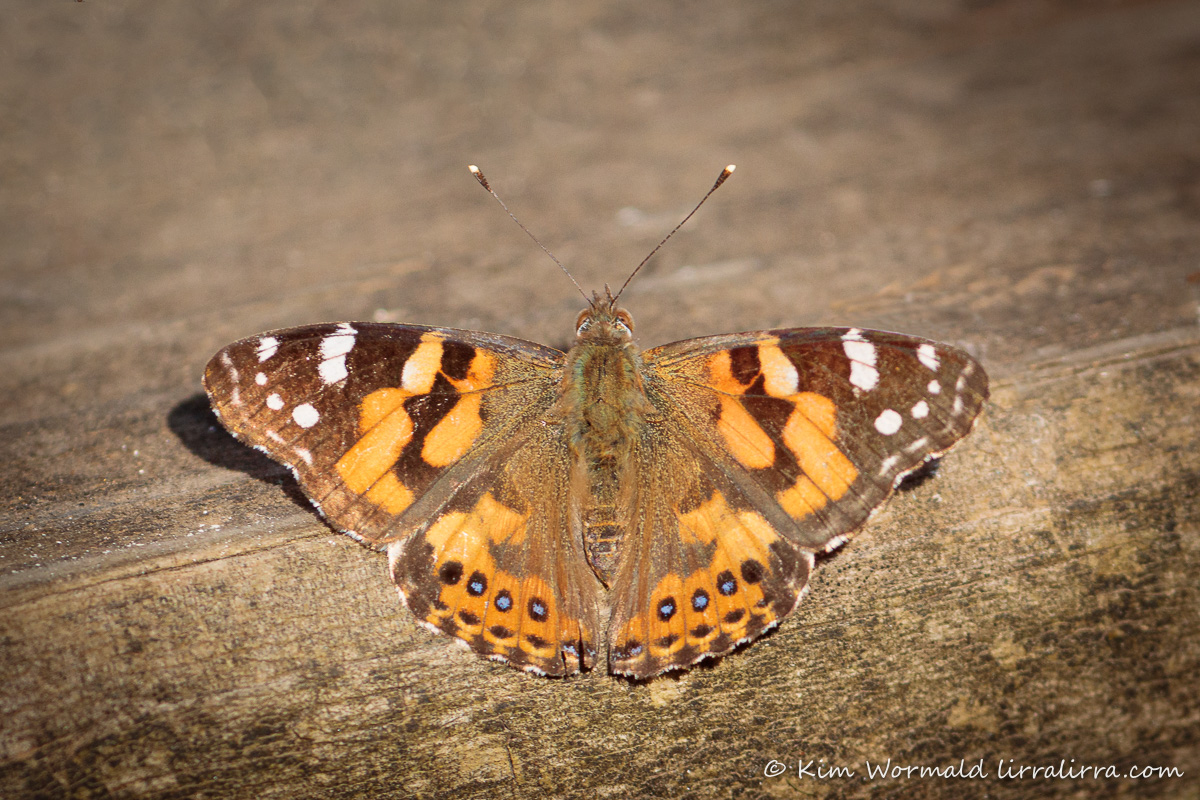
1/1250, f/5.6, ISO 800
This Australian Painted Lady butterfly kept settling in shafts of sunlight near to where I was sitting on the grass. It is in perfect condition with no ragged edges or signs of wear or damage which make me wonder if it had just emerged from its chrysalis and was drying its beautiful wings. The ‘headlights’ on its antenna look so amazing I had to do a little research. Apparently butterflies use their antenna to smell and to keep their balance. Isn’t the natural world awesome.
There are two days left of the Aussie Backyard Bird Count. Birdlife Australia are gathering information from citizen scientists. All you need to do is note the bird species you see in your garden in 20 minutes and enter your list here: Aussie Backyard Bird Count
Happy birding and butterflying, Kim
~ Facebook page Kim Wormald – lirralirra
~ Facebook group Ethical Bird Photography
