I returned to the Wedge-tailed Eaglets yesterday and was thrilled that they were still there; looking simultaneously magnificent and comical.
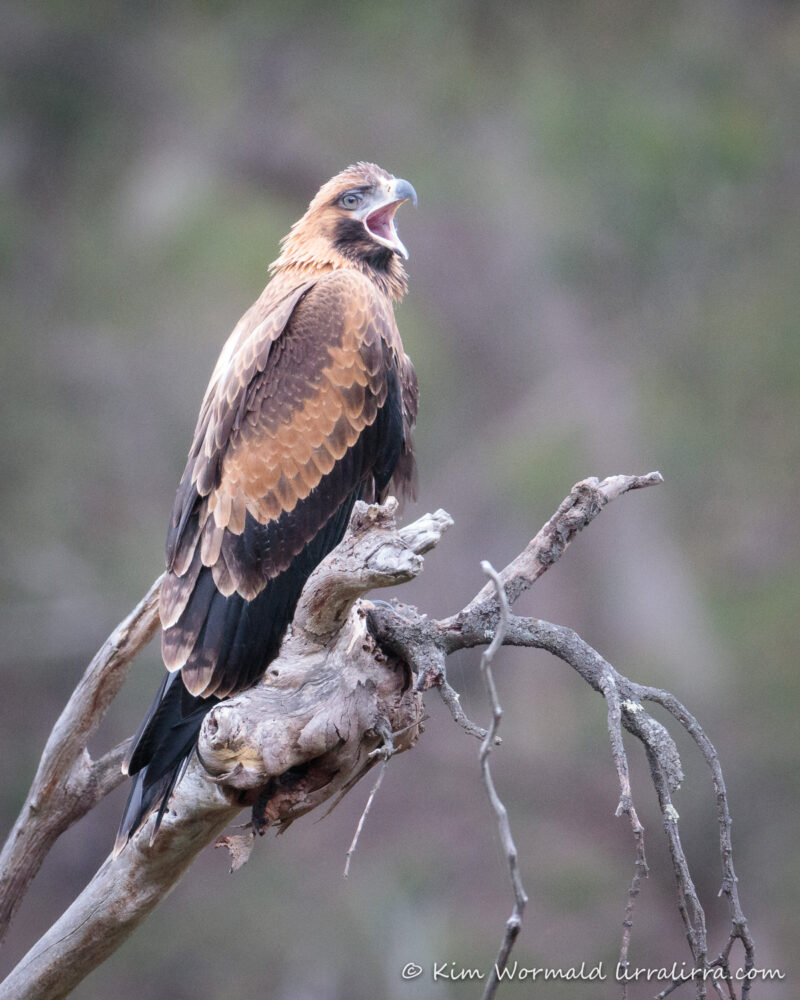
1/1250, f/5.6, ISO 2500, focal length 560mm, handheld
Canon 5DSR, Canon 200-400L IS USM EXT
I thought I’d missed this shot of the Wedge-tailed Eaglet yawning as I’d just lifted the lens to my eye and was adjusting the settings for the changing light. I hadn’t carted my tripod along the track as I wasn’t really expecting to see the chicks – a very silly omission. I often handhold my long lens even though the tiniest movement at a focal length of 560mm can easily result in an image that is seriously out of focus. My arms were starting to ache a little which made me even more concerned that I’d missed the shot. I did a happy dance when I saw I’d be able to share it.
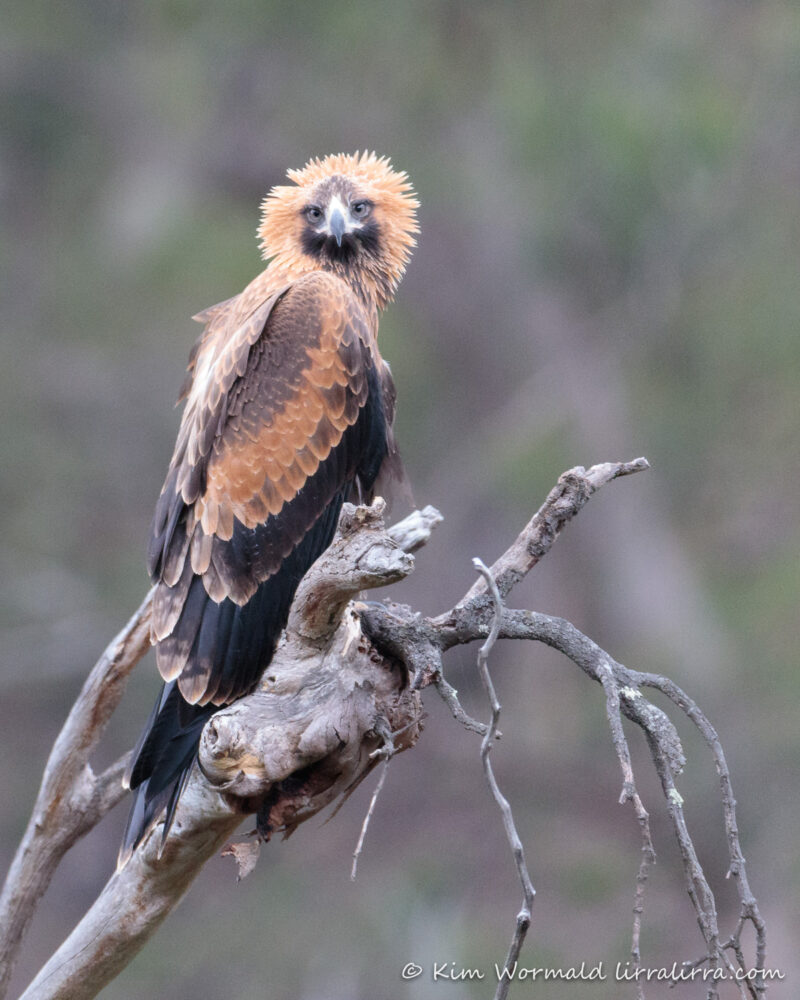
1/1250, f/5.6, ISO 2500, focal length 560mm, handheld
Canon 5DSR, Canon 200-400L IS USM EXT
I was thrilled to capture this moment too, when the breeze ruffled the feathers on the eaglet’s head as it looked towards where I was standing at the edge of the gorge. The symmetry of its magnificent face is quite startling, especially rimmed with those rich, regal looking feathers. Though I couldn’t help thinking of the golden lion tamarind which made me smile.
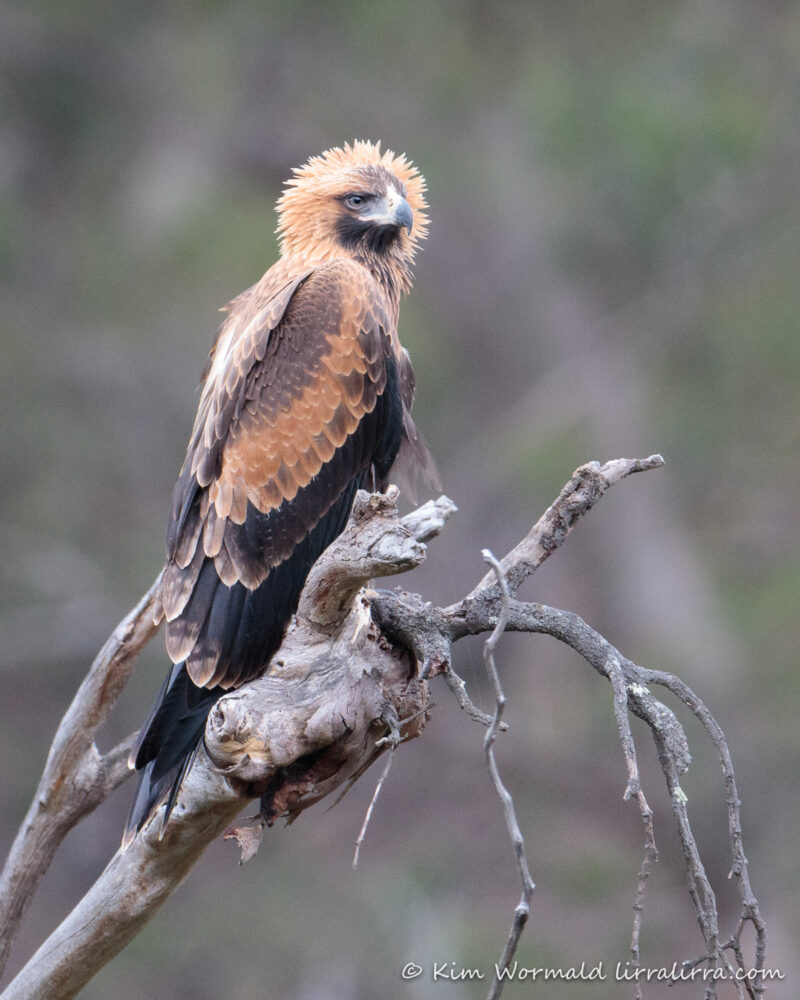
1/1250, f/5.6, ISO 2500, focal length 560mm, handheld
Canon 5DSR, Canon 200-400L IS USM EXT
I’ve included this shot as the hook on its upper bill is so clearly shown against the fringed feathers of its head. Apart from the swarming hoards of mosquitos it was totally awesome to watch this magnificent bird as I listened to the rush of water far below in the gorge.
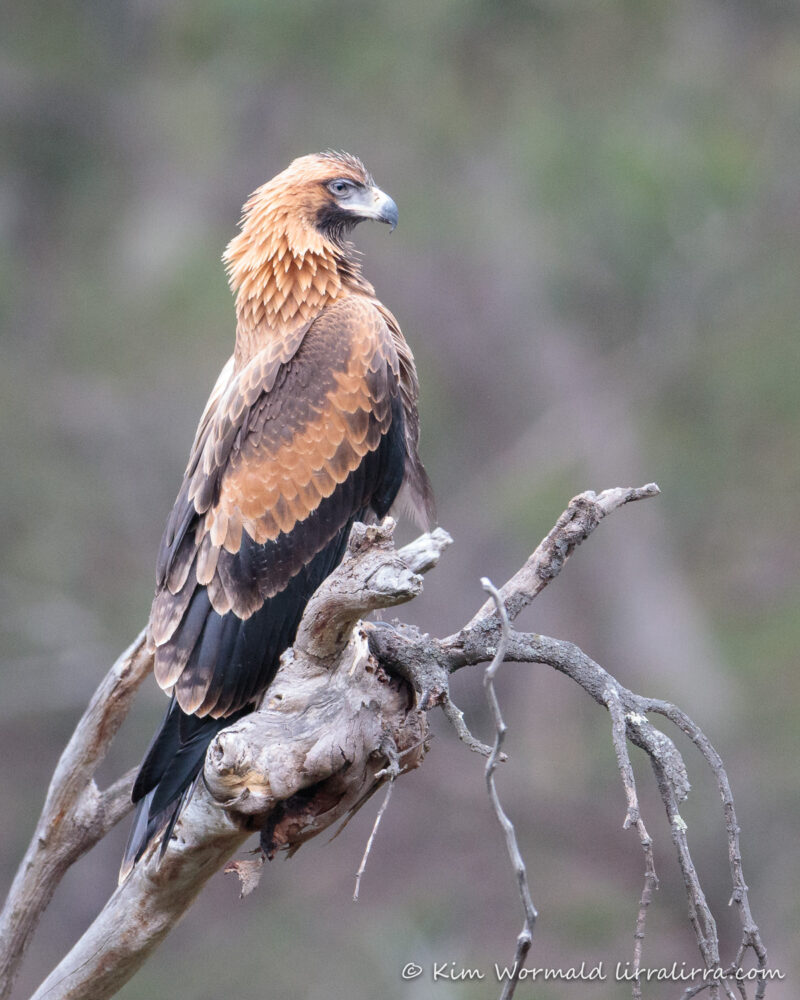
1/1250, f/5.6, ISO 2500, focal length 560mm, handheld
Canon 5DSR, Canon 200-400L IS USM EXT
With its neck stretched and the wind ruffling the golden feathers of its mantle I can’t imagine a bird looking any more regal than this. Wedge-tailed Eagles stand about one metre tall and have a wingspan of 2.3-2.8 metres. It was truly thrilling to watch this bird as it perched so high above the rushing water. What a beautiful world.
Happy birding, Kim
~ Browse prints and gifts Lirralirra Shop
~ Facebook page Kim Wormald – lirralirra
~ Facebook group Ethical Bird Photography
