It’s not every day that a fledgling White-naped Honeyeater visits my birdbaths and poses like a penguin.
1/800, f/5.6, ISO 800
Canon 5DIII, Canon 100-400L IS USM
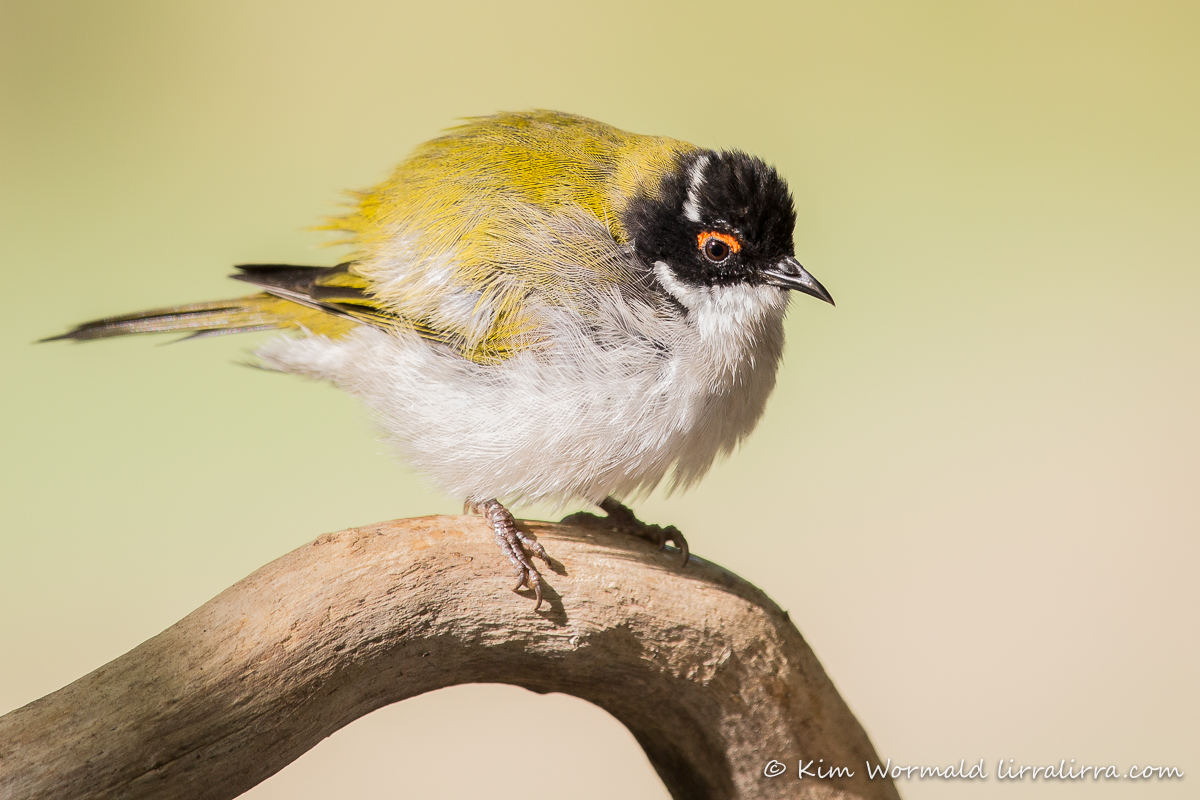
This first shot is one I took a while ago but have included it as it clearly shows the colours of the bird, in warm light. Their markings are delightful to my eye. I like the olive-green upper parts, their smart black caps, the orange crescent above their eyes and that white band at the back of their necks that gives them the name White-naped Honeyeater.
1/800, f/5.6, ISO 1600, focal length 560mm
Canon 5DSR, Canon 200-400mm L IS USM EXT
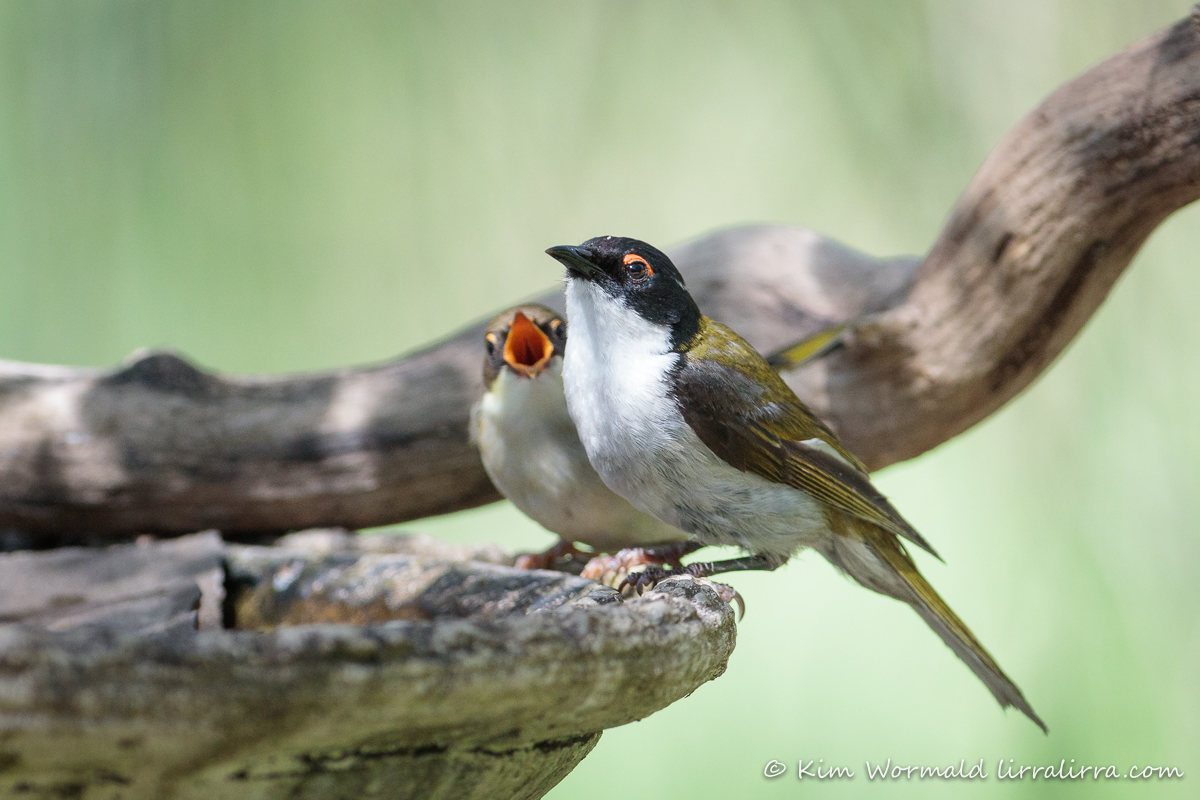
These two visited my bird bath the other day – so cute! The fledgling looks quite different to the adult birds, as you’ll see below.
1/800, f/5.6, ISO 1600, focal length 560mm
Canon 5DSR, Canon 200-400mm L IS USM EXT
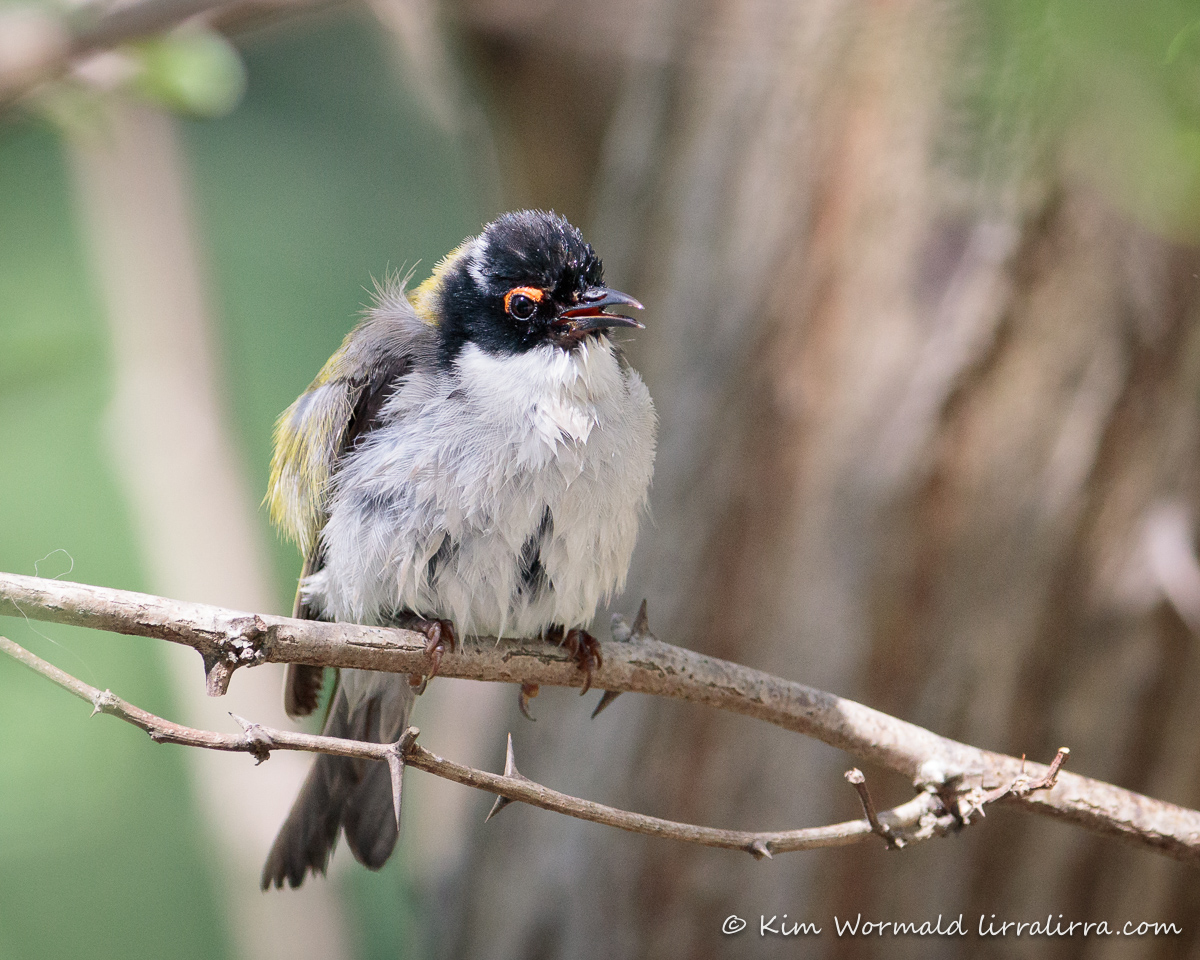
This is the adult from the second image, after having bathed several times. We’ve been having some hot and humid weather in Melbourne with my thermometer briefly showing 42.3C. The birds have been grateful for the fresh water.
1/800, f/5.6, ISO 1600, focal length 560mm
Canon 5DSR, Canon 200-400mm L IS USM EXT
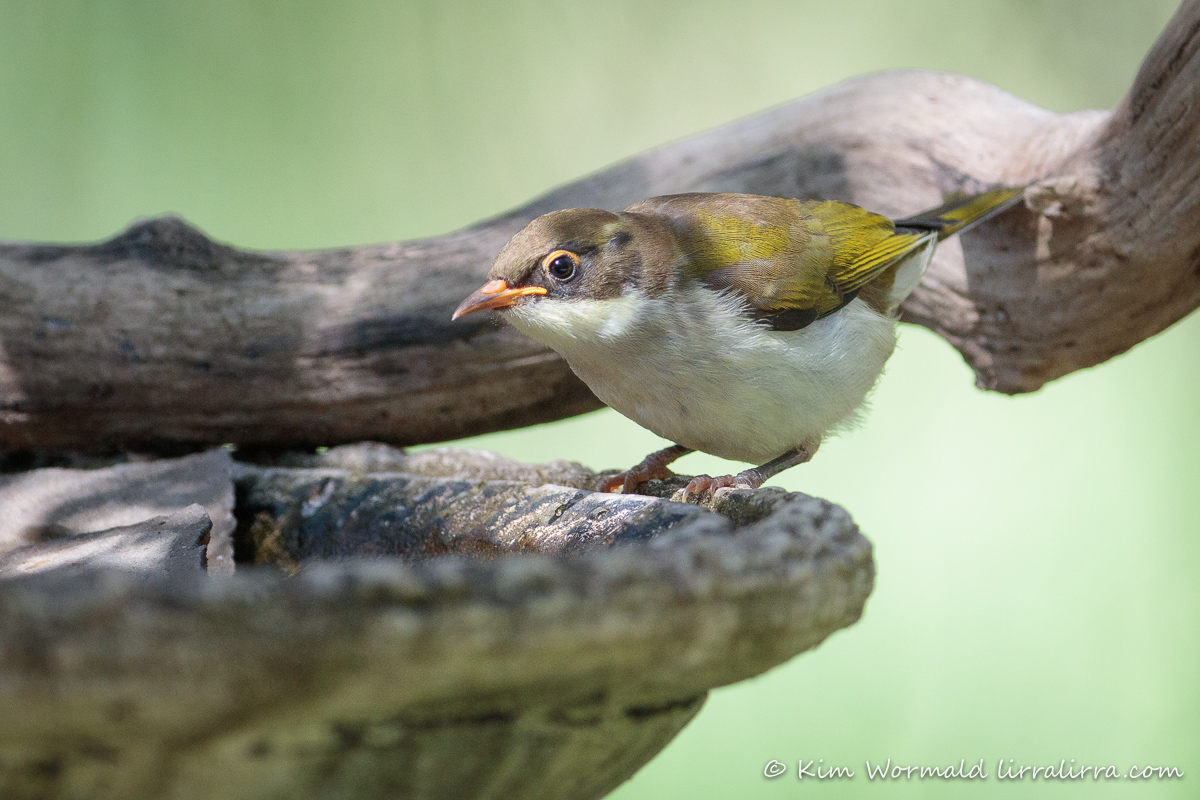
The fledgling took a little longer to take to the water and was a little clumsier as it bathed. I feel like I’ve set up a ‘spot-the-difference’ game. Can you see them all? The bill, nape, head, crescent, upperparts, underparts…
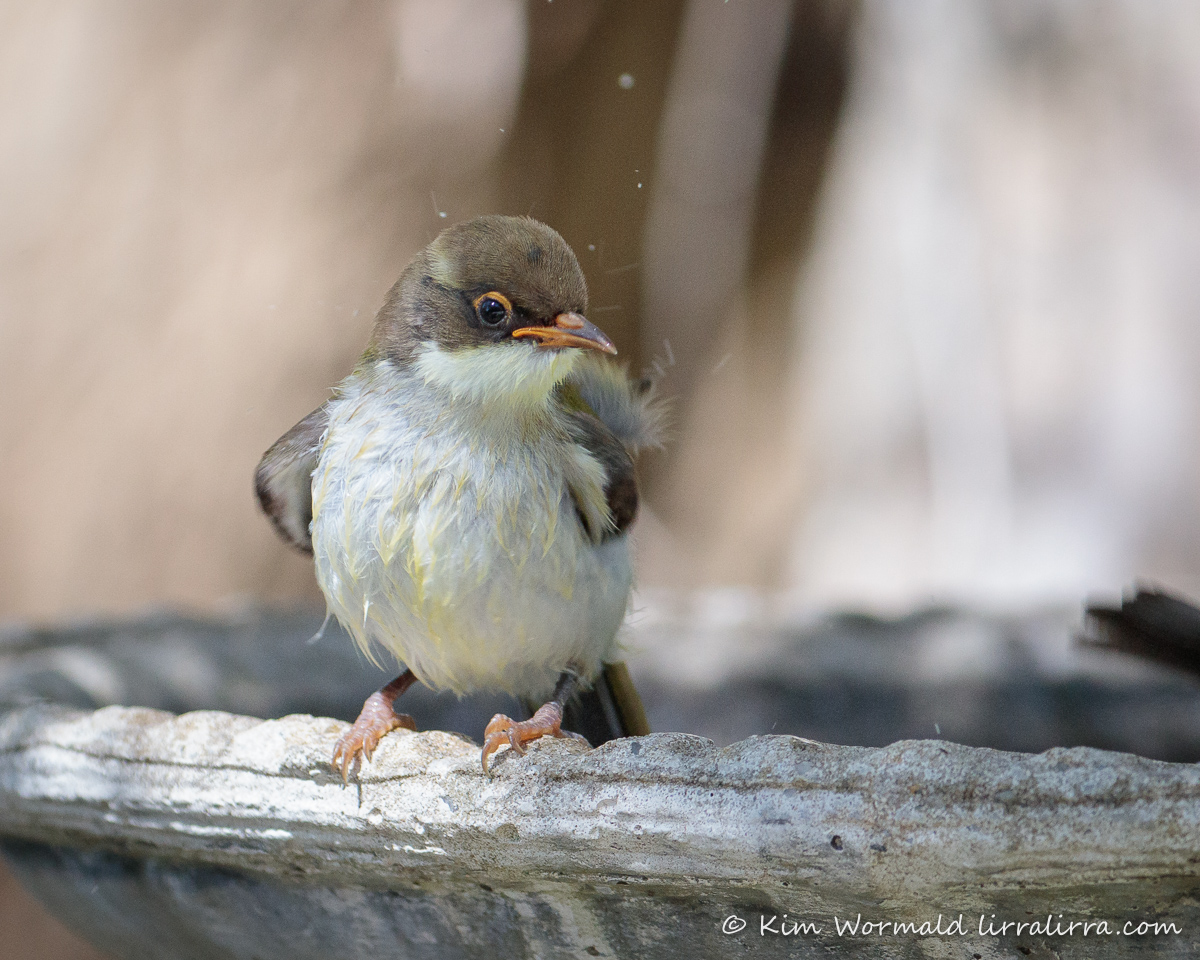
1/800, f/5.6, ISO 1600, focal length 560mm
Canon 5DSR, Canon 200-400mm L IS USM EXT
And here’s the funny little pose that made me think it looked strangely like a miniature penguin.
Fairly often I’m asked which field guide I recommend and newbies are always surprised when I don’t recommend using a book of photographs for identification. Detailed drawings do a far better job of showing colours and specific markings, details that are likely to be lost in a photograph. For example, many colours can easily been over-exposed and blown out, other details might be lost in the shadows, like the colour of a bird’s legs or a significant marking on their feathers. Colours can appear quite different at different times of the day, as shown by the warm light of the first image compared to the others in this series. Our eyes adjust for much of this when we’re actually watching a bird but we don’t always know what the light was like when a photograph was taken, or whether the white-balance has been set a bit too warm or too cool.
I hope your birdbaths are as busy as mine, remember to keep a stick or rock in deeper baths to make sure the birds and other critters can scramble out if they get into trouble.
Stay safe, happy birding, Kim
~ Browse prints and gifts Lirralirra Shop
~ Facebook page Kim Wormald – lirralirra
~ Facebook group Ethical Bird Photography
