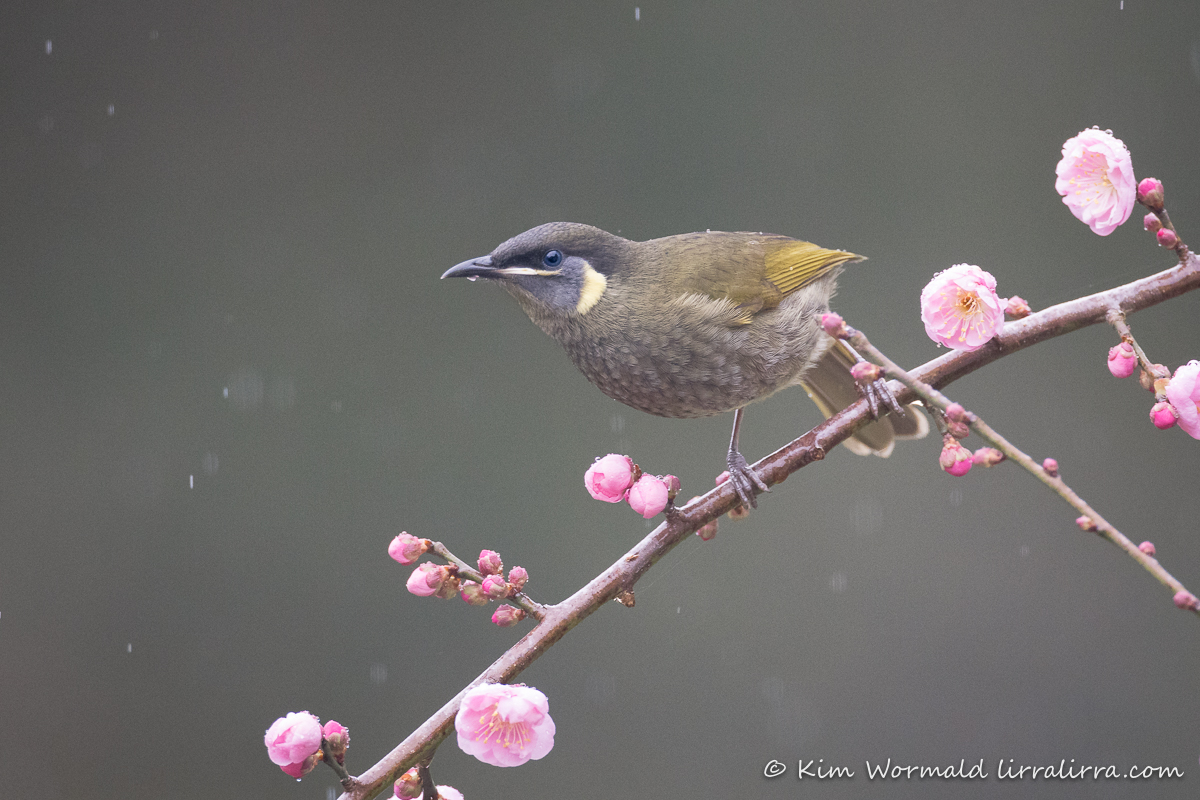
Even the drizzle couldn’t straighten my smile as I photographed this sensational Lewin’s Honeyeater as it sipped nectar from the mid-winter blossoms on the weeping apricot.
1/800, f/4.0, ISO 2500, handheld
Canon R5, Canon RF 600 f/4 L IS USM
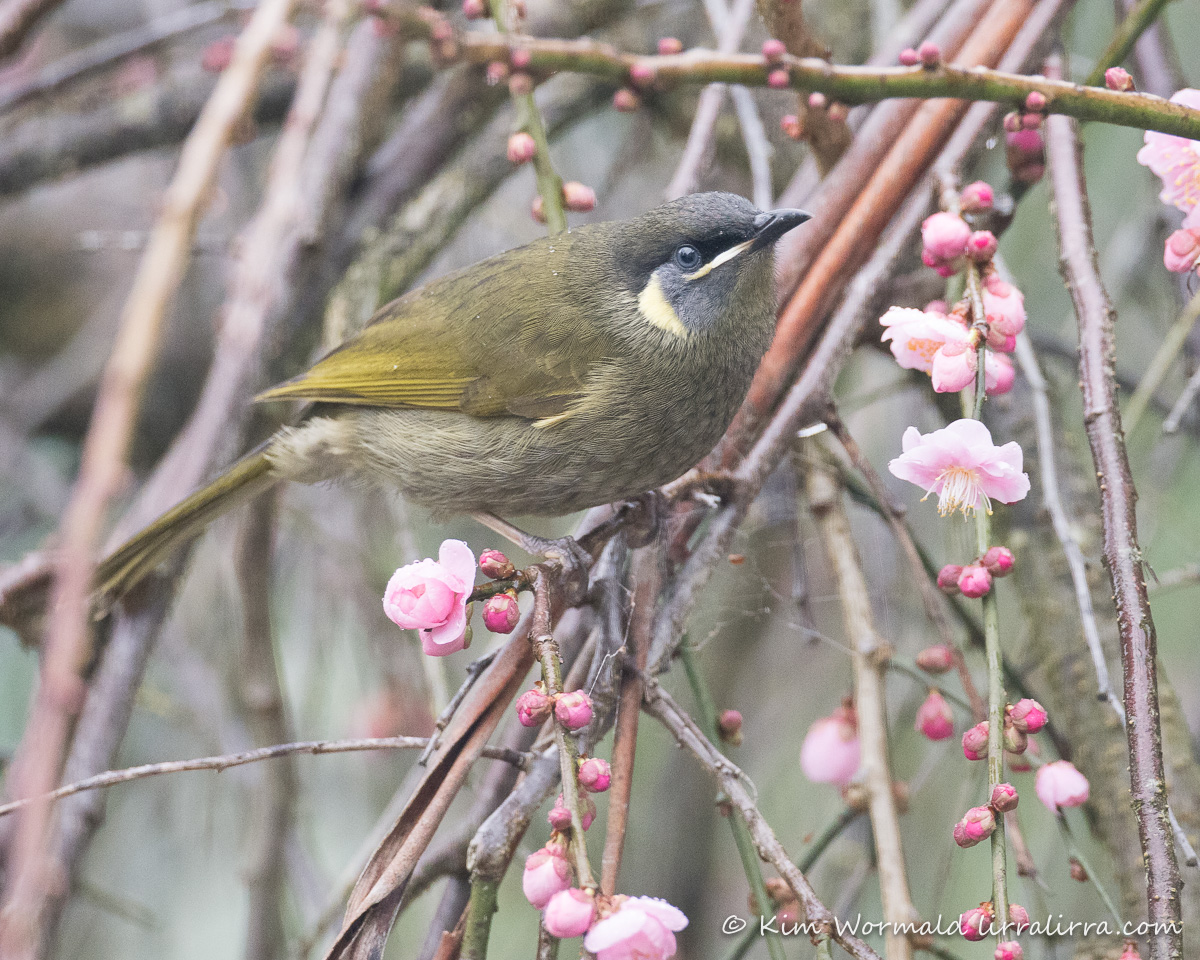
I think of Lewin’s Honeyeaters as ‘crescent moon’ birds due to their striking yellow ear patch. Their feathers range through various greens and greys, they have a yellow gape and adults have a blue iris. This honeyeater didn’t spend long at the top of the weeping apricot before ducking into the tangle of branches.
1/800, f/4.0, ISO 2500, handheld
Canon R5, Canon RF 600 f/4 L IS USM
I was photographing this honeyeater through a window about 15-20 metres from the tree. The bird wasn’t disturbed but did glance towards me occasionally – birds are very sensitive to their surroundings.
1/800, f/4.0, ISO 2500, handheld
Canon R5, Canon RF 600 f/4 L IS USM
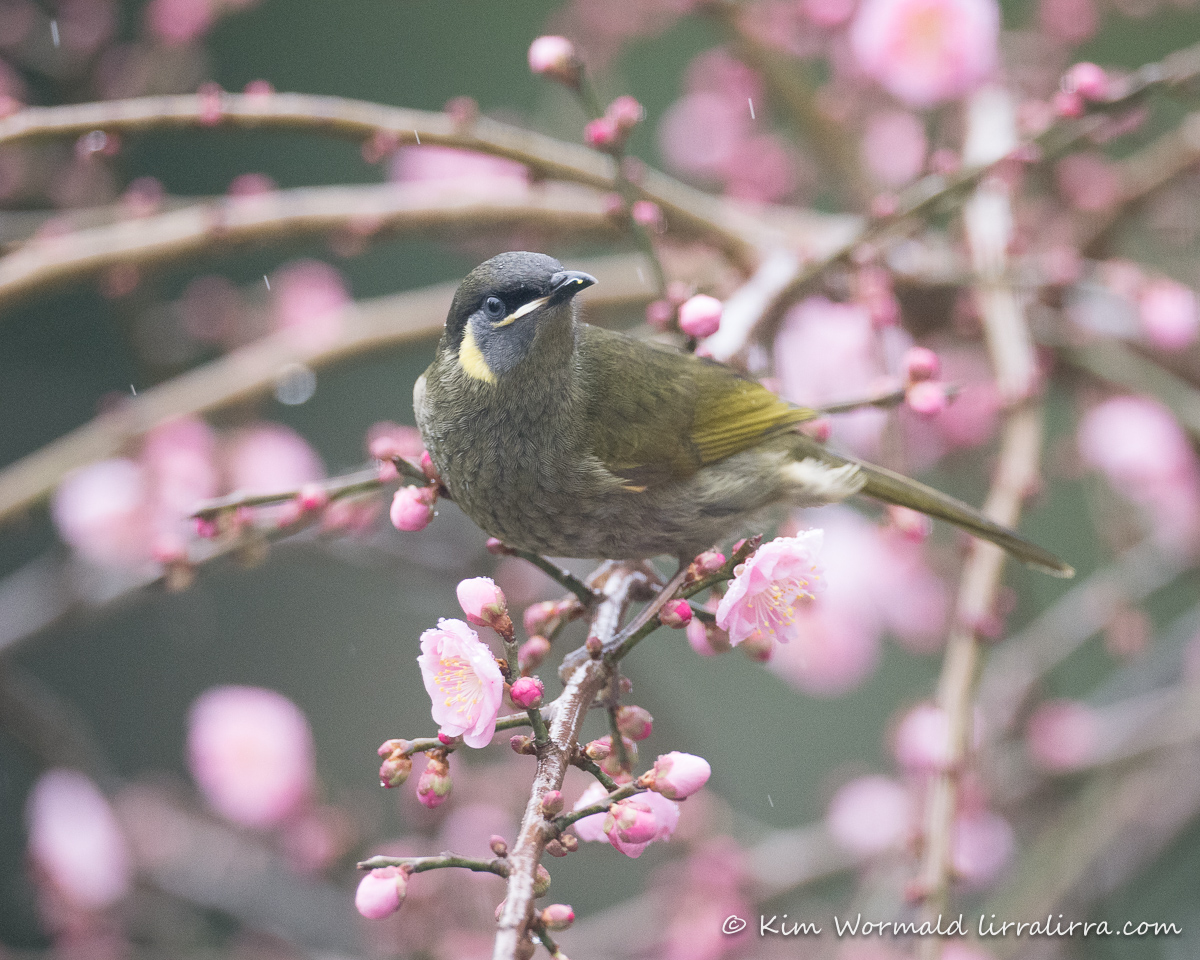
Can you spot the sepal caught in the honeyeater’s bill? There are a few raindrops in the pink blossom shots, the drops on the same focal plane as the Lewin’s Honeyeater are clear while other drops are fuzzier blobs.
1/500, f/5.6, ISO 400
The first inkling I get that Lewin’s Honeyeaters are visiting is usually the sound of their loud ‘rapid fire’ call. They generally eat small fruits but also take insects and nectar.
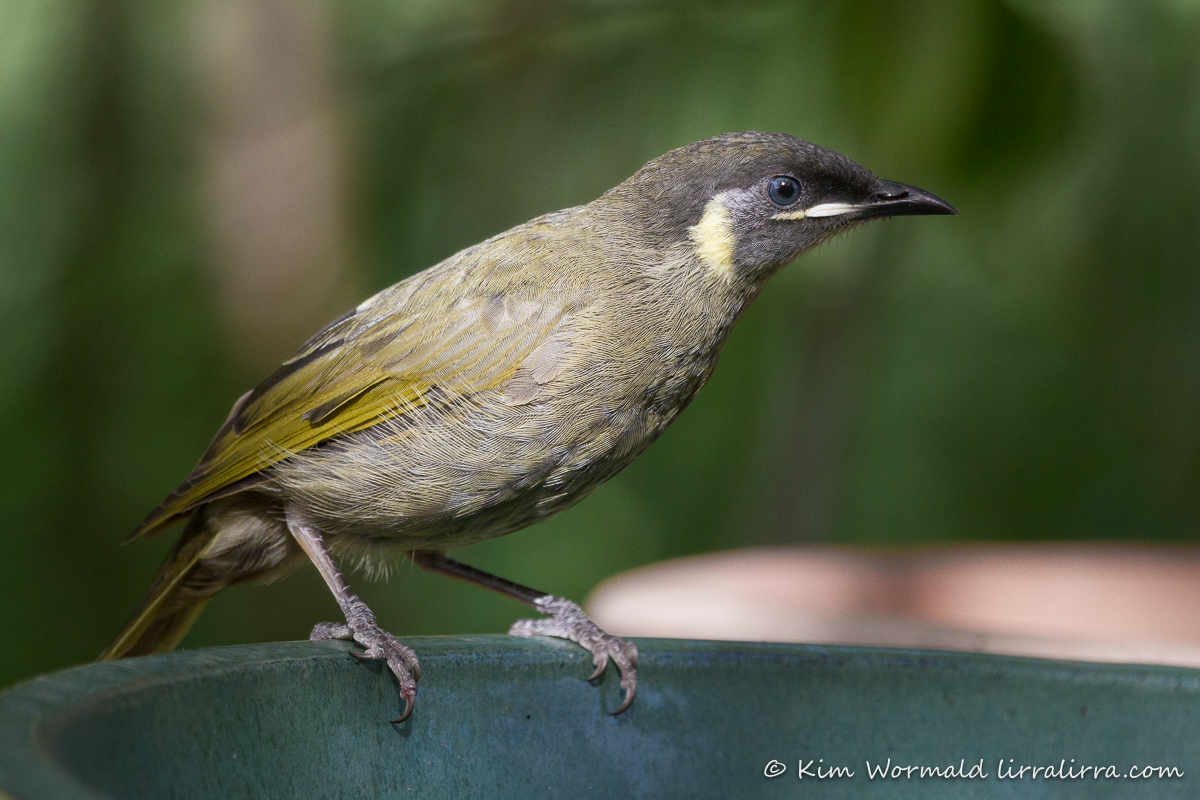
1/640, f/5.6, ISO 400
Sometimes they briefly visit my bird baths.
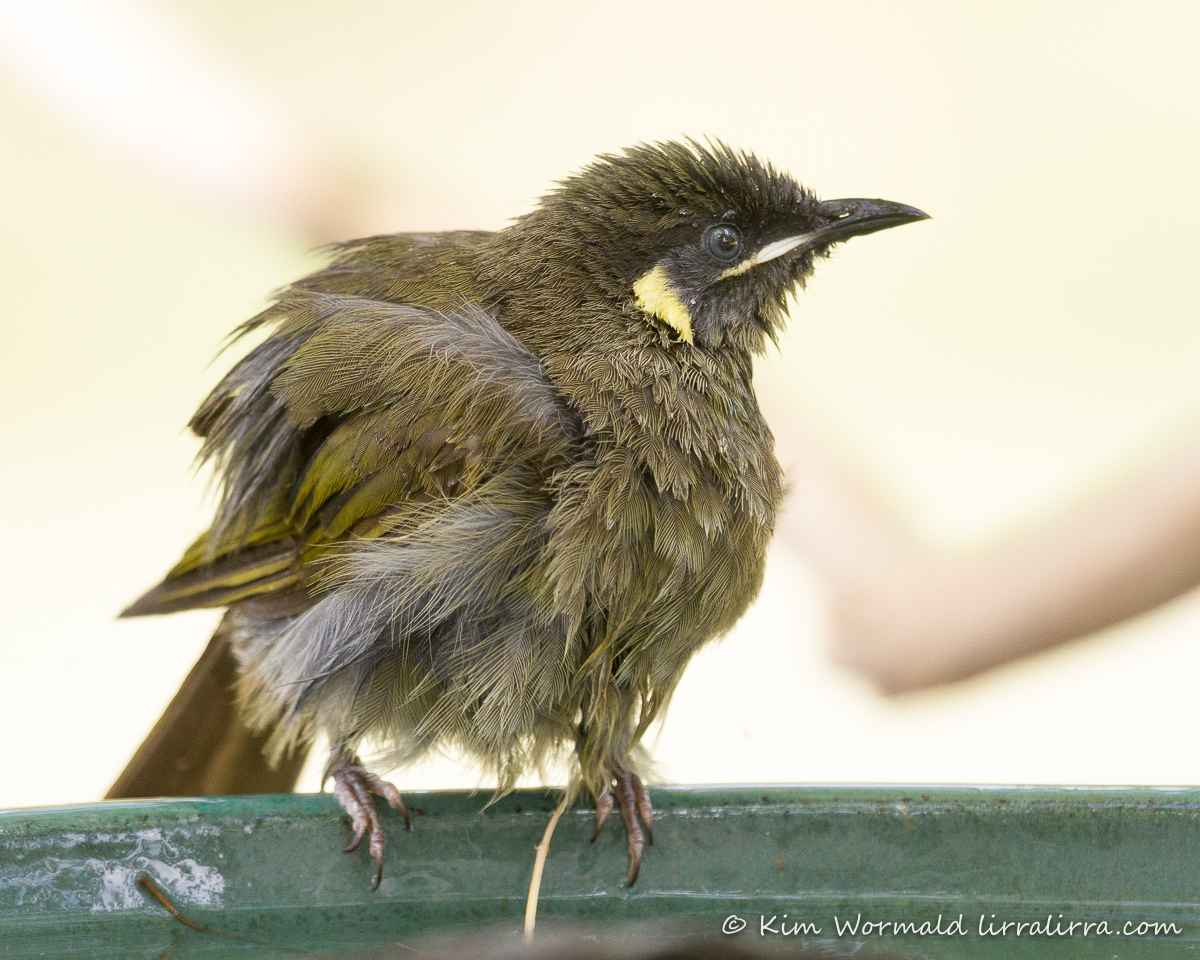
1/640, f/5.6, ISO 640
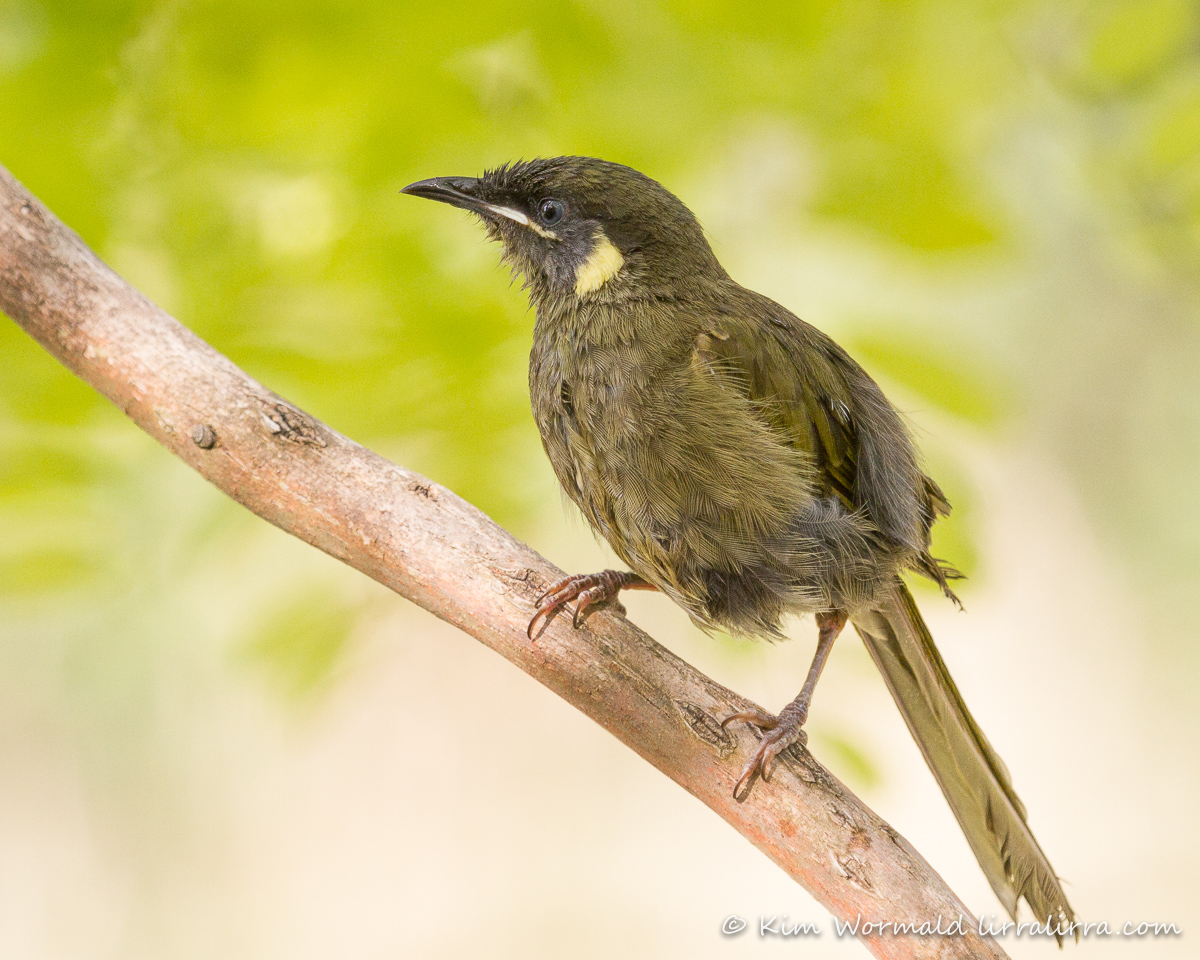
Young Lewin’s Honeyeaters have brown irises and the beautiful little one above has an iris which has started to turn blue.
Happy birding, Kim
~ Prints and gifts Lirralirra Shop
~ Facebook page Kim Wormald – lirralirra
~ Facebook group Ethical Bird Photography
