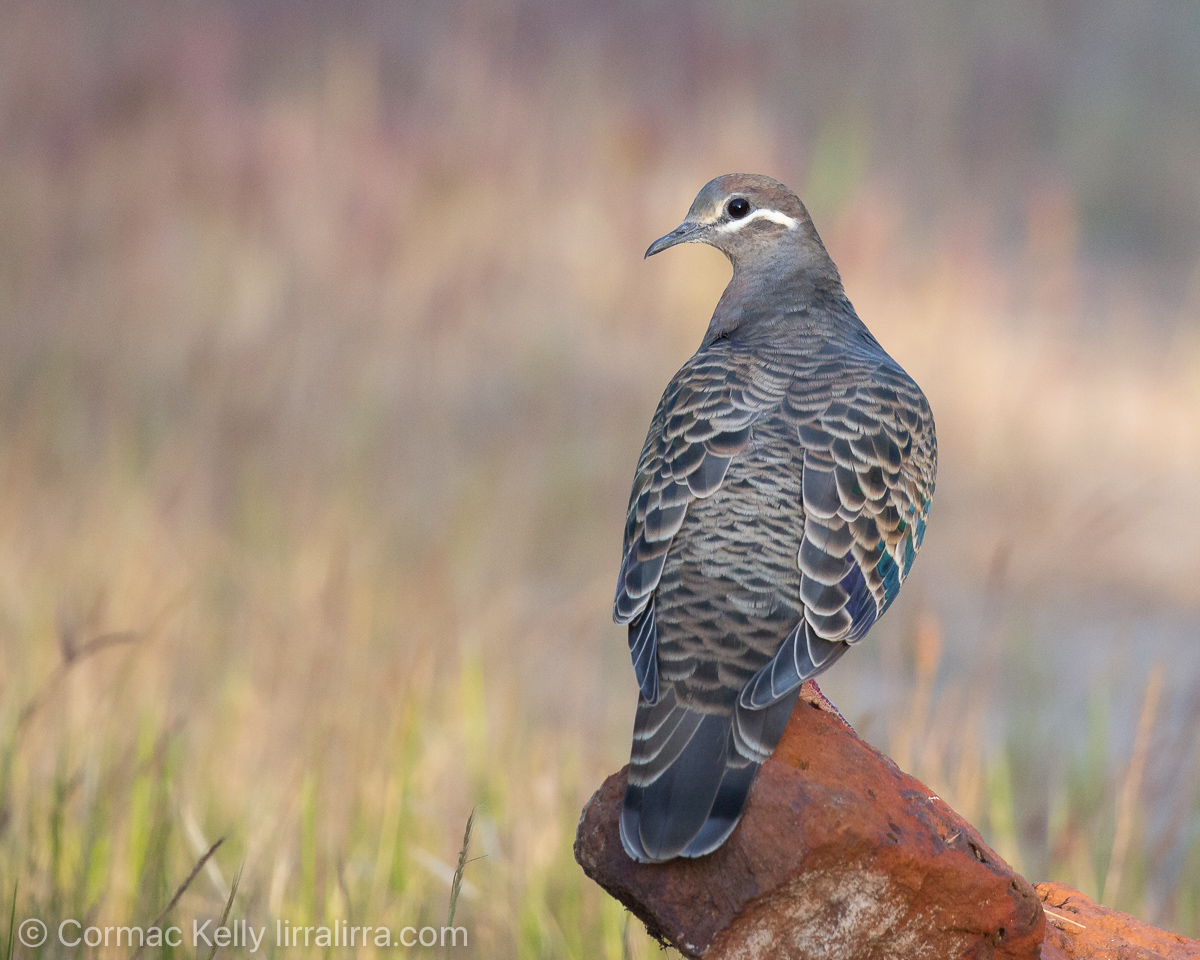
Australian Painted-snipe!

Unbelievable. Incredible. Amazing. Critically endangered. The elusive Australian Painted-snipe has been described as a near mythical ‘nomad of temporary wetlands in inland Australia’ (Australian Bird Guide). This week I made a round trip of six hours with the hope that this tiny, enigmatic bird would still be lurking at the edge of a regional swamp in western Victoria. And she was!

Australian Painted-snipe (Rostratula australis)
1/1000, f/9, ISO 1600
Canon R5, Canon RF 600 f/4 L IS USM

According to birders more familiar with the species, she is a juvenile female and will soon develop the rich chocolate-brown head and neck of an adult female. The males are more subtly coloured and take responsibility for incubating the eggs and caring for the youngsters.

A friend, Carol, and I arrived late in the morning and spoke with Catherine who had seen the painted-snipe the previous week and was hoping for another sighting. It was exciting just talking with someone who had seen such a secretive species! It was extra special to find out that Catherine is a lirralirra subscriber (hi Catherine!), and it was great to know that we were in the right place. Many birders came and left during the day but Carol and I just wandered back and forth along the edge of the wetland.

The area Catherine had pointed to was about 150-200 metres away which was too far for my binoculars to confirm every flash of white I saw. I started using my camera to photograph those specks, just in case they weren’t Black-fronted Dotterels or Magpie-larks – I have quite a few awful photographs from the first few hours of watching, waiting and hoping.

Grey Teal, Australian Painted-snipe (Rostratula australis), Magpie-lark
1/1250, f/9, ISO 1600
Canon R5, Canon RF 600 f/4 L IS USM

It was gone 3:30pm when a woman called, ‘I’ve got it!’. I’m really sorry that I didn’t get to thank her. Whenever anyone blinked, or checked their images, the bird vanished and there would be a flurry of ‘helpful’ instructions like ‘she’s in front of the log’, ‘the ducks just flew over her’, ‘see the dotterel on the left, she’s behind it’ and other comments that were hilariously tricky to follow. The photograph above gives a rough idea of how difficult she was to spot – and that’s using a 600mm lens with selective focus. Can you see her, the two Grey Teal and the Magpie-lark?

Black-fronted Dotterel, Australian Painted-snipe (Rostratula australis)
1/1250, f/9, ISO 1600
Canon R5, Canon RF 600 f/4 L IS USM

It was fascinating to watch how she stayed among other items in the water like fallen logs and grasses. It made her very difficult to see. This behaviour was unlike the dotterels and Magpie-larks that would also forage in the open, along the shoreline. The painted-snipe’s plumage provided extra camouflage, disruptive camouflage, by making it hard to see a complete bird. To add to the difficulty of seeing her she would often stand absolutely still, and blend in perfectly with the background.

Australian Painted-snipe are classified Endangered in every state and territory, and Critically Endangered in Victoria.

Grey Teal, Australian Painted-snipe (Rostratula australis)
1/1250, f/9, ISO 1600
Canon R5, Canon RF 600 f/4 L IS USM

The photograph above is one of my favourites from the day. From time to time the Australian Painted-snipe (I can hardly believe I’m typing that name) would be surrounded by other birds. In this shot I think it looks as though the Grey Teal is standing guard while the painted-snipe forages. Australian Painted-snipe (I couldn’t resist typing it again) mainly forage for aquatic invertebrates along with some plant material.

Australian Painted-snipe (Rostratula australis), Grey Teal – exceedingly heavily cropped
1/1250, f/9, ISO 1600
Canon R5, Canon RF 600 f/4 L IS USM

It’s been a long time since I’ve seen a lifer and this enigmatic bird was not one that I ever imagined would break the drought. In 2022 there was only one place in Australia where this species was recorded. There are believed to be 300-340 across the country but as a nomadic species that prefers temporary wetlands no one knows where they might turn up next. They are so rare that their call has not yet been recorded, and scientists keen to track their movements have been unable to find them and start the process. Apparently they are generally more active at night, making it even more remarkable that many of the recent flurry of birders have been lucky enough to see her.

It is indeed a wonderful world of nature out there.

Happy birding, Kim

~ Prints and gifts Lirralirra Shop
~ Facebook page Kim Wormald – lirralirra
~ Facebook group  Ethical Bird Photography