There’s nothing quite like a wander on a beach to blow away the cobwebs and hopefully see a few interesting sights along the way.
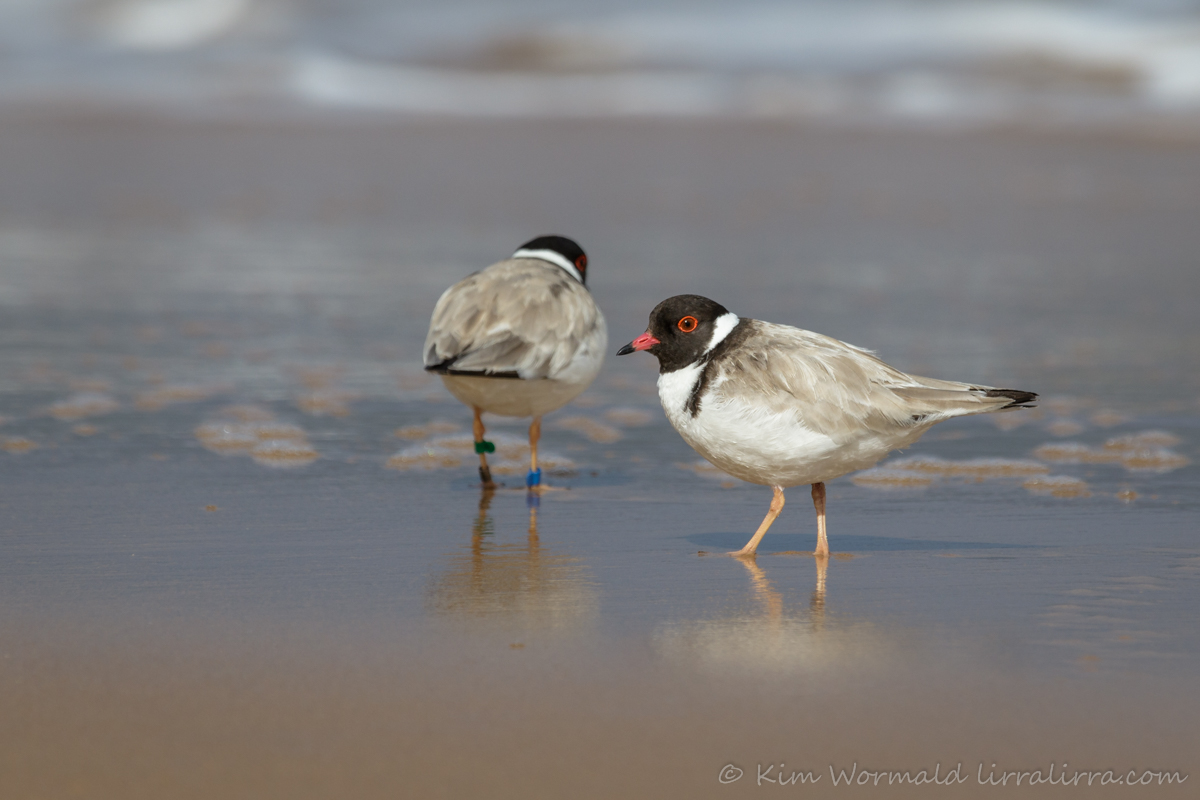
Hooded Plover (Thinornis rubricollis rubricollis) eastern – listed as Vulnerable
It’s extra special to catch sight of vulnerable Hooded Plovers sprinting along the water’s edge as they forage for tiny arthropods.
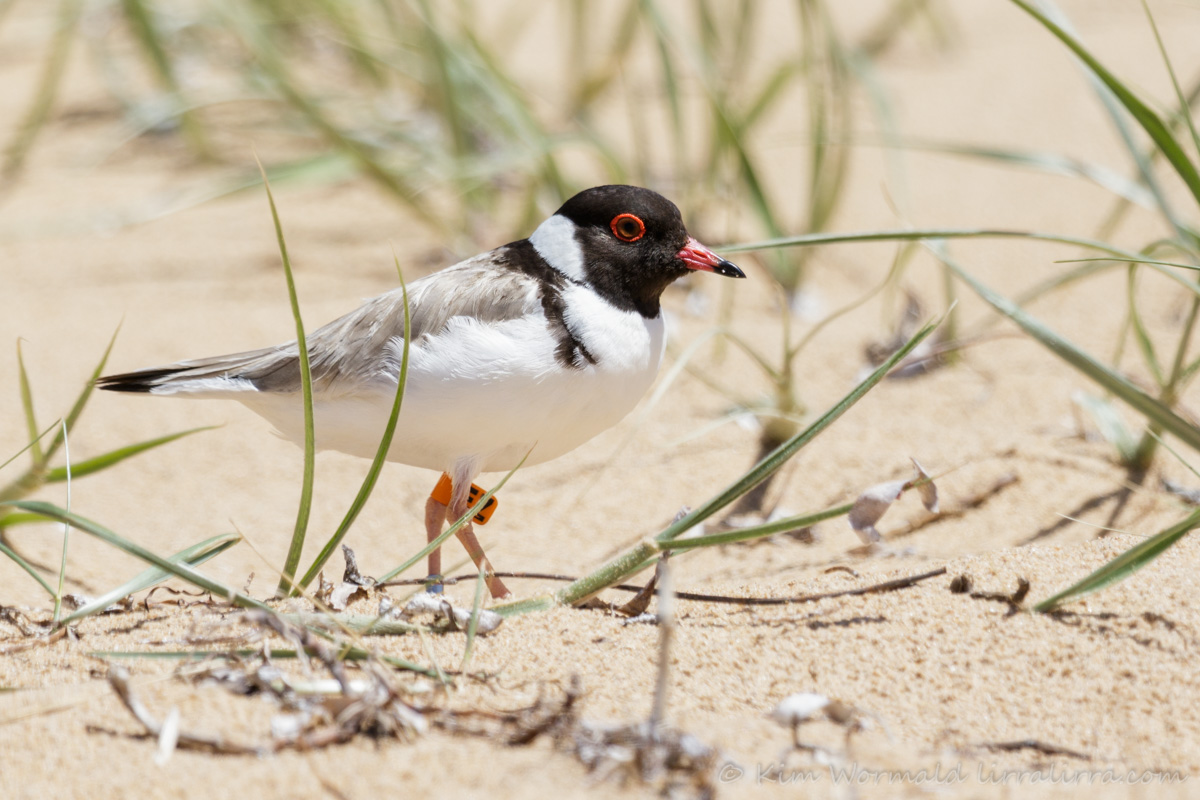
Hooded Plover (Thinornis rubricollis rubricollis) eastern – listed as Vulnerable
Or to see them standing stock-still among the dunes, relying on their size and lack of movement to render them invisible.
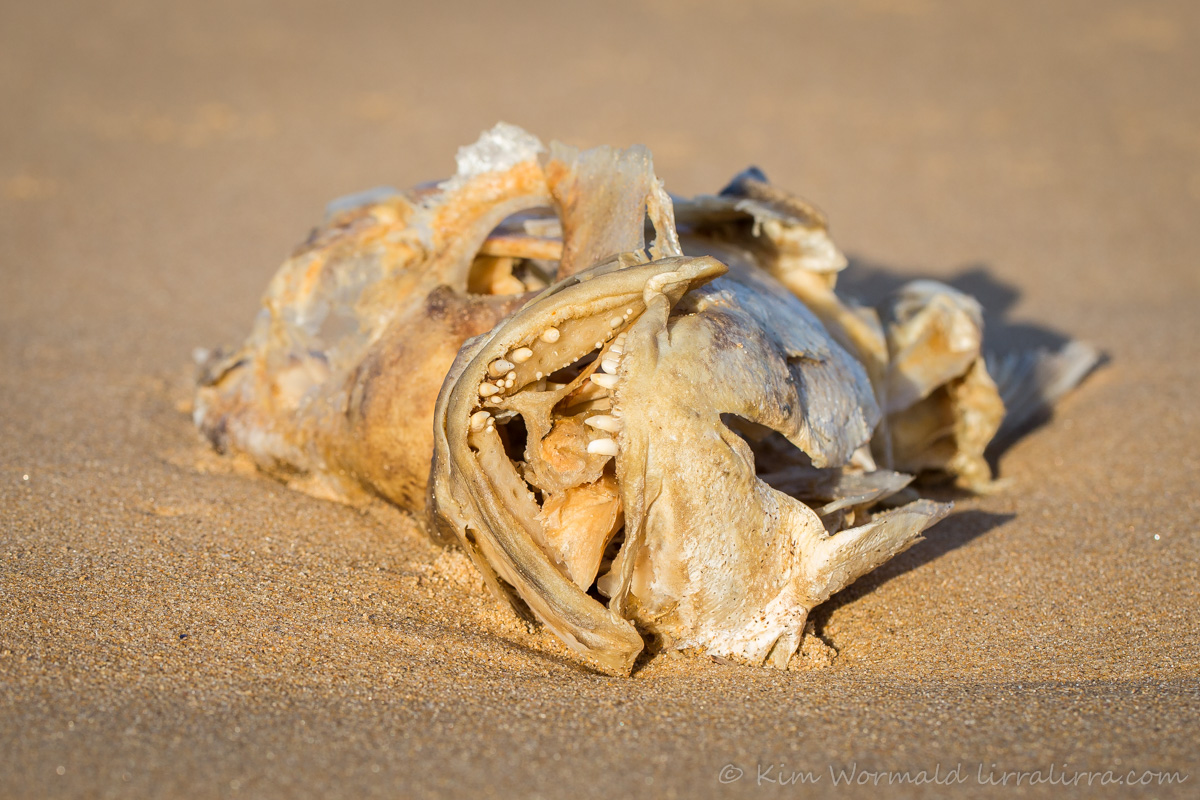
Snapper (Washedupus skeletiae)
.
Sometimes interesting things have been washed up on the beach, like this grim looking fish skeleton. I was surprised by the teeth and guess they are something to do with why the species was given the name ‘Snapper’.
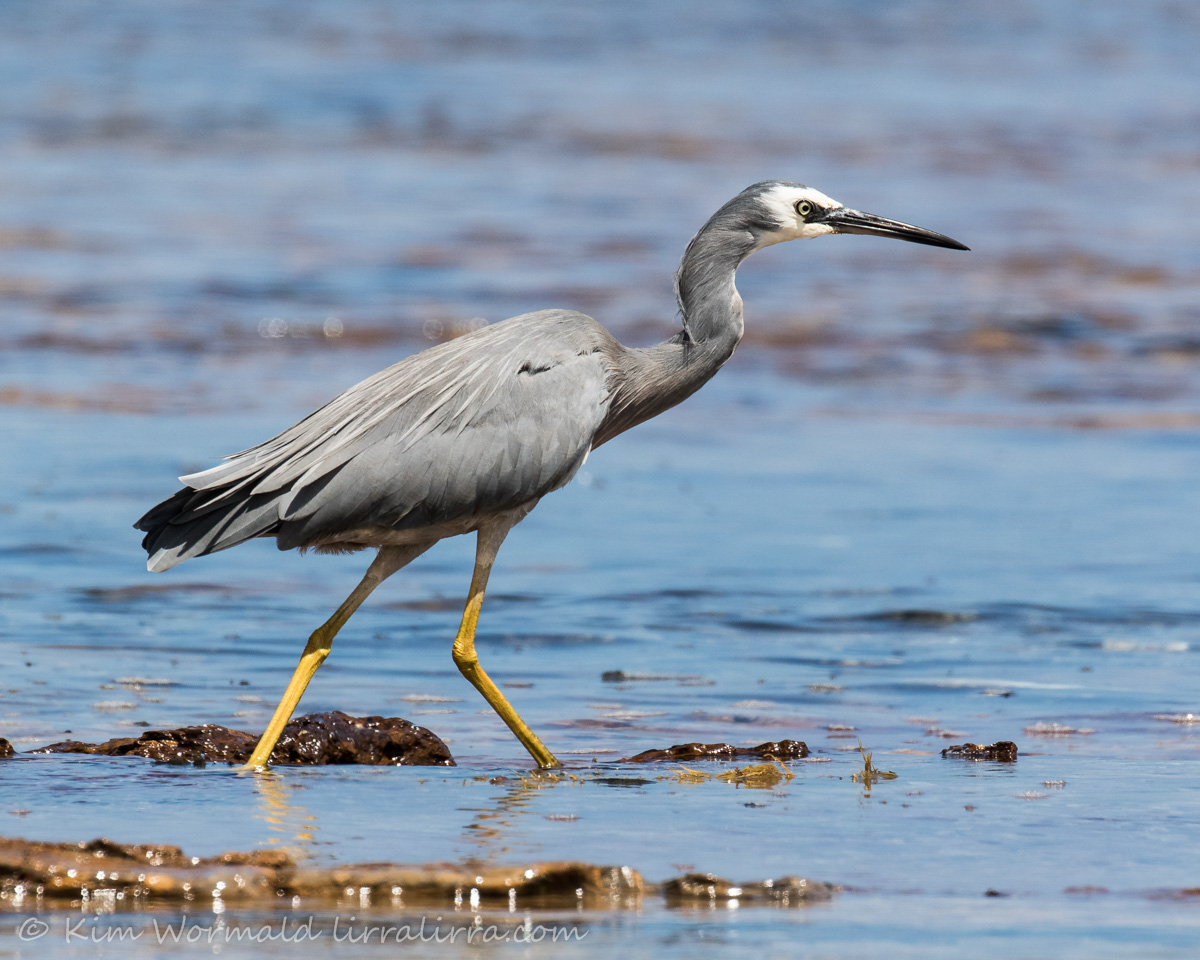
White-faced Heron
There’s something relaxing about watching herons as they hunt. They creep around the rockpools, creating barely a ripple, when they spot a fish or crab they either dart forwards and catch it or sway their necks hypnotically before striking. It looks very snakelike and reminds me of the ‘trust in me’ scene where Mowgli is mesmorised by Kaa the snake.
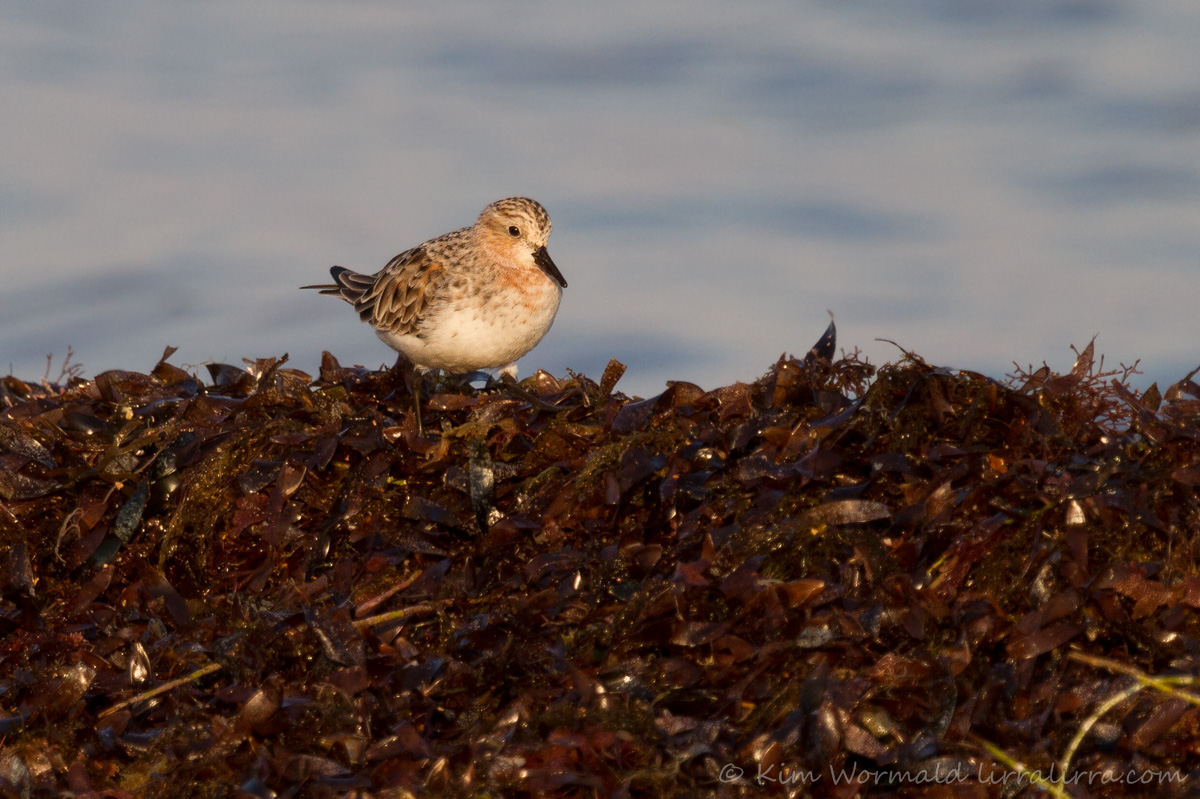
Red-Necked Stint
The Red-necked Stint image, above, is from an earlier post ( Red-necked Stints ) and I’ve included it today as the next image gives an idea of scale albeit in very different light conditions.
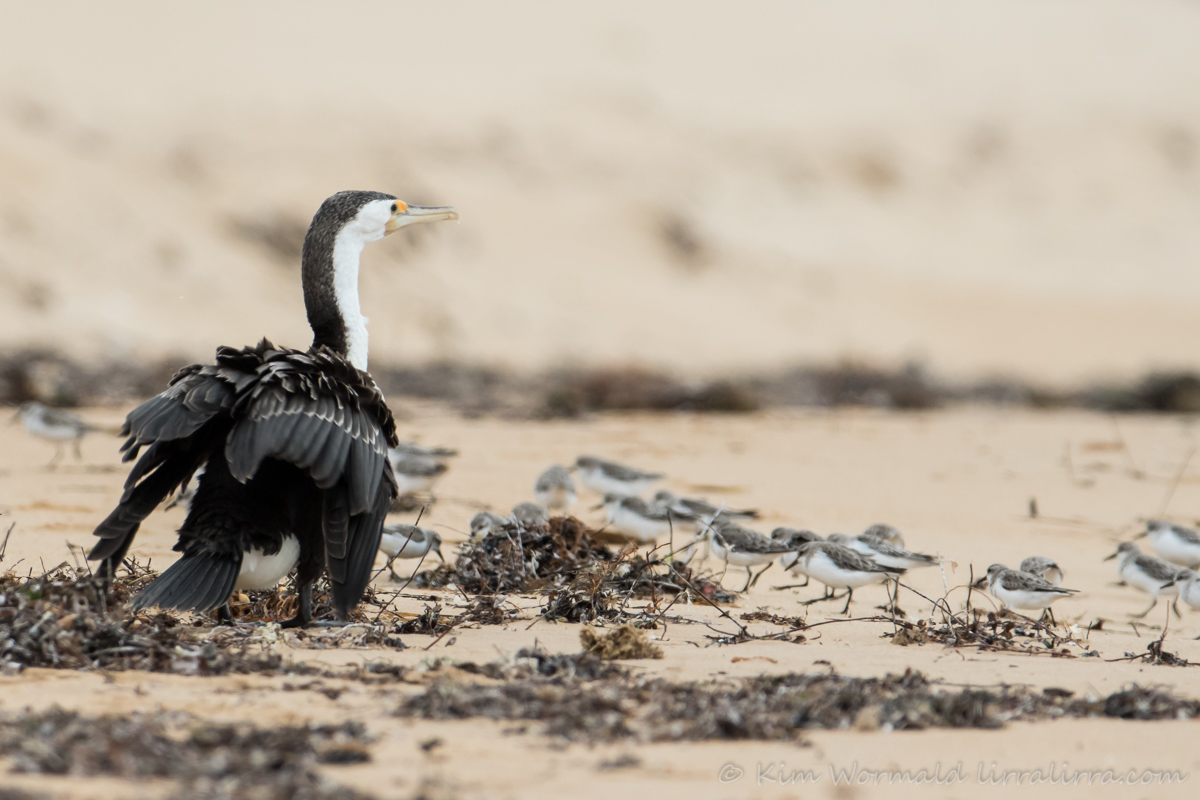
Pied Cormorant, Red-necked Stint
I was flat out on a bank of seaweed photographing a small flock of Red-necked Stints foraging at the waters’ edge that no one but myself seemed able to see. Occasionally other beach users would walk between me and the birds and not even notice the flurry of tiny wings whirl away in a semi-circle catching the light differently on their light fronts and dark backs as they changed direction. At one point the stints briefly ran up the beach and joined a Pied Cormorant which I thought was a good opportunity to show how tiny the stints are in comparison. They are in the open in this shot whereas they more likely to be seen amongst seaweed at the water’s edge where they are difficult to see.
Happy birding, Kim
~ Thank you for your visit and comments.
~ If you’d like to receive a weekly email informing you that lirralirra has been updated please add your email address to the ‘subscribe’ box above right.
