This very noisy Little Wattlebird landed right next to the wattle I’d just planted.
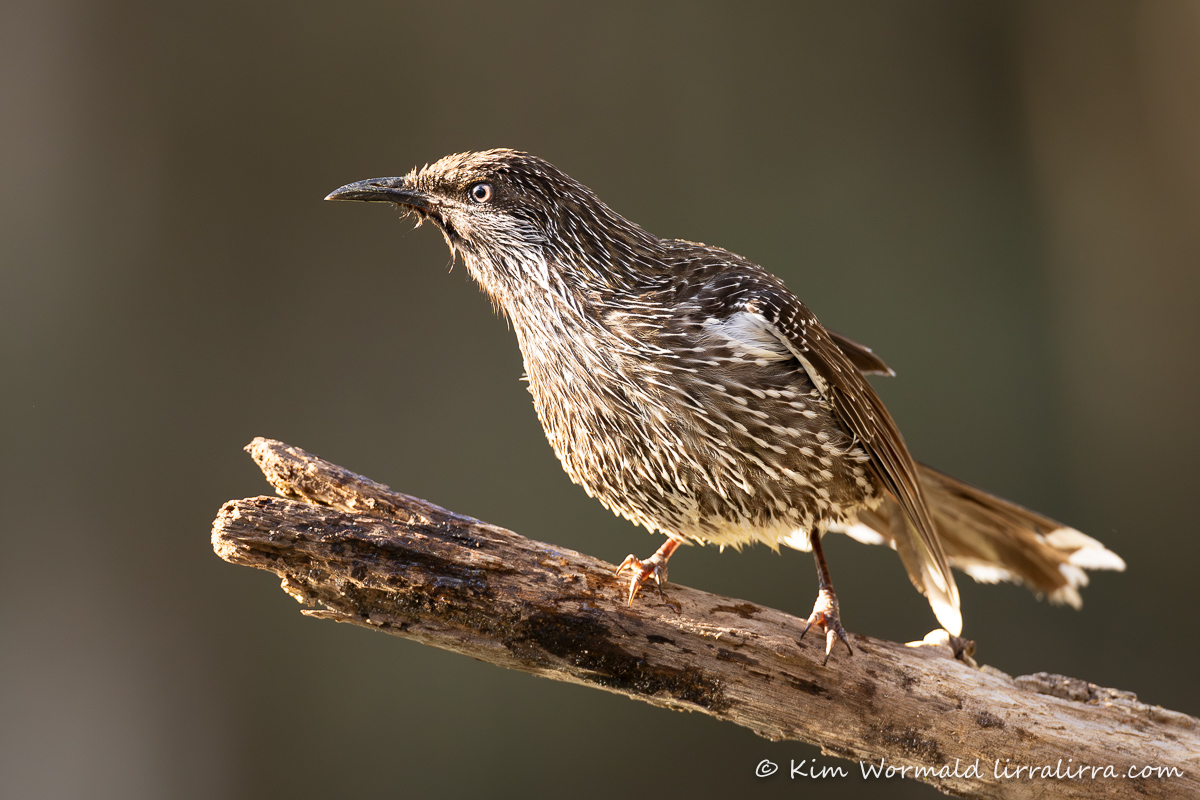
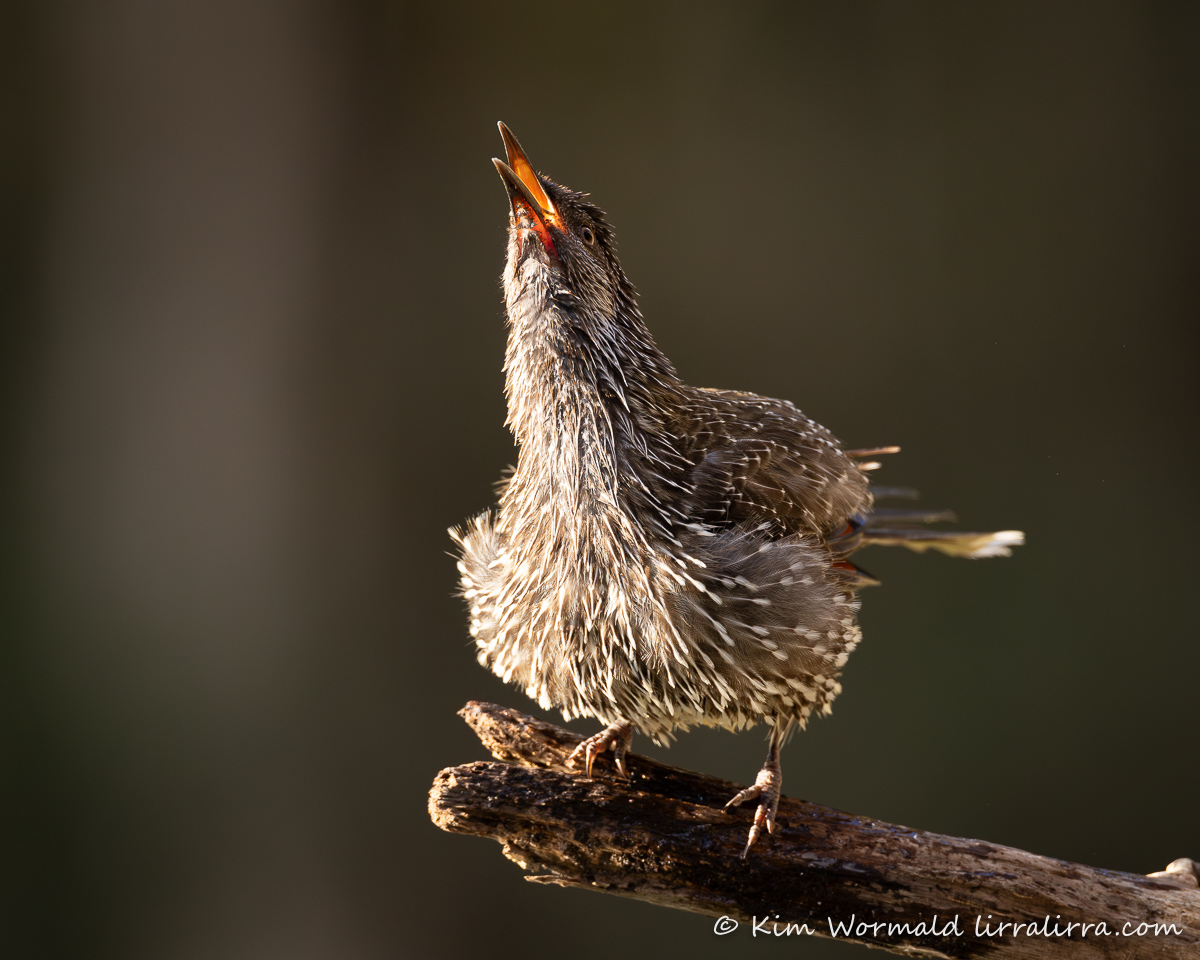
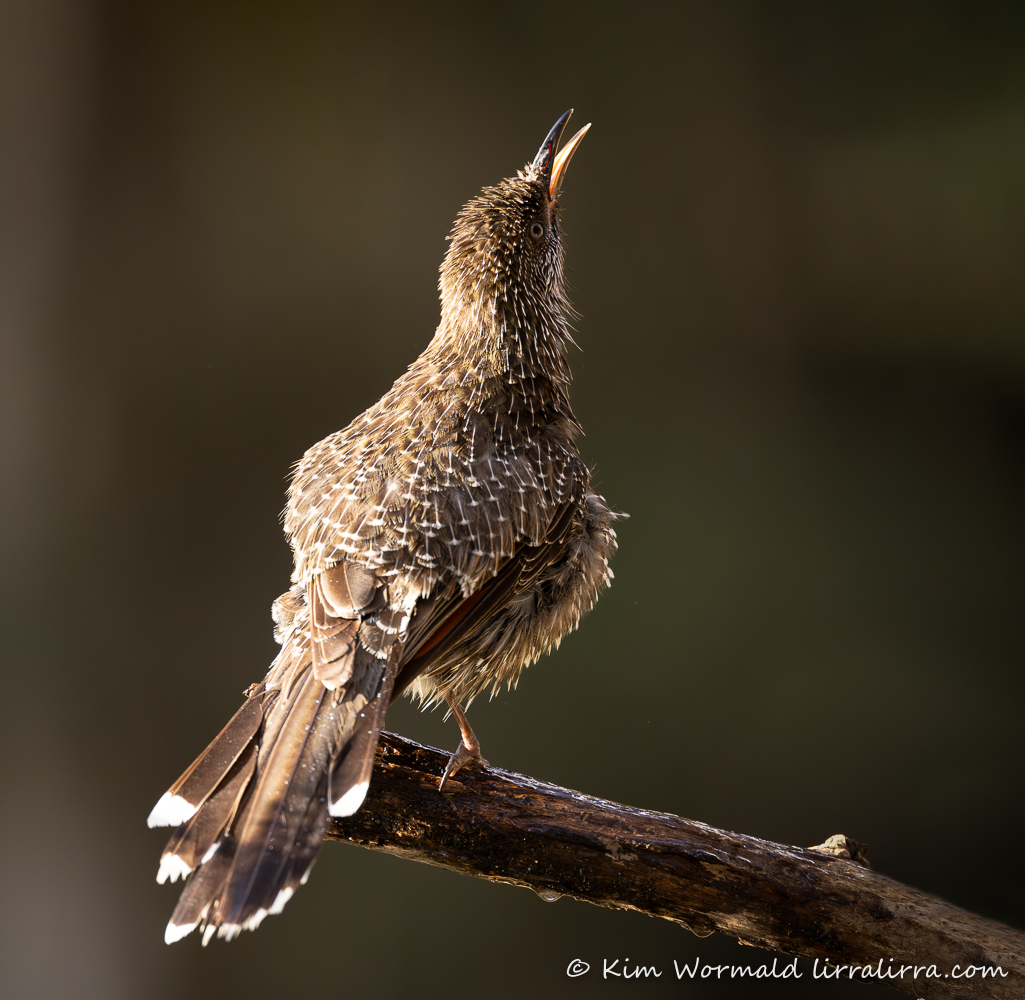
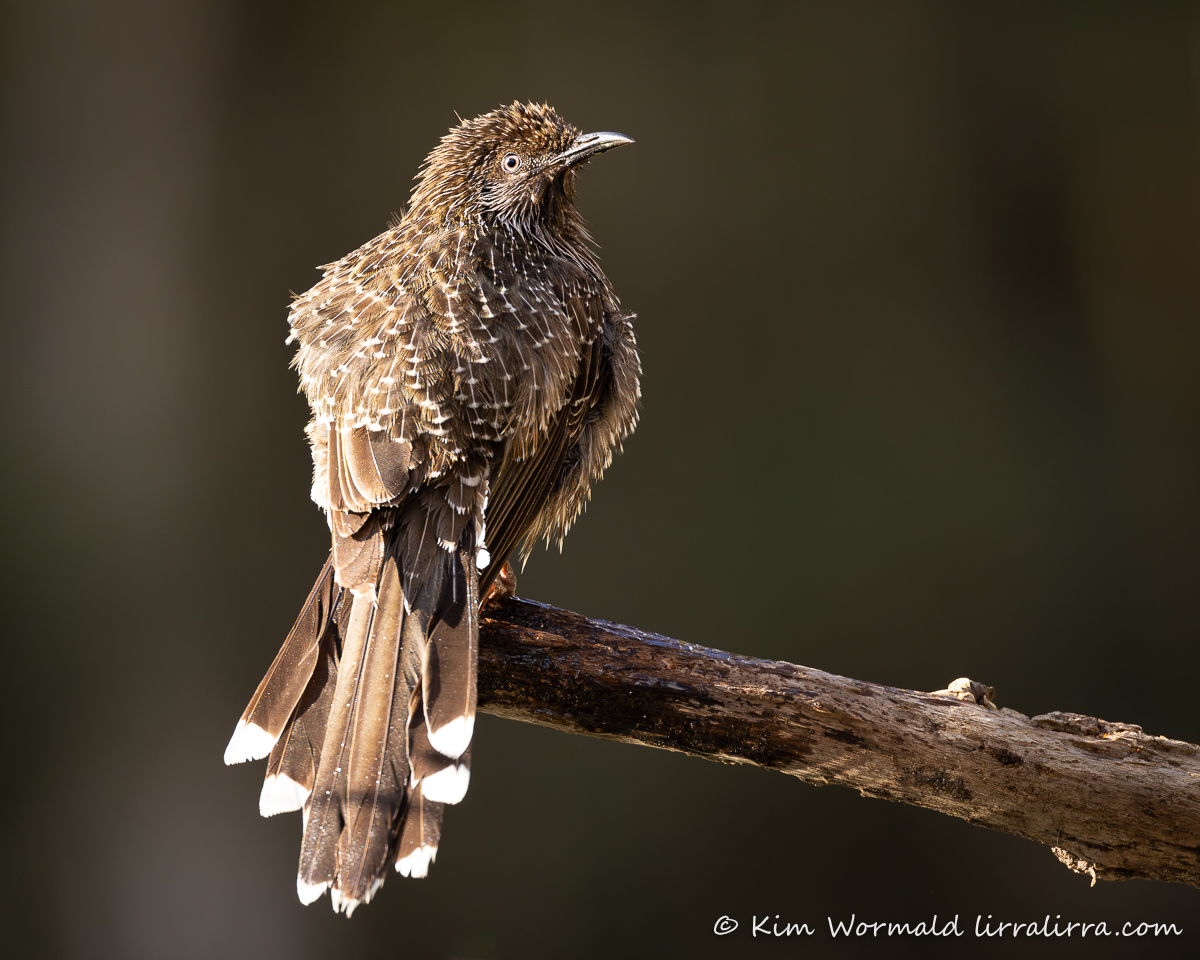
I added this week’s four images at the same time and they’ve come up like this, which is a bit strange, especially as it’s clipped one of the tails. I’m not sure if it will be possible to click on the photographs to enlarge them but guess I’ll find out when I publish this post.
This Little Wattlebird (Anthochaera chrysoptera)was making so much cackling noise that I couldn’t help but smile. They are a relatively new visitor to my garden but I’m glad they aren’t here all the time as they aggressively chase other honeyeaters. Little Wattlebirds are fairly large honeyeaters but are the smallest of the three species of wattlebird (yellow, red and little).
A tree near the birdbaths fell at the start of last summer. I left it where it had fallen as it still gave protection to the bathers from the Brown Goshawks and Collared Sparrowhawks. I’ve seen these two raptors take Eastern Yellow Robins and Eastern Spinebills so I like to keep the birdbaths cradled by trees and shrubs. I waited until we’d had some rain and the birds wouldn’t be so reliant on my birdbaths. An arborist thought I’d need a winch to remove the tree but I set to work with a mattock, pruning saw, hand saw, a trowel and some heavy duty loppers and after four days I managed to expose and cut through the roots. I knew I didn’t want to replace the tree with another Golden Robinia and it’s horrendously spiky suckers. I chose an Acacia leprosa (cinnamon wattle Scarlet Blaze) and I’m hoping it will grow quickly and look beautiful to provide protection and nourishment.
I know I shall be unhappy with the way the photographs are showing but I’m way too tired to fix it tonight.
Happy birding, Kim
Settings explained: This is a fairly new segment that I will include in some posts. I shoot fully manual as this gives the best chance to adapt my shutter speed and depth of field in circumstances that can change rapidly. These changes can include lighting, activity and species. In this week’s photographs the ISO was 1600 but I changed the f/stop from f/4.5 to f/5.6 to widen the depth of field and expand the area in focus. I also changed the shutter speed from 1/1000 of a second to 1/1200. With hindsight I would have opened the aperture further to increase the DOF for the shots where the bird’s tail is out of focus. With even more hindsight I would have upped the ISO and the shutter speed in case the bird had behaved more dramatically. I recommend back button focusing and setting your camera so you can easily change your settings without taking your eye from the viewfinder.
~ Facebook page Kim Wormald – lirralirra – 10K+ followers
~ Facebook group Ethical Bird Photography
~ Browse prints and gifts Lirralirra Shop or contact me directly

Very pretty! You’ve done a great job with the garden!
Many thanks Alyssa! The little helpers today were pretty awesome 🙂
We have little Wattlebirds here on the Sunshine Coast and they are our major bird at home. They can be aggressive at times but we still have Brown, Dusky, Lewin’s, White Throated, Yellow faced and New Holland Honeyeaters. I love your photos. The plumage is not easy to photograph well.
That’s a beaut collection of honeyeaters Carolyn. I have several species here too but it’s still disappointing to see some of them being chased away when there’s plenty for all. I agree that the Little Wattlebird’s plumage is pretty gorgeous