Grey Shrike-thrushes seem too small to take a frog but there it was, with a hapless frog dangling from its bill.

1/1250, f/4.5, ISO 1600, handheld
Canon R5, Canon RF 600mm f/4 L IS USM
I was watching the shrike-thrush when I noticed that it had caught something that kept trying to escape. All I could see were flashes of bright orange which I thought looked like a moth. I was several metres from the action and the determination of the prey made me lift my lens to have a closer look. And there it was, a frog, that kept managing to free itself from the bird’s grip.
I used books and the internet and friends to try to identify the species and originally decided, with little confidence, that it might be a Peron’s Tree Frog. I shared the photograph on facebook asking for a positive identification and Ewings Tree Frog was the unequivocal answer. I think the little frog’s desperate attempts to escape were successful as none of my photographs show it being eaten and I don’t think I would have missed that despite the action being so fast.
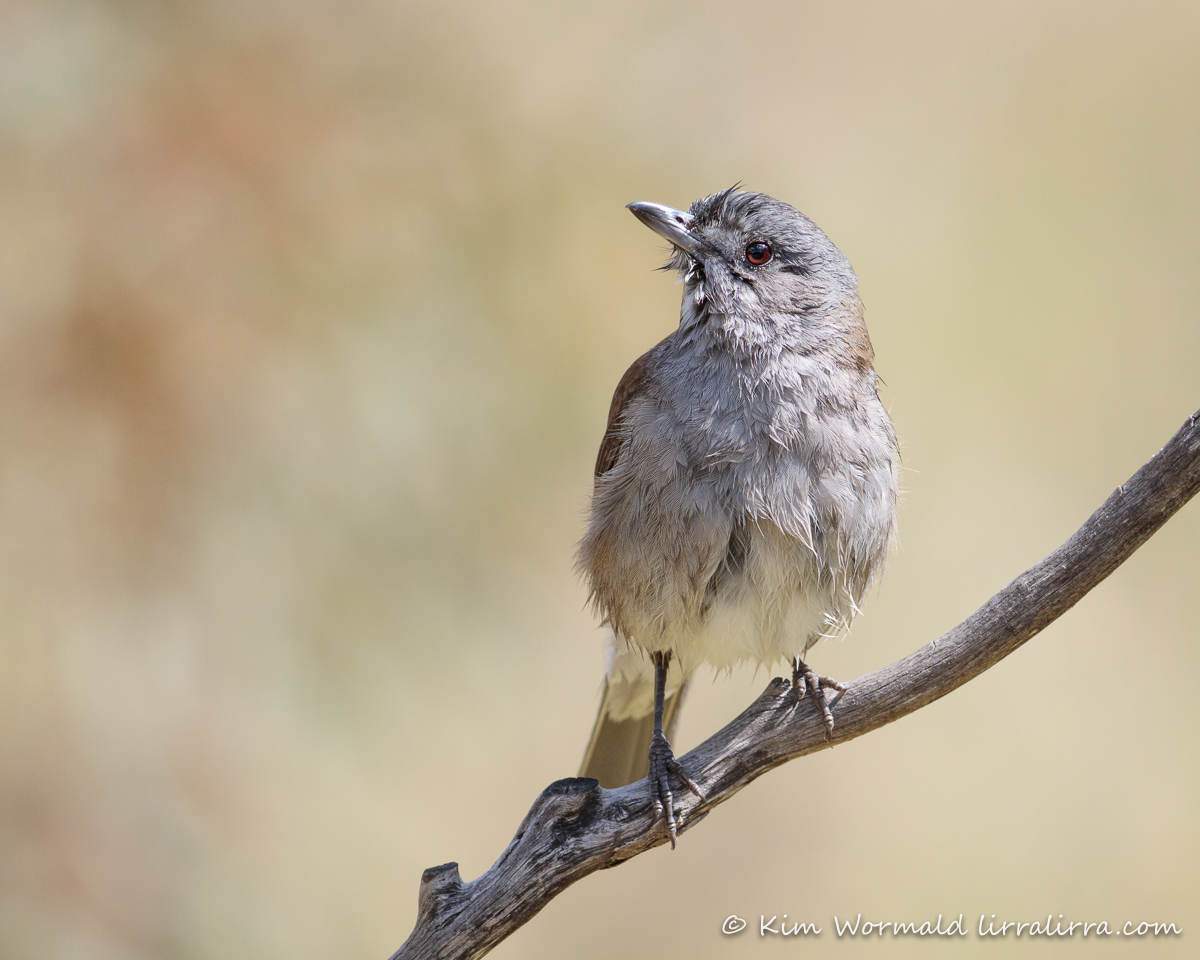
These birds aren’t shrikes or thrushes, they are smaller than the Common Blackbird and their voice (as the scientific name suggests) is beautiful.
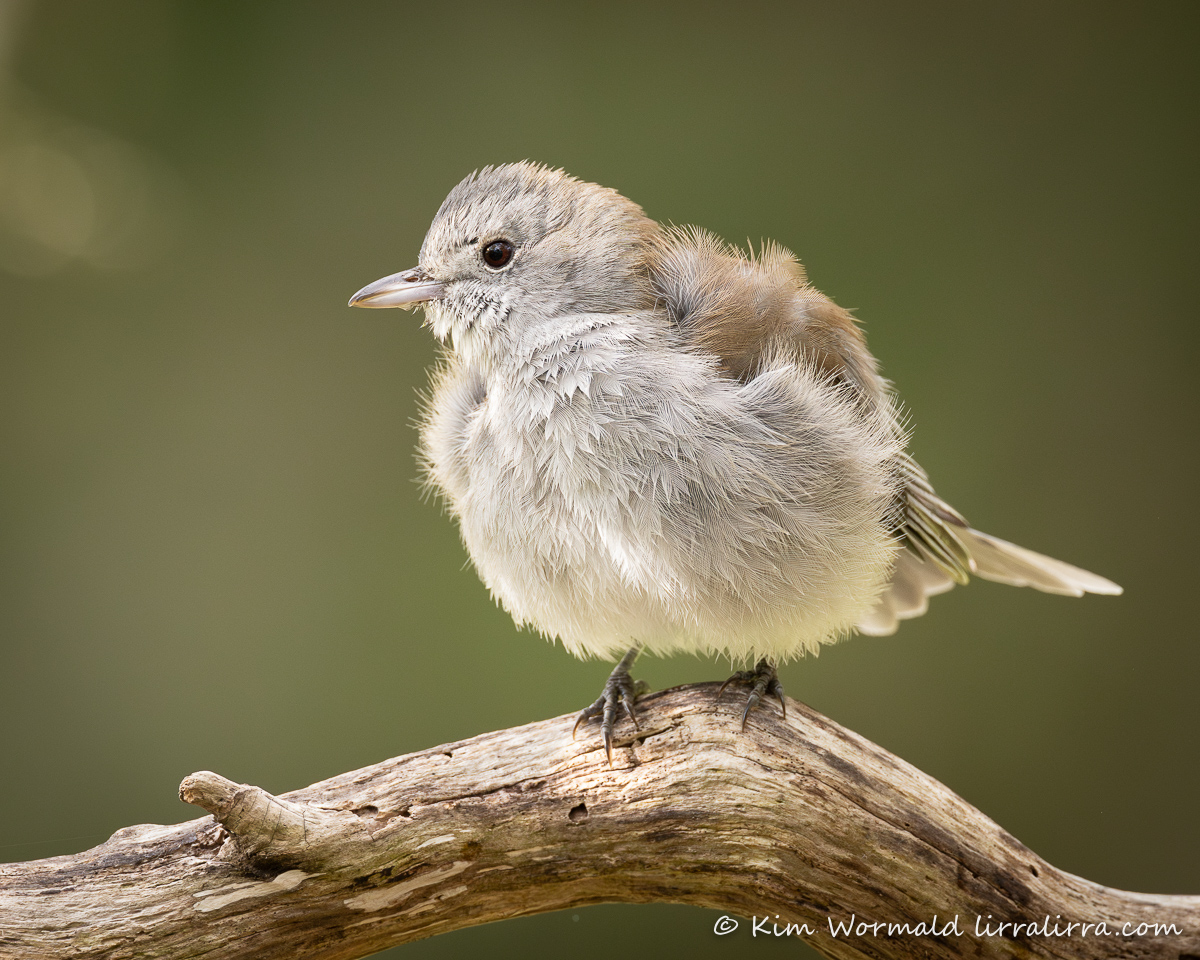
Looks can definitely be deceiving as this little dollop of feathers looks far too small and sweet to be a frog catcher. Frogs and Grey Shrike-thrushes both call at my place though I’m not sure how many frogs the shrike-thrushes would find as White-faced Herons forage pretty regularly.
Happy birding, Kim
~ Facebook page Kim Wormald – lirralirra – 9.8K followers
~ Facebook group Ethical Bird Photography
~ Browse prints and gifts Lirralirra Shop or contact me directly

Eyes bigger than its stomach? What an amazing capture. Alyssa is right.
And what a totally gorgeous photo the third is? A killer? Me? You must be mistaken…
It was remarkable to see how often the frog escaped, probably each time the shrike-thrush tried to get a better grip. And yes, so funny about the innocent shot!
What a remarkable moment to capture!
I’m so pleased that I wanted to identify the ‘moth’!