This is the first time I’ve knowingly photographed a New Holland Honeyeater on a perch it is sharing with an invasive fungi species.
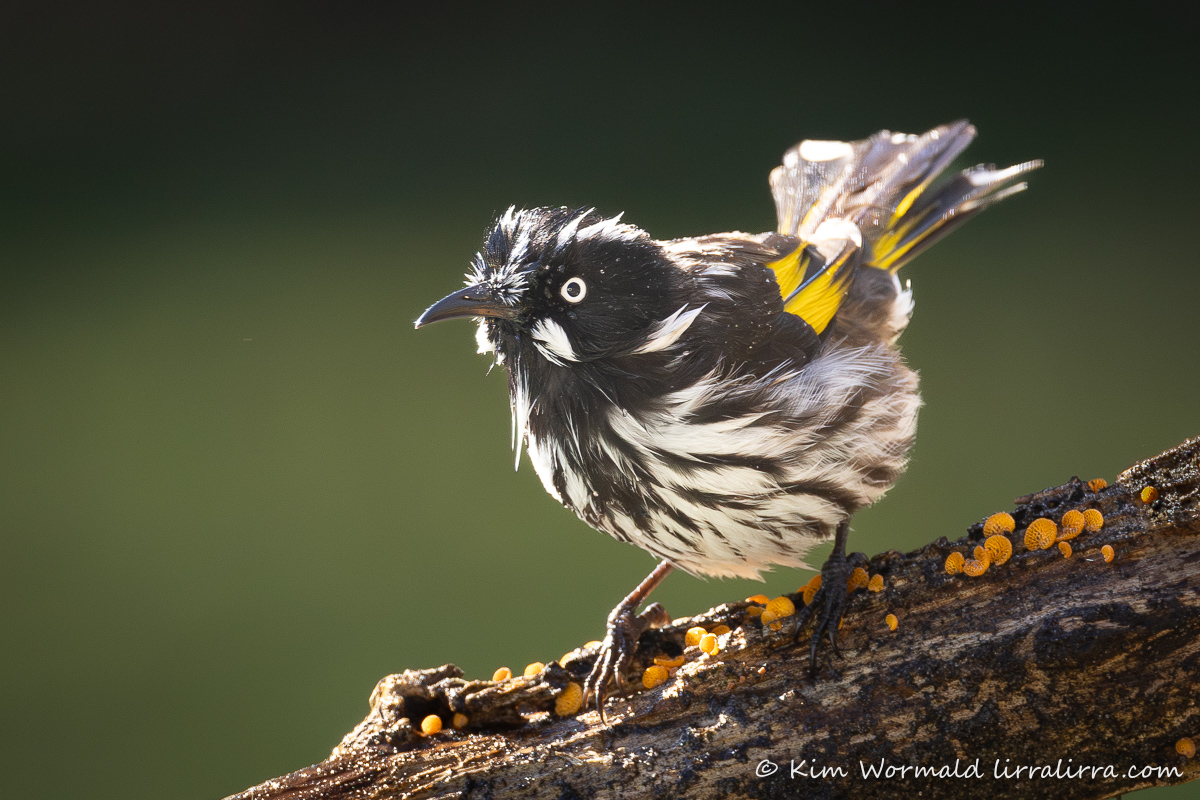
1/1000, f/5.6, ISO 1600
Canon R5, Canon RF 600mm f/4 L IS USM
New Holland Honeyeaters are real little characters to watch as they interact with each other. They can be fairly aggressive or hilariously comical. This is an adult bird; juveniles have blue irises.
I hadn’t realised that the tiny orange fungi is an invasive species until I identified it as Favolaschia claudopus. It is also known as orange ping pong bats, orange pore fungi, and orange porecap. Apparently it’s a decomposing fungi that breaks down dead wood and often out-competes native fungi.
Settings explained: This is a new segment that I might include in some posts. I shoot fully manual as this gives the best chance to adapt my shutter speed and depth of field in circumstances that can change rapidly. These changes can include lighting, activity and species. In this case I chose an aperture of f/5.6 as I wanted the fungi as well as the bird to be in focus. In the light conditions on the day (or I should say, the light conditions at that moment) I could use my preferred ISO of 1600 but to keep that ISO while closing the aperture slightly more than usual came at the cost of using a shutter speed of 1/1000 rather than my preferred lowest speed of 1600.
Happy birding, Kim
~ Facebook page Kim Wormald – lirralirra – 10K+ followers
~ Facebook group Ethical Bird Photography
~ Browse prints and gifts Lirralirra Shop or contact me directly

They are such beautiful birds! How interesting re the fungi. I didn’t know that introduced fungi was an issue.
I thought it was pretty interesting too…
Thank you. Things are a bit ugly here and I am so grateful for the beauty and wonder you share
I’ve been thinking of you EC, I hope things improve for you soon
Wonderful photo. I really appreciate that you are sharing your camera settings and your rationale for using them. This is of great interest to me in my quest to improve my bird photography. Thank you!
Thanks Susan, I’m glad it’s helpful 🙂