Much of the country has experienced high temperatures recently, and there are bushfires burning in every state and territory apart from the ACT. It is heart-wrenching. One thing we can do is to help birds and other wildlife to keep cool and hydrated. I’m going to share some ideas, and photographs, that I use at my Trust for Nature/Land for Wildlife/Gardens for Wildlife property.
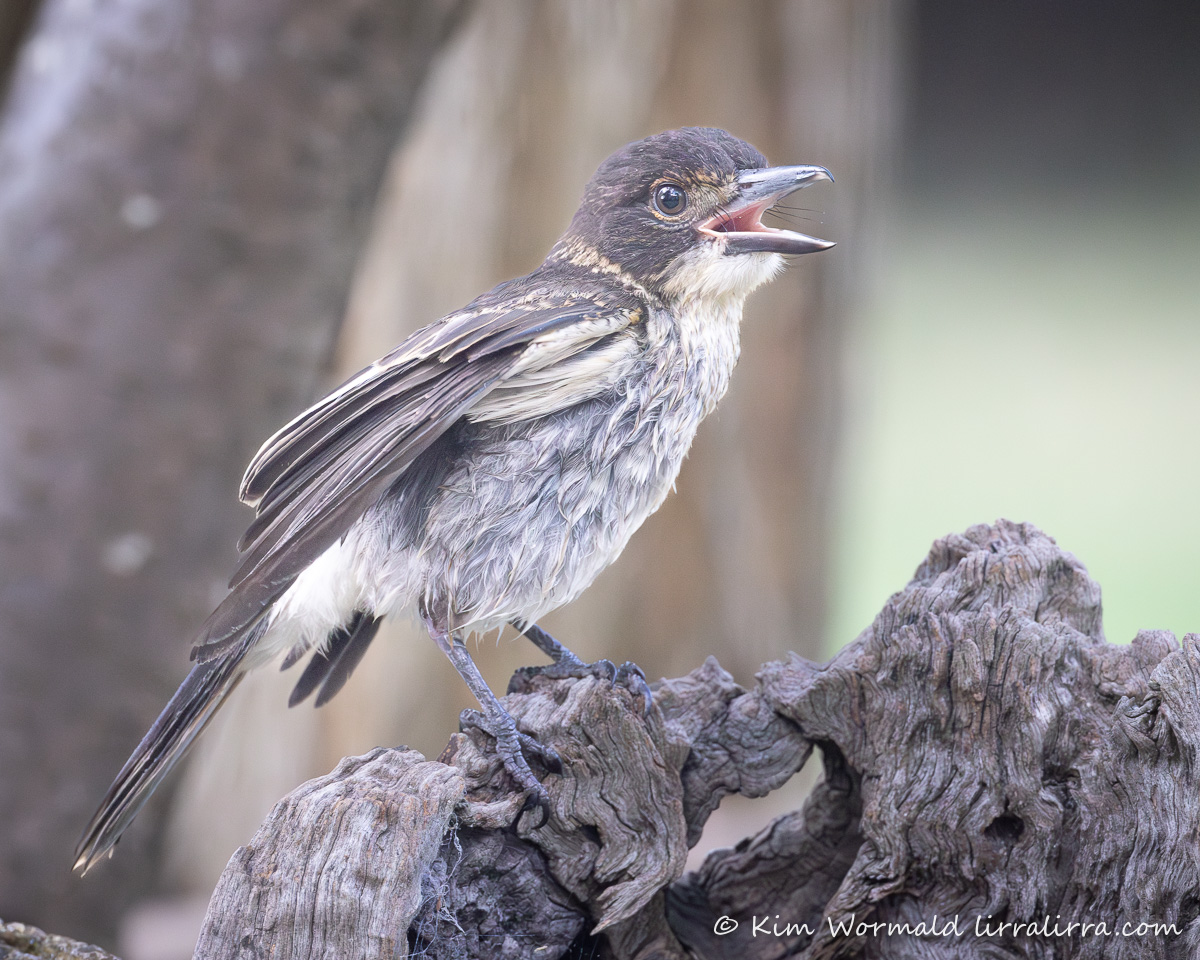
During the hot weather my weather station said the temperature here reached 47.5 degrees Celsius. Birds can suffer heat stress from about 36 degrees Celsius. Unless birds have access to shade and water the heat stress can be fatal when temperatures reach 45 degrees. I do my best to keep the birds here alive during heatwaves and I’ll explain how I do it.
The young butcherbird above is showing typical signs of heat stress. Its bill is open as it pants to help it cool down through evaporation. Its feathers and wings are held away from its body to allow airflow. Its feathers are damp as it had already bathed. I always allow birds to drink and bathe before photographing them at the birdbaths. On this hot day I was taking photographs through the window to ensure no birds were disturbed while trying to cool down.
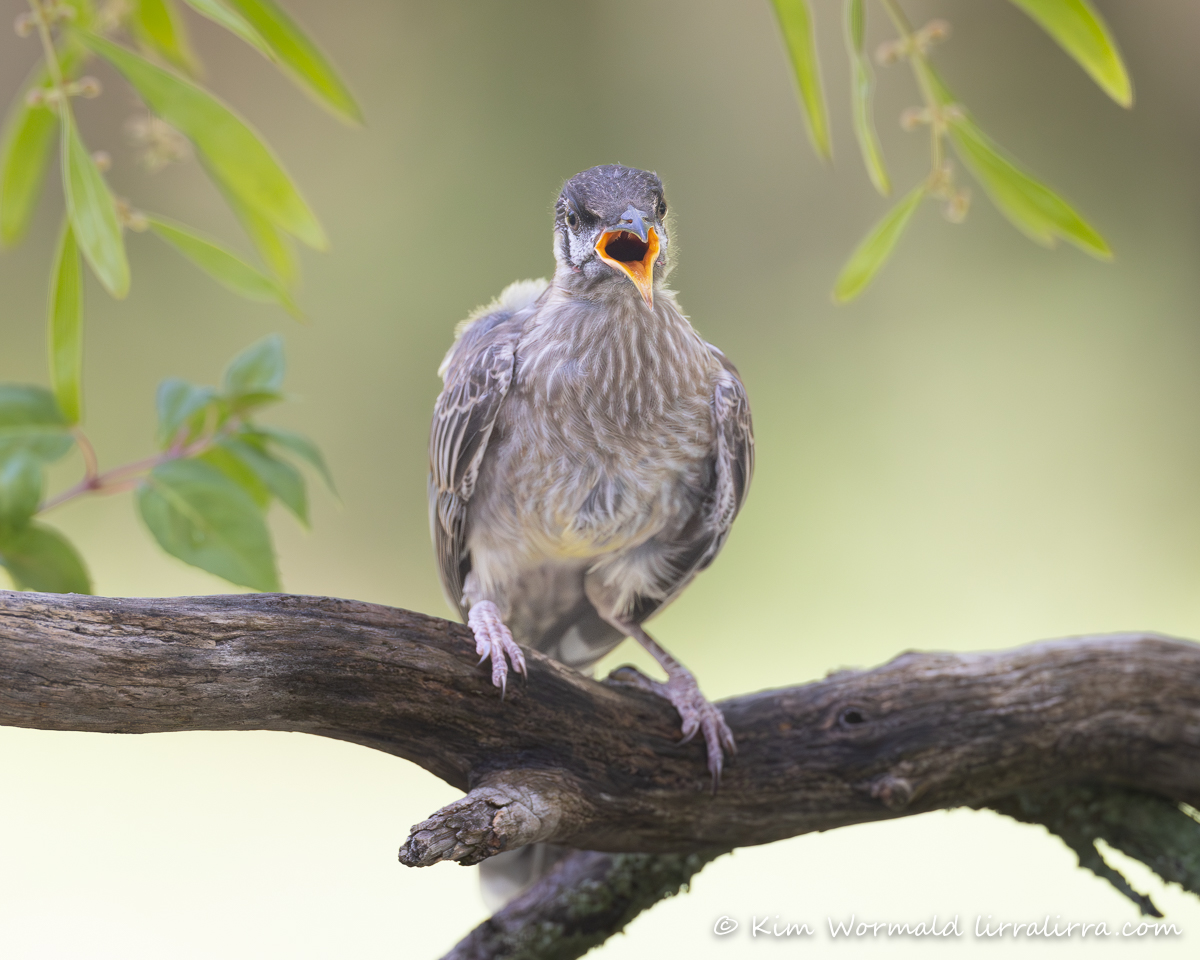
This young wattlebird was also feeling the heat and has its bill open and its wings held out from its body. If you look closely you’ll see the tiny bud of its red wattle – so cute! This bird didn’t bathe but drank, quite strangely at first which made me wonder if it was its first visit to a birdbath.
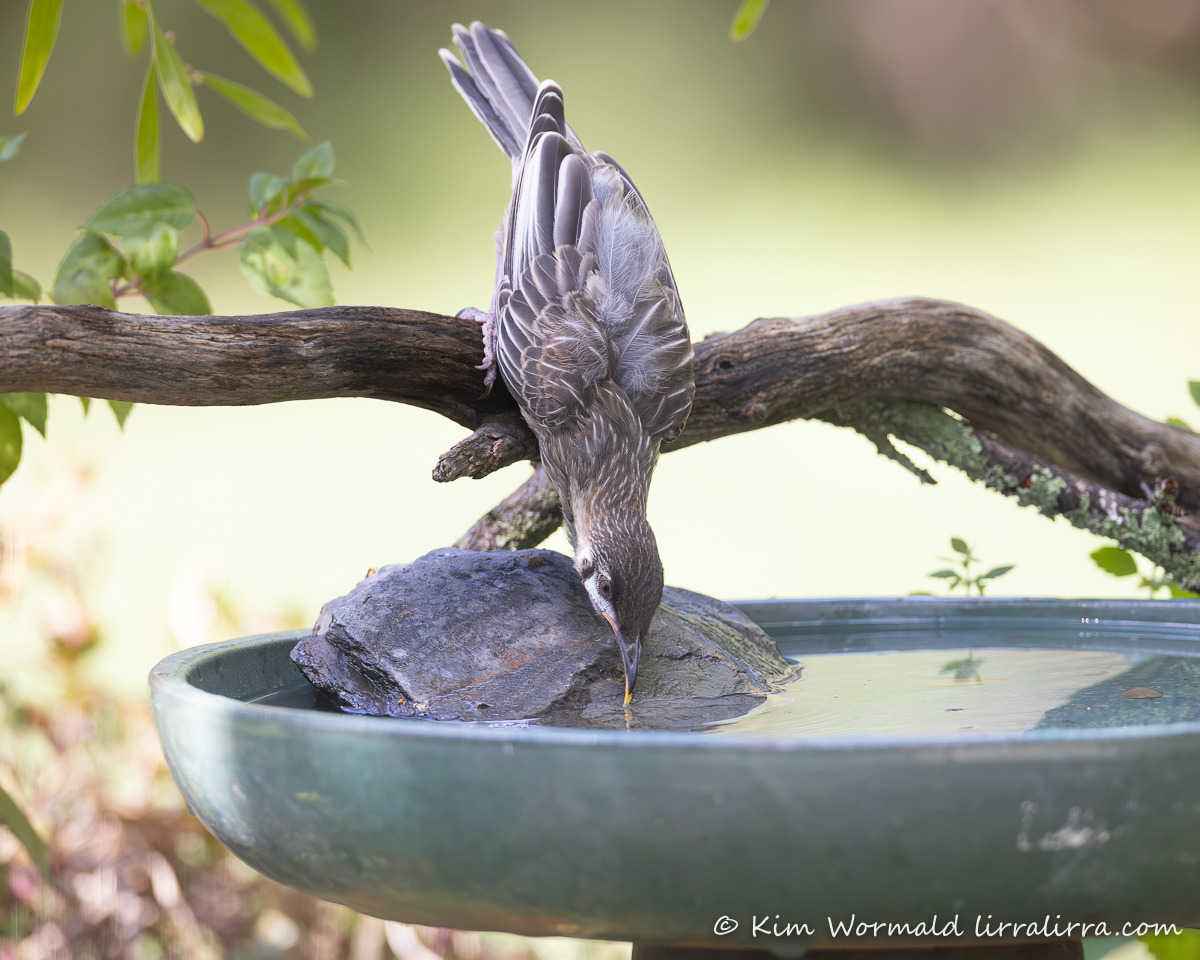
During its first attempts to drink, this very young wattlebird kept licking the rock with its long tongue. I was concerned that the rock would be hot and might damage the delicate brush-like tip of its tongue. It didn’t duck right down to the water until the parent bird arrived and the youngster followed the adult’s example.
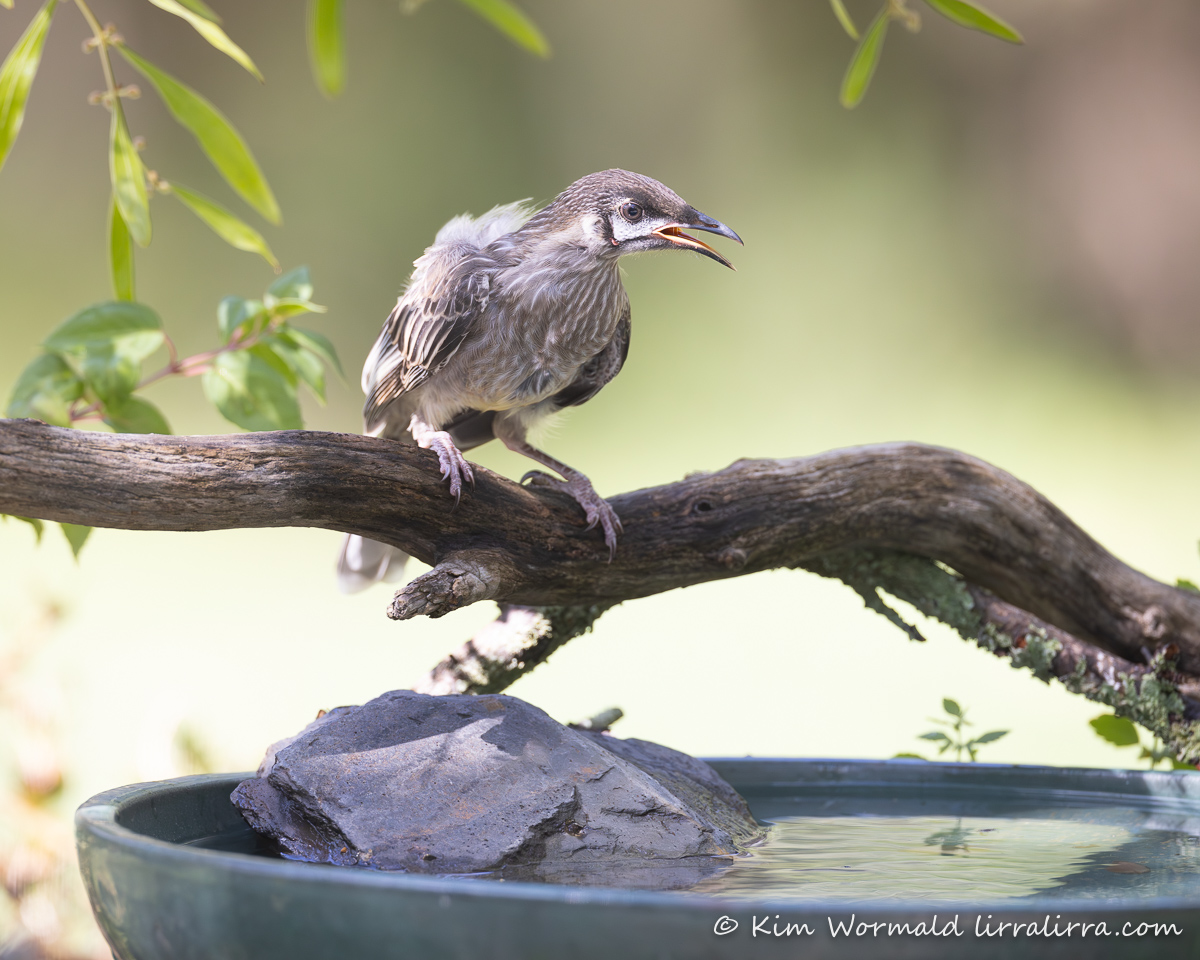
The tiny red wattle is slightly easier to see in the image above.
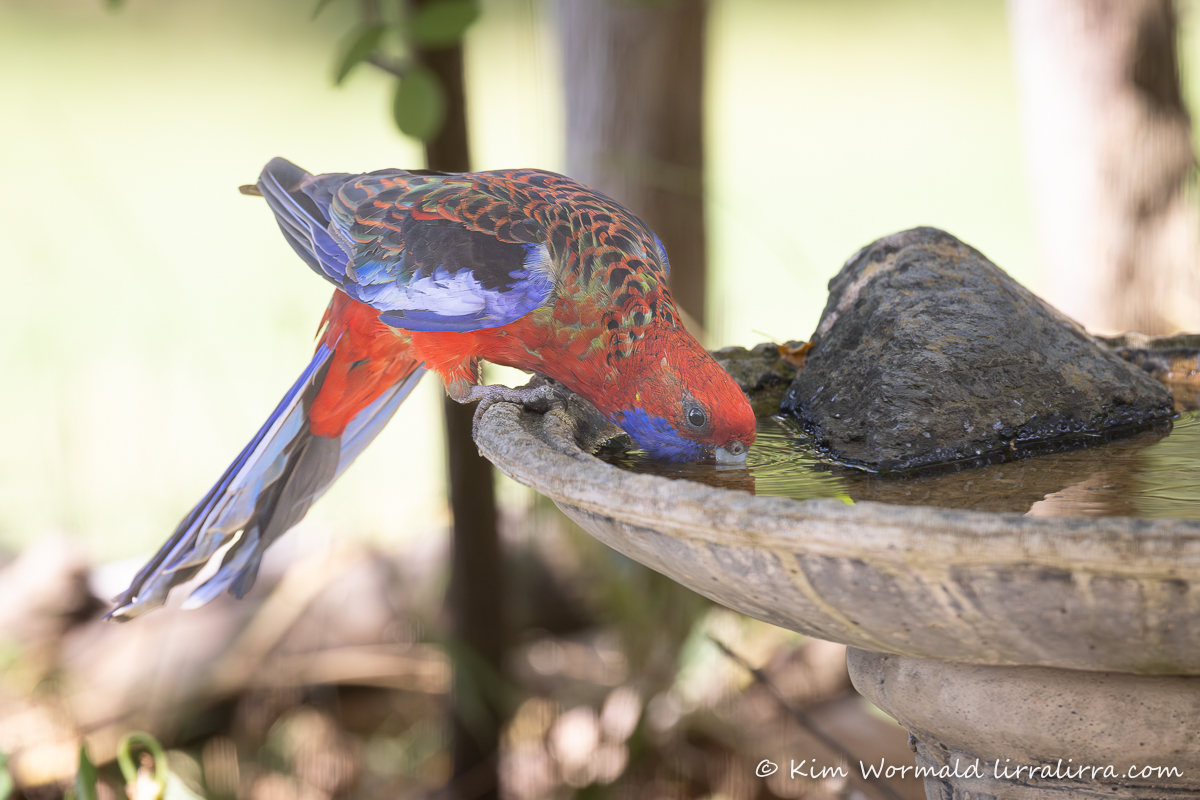
This Crimson Rosella is an immature bird, as it hasn’t yet lost all of its green juvenile feathers. But it definitely knew how to get a decent drink!
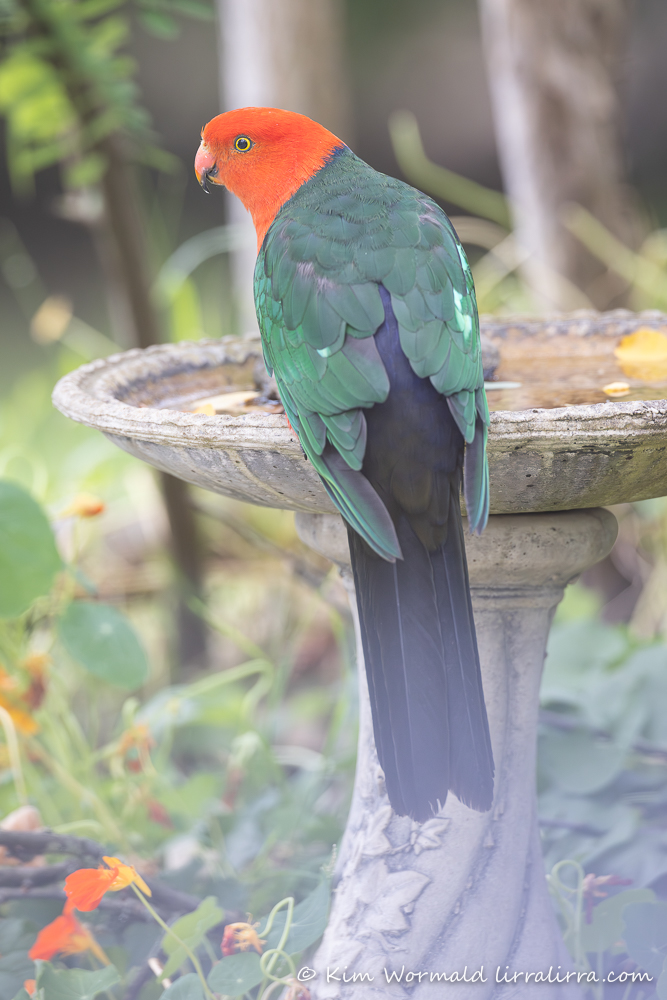
This king-parrot rested in the shade for several minutes. On seriously hot days the water in the birdbaths gets hot and evaporates quickly. Water is also lost as birds bathe and splash. Once the king-parrot left I dashed outside to refresh and refill all the baths.
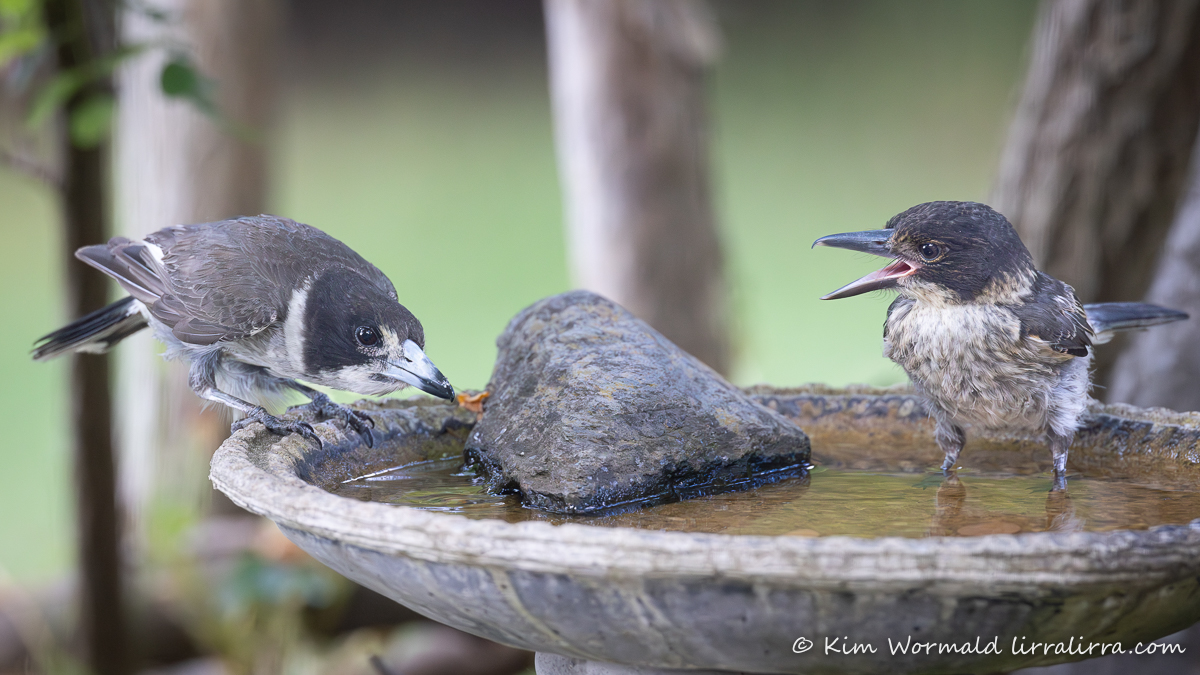
The adult butcherbird soon joined the youngster in the shallow birdbath.
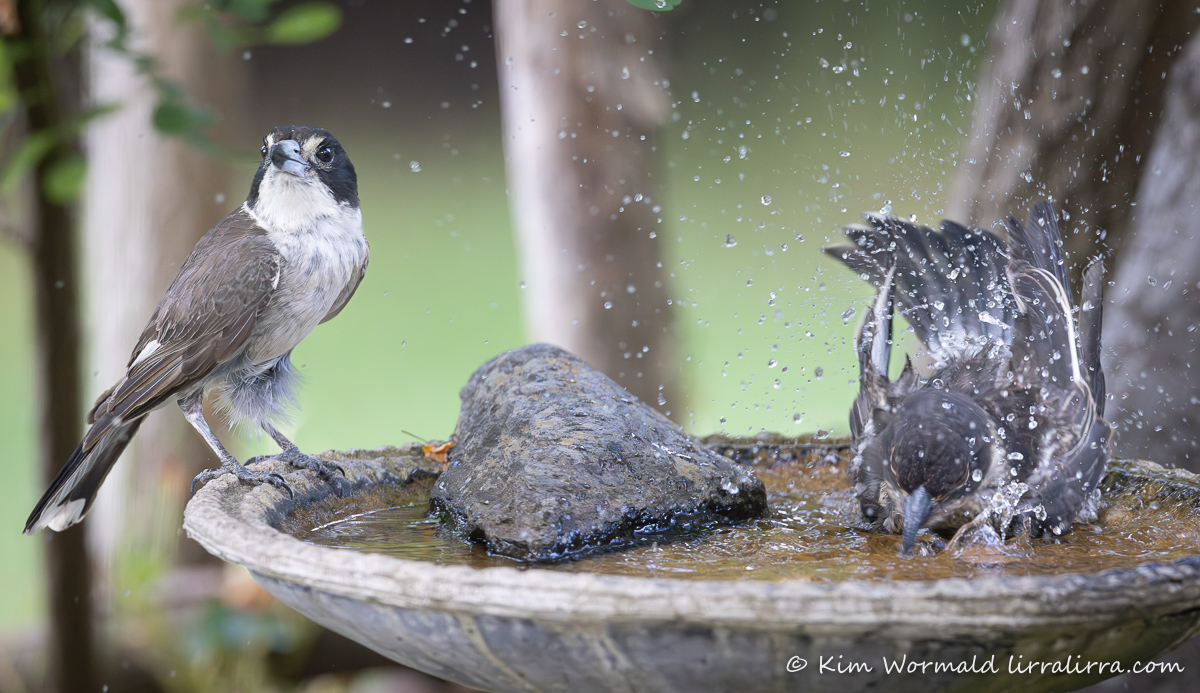
This young butcherbird knew exactly how to make good use of the cool water.
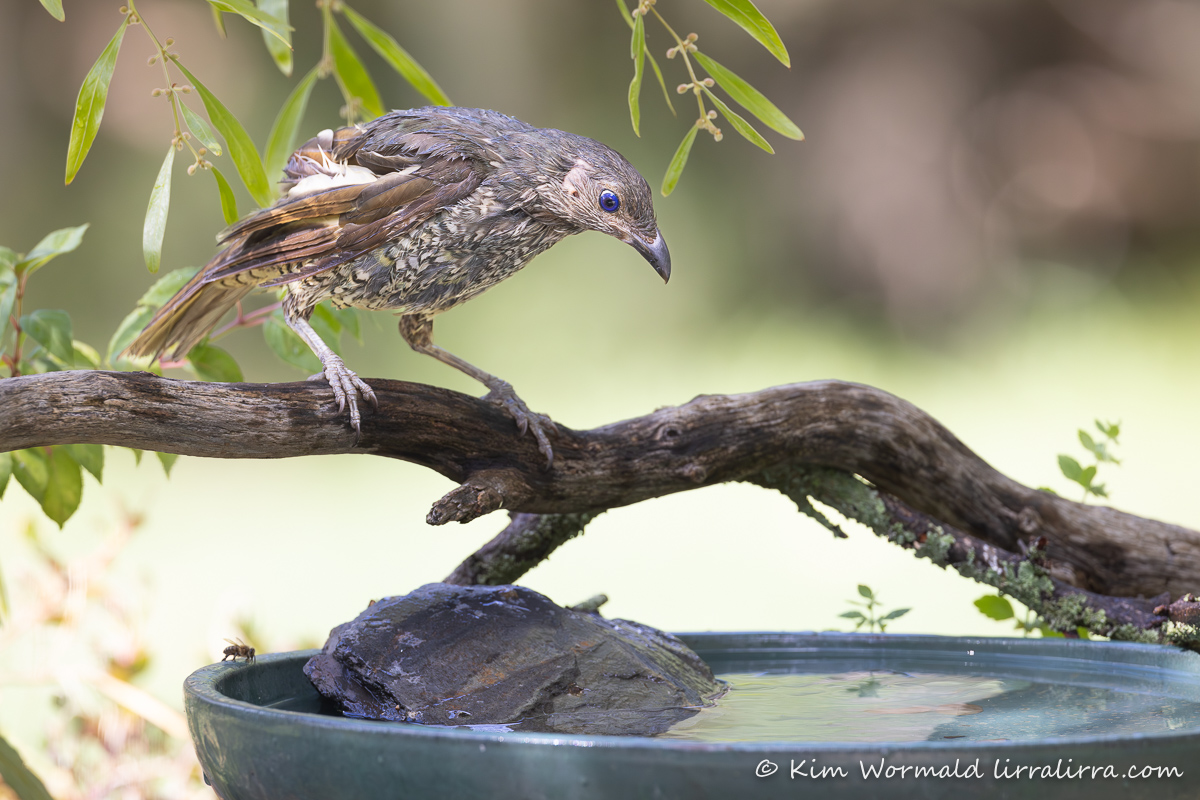
I’m still thrilled to see Satin Bowerbirds here. They are relatively new arrivals and a small family group make very good use of the larger of the two pedestal birdbaths. Can you see the bee drinking from a droplet shaken from the bowerbird’s feathers?
I have two pedestal birdbaths close together, one shallow and one deeper. Beneath them I have a shallow bird bath placed on the ground. I have other small water points around the property but the cluster of three is by far the most used area.
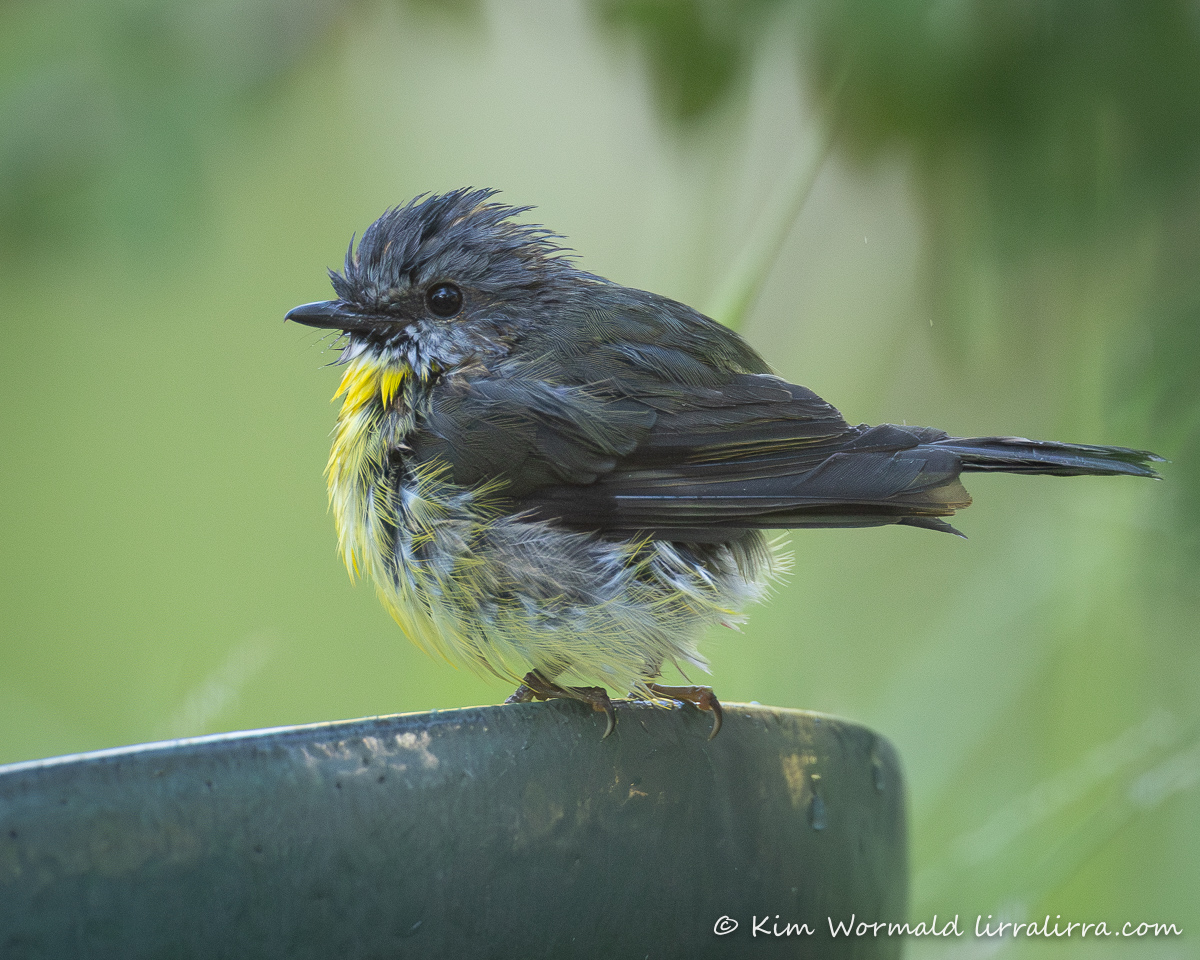

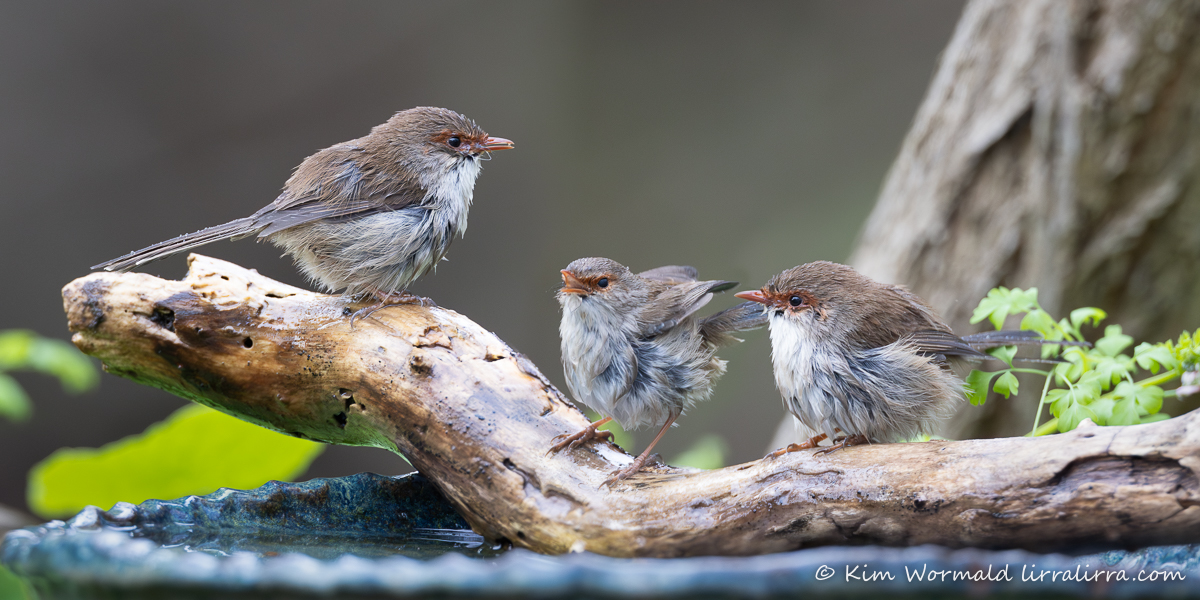
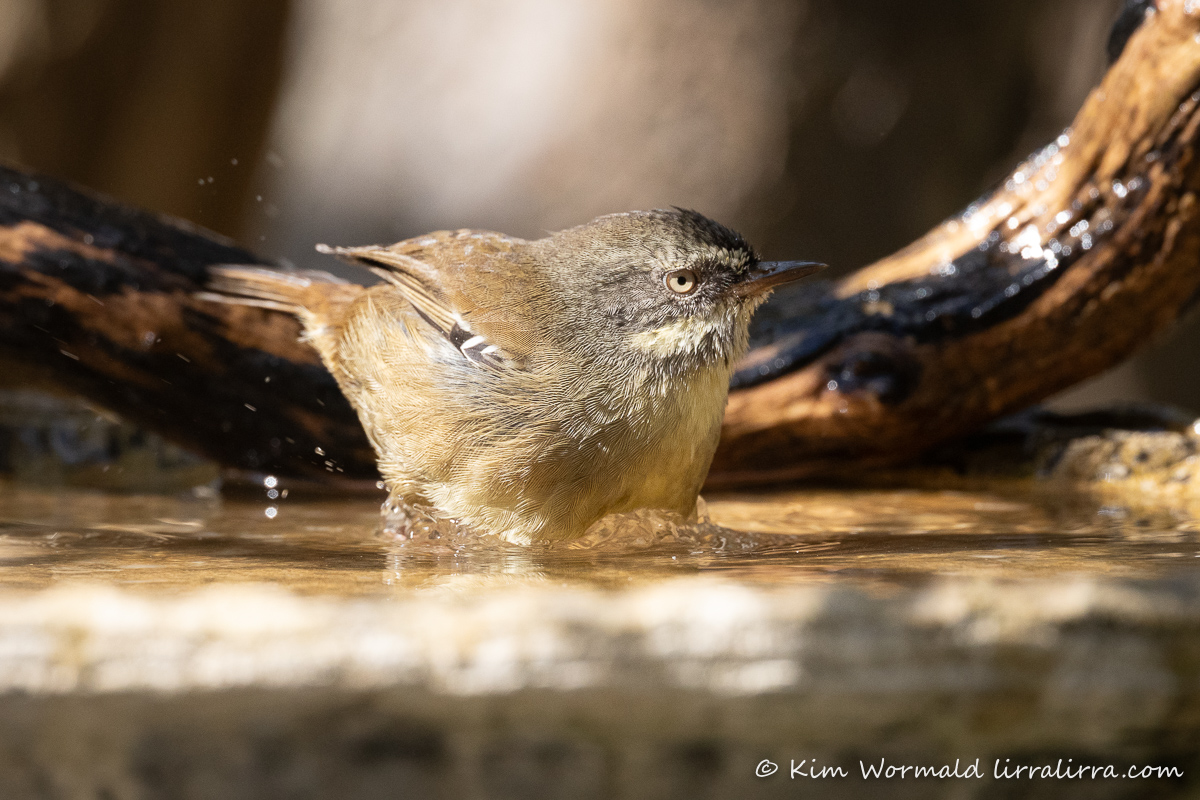
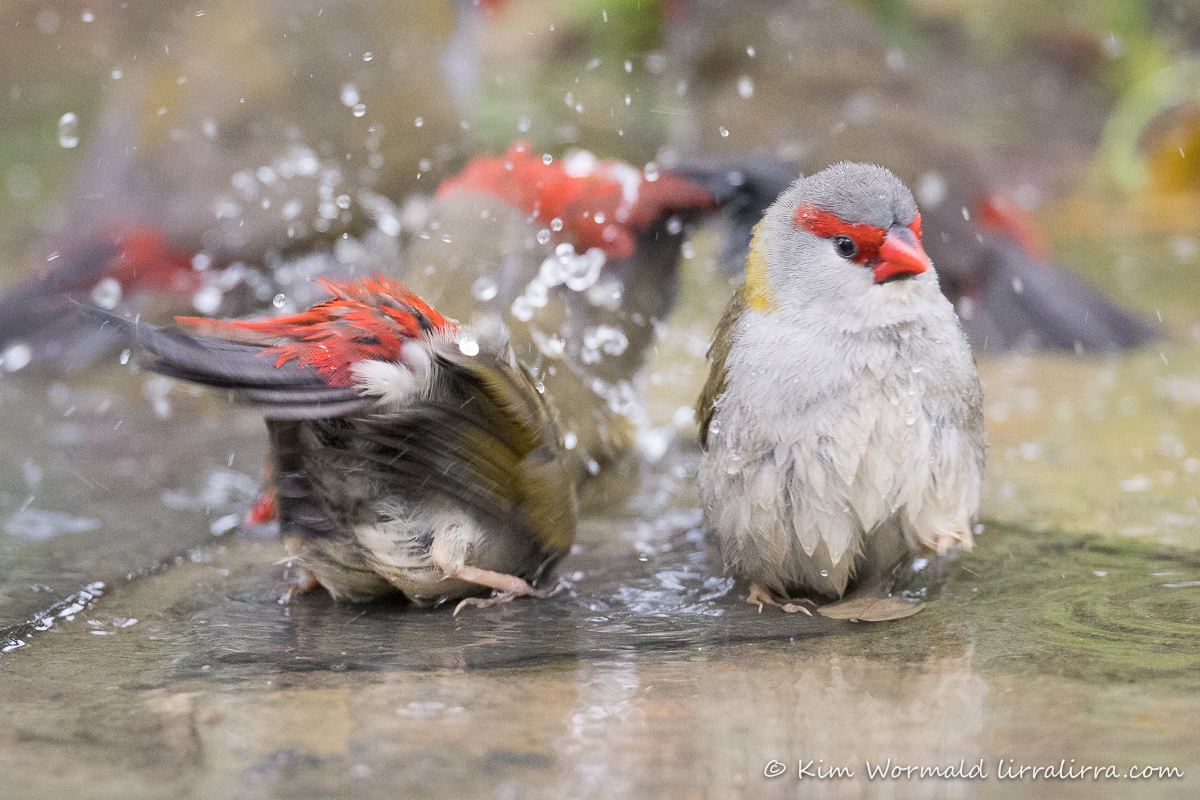
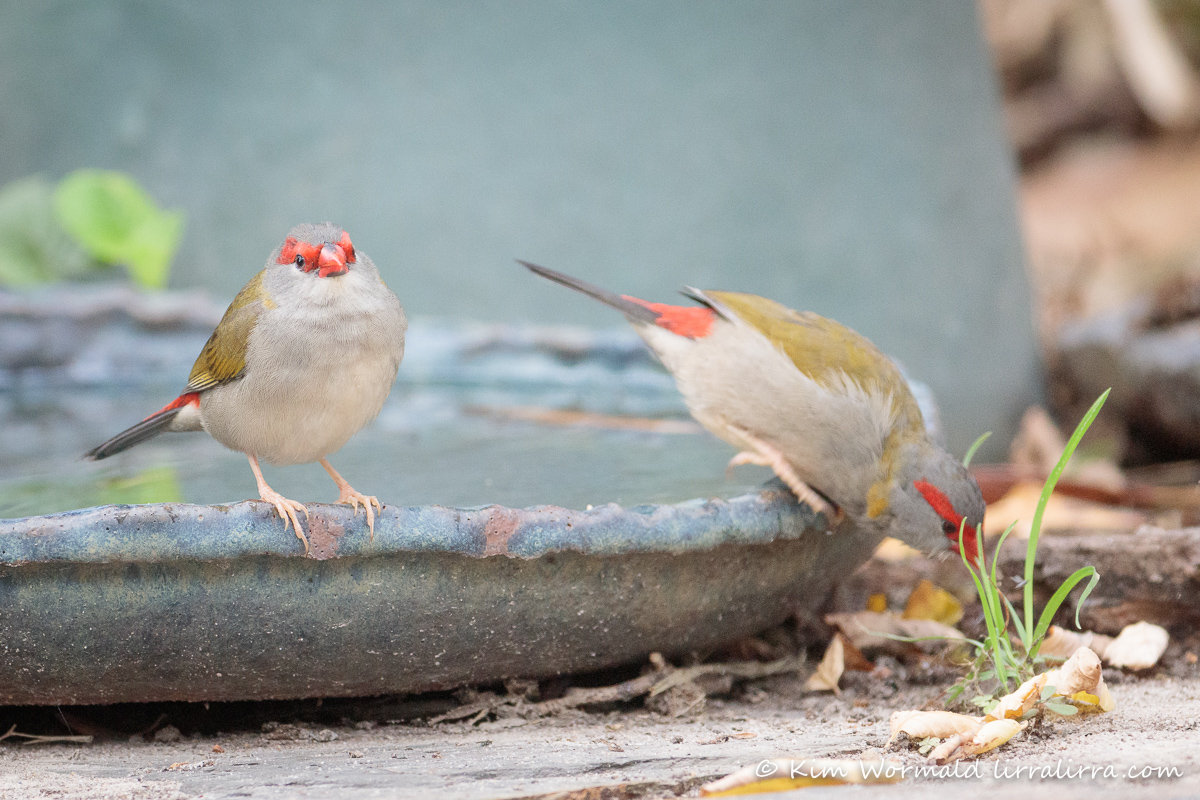
Enjoying a drink and a snack from the shallow birdbath that is at ground level. It was made for me by a friend who is a talented potter (thank you Fiona!) and I love it as much as the birds do.
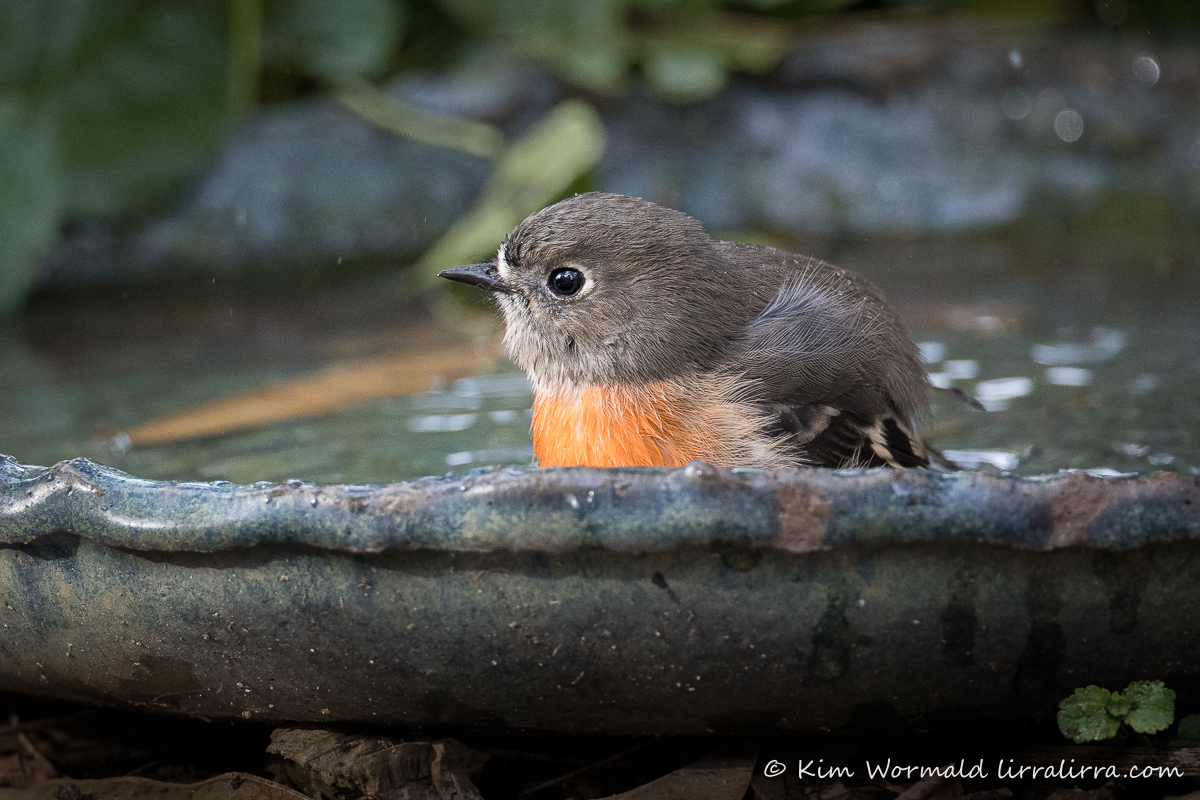
The Scarlet Robin image was taken during winter (birdbaths are important throughout the year). These little lovelies often sit and relax in the ground level bath. It is used by many of the smaller birds.

One hot summer’s day I saw a Grey Fantail flying from the bush to the birdbaths. It was so stressed by the heat that it literally fell out of the air. I was about to rescue it when it regained its strength and flew the final few metres to drink and bathe. This is why I never photograph birds at water sources before they’ve had the chance to drink and bathe – I never know the effort it has taken them to get to water.
On very hot days I often leave a sprinkler on low, giving a fine mist of water for the birds to sit beneath.
If you see a bird that is heat stressed and unable to move it is possible to help them. Catch them carefully using a towel, place them in a ventilated, lidded box on a small towel and put them in a safe, dark, quiet place. Do not attempt to feed them, or put water into their mouths. It’s good to keep the number of your local rescue centre, or wildlife organisation, in your phone so you can quickly call for help and guidance.

There are a few important things to consider when providing water for wildlife. Here’s a list of what works best for me.
- Ensure the birdbaths are placed somewhere safe from cats and other predators – this can include using raised baths and placing them among branches to make it more difficult for goshawks and sparrowhawks to take birds while they are wet and vulnerable
- Place the baths in the shade if possible
- Use birdbaths with different depths – shallow baths to suit tiny birds and insects, and deeper baths for larger birds and small mammals
- If possible have a range of baths at different heights, including one at ground level if it’s safe to do so – place in shade if possible
- In all but the shallowest of baths use a rock or branch to ensure that wet birds are able to safely leave the water – I prefer to use a rock as even the largest birds are unable to displace it
- Refresh and refill the baths daily, and several times a day when the weather is hot as it’s important to keep the water cool
- On hot days put a sprinkler on low to provide a fine mist to help cool hot birds
- Ensure the baths are kept clean as avian diseases are spread where birds congregate
- Saucers and jar lids can be used to provide water for bees, other insects and skinks
- Providing water at ground level (as well as higher up) can help avoid pedestal baths being knocked to the ground by thirsty possums, kangaroos and other mammals – sometimes!
- Always allow birds to drink/bathe before risking taking a photograph – birds are more important than the image
- Don’t give up hope – even if you feel that your birdbaths aren’t being used very often make sure you keep them freshly filled with water and eventually the birds and/or other creatures will realise that you are providing a reliable source of fresh water and they will add your place to their list of favourite places to visit.
Not only does providing water help our birds and wildlife but it gives many hours of joy to those of us lucky enough to watch them. Please let me know if I have missed anything or if you have other ideas or experiences to add.
Happy birding, Kim
~ Facebook page Kim Wormald – lirralirra – 10K+ followers
~ Facebook group Ethical Bird Photography
~ Etsy – prints via me at Kim Wormald lirralirra
~ Browse prints and gifts Lirralirra Shop or contact me directly

Kim you are in bird heaven on Earth.
I get excited if I see a magpie but unfortunately we have a 400 space car park behind our fence and trucks and cars causing noise, dust and danger and I am sure that is why we do not see any of your beautiful feathered friends. We are the only house with trees in the back yard, the rest consist of concrete and steel so habitat protection and providing safe, cool, friendly places are not available.
We are the only one house on the block all the rest are two, three and now, of course, in our area we are targeted to build 6, 8, 10 storey developments in suburbia and in the city of Box Hill, a 50 storey monstrosity and another 20 high rise hellscapes have just been approved and will be all concrete, glass, steel, no trees, grass, ponds, wetlands or gardens and this again brings excessive noise, pollution, dust, lights, dangers and nowhere for our unique, precious and irreplaceable birds to live.
Thank goodness there are people and groups like you that value and understand the importance of protecting our natural environment and, importantly, creating safe, healthy and vibrant places for all our wildlife
Enjoy your piece of paradise. Your bird family are delighted.
I do feel very blessed Barbara, and was thrilled when I managed to put a protective covenant on the property. The birds and bugs in your area must see your place as an absolute haven. I often think of ow everything would have looked 300 years ago…
Water is life!!
These beautiful photos show these magical feathered friends definitely know that your home is one of their favourite places to visit.
A precious bee enjoying a drop of water from its friend the Satin Bowerbird shows how nature tries to share its resources with all living beings.
Another suggestion is to also check pools as sometimes in desperation birds and other wildlife will access these areas and structures seeking water and shade and often struggle to escape. Lizards are often attracted to pools for water, basking, and sometimes even play, with species like water skinks naturally near water, while others like bearded dragons and monitor lizards might swim or soak for exercise and cooling in the heat, though they can easily drown, so providing escape routes (like “Frog Logs”) is crucial for any wildlife that falls in.
Sprinkler on low is a great suggestion and, as stated, adding a rock or branch to a bird bath and ensuring water level is shallow for the gorgeous little birds is a perfect way to ensure all the birds big or small stay hydrated, cool and safe.
Thank you Kim for the valuable suggestions and, of course, the magical photos.
Stay safe
Thanks for mentioning the ‘frog logs’ Barbara. There are quite a few options to help creatures get themselves out of pools and I’m sure you’re right about this being even more of an issue in hot weather. There was a beaut array of birds at the birdbaths today including two species of honeyeater, thornbills, Silvereyes, pardalote, fantails, maggies, fairywrens, scrubwrens and probably many others that I heard calling but didn’t see bathing.
I use large plastic potplant saucers with rolled edges as birdbaths in my yard. Birds can perch easily on the rolled edges, and they are relatively cheap to buy for those on a restricted budget. They are easily cleaned with a pressure nozzle on a hose, and can be scrubbed if algae builds up.
Thank you for caring for our beautiful birds!
Thanks for that idea Marie, excellent thought. And thank you for caring too!