The Point Danger Australasian Gannets are breeding again, and this week I’m sharing their story in photographs.
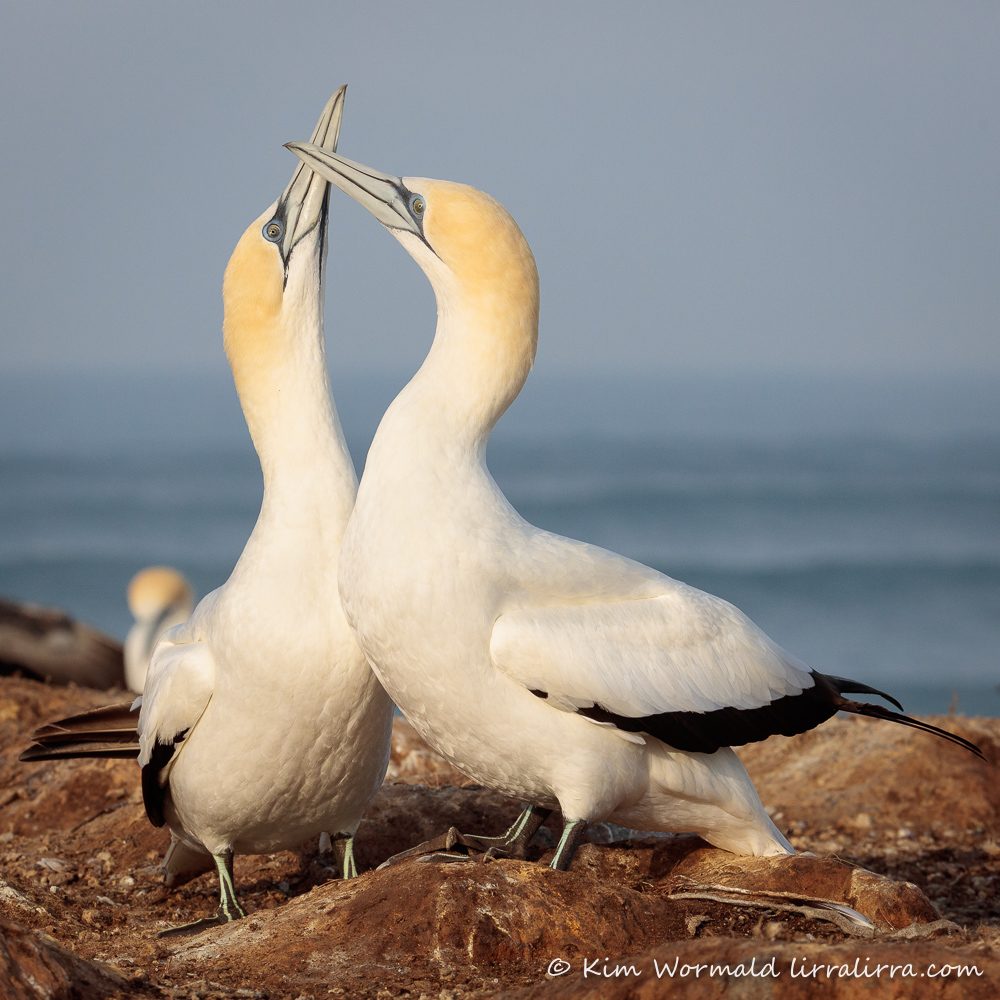
Australasian Gannets form monogamous pairs and often engage in pair-bonding activities like bill-tapping.

The Point Danger colony at Portland, Victoria, is Australia’s only mainland gannet breeding area. This rocky outcrop is the overflow area from the Lawrence Rocks islets that are just over 2km out to sea from Point Danger.
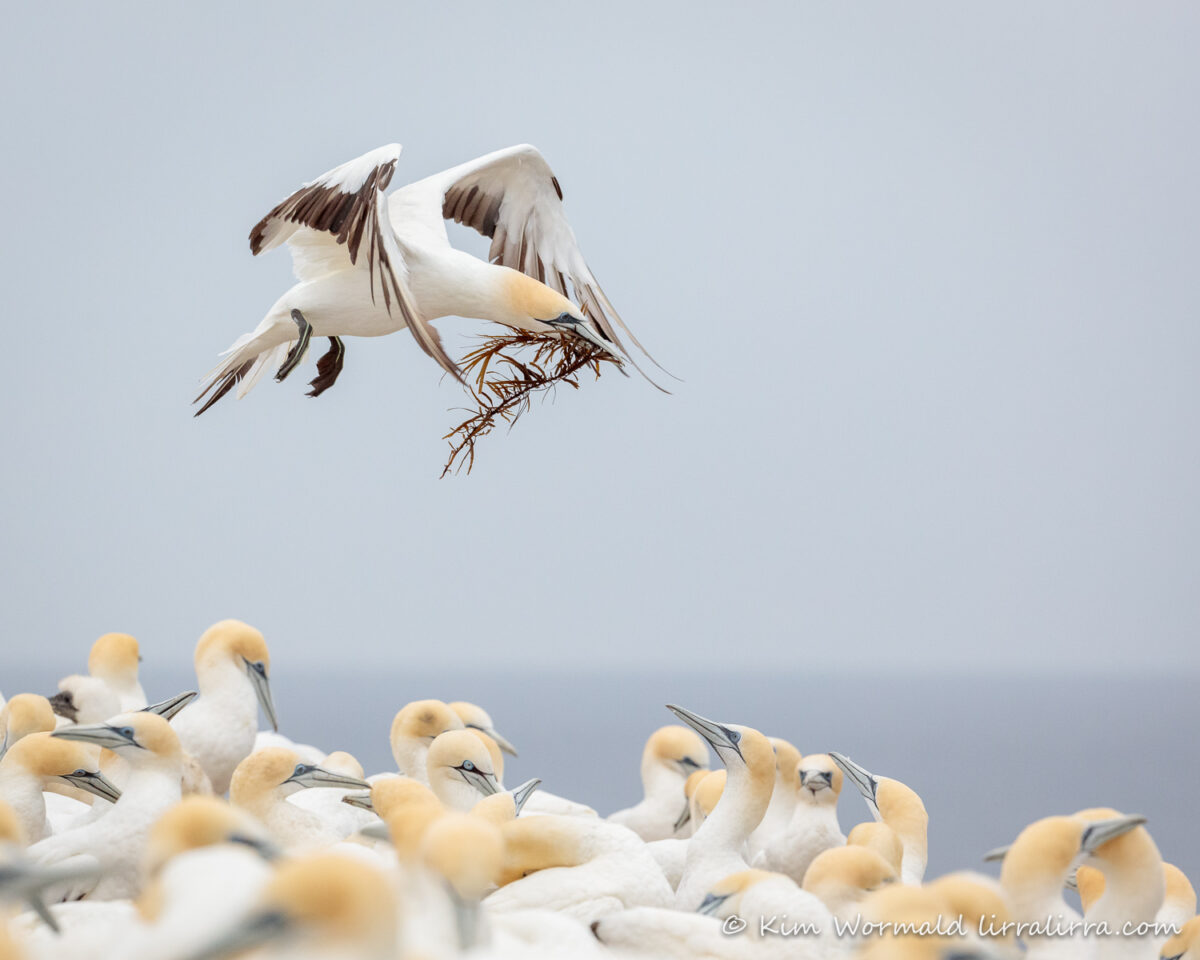
When the breeding season begins the adult gannets start bringing all kinds of bits and pieces to Point Danger to use as nesting materials. They create a rough nesting mound from items including seaweed, twigs, pieces of rope, feathers and guano. It always astounds me how they manage to land in such a crowd and the cacophony is remarkable if they dare encroach on another pair’s patch.
In an earlier post I shared twenty-one photographs of gannets with all the items I mentioned above, you can see the post here: Gannets bearing gifts

The parent birds share the incubation of a single, pale blue egg which hatches after 44 days. The chicks are born bare-skinned but soon develop some downy white feathers.
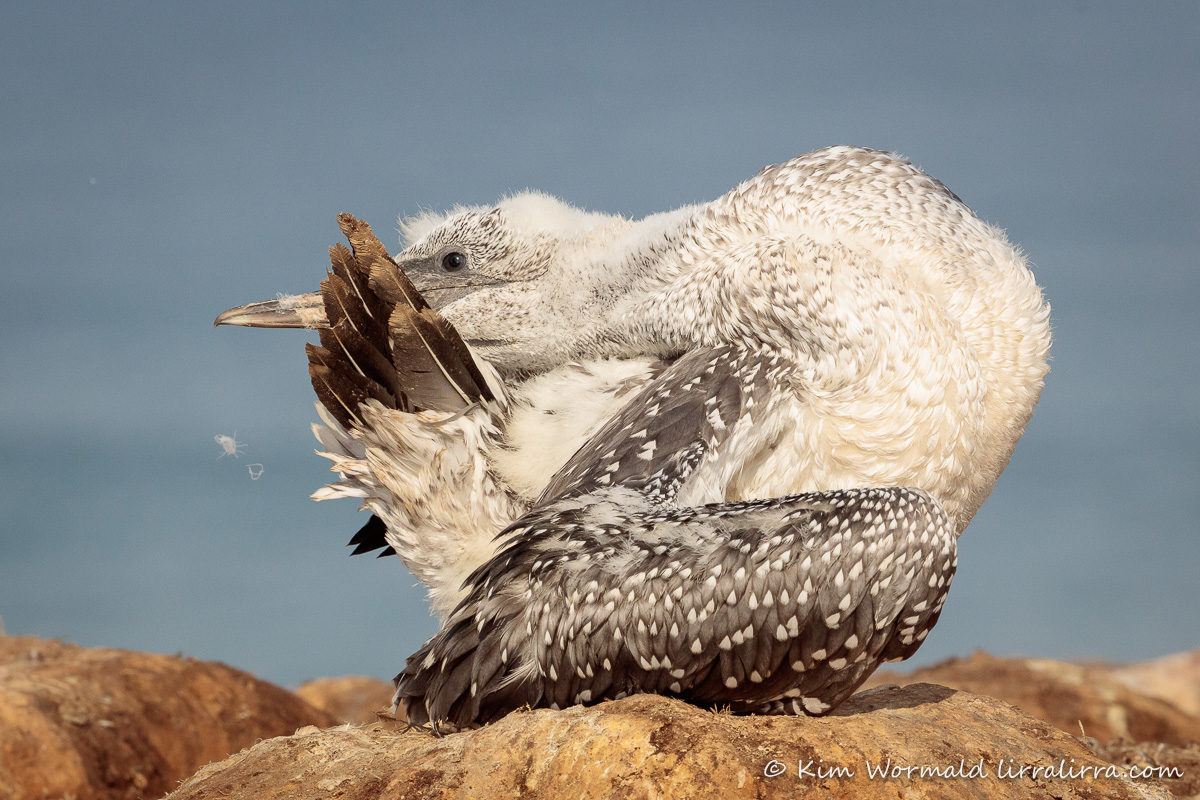
As they grow their white down is gradually replaced with the feathers that will take them to the fledgling stage. Their early attempts to preen are comical to watch.
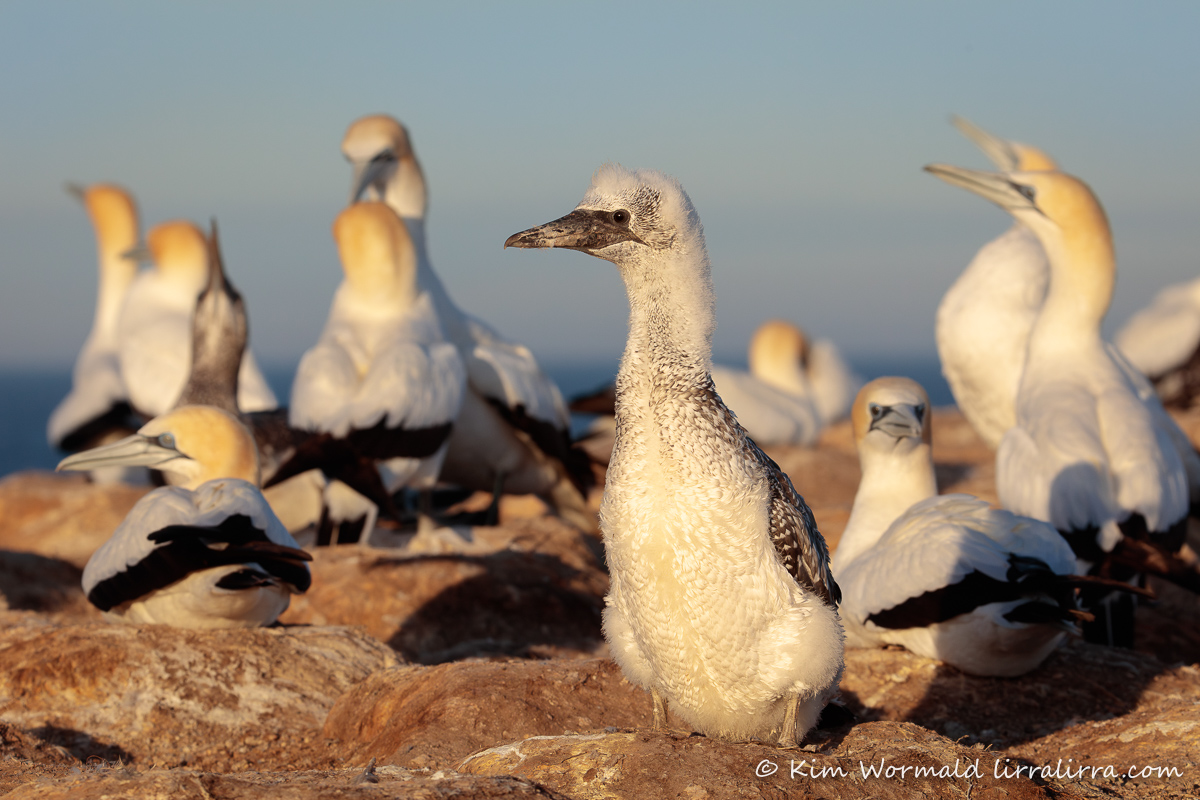
The chicks keep a vigilant eye out for their returning parent! They are voracious feeders.

Parent gannets regurgitate fish to feed their chicks.
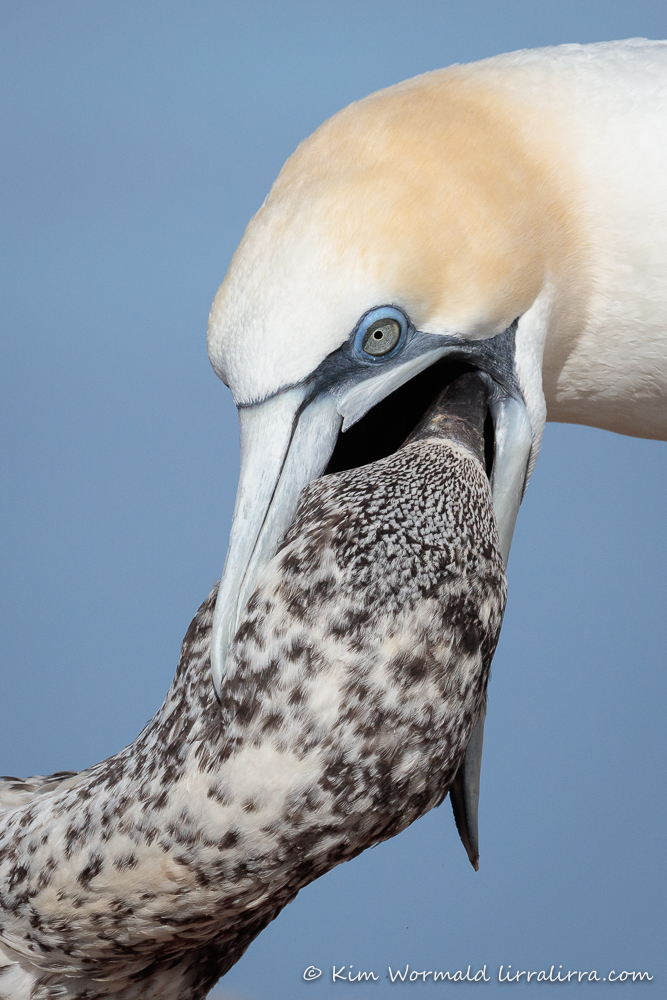
The regurgitation process is stimulated by the chick calling and banging at each side of the parent’s bill before taking a deep dive into the parent’s throat.
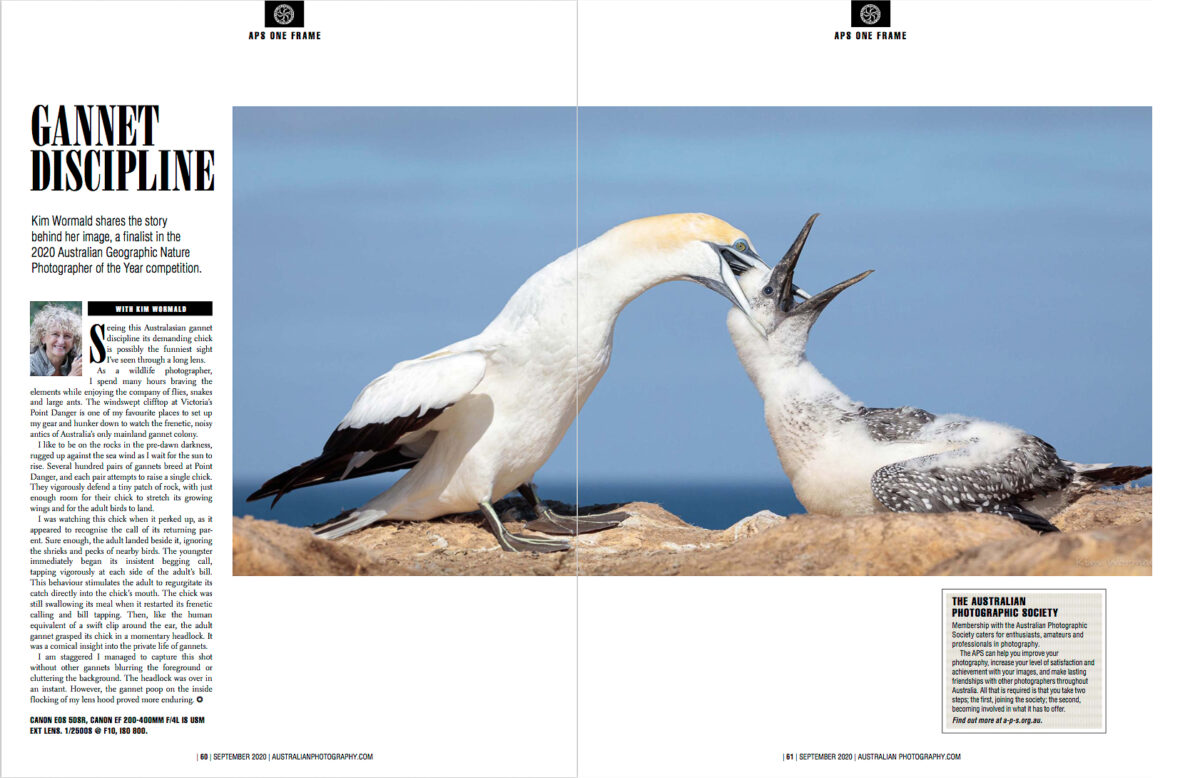
The photograph above, Gannet Discipline, is one of my favourite shots, ever. The chick had been very demanding for its first mouthful of fish and had barely finished swallowing when it began the noisy battering of the parent’s bill again. The adult put it in a momentary headlock as if to say, ‘Hey, give me a minute can’t you!’ This photograph was a finalist in the Australian Geographic Nature Photographer of the Year competition and was featured in the Australian Photography magazine.

As the chicks get closer to fledging they spend a lot of time flapping their wings to build up their muscles.

And when the chicks finally fledge, after about 102 days, the adults are free from breeding duties for another year. The chicks mature around the age of 6-7 when they return to the rocks to start raising their own chick.
Happy birding, Kim
PS The 200 lirralirra calendars originally ordered have been mailed and have hopefully arrived safely. I’ve had some wonderful feedback which I greatly appreciate, thank you! As I’ve already received new orders I plan to organise a second printing in the second half of November, new orders can be made via the Etsy link below.
~ Facebook page Kim Wormald – lirralirra – 10K+ followers
~ Facebook group Ethical Bird Photography
~ Etsy – Kim Wormald lirralirra
~ Browse prints and gifts Lirralirra Shop or contact me directly
#ethicalbirdphotography #ethicalwildlifephotography

Oh Kim – what an amazing set of photographs and not surprised that the discipline phot was judged a winner!
I love gannets – their markings look like something out of the art deco period 🙂
I can still hardly believe that I managed to get the Gannet Discipline shot Fiona. I was so lucky! It’s extra amazing that there were no gannets between me and the action – the odds of that are pretty incredible. I love the ‘art deco’ description, I’ll have to remember that.
So lovely Kim. Thanks for your photos and discription. Valda
I’m so pleased you liked the post Valda, Kim
Stunningly beautiful observations and photos Kim.Thankyou
My pleasure Ann. They are superb birds to watch