Fantails are delightful birds to watch as they are super active and totally exquisite. There are three species that I see at my Trust for Nature property.

I have a print of the fantail above hanging in my study and I never tire of looking at the details of each feather. Grey Fantails are Australia’s most common fantail. These acrobatic birds are insectivores, as are all fantails, and they generally forage from the mid-storey. They take insects on the wing and I love hearing the snap of their bills when they are first learning (and sometimes missing) the insects.
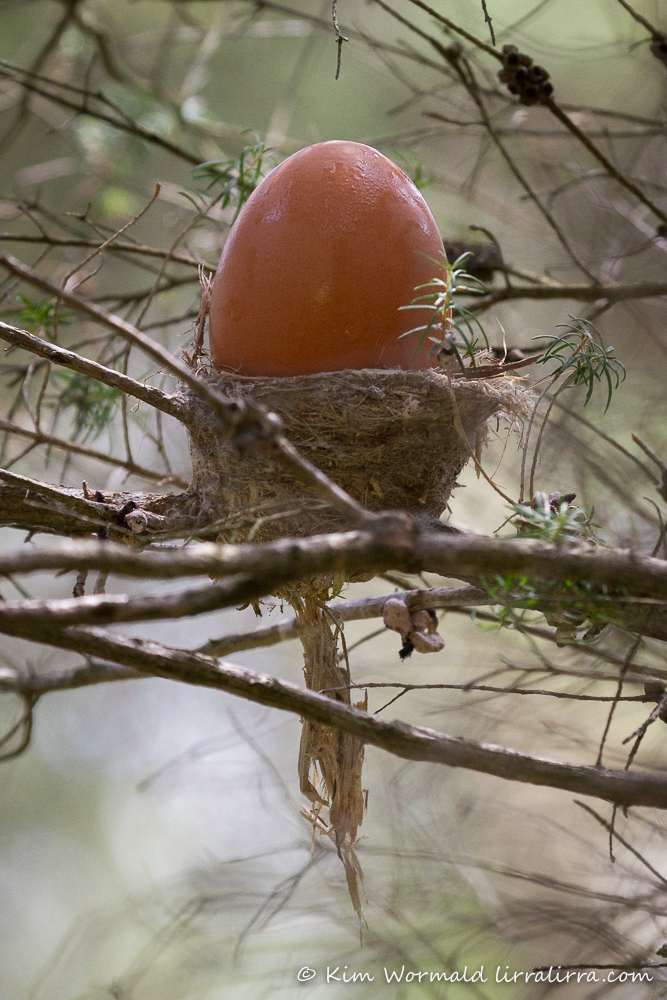
Grey Fantail nests are pretty ‘wine glasses’ and are surprisingly tiny. Three chicks were successfully fledged from this nest. When they left the nest I had a close look and was stunned by its size. I raced inside to get a normal hen’s egg and sure enough it fitted perfectly. I still find it amazing to look at an egg cup and realise that Grey Fantails could raise three chicks in something that small.
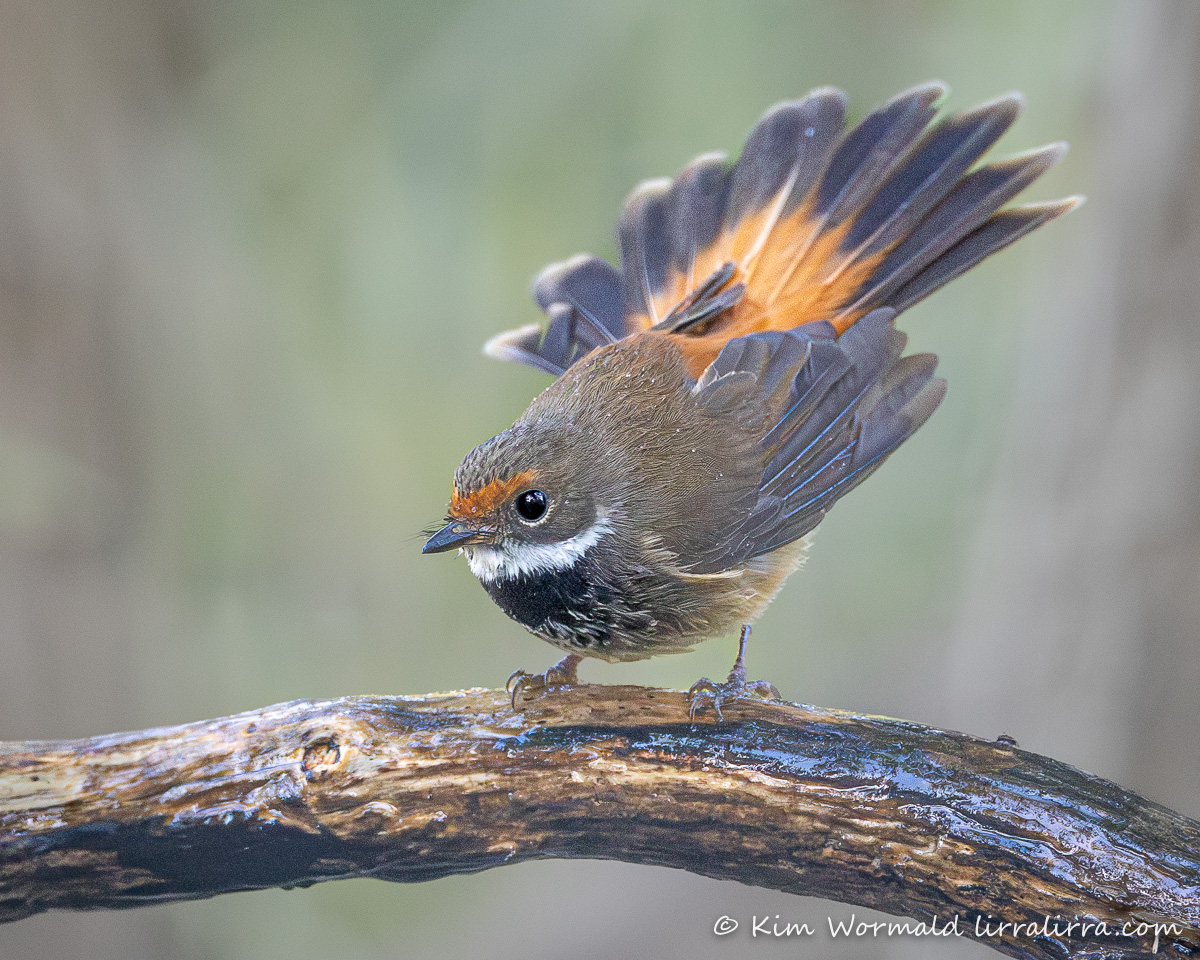
Rufous Fantails are my favourite small birds and this is one of my favourite photographs of one that came to visit my place earlier this year. They are stunning little birds that are constantly on the move. They forage for insects mainly in the mid to lower storey. Their nests are similar to Grey Fantail nests.

I’m not sure how many people are aware that Willie Wagtails are also fantails, the three species I’m sharing in this post are all of the genus Rhipidura.
I think of Willie Wagtails as being ubiquitous as I see them just about everywhere I travel, even at friend’s place on a horse’s back! They forage mainly at ground level but will also take insects from the air.
There’s something cheerful about these noisy little tail waggers. They feature strongly in indigenous culture where they are often believed to eavesdrop on conversations and pass on what they hear. ‘Aboriginal Words and Place Names’ by AW Reed lists several words for Willie Wagtail including: tityarokan, mugana, jenning-gherrie, deereeree and gumalkoolin. A name I am more familiar with is tjinjiri tjinjiripa, pronounced almost ‘gingery gingerypa’; I’ve been known to whisper things to Willie Wagtails that I’d like to have spread around!
Happy birding, Kim
~ Facebook page Kim Wormald – lirralirra – 10K+ followers
~ Facebook group Ethical Bird Photography
~ Browse prints and gifts Lirralirra Shop or contact me directly

For a moment there I was trying to imagine how on Earth a little bird would incubate such a big egg… I’m clearly tired! Stunning pictures of these beautiful little ones ☺️
That’s hilarious! You need much more sleep! zzzzzzz
I smiled too, Kim. Thanks for the stunning photos of these beautiful little birds, and for sharing your knowledge of them.
My pleasure Liz.They are so entertaining to watch.
Beautiful, beautiful things – and I am loving the image of you whispering to Willie Wagtail.
It did make me smile when I heard about them being gossip birds.