After handholding a long lens for the best part of an hour my arms were complaining but the shots were pretty fabulous. In these series I showcase not just the bird but also the background and a very strange anatomical structure.
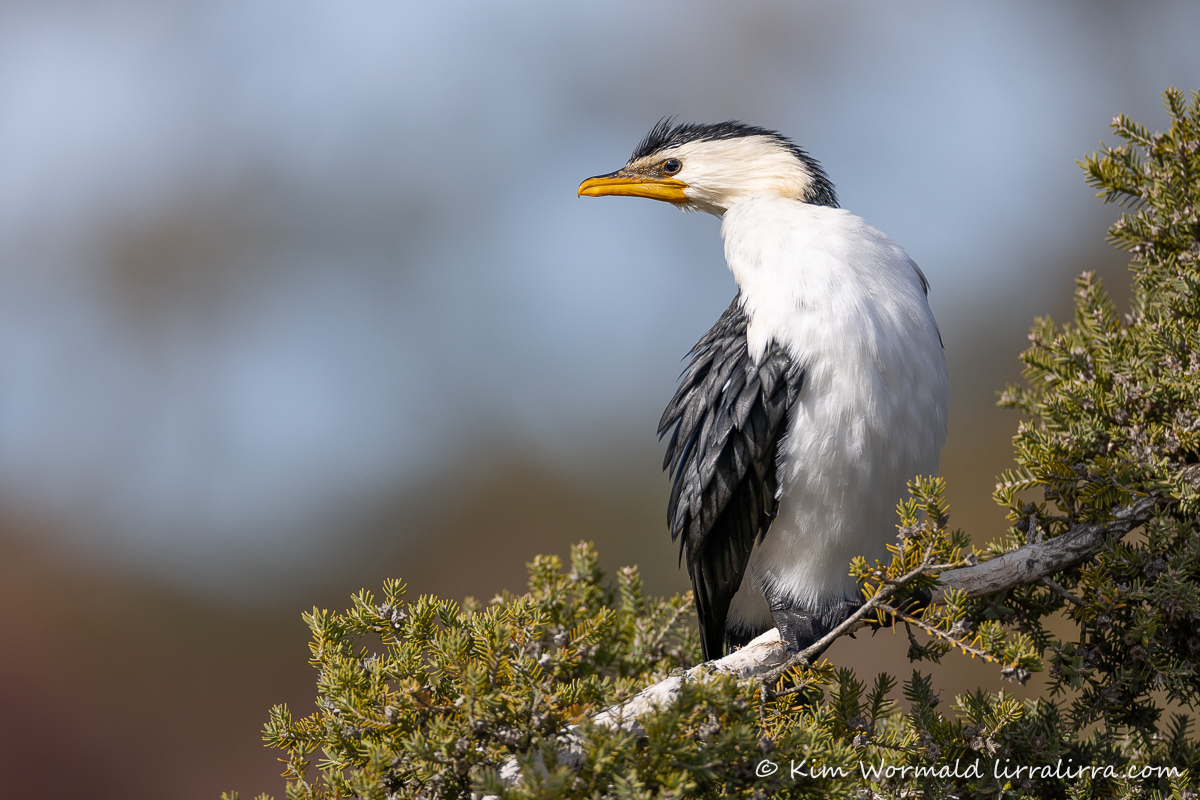
Those of you familiar with Little Pied Cormorants will know that many photographs of them are pretty similar as they often keep the same pose for ages and the photographer has to stay alert to notice when they ruffle their wings or yawn or scratch…
The bird sat in this tree for most of the hour I was watching it but by moving around, sometimes very slightly, I could make a significant difference to the background.
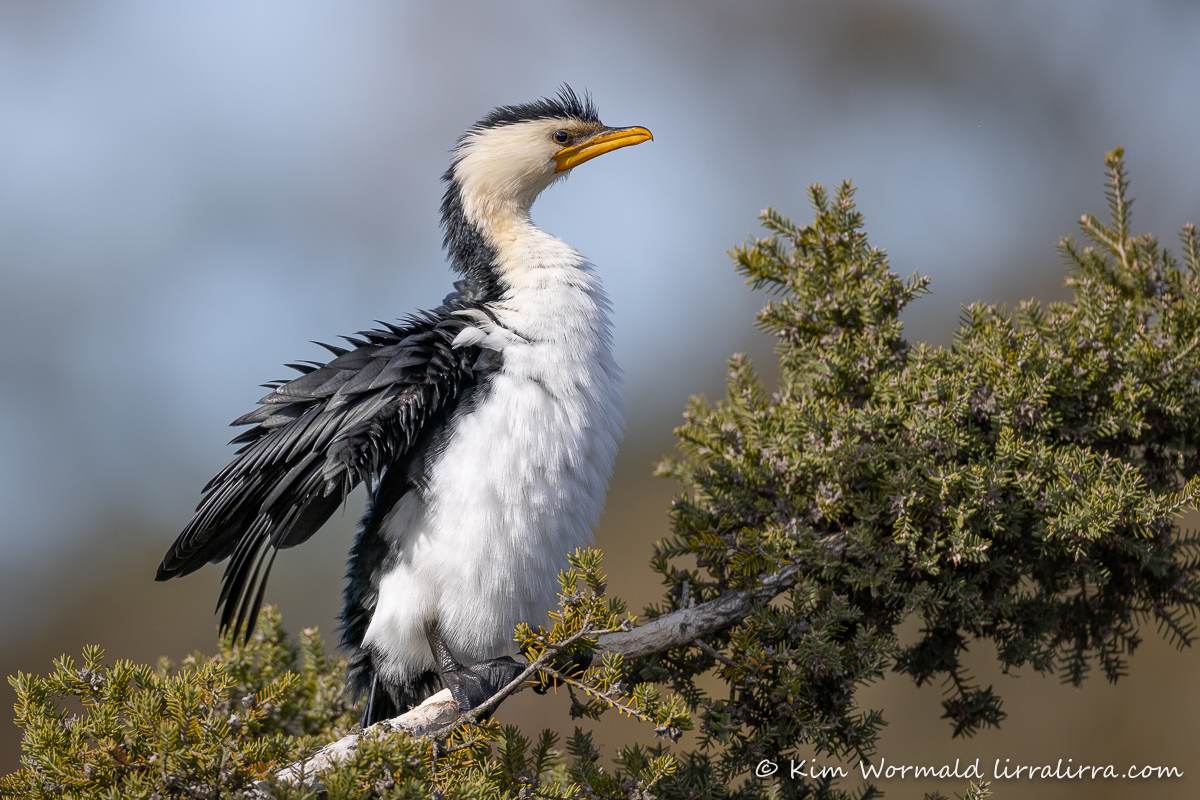
Patience paid off when the LPC ruffled the feathers of its underparts and head as well as its wings. These birds are often confused with Pied Cormorants and I wrote a post a while ago that points out the differences.
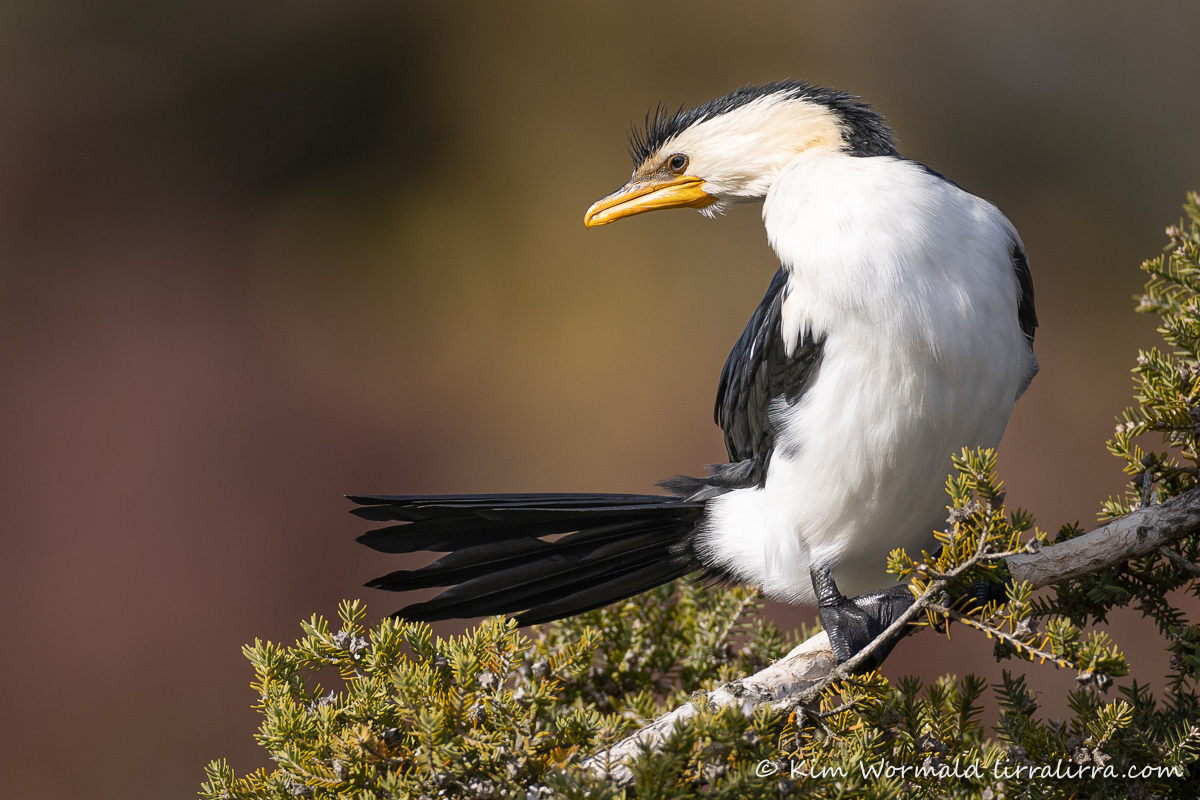
The bird is perched on the same branch here but I had moved a little to my left which made a significant difference to the background.
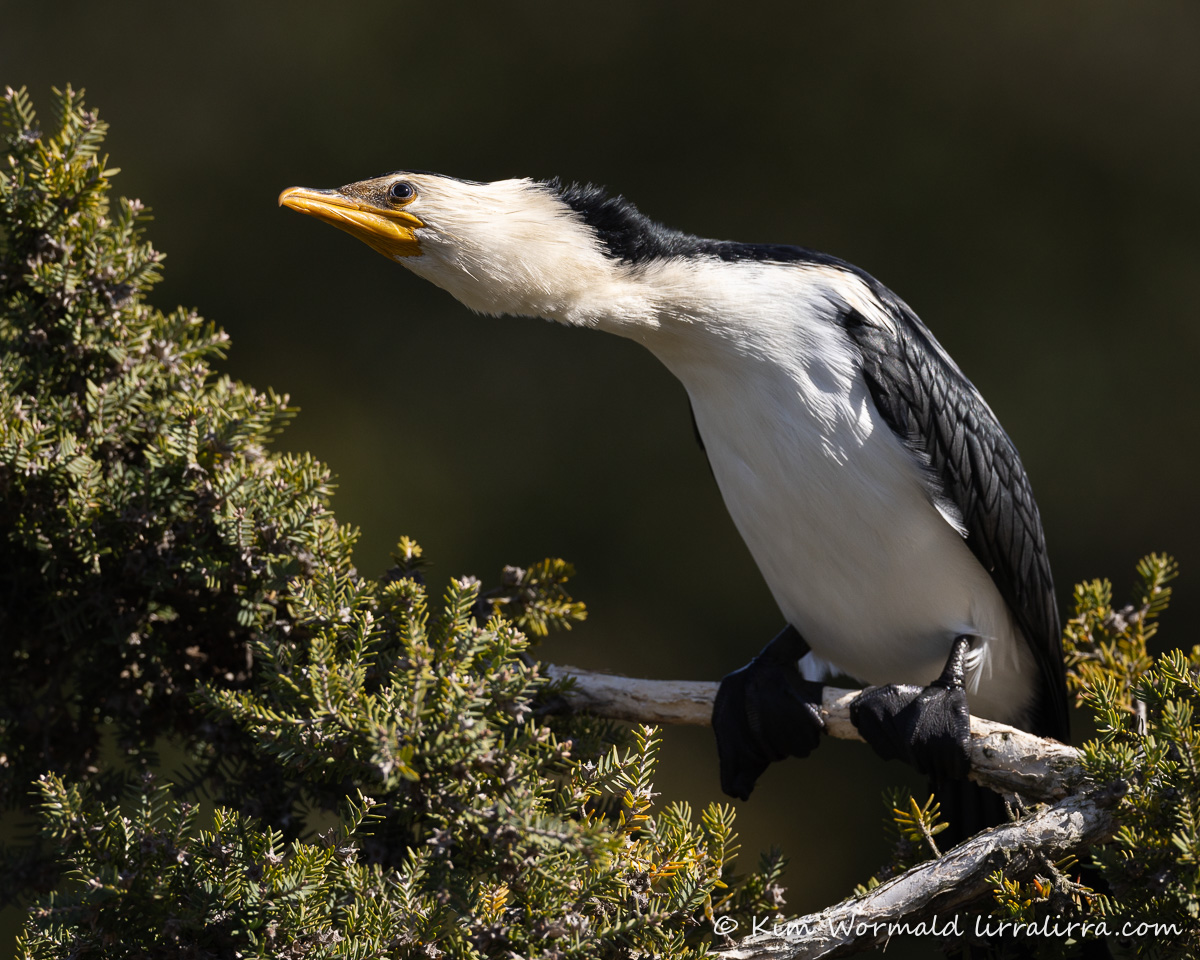
From the other side the background became more dramatic.
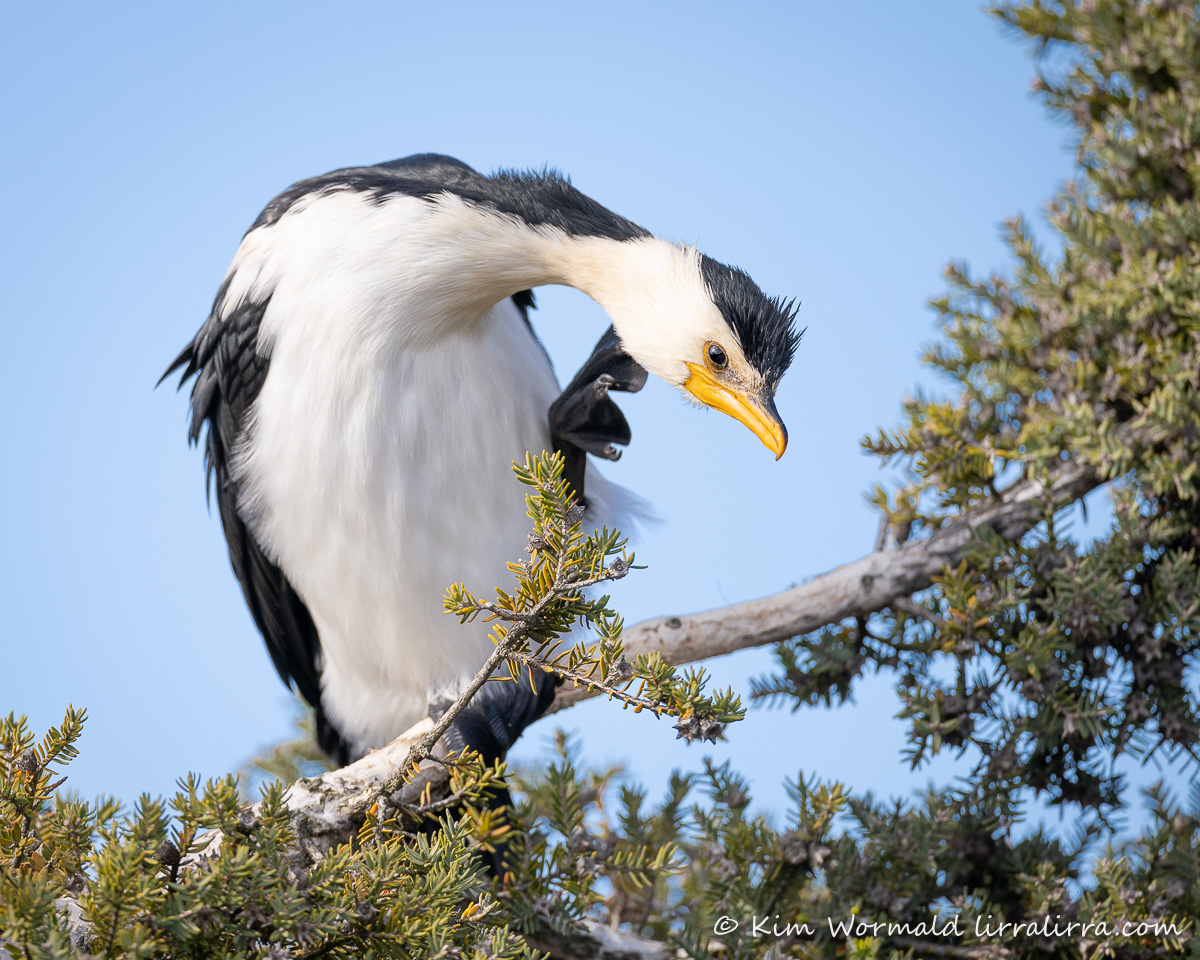
And by moving around again, further to the right, the sky became the background. When taking workshops in the field I teach what to look for and what f/stop to use to create the background you’d prefer. The shot above makes me smile, the cormorant’s expression is so evocative as it uses its fascinating foot to have a little neck scratch.
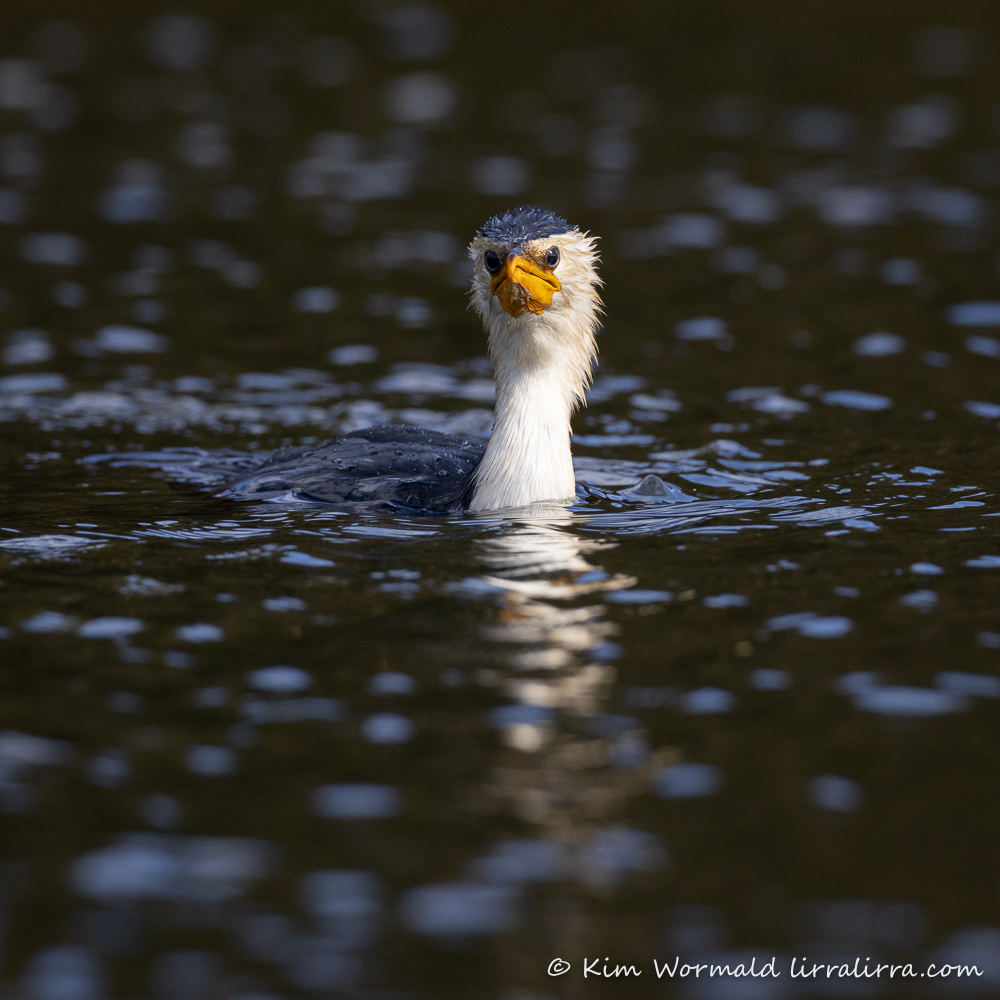
Hand-holding a long lens is tricky enough when I can point the camera slightly upwards but is very tricky when I’m down low. Despite that my arms briefly appreciated the change of position when the LPC flew into the pond to forage. At this site their favourite food seems to be yabbies. They dive under water to feed and unless the food item is particularly large they generally have swallowed it before resurfacing.
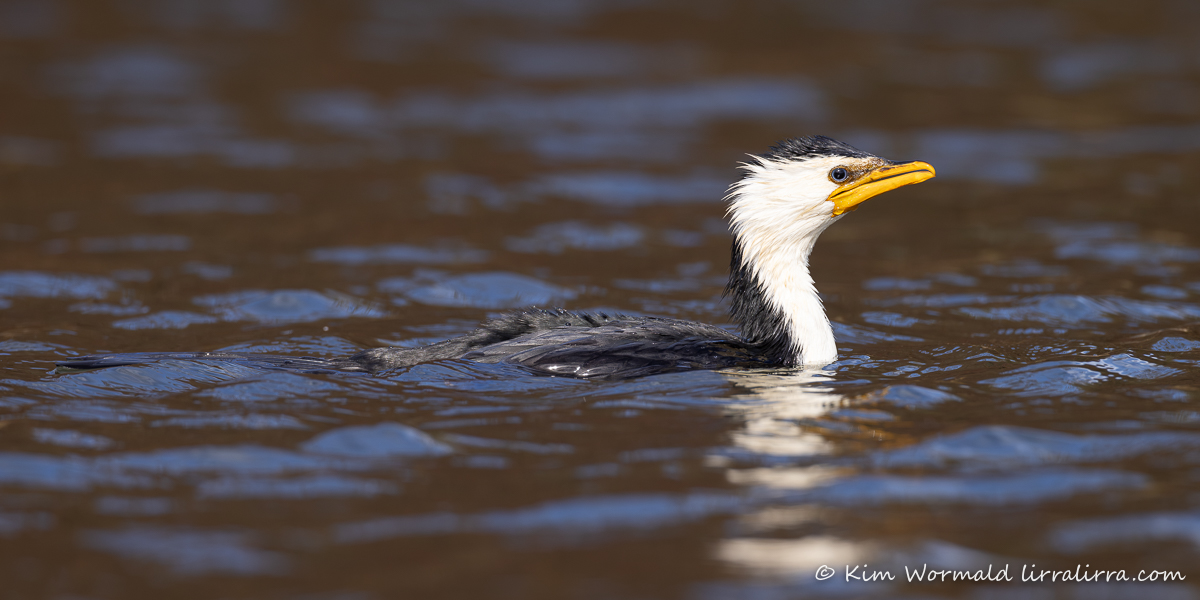
These three water shots show how different the water itself can look in photographs taken around the same time. It was pretty windy on the day as shown by the choppy water above.
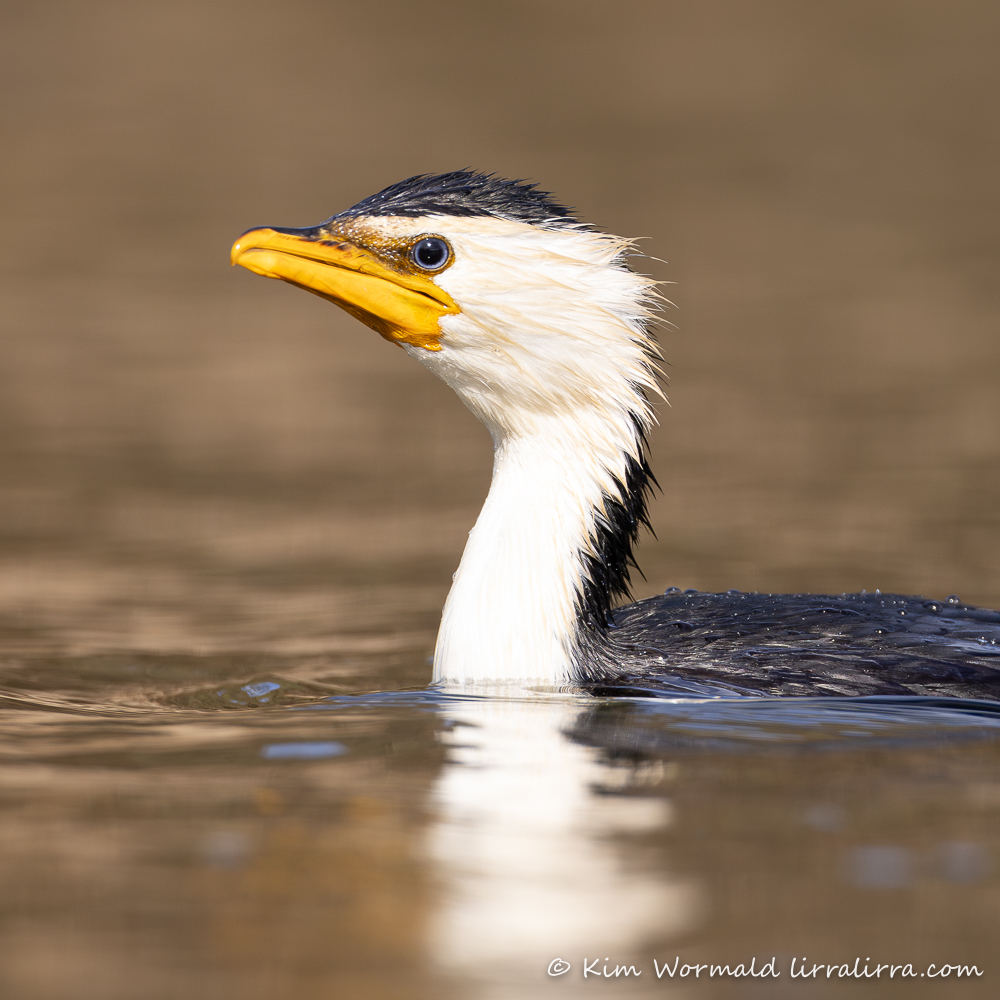
But when the wind dies down a little and the sun shines the water can look more golden and silky.
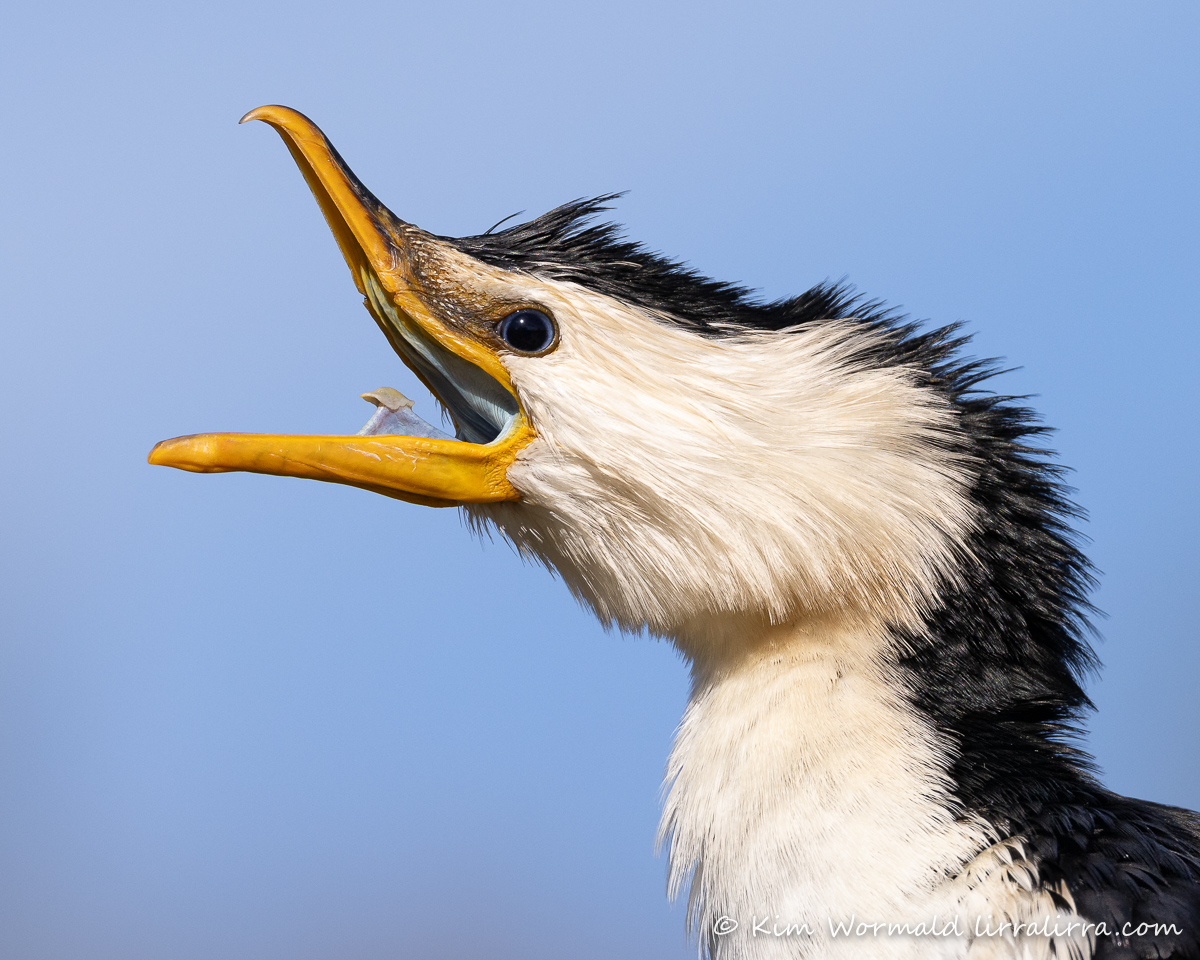
And finally the strange anatomical structure. When the LPC yawned this odd-looking ‘thing’ showed itself. After some research and asking for confirmation from a bird identification site I believe it to be a laryngeal mound. I’d never heard of the structure before or the role it plays in swallowing and calling.
Happy birding, Kim
Settings explained: I shoot fully manual as this gives the best chance to adapt my shutter speed and depth of field in circumstances that can change rapidly. These changes can include lighting, activity and species. In this week’s photographs the ISO was low and the shutter speed high as I wanted to be ready for any sudden movements the cormorant might make. For a straight portrait I would have been happy to use 1/800 of a second but most of these shots were taken at 1/2000. I kept the f/stop number quite high as cormorants are larger birds than I usually photograph and if I’d made the aperture too small the depth of field would have caused most of the bird to be out of focus. I recommend back button focusing and setting your camera so you can easily change your settings without taking your eye from the viewfinder.
~ Facebook page Kim Wormald – lirralirra – 10K+ followers
~ Facebook group Ethical Bird Photography
~ Browse prints and gifts Lirralirra Shop or contact me directly

That is a fantastic series! Such interesting birds, very Dino-esque I think. Stunning.
I shall think of them as dino-esque penguins from now on!
Brilliant series Kim. Most enjoyable to view and read/learn.
Thanks Wendy! I hope you’re seeing some wonderful sights and getting some beaut shots.