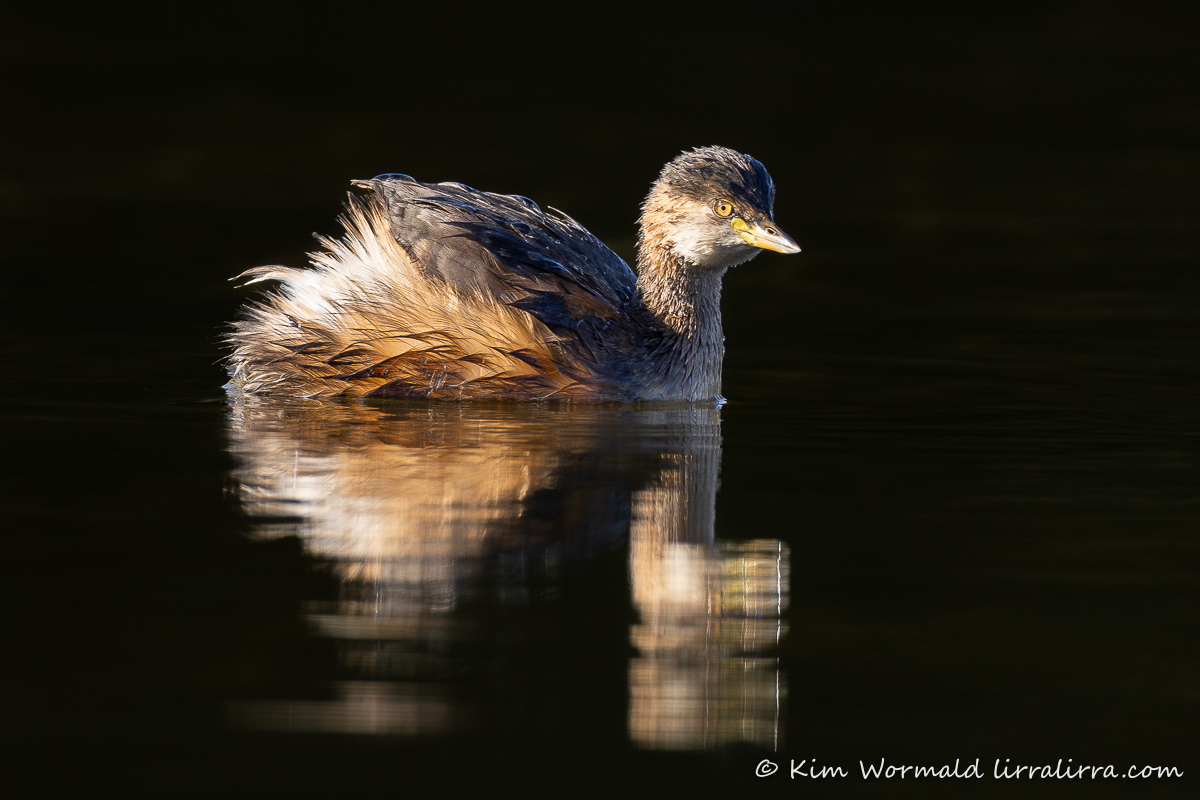
What a fabulous sight! The best way to capture these stunning photographs was to lie on the ground watching as a pair of grebes bobbed to the surface from their frequent deep dives to forage for small fish.
1/3200, f/6.3, ISO 1250
Canon R5, Canon RF 600 f/4 L IS USM
The grebe looked truly beautiful when it rose to the surface in a shaded part of the pond. I love the way the light made its golden feathers, reflection and eye appear to glow against the dark waters. The minuscule bow wave shows that the grebe was keeping still, with just the breeze causing the ripples that fragment the reflection.
1/3200, f/6.3, ISO 1250
Canon R5, Canon RF 600 f/4 L IS USM
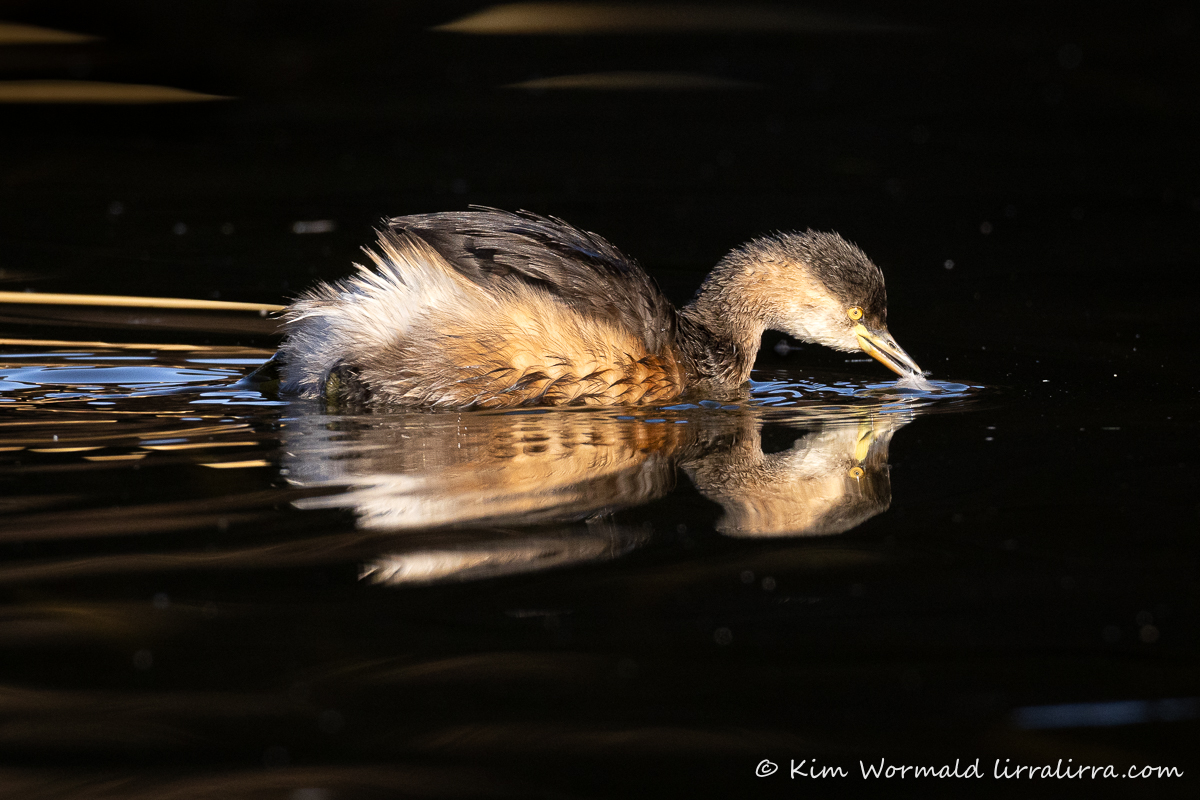
Then the grebe spotted something in the water and sped across to pick it up. I couldn’t tell what it was until I loaded my photographs onto my computer.
1/3200, f/6.3, ISO 1250
Canon R5, Canon RF 600 f/4 L IS USM
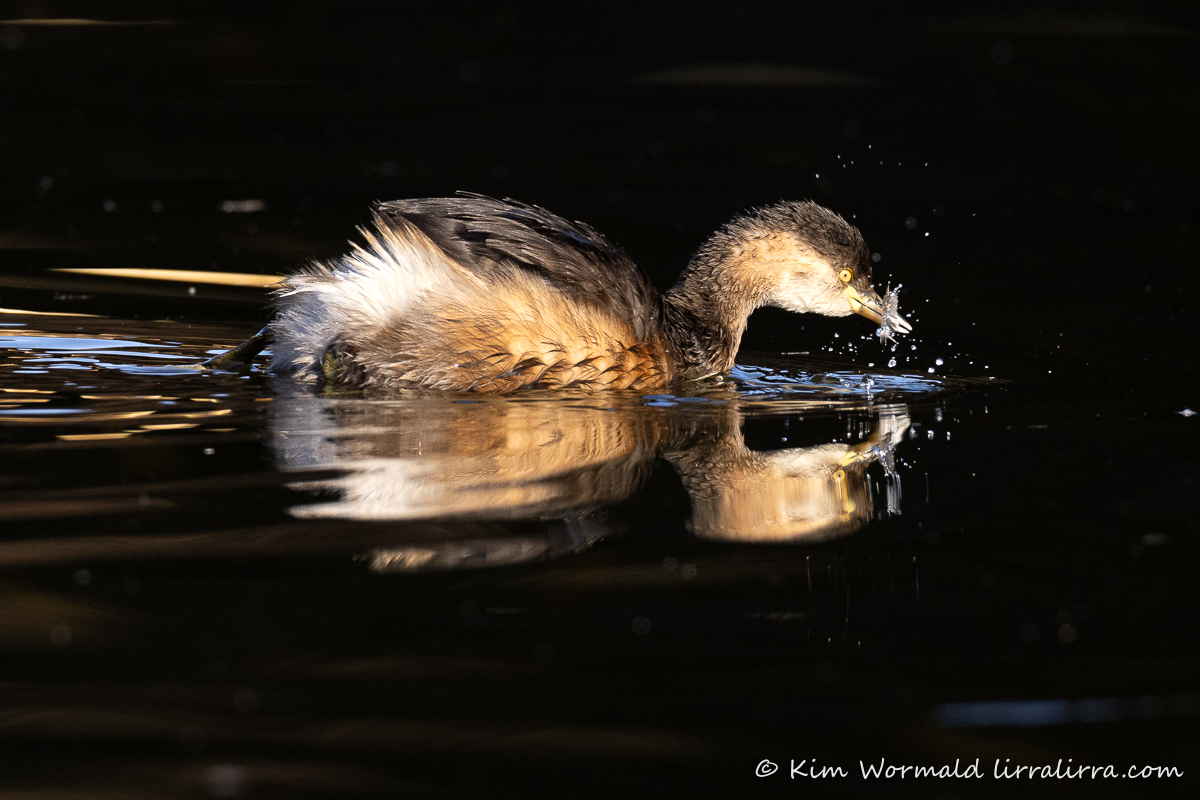
As it shook droplets of water from the item I presumed it was a little fish or an invertebrate of some kind, but it was a feather. I imagined it was being playful but I had previously photographed a Swamp Wallaby eating feathers so I did some research and apparently grebes are known to eat feathers, and feed them to their youngsters. Unlike the wallabies that are seeking nutrients it is believed that grebes eat feathers to help prevent injury from fish bones.
What a fascinating natural world!
Settings explained: This is a new segment that I might include in some posts. I shoot fully manual as this gives the best chance to adapt my shutter speed and depth of field in circumstances that can change rapidly. These changes can include lighting, activity and species. In this case the grebe was beautifully lit so my shutter speed and ISO could have been considerably lower but I was also capturing action shots as the grebes dived so wanted to capture the action while also freezing the droplets of water. This worked well for freezing the droplets when the grebe shook the feather. The f/stop was set at f/6.3 as the grebe was relatively close to me and I wanted to ensure that the entire bird was in focus.
Happy birding, Kim
~ Facebook page Kim Wormald – lirralirra – 10K+ followers
~ Facebook group Ethical Bird Photography
~ Browse prints and gifts Lirralirra Shop or contact me directly

Wonderful photos and great descriptions to go with them. thank you.
Thank you Wendy, it was lovely to watch them and learn new things too!
Such beautiful birds. Love their fairly laid back, matter of fact personalities.
Thanks for the added notes on settings. Very helpful to learn from an accomplished photographer.
Regards
Thanks Peter, they are pretty special birds for sure. I’m glad to hear that the setting notes were helpful
These are absolutely exquisite images.
Thank you so much for lying on the no doubt cold hard ground.
You capture the incredible beauty of nature supremely well.
You are so right about the cold hard ground EC. I was seriously questioning my sanity until I saw the photographs.
That is very interesting re eating feathers ! I adore these stunning pics. They’re perfection.
Oh thanks heaps Alyssa! It is definitely a fascinating world out there