Kites in flight

This series of ‘Kite in flight’ images was taken on the eBird Global Big Day for birders, Saturday 14 May. So far 16,000 birders across the world have submitted sightings of over 6,000 species.


Kite in flight - Kim Wormald 7

Black Kite (Milvus migrans)
1/1600, f/6.3, ISO 1600


Visitors to Werribee’s Western Treatment Plant that morning would have been unlucky to miss the large group of Black Kites taking insects from the paddocks either side of Paradise Road. Luckily individual birds occasionally decided the insects were greener in the other paddock and flew across the track.


Kite in flight - Kim Wormald 8

Black Kite (Milvus migrans)
1/1600, f/6.3, ISO 1600


I marvel at the way birds use their wings and tails in flight to defy gravity with such gracefulness. A Black Kite weighs over half a kilogram and yet they glide and soar with ease. They are about half a metre in length with a wingspan of approximately 1.5 metres.


Kite in flight - Kim Wormald 9

Black Kite (Milvus migrans)
1/1600, f/6.3, ISO 1600


Black Kites aren’t black but have a mottled mixture of dark brown, light brown and rufous plumage with distinct barring on their tails and wings. They have dark brown eyes and yellow ceres. They are the only raptor to have a forked tail, which generally makes in flight identification a breeze; they are also known as Fork-tailed Kites.


Kite in flight - Kim Wormald 1

Black Kite (Milvus migrans)
1/1600, f/6.3, ISO 1600


Black Kites have a particular fondness for grasshoppers but also feed on small mammals, lizards and occasionally on small birds. They often forage at the edge of grass fires and will eat carrion as well as live prey. There are anecdotal records of Black Kites and Brown Falcons deliberately spreading fire by carrying smoldering sticks to unburnt territory. There is no photographic evidence of this but reports are far ranging and can be read about here:  Australian raptors may be playing with fire


Kite in flight - Kim Wormald 2

Black Kite (Milvus migrans)
1/1600, f/6.3, ISO 1600


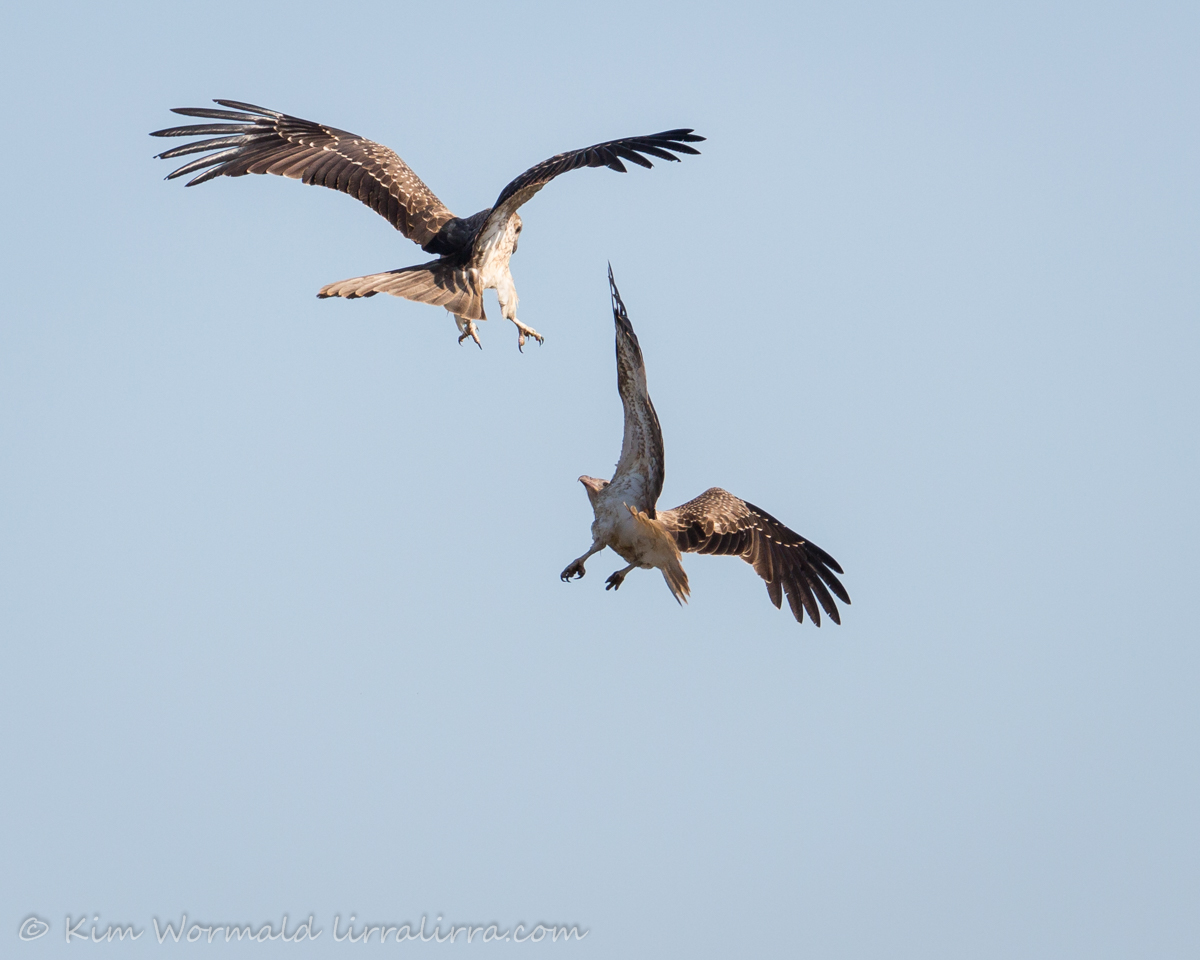
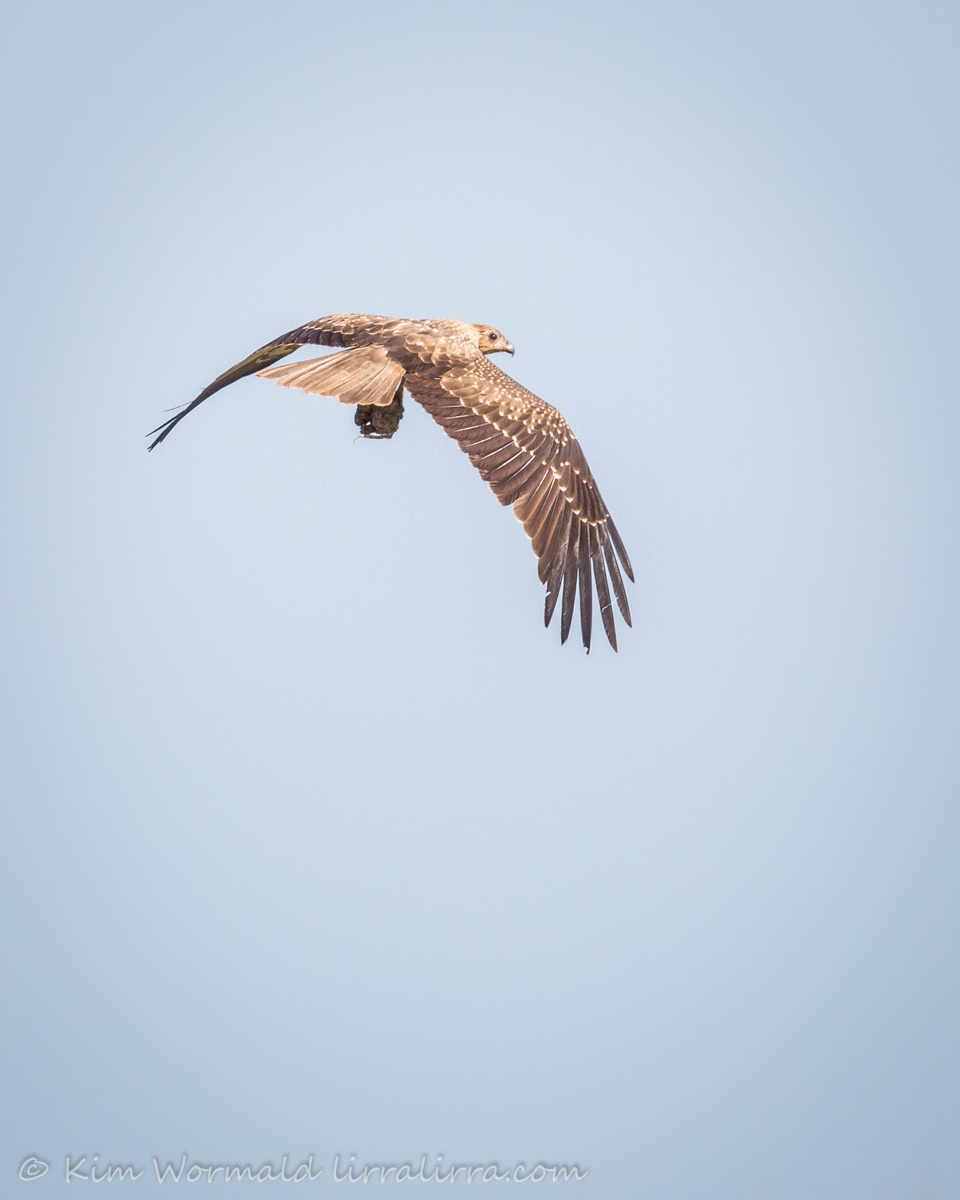
I particularly like the colouring of this individual and the triumphant way it is holding its wings. The various under-wing covert feathers look beautiful. Black Kites have short yellow legs which are usually tucked under the feathers when in flight, apart from when they are about to strike prey or when a toe is visible, as it is in the image above.


Kite in flight - Kim Wormald 3

Black Kite (Milvus migrans)
1/1600, f/6.3, ISO 1600


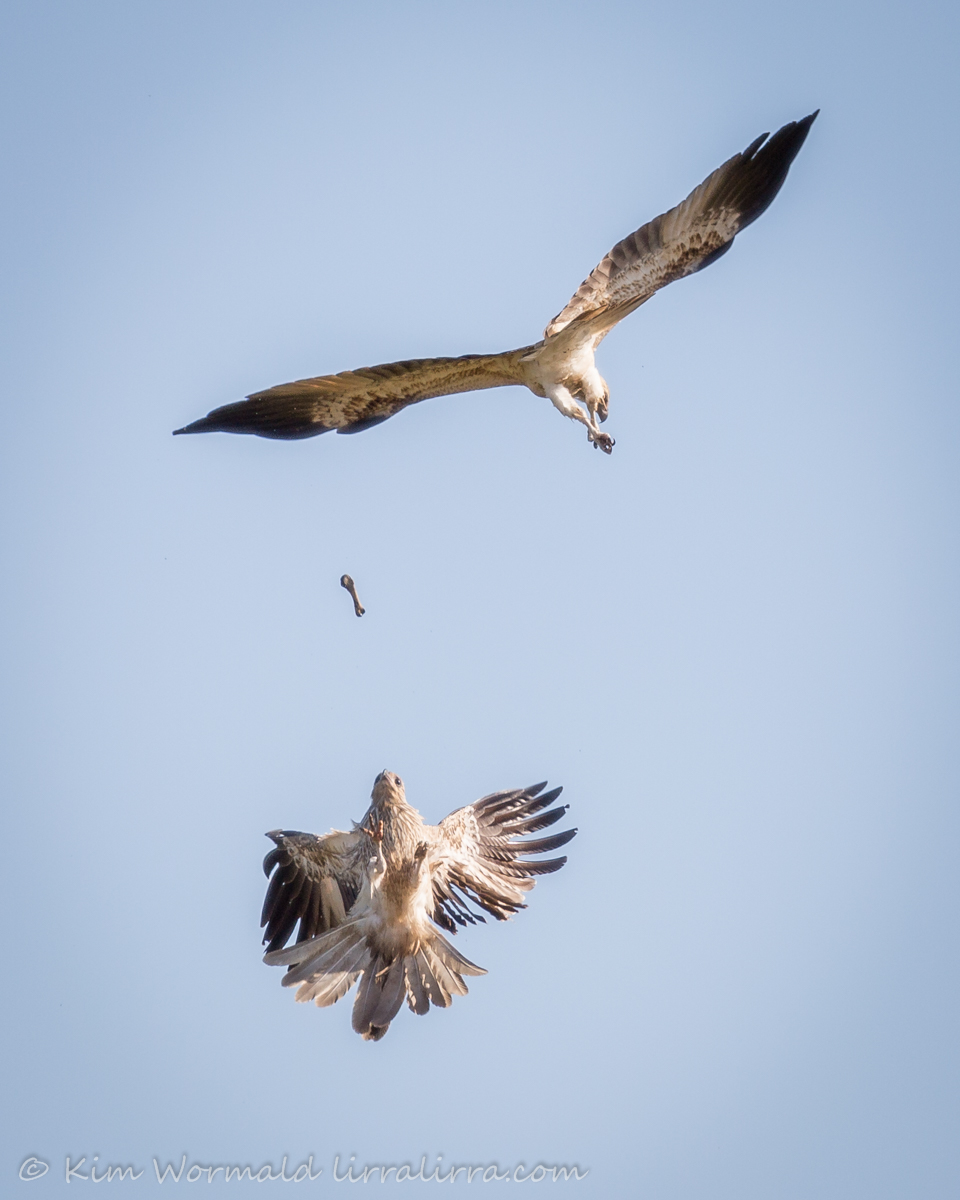
Sometimes they flew so low that they filled the frame. I hear violins playing when I look at these images.


Kite in flight - Kim Wormald 5

Black Kite (Milvus migrans)
1/1600, f/6.3, ISO 1600


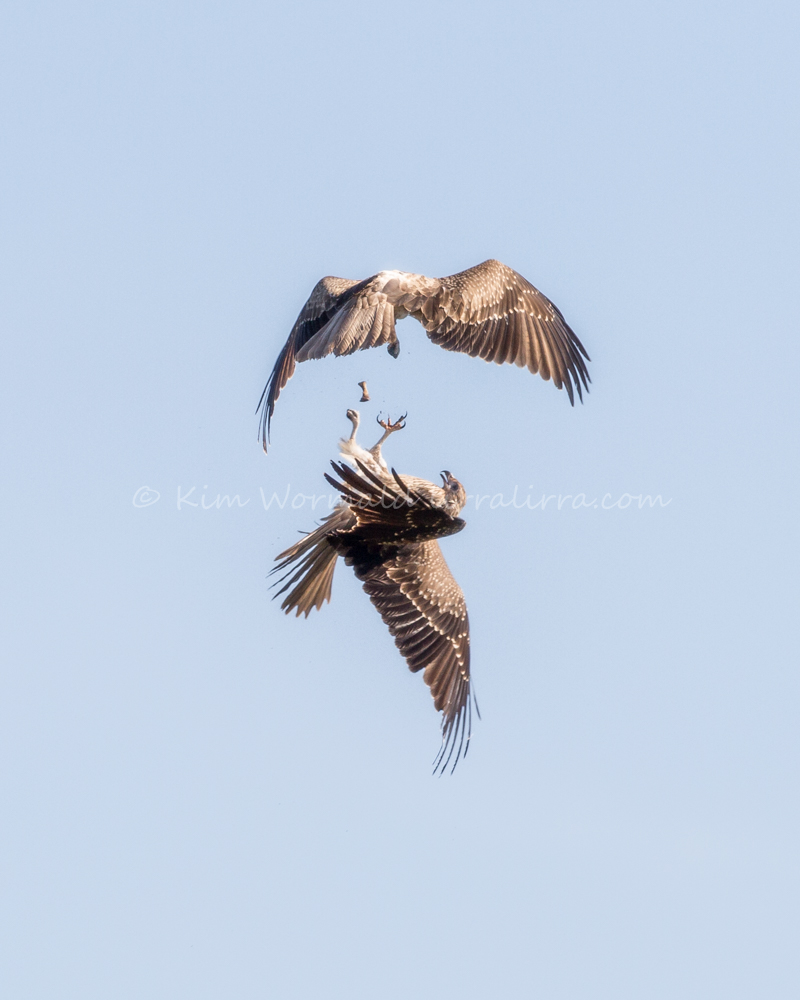
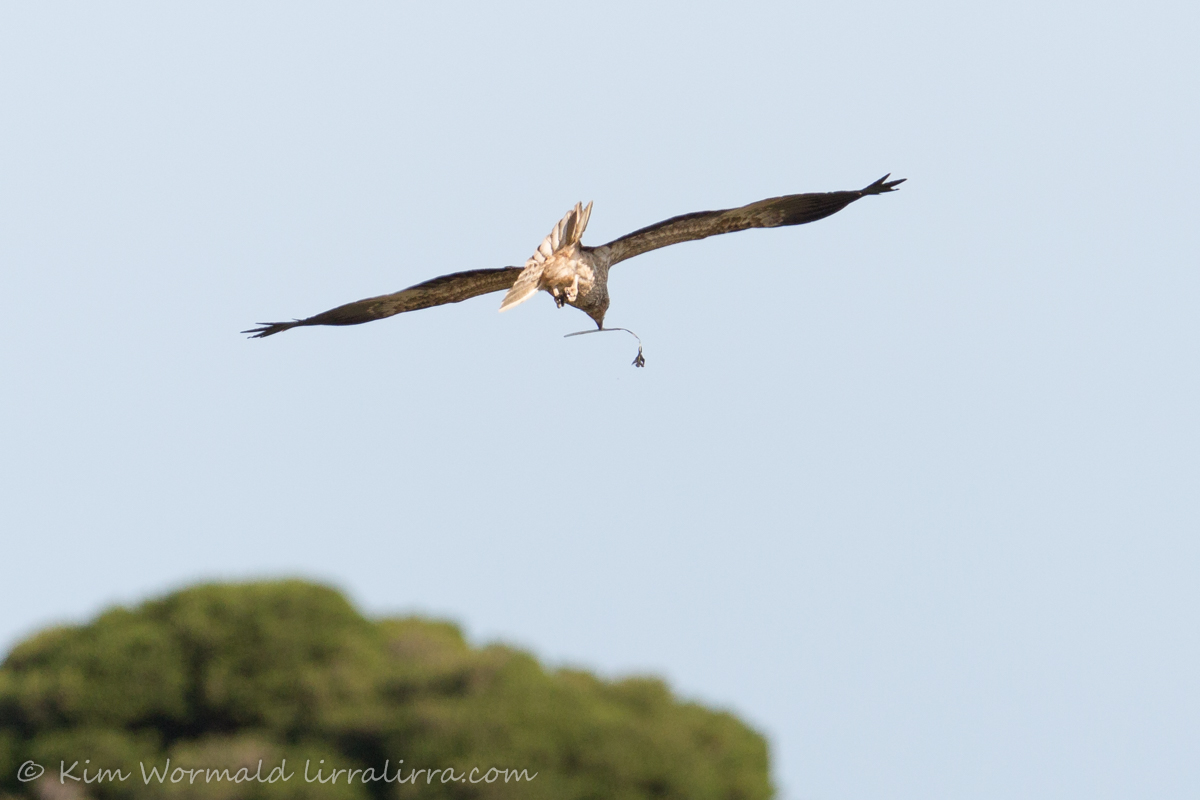
Although Black Kites often forage on the ground they also swoop to take live prey – this one appears to have me in its sights! Aren’t their ‘fingertip’ wings amazing.


Kite in flight - Kim Wormald 6

Black Kite (Milvus migrans)
1/1600, f/6.3, ISO 1600


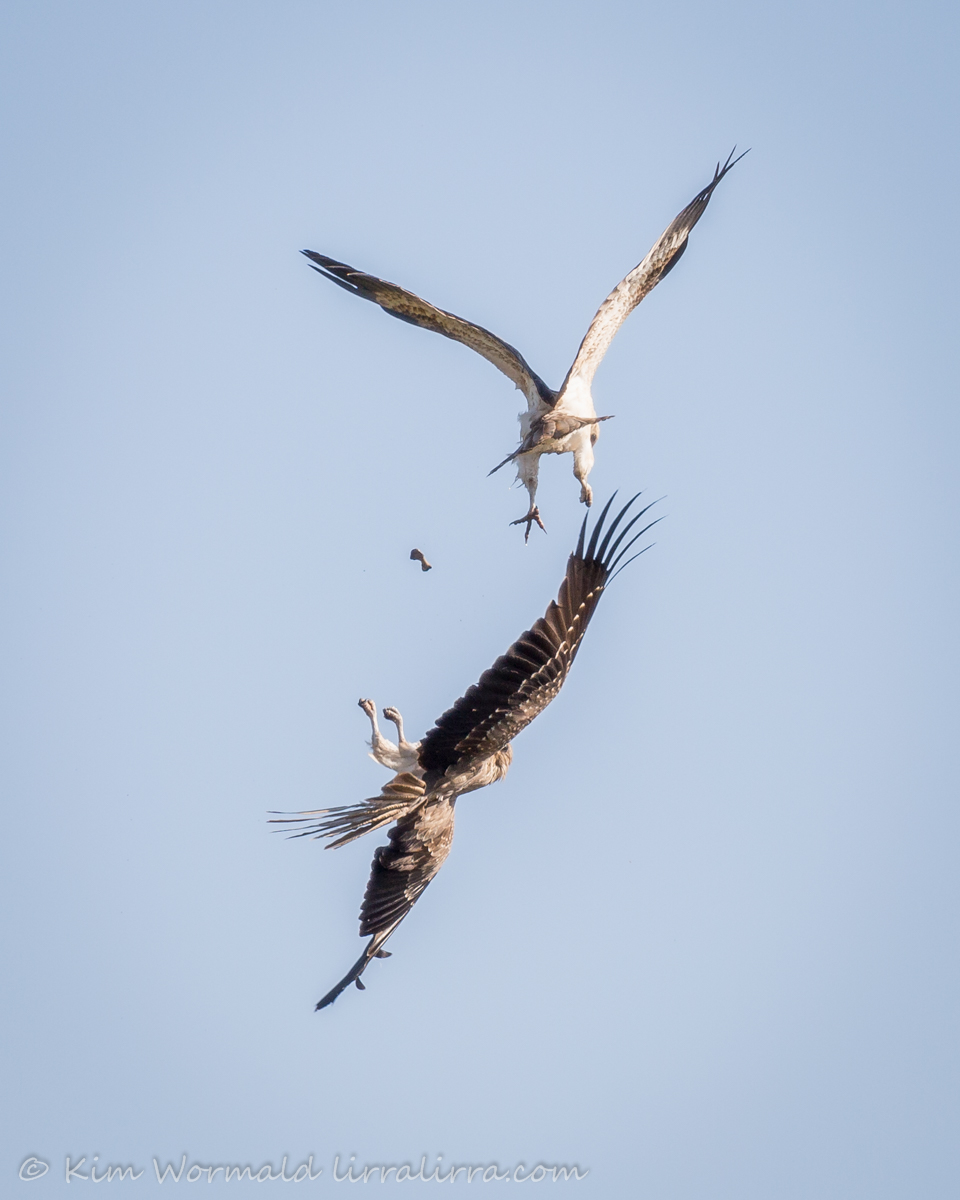
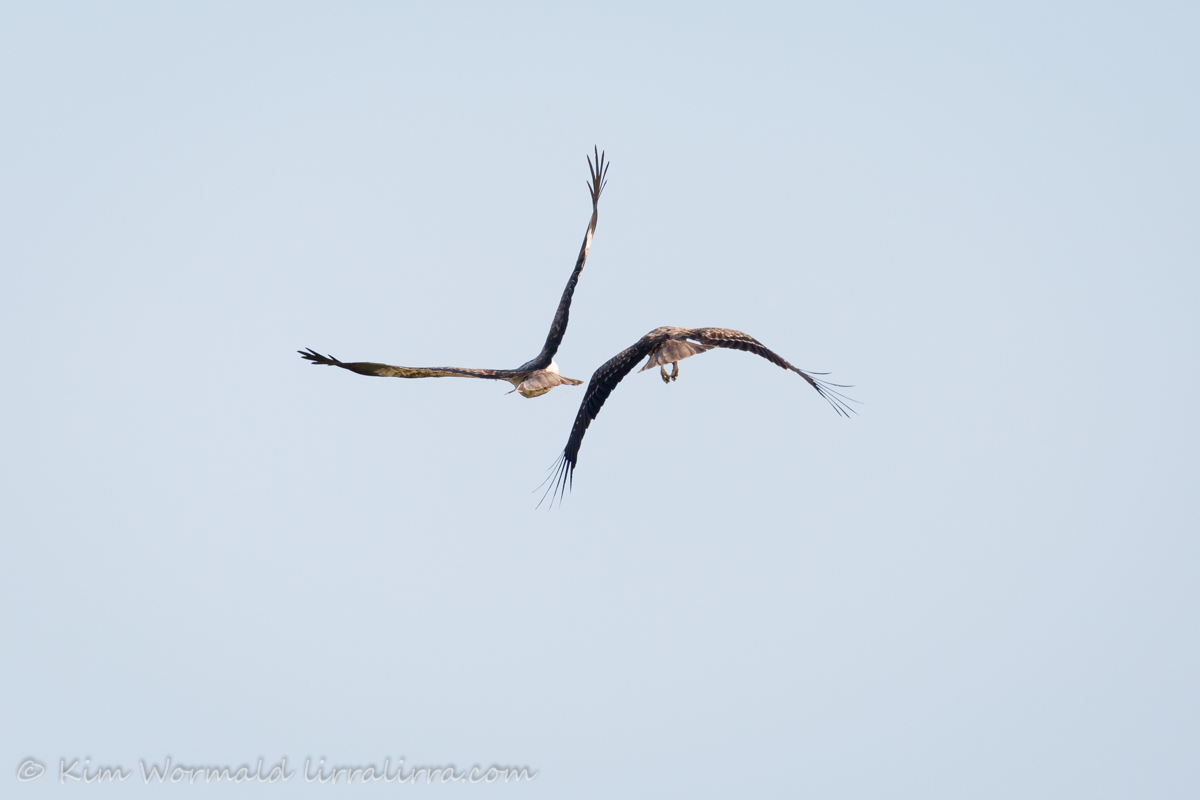
Black Kites can sometimes be mistaken for Square-tailed Kites, especially when they are flying high and have spread their tail feathers.

Friends have often spoken about the Melbourne Bird Photographers group and when Graham, the highly esteemed ‘Chief Birder’ who I’m still to meet, put out a call for WTP permit holders willing to take passengers on the Global Big Day it was easy to put up my hand – along with heaps of others. I failed miserably at finding the meeting place and then misunderstood where the group were heading and waited at Paradise Road – which was a thoroughly enjoyable wait, thanks to the Black Kites. So my lovely passenger and I birded all day without finding the rest of the group in the 10,500 hectares of the WTP. Together we saw 55 species, including 3 Brolga that magically appeared on the track just after we’d made the decision to leave and had stowed our camera gear in the back

Happy birding, Kim


Update on the Victorian duck shooting season

After last week’s political backflip that saw Lake Elizabeth (Ramsar site) re-opened to shooters I was delighted that duck rescuers from the Coalition Against Duck Shooting out-numbered shooters and that the lakes and wetlands in the area were wonderfully quiet.

Animals Australia have just launched a fabulous campaign with posters of these awesome people placed around Melbourne, including this one on the Bolte Bridge which is a delightful irony considering that Sir Henry Bolte was responsible for setting up field and game, and funding duck shooting in Victoria.

Thank you Animals Australia, and thank you Erin Phillips (Opals basketballer), David Zaharakis (AFL player), Sharni Layton (Diamonds netballer) and Peter Siddle (Aussie cricketer). These people know what sport is, and they share their thoughts in this video Duck Shooting is not a Sport


Animals AustraliaImage taken from: Animals Australia’s Duck Shooting is Not a Sport video


IMPORTANT UPDATE – Shooters have complained en masse to the official sporting bodies of these awesome athletes saying they are disgusted that players have spoken out about animal rights. Apparently, the sporting bodies are taking their complaints very seriously and Chemist Warehouse have said they want their logo removed from the advertisements, it would be great to get them to change that plan and probably good for business considering only 0.4% of Victorian’s are duck shooters and almost 90% want it banned.

Please find a moment to send a quick note, and/or call, in support of the players:

In support of David Zaharakis: AFL –   general@afl.com.au     generalenquiries@essendonfc.com.au     03  8341 6000

In support of Erin Phillips: Basketball Australia – info@basketball.net.au   03 9847 2333

In support of Peter Siddle: Cricket Australia – public.enquiries@cricket.com.au   03 9653 9999

In support of Sharni Layton: Netball Australia – infonet@netball.asn.au   03 9621 8600

Chemist Warehouse  –  info@chemistwarehouse.com.au   03 9462 9111

Thank you!


~ Thank you for visiting and commenting

~ If you would like to join subscribers who receive a weekly email letting them know that lirralirra has been updated please use the ‘subscribe’ box above right