If a crazily huge world-wide survey was done I bet that few people would believe that the world’s smallest penguin species can be found snuggled in burrows in Australia.
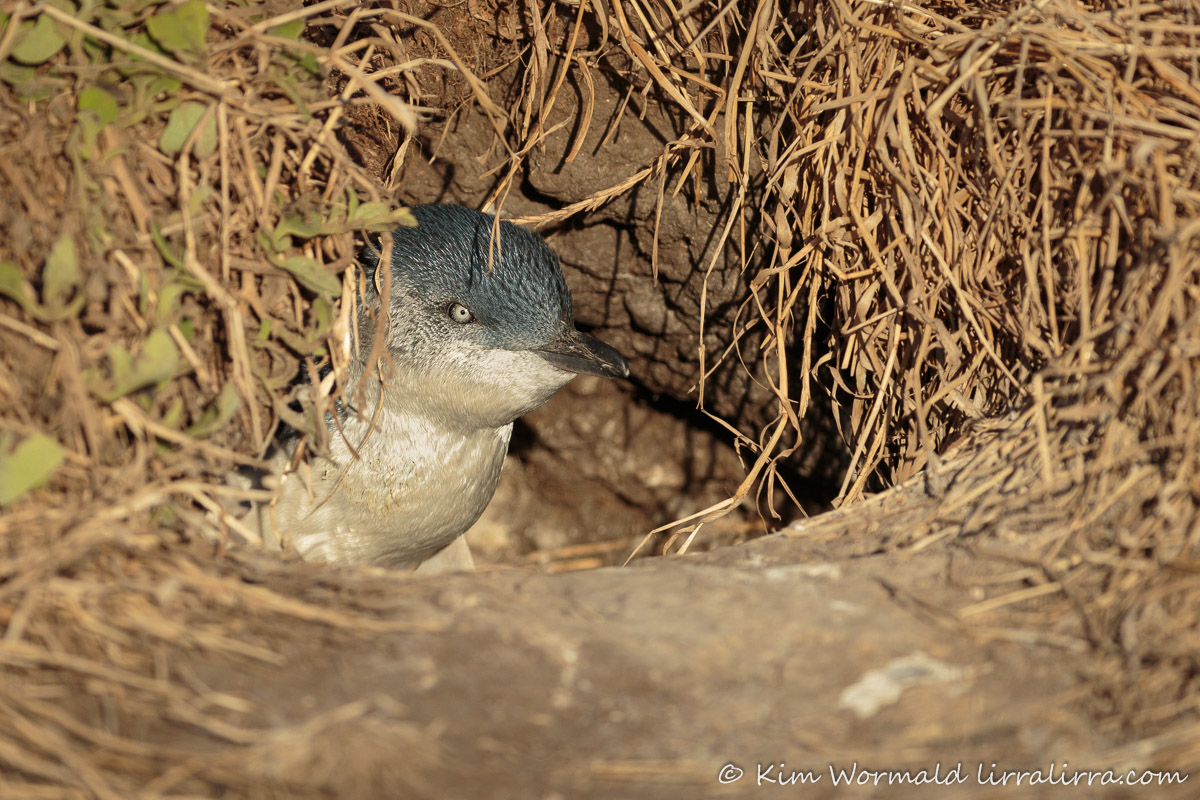
Little Penguin (Eudyptula minor)
~
Over the Christmas break I spent some time wandering around Phillip Island which is south east of Melbourne. The island is well known for its nightly Penguin Parade when hundreds of tiny penguins, weighing 1kg and standing just over 30cm in height, waddle comically from the sea to their burrows.
I spotted the Little Penguin, above, at sunset one evening. The burrow is well hidden and I only noticed it due to the scattering of scats at the entrance.
~

Little Penguin (Eudyptula minor)
I wandered the same way many times, sometimes the burrow appeared empty and once it appeared to have two penguins snuggled inside.
This burrow is at the top of a cliff. It would take effort for a reasonably fit person to climb up from the shore and I can only marvel at the fact that these tiny penguins can make the climb after spending all day foraging at sea.
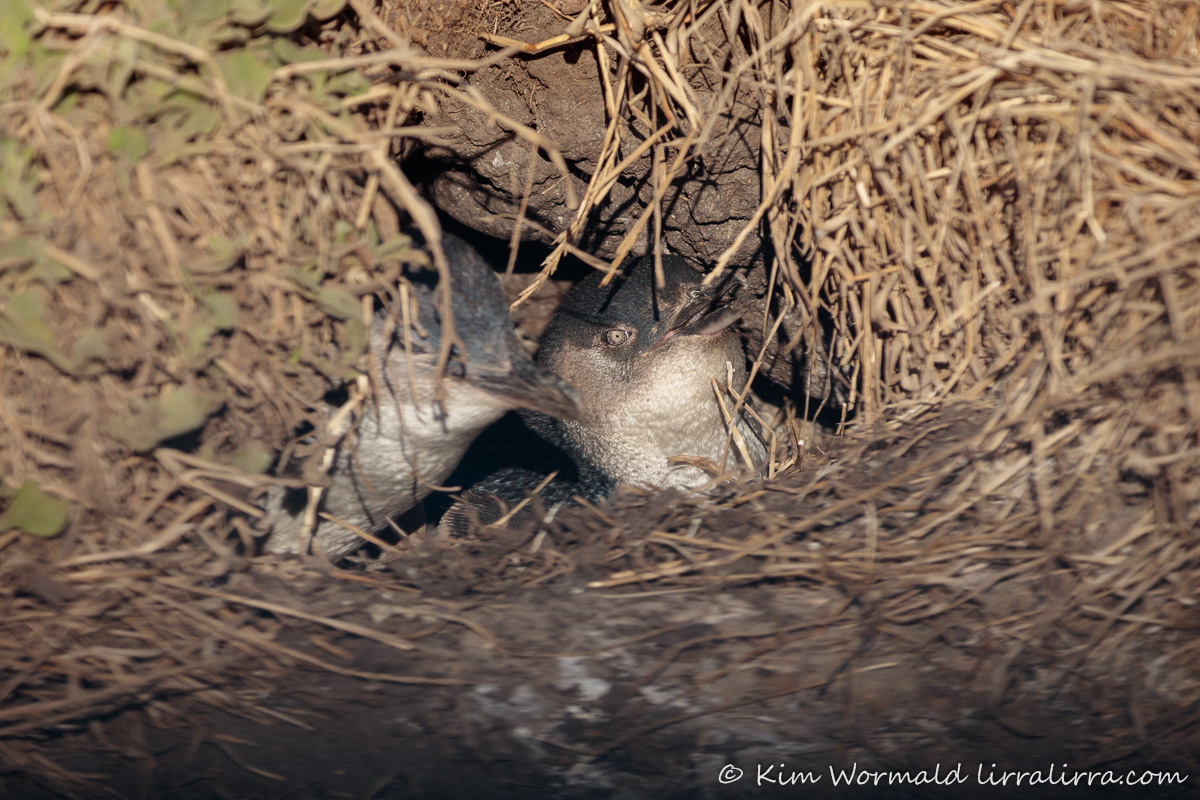
Little Penguin (Eudyptula minor)
I watched the penguins from the bank on the far side of a wide vehicle track. I stayed quietly watching, sitting low among the grasses and waited to see if the grey smudge moved. After several minutes (it could have been longer) the second Little Penguin briefly raised it head as it yawned.
What a privilege it was to see them, and how funny to see people whizz past in their vehicles without seeming to notice me, let alone the penguins.
Happy birding
Kim
NB my apologies if you’ve been caught up in the issue regarding leaving comments and thanks to EC for letting me know it has been taking two attempts to have comments accepted, hopefully the issue has been solved now
~ thank you for visiting and commenting
~ if you would like to join subscribers receiving handy weekly emails when lirralirra is updated please use the ‘subscribe’ box above right
