I have watched honeyeaters for hundreds of hours but never before have I been aware of such fascinating behaviour among the blossoms.
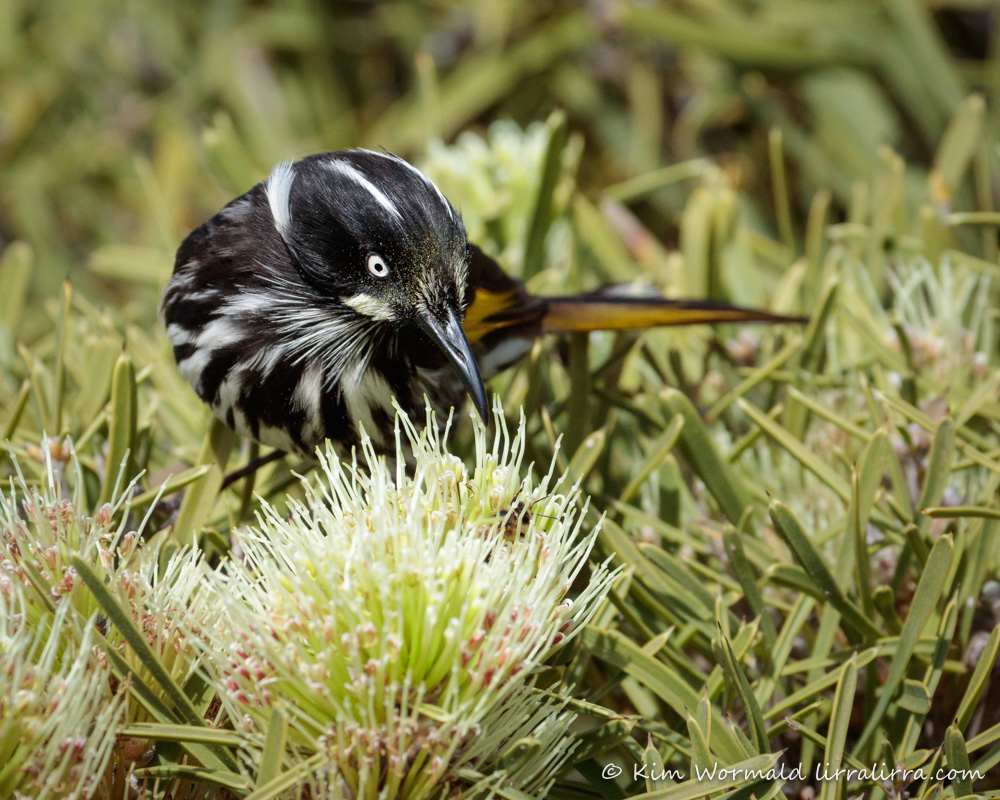
New Holland Honeyeater (Phylidonyris novaehollandiae)
1/2500, f/8.0, ISO 1600
Canon EOS 5DS R, Canon EF 200-400mm f/4L IS USM Ext
If you follow the honeyeater’s stare you will see a bee semi-hidden between the stamens of the Hakea corymbosa. I’ve often seen honeyeaters eat bees, insects and spiders and have photographs of Helmeted Honeyeaters holding spiders and a clear memory of an Eastern Spinebill carrying a bee towards its nestlings.
But these honeyeaters weren’t eating the bees, they were picking them up and tossing them aside! The bees didn’t appear to be hurt but I didn’t choose to examine them closely. I saw bees being thrown more than a dozen times but couldn’t capture a clear shot even at 1/2500th of a second. I took an image 1/100th of a second after the shot above and the bee had already been thrown to the bird’s right.
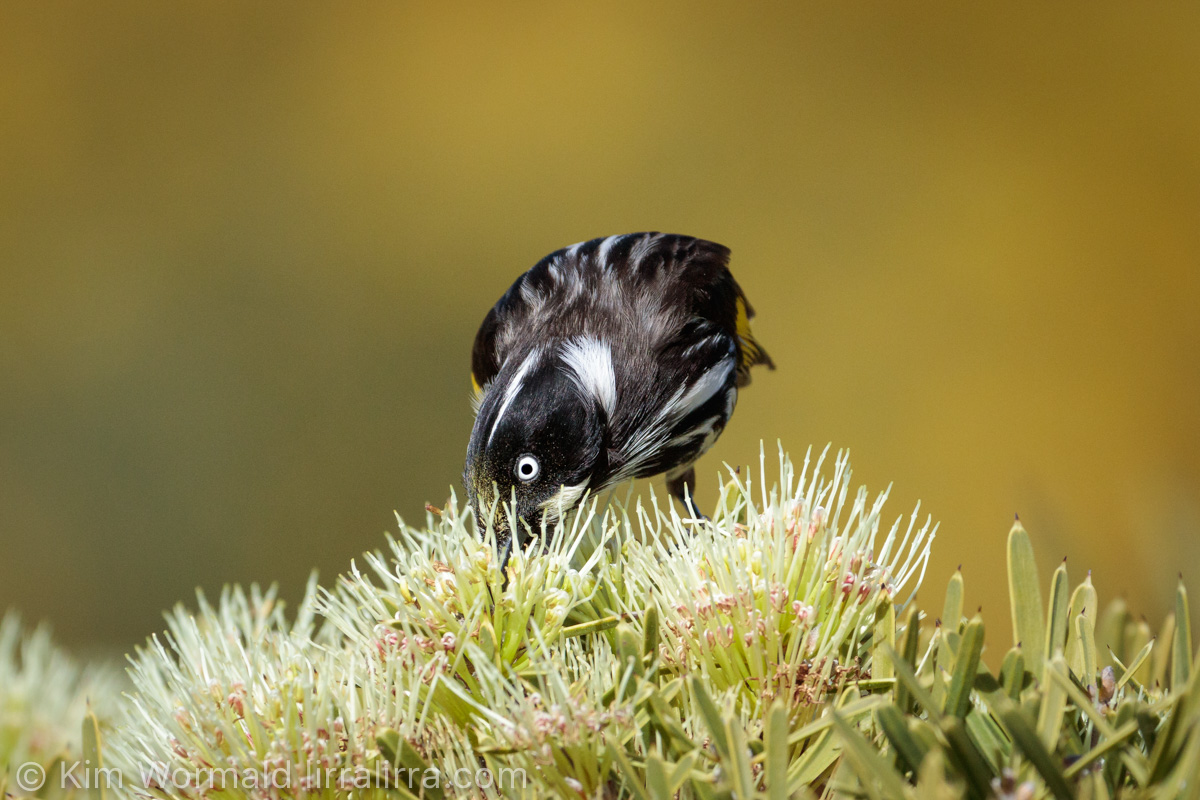
New Holland Honeyeater (Phylidonyris novaehollandiae)
1/3200, f/8.0, ISO 1600
Canon EOS 5DS R, Canon EF 200-400mm f/4L IS USM Ext
.
I was keen to try for a bee-throwing shot so upped the shutter speed to 1/3200th of a second. I’m not sure whether there was a bee in the image above or if it was just the honeyeater probing into the nectar with its long, feathery tongue. The blurry golden background is a wattle tree in full blossom.
.
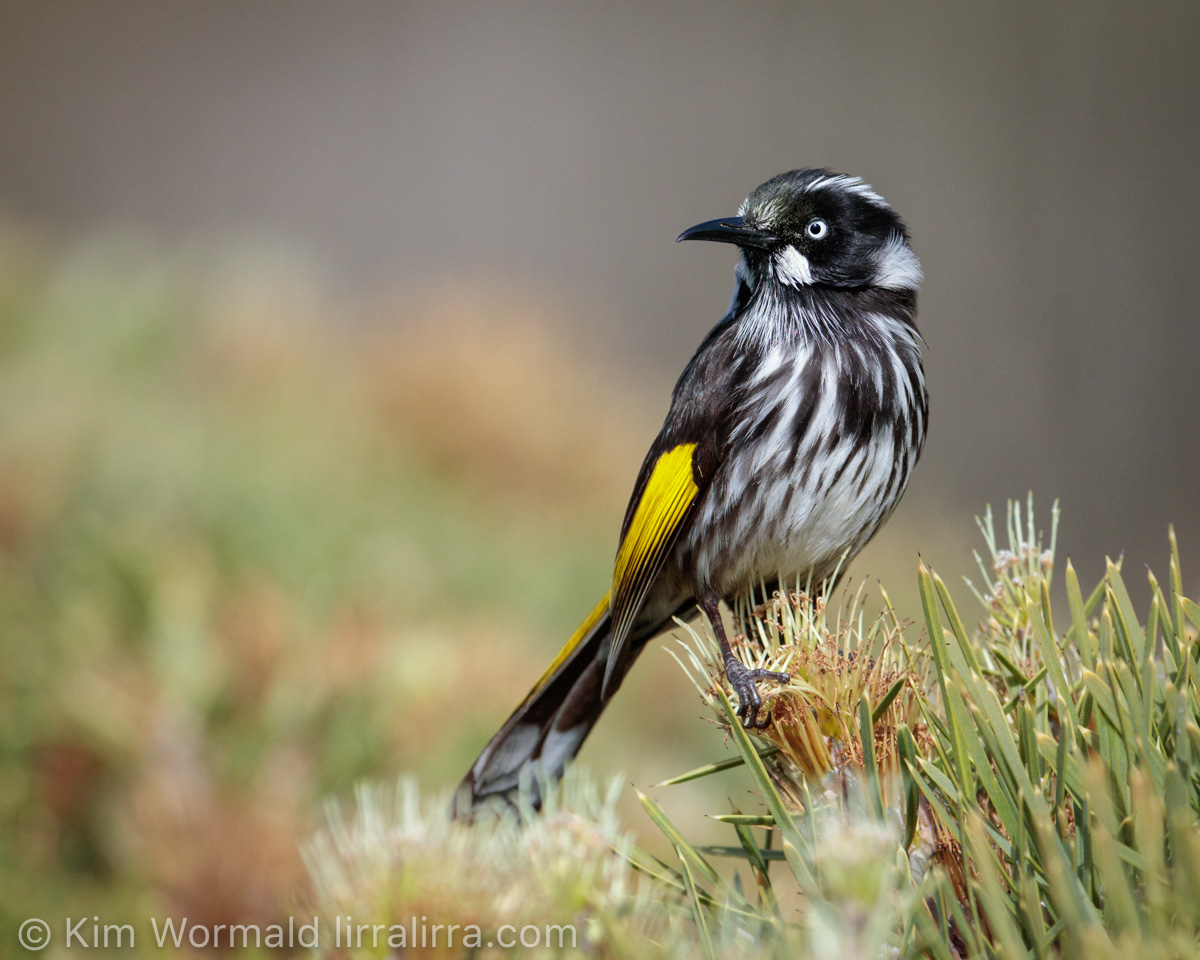
New Holland Honeyeater (Phylidonyris novaehollandiae)
1/3200, f/7.1, ISO 1600
Canon EOS 5DS R, Canon EF 200-400mm f/4L IS USM Ext
.
This week’s images were taken over a couple of days at the Royal Botanic Gardens Cranbourne, east of Melbourne. It’s always a challenge focussing on birds’ eyes as they dart from blossom to blossom, ducking rapidly to take nectar or throw a bee, and occasional pausing to take a momentary look around.
I’m mindful of backgrounds when taking nature shots. I want the birds to stand out to showcase their beauty and, if possible, I aim for clear or pretty backgrounds. The images above were taken on the brighter of the two days so I had flexibility with the shutter speed and f/stop. A higher f/shop would have kept more of the background flowers in focus, a lower f/stop would have blurred them out more consistently. I quite like the painterly effect given by f/7.1 in this situation.
.
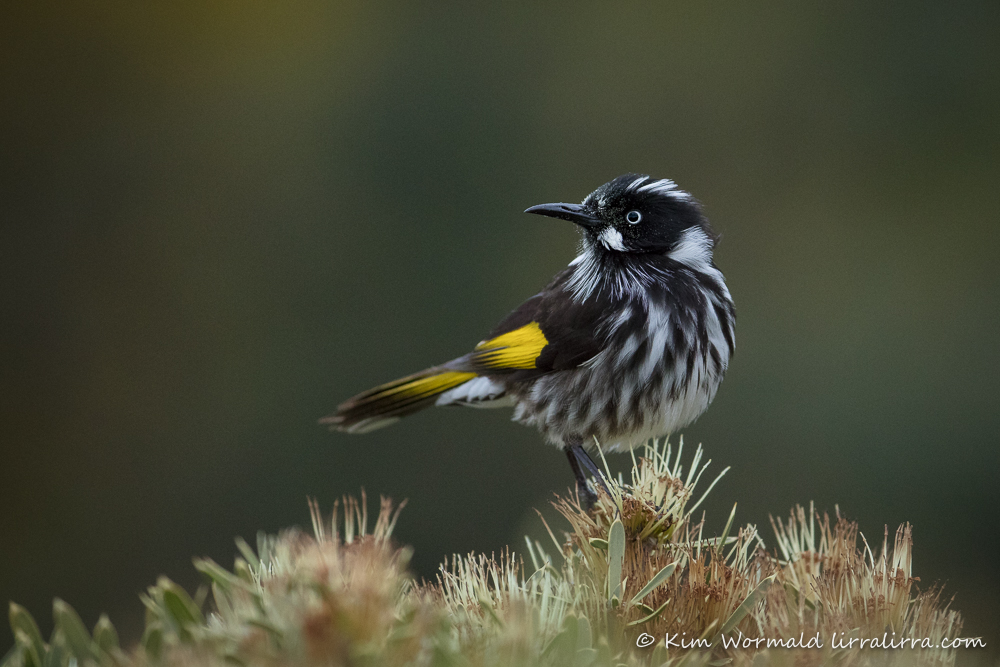
New Holland Honeyeater (Phylidonyris novaehollandiae)
1/640, f/5.6, ISO 3200
Canon EOS 5DS R, Canon EF 200-400mm f/4L IS USM Ext
The first of the two days of shooting was seriously overcast, as shown in the final two images of the post. To get well exposed images I cranked up the ISO, put the shutter speed as low as practicable and opened the aperture wide. The cloudy weather created challenges but there’s something pleasing about the soft light and mistiness.
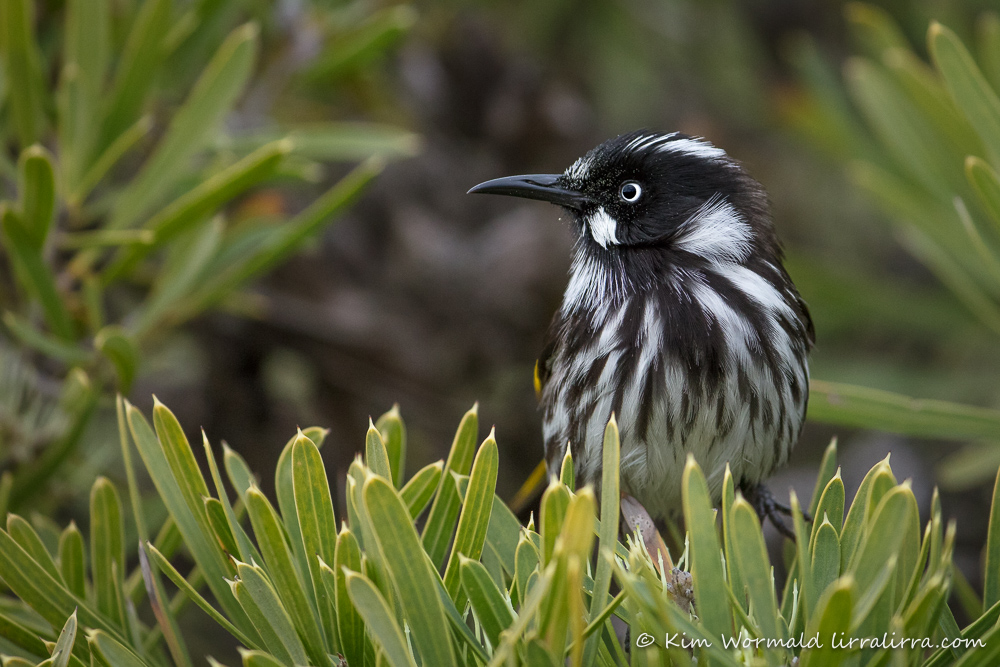
New Holland Honeyeater (Phylidonyris novaehollandiae)
1/800, f/5.6, ISO 1600
Canon EOS 5DS R, Canon EF 200-400mm f/4L IS USM Ext
This little New Holland Honeyeater looked pretty comical as it popped up to check out the neighbourhood. It’s left foot hasn’t yet rested on the hakea, the moment touch-down occurred the honeyeater was off to the next blossom.
A photography friend joined me on both days, at short notice on the second day when I hurriedly called to say the weather looked good and I was heading to the gardens hours earlier than planned. As well as the fascinating birdlife we met all kinds of interesting people and enjoyed delicious hot chocolates – it was a delightful couple of days.
Happy birding
Kim
News Update: Jennifer Ackerman, award winning science author of The Genius of Birds, contacted me recently about using some of my images for her upcoming talks in Australia. Jennifer was great to speak with and I’m looking forward to reading her book. More information is available at these links:
- Melbourne Writers Festival, 26 August 2017, 2:30 p.m., Deakin Edge: Jennifer Ackerman in Melbourne
- Castlemaine Library, 31 August 2017, 5:30- 6:30 p.m.: Jennifer Ackerman in Castlemaine
- Australian Wildlife Sound Recording Group 2017 Workshop: Sept 6-11, Baradine: Jennifer Ackerman in Baradine
~ thank you for visiting and commenting
~ use the subscribe box to receive a weekly email when lirralirra is updated
