With the weather forecast predicting 42 degrees celsius (107.6 fahrenheit) in Melbourne, and hot right across the country, it would be great if we can all provide safe water for our wildlife.
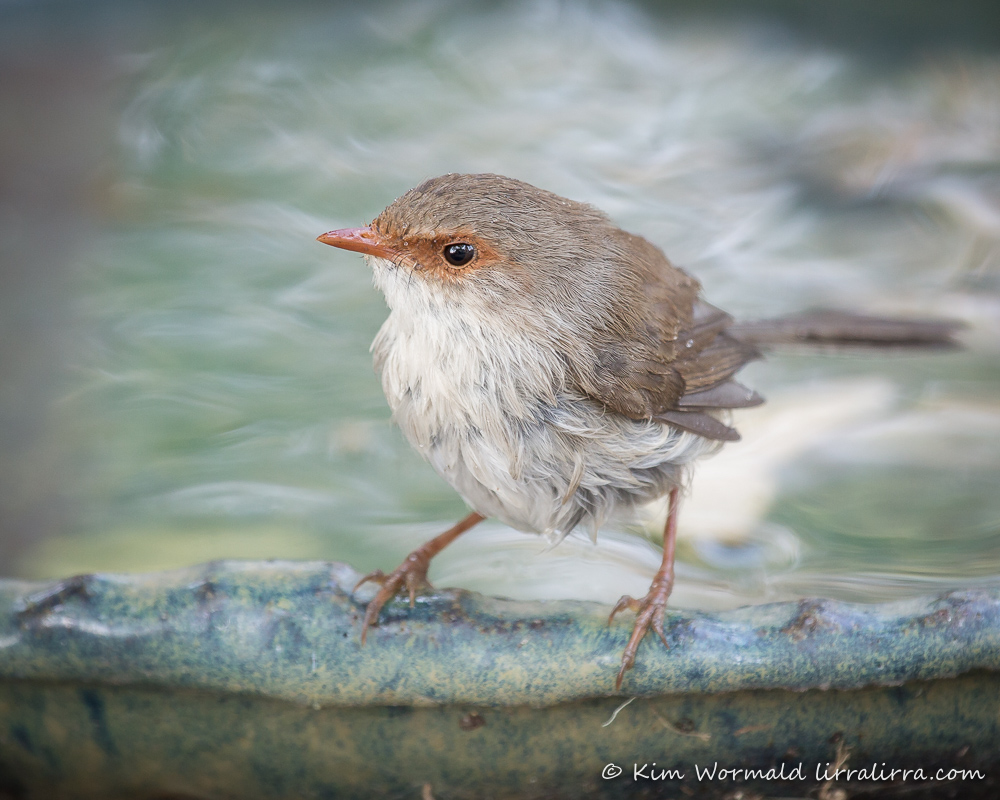
Superb Fairy-wren (Malurus cyaneus)
Shallow water bowls are best but may need refilling throughout the day. If you only have deeper bowls it’s important to place rocks and sticks in the water to ensure that the birds can escape from the water and don’t drown.
Superb Fairy-wrens prefer to bathe at ground level, if you don’t have cats or dogs in your garden. The birdbath in these images is very shallow and was made for me by a Superb Precious-friend. The fairy-wrens love hopping through the understory to drink and bathe.
Generally though it’s good to place birdbaths higher if possible, and preferably in the shade and in an area where they are protected by plants or trees. Birds are vulnerable when they are wet, it takes a few moments for them to shake water from their feathers and be able to fly; birds of prey can take advantage of this so your birdbaths are more likely to be used if the birds feel safe.
I love the way the water looks so silky in the image above, and how the colour perfectly matches the birdbath.
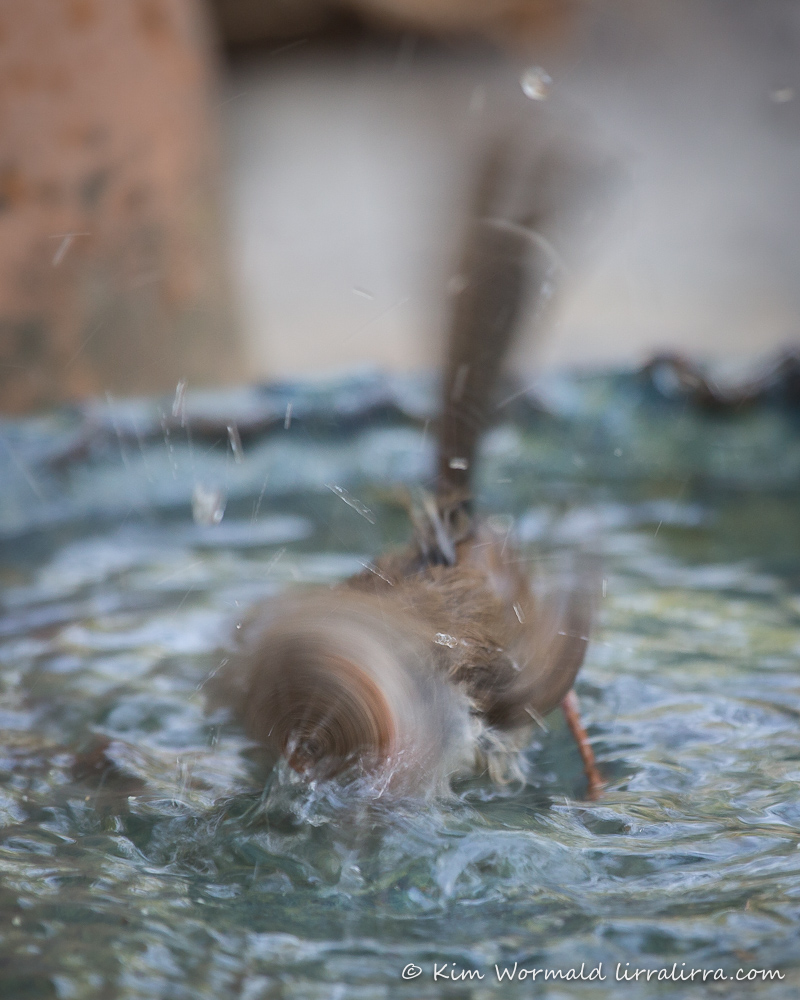
Superb Fairy-wren (Malurus cyaneus) – speed bathing
The image above was taken at a 1/125th of a second and it makes me smile. You can see how shallow this birdbath is, I’ll keep an eye on it tomorrow to make sure it stays full.
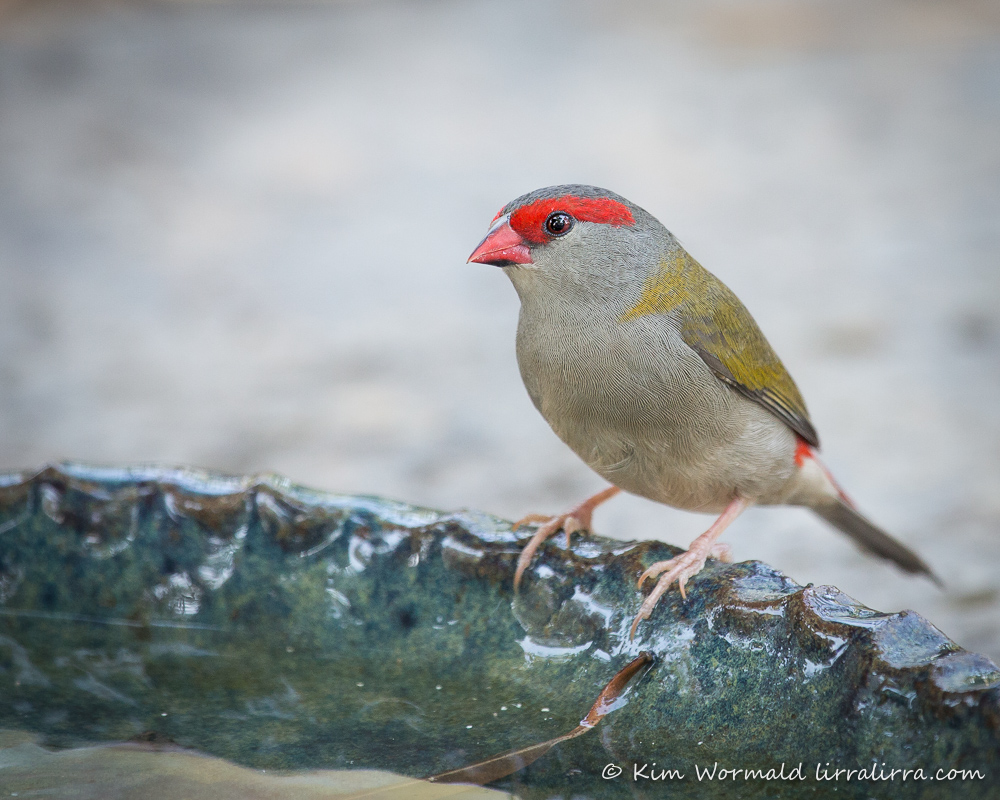
Red-browed Finch (Neochmia temporalis)
The finches usually choose one of the higher birdbaths but occasionally come down to the ground level option.
A few years ago one of my girls drove home to see me a couple of hundred metres down the track carrying a heavy 16lt fire-fighting knapsack and using the pump to spray water into the air above my head. I will never forget the look of astonishment (and amusement) on her face. The temperature that day was in the mid-forties and I’d seen a large group of Australian (Maned) Wood Ducks panting on a patch of grass. I’d stupidly decided to cool them down with a fine mist of cool water. Water sprayed from the knapsack can go a surprising distance and I thought the birds would like it. Instead they took flight, which meant I’d done the exact opposite of what I’d hoped to do. By then I was so hot and exhausted that spraying myself was the only sensible option.
The ‘waterbirds’ part of the title leads me to a special request. The state government is currently considering what they will do about this year’s Duck Shooting Season. The horrendous massacre at The Marshes last year generated a public outcry; thousands of native waterbirds were injured or killed, including endangered species, in what was described by the Coalition Against Duck Shooting as a ‘bloodbath’. Many birds were killed when shooting began illegally early, when it was still dark and birds could not be identified or properly retrieved.
With the state government’s recent promise to protect the welfare of all animals, now is the ideal time to write to Premier Daniel Andrews and Minister Jaala Pulford – daniel.andrews@parliament.vic.gov.au, jaala.pulford@parliament.vic.gov.au. A simple email urging them to join NSW, WA, Qld and the ACT in permanently banning the shooting season, would be great. If you’d like to write more you might like to check out this page: Regional Victorians Opposed to Duck Shooting
Further information about our Seasons of Shame can be found in links in the right-hand sidebar.
Happy birding, stay cool
Kim
~ thank you for visiting and commenting
~ use the subscribe box if you’d like to receive a weekly email when lirralirra is updated
