Whistling Kites have a much scruffier look than last week’s sleek Black-shouldered Kite.
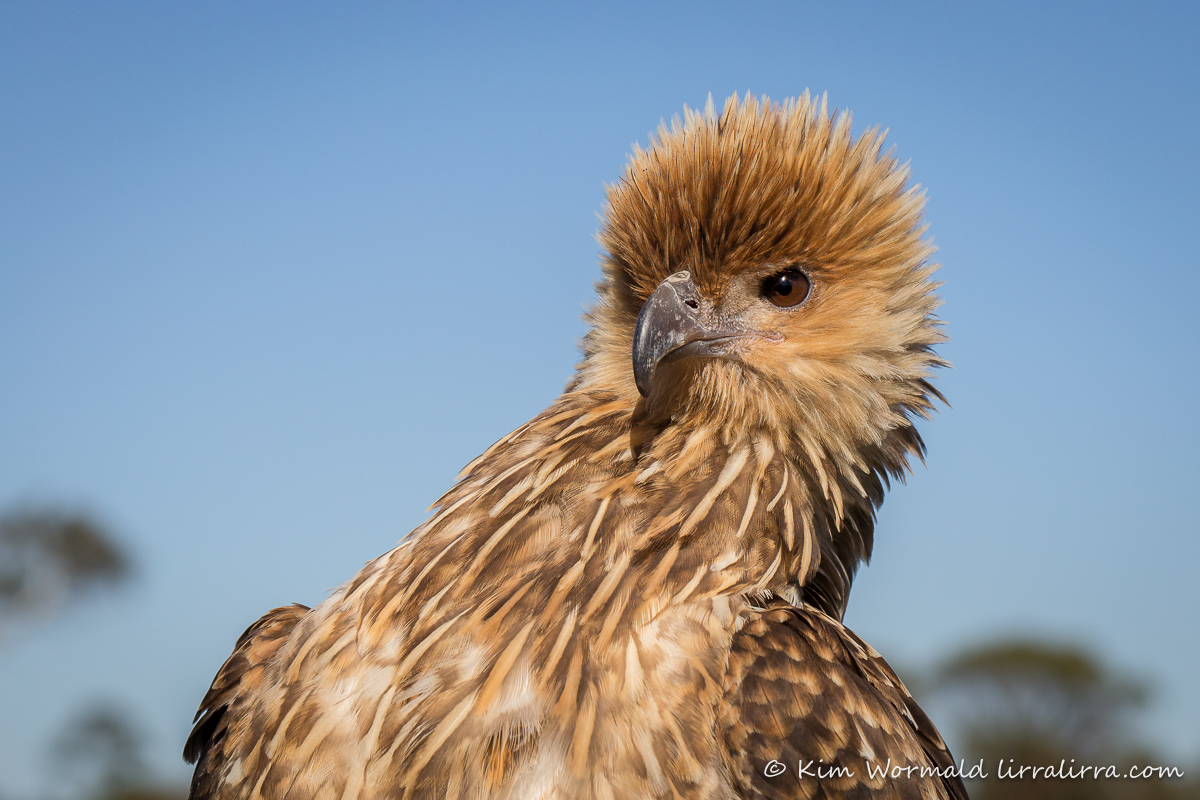
Whistling Kite (Haliastur sphenurus)
1/2000, f9.0, ISO 800
These magnificent kites can be found across Australia. They stand about 60cm in height, weigh up to a kilogram, with a wingspan of almost 1.5m. Females are larger than males and the species are named in honour of their distinctive two-pitched whistle. Their call can be heard in the excellent, emotive movie ‘Rabbit Proof Fence’ though the bird footage is of a Black Kite. This is typical of movies, Kookaburras are often heard calling from African jungles. At least Whistling Kites and Black Kites live in the same country.
 Whistling Kite (Haliastur sphenurus)
1/2000, f9.0, ISO 800
Whistling Kites feed on all kinds of critters including small mammals, birds, fish and insects. They also feed on carrion. If it is safe to do so it’s good to move roadkill onto the verge to help prevent birds of prey becoming secondary victims.
A couple of years ago I was incredibly lucky to see two Whistling Kite playing with a rabbit bone, whilst in flight. I shared the experience in the post Kites Playing Catch

Whistling Kite (Haliastur sphenurus)
1/250, f5.0, ISO 3200
The birds in this week’s post are from conservation/rehabilitation organisations. The kite above was indoors, I won’t use a flash to photograph birds; you may have noticed the wide open aperture, high ISO and a shutter speed about one tenth of that in the other images.
I need to choose one of these images but am finding it tricky to choose my favourite portrait, if only we could ask birds to turn a little and keep still for a moment I’d have a better chance of getting a perfect shot. I’d be interested to hear if anyone has a preference, either by adding a comment here or via my email address on the contact page.
Happy birding
Kim
Duck Shooting Update
Monday is the final day of this year’s Victorian Duck Shooting season. Once again it has been sickening with dead and dying birds left scattered around the wetlands. Rescuers from the Coalition Against Duck Shooting have been out in force for the past three months and will be out again this week searching for birds that need veterinary help. My heartfelt thanks to the rescuers, the organisers, the vets and the wildlife shelter operators who truly care about our native birds and their habitats. My thanks also to everyone who has written, and continues to write, to members of parliament – when our voices are louder than the voices of the shooters we will win this battle for the birds.
~ thank you for visiting and commenting
~ use the subscribe box if you’d like to receive a weekly email when lirralirra is updated
