This beautiful Barn Owl is one of the lucky ones.
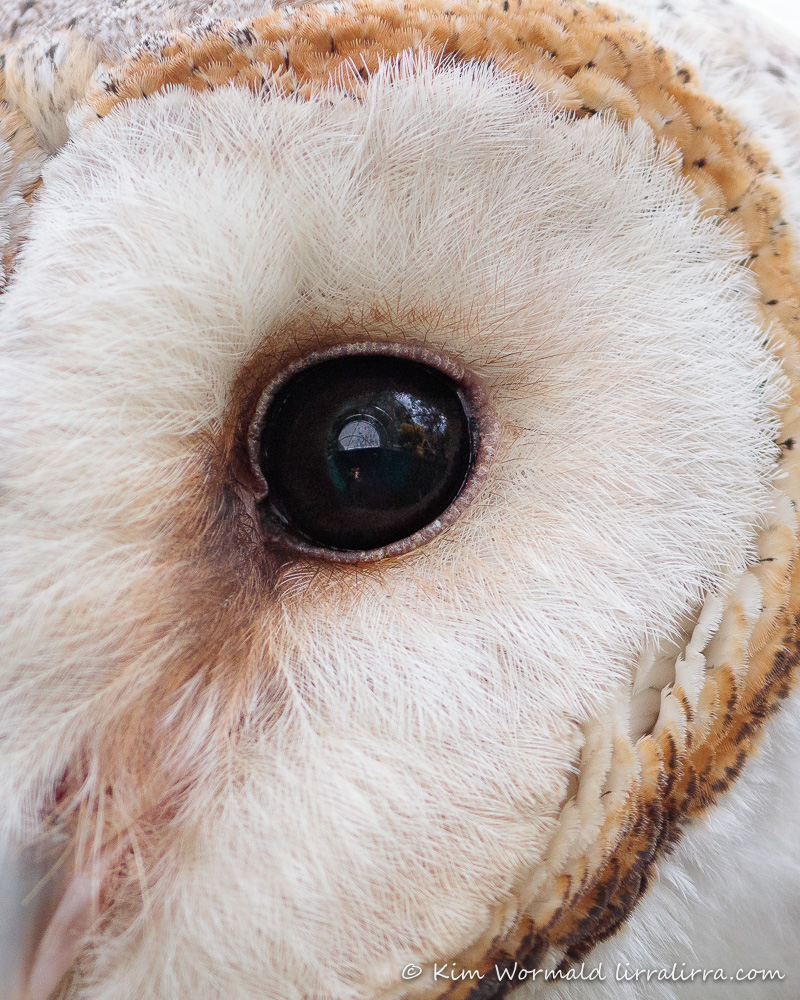
Eastern Barn Owl (Tyto alba delicatula)
1/500, f/5.6, ISO 1600
Barn Owls are a magnificent species (with several sub species) that can be found across the planet apart from Antarctica. They feed on a range of small mammals supplemented with large insects and occasionally with birds, frogs and small reptiles. They have incredible hearing with sounds being directed to their asymmetrical ears by their heart-shaped facial disc which is detailed in the image. They pinpoint sounds with perfect accuracy and their forward-facing eyes give them binocular vision which enables them to judge distances and capture their prey. Their soft feathers mean their flight is virtually silent; I’d always understood this means they can hunt in stealth mode but I’ve only recently realised it would also help them to hear the tiniest of rustles amongst the undergrowth. Apparently they are even able to hear the heartbeat of their prey.
Birds of prey are often affected by secondary poisoning. Most rat and mice baits kill the target animals after just one feed – this kind of poison is the most dangerous to birds as it kills them when they feed on affected rodents. Other options are becoming more widely used including electronic traps that zap the rodents without using poison. Live trapping is another option which means that the captured animal can be properly identified. I’m pretty hopeless when it comes to trapping pests. Years ago I was using a live trap in my kitchen and was horribly distressed to find a dead mouse in it and horribly shocked that my girls were roaring with laughter – until I realised they’d put a toy mouse in the trap and were delighted by my dramatic reaction.
The Barn Owl above was taken into care as it was underweight and unable to fly. It is being cared for at a wildlife shelter, gaining weight, flying well and soon to be released where it was found. After spending a couple of years helping injured and orphaned wildlife I am awe of the dedication and skill of wildlife shelter operators, the work they do is phenomenal – my heartfelt thanks you all.
There are links to wildlife rescue sites on the lirralirra links page where you can find useful information and phone numbers. Please let me know if you are aware of other sites I should add. As it’s springtime I’ll talk more about wildlife rescue soon, especially relating to nestlings.
Happy birding
Kim
~ thank you for visiting and commenting
~ if you would like to join the subscribers receiving a weekly email when lirralirra is updated, please use the ‘subscribe’ box above right
