This Mallee Ringneck is one of my favourite images, taken at Gluepot, one of my favourite places.
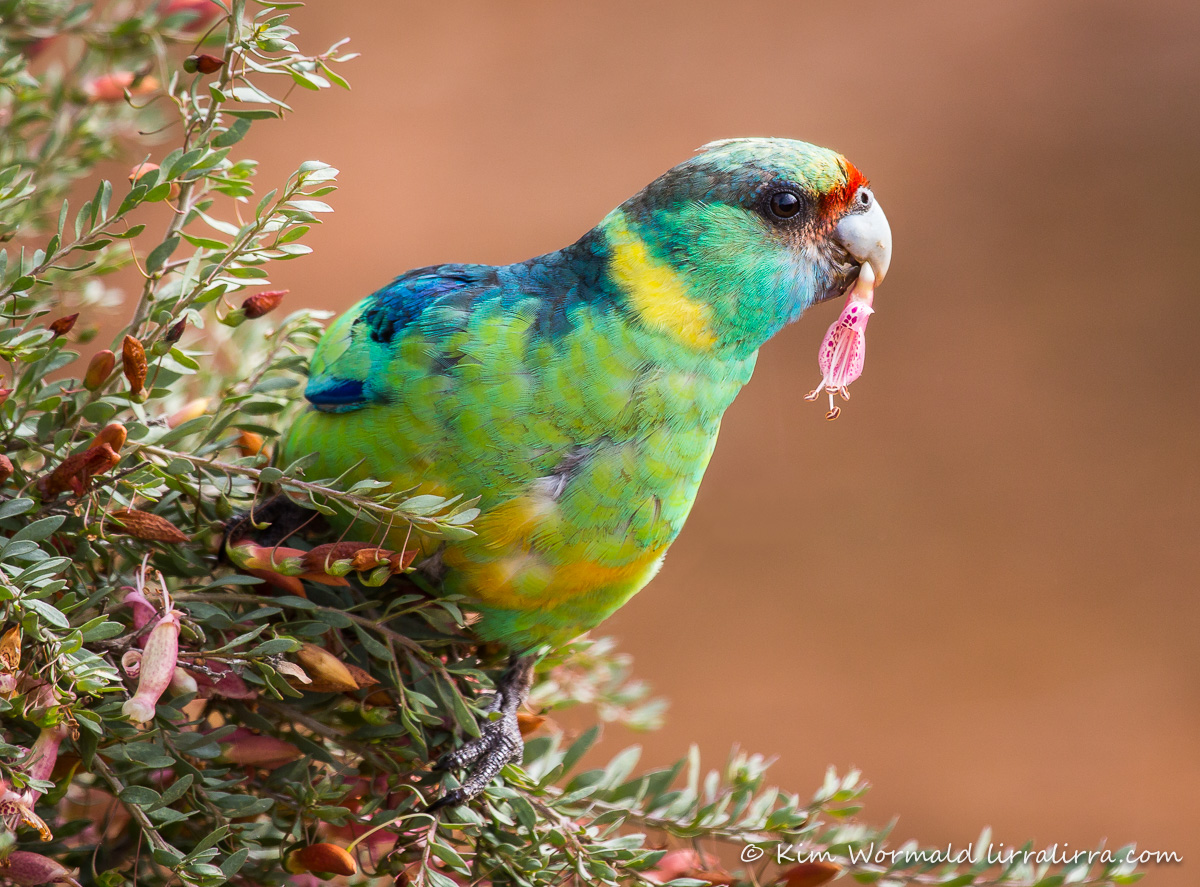 Mallee Ringneck (Barnardius zonarius ssp barnardi)
1/640, f5.6, ISO 400
I was rapt to spend time watching this beautiful bird as it daintily picked eremophila blossoms. I especially liked the way it turned this flower towards me as it perched on the edge of the bush with the red mallee sands as a background. Gluepot Reserve is in South Australia, about 40km north of Waikerie. It is a magnificent, private birding area that is well-worth visiting if you get the chance.
The range of colours in this bird is remarkable. The dark mantle and back means it is most likely male. According to The Australian Bird Guide this sub-species of the Australian Ringneck prefers woodlands, acacia scrub and mallee along with streamside eucalypts. They are stunning birds to see and to listen to their bell-like call.
On a personal note I have spent many hours this week cuddling the new baby in the family, my heart has melted, again.
Happy birding!
Kim
~ thank you for visiting and commenting
~ if you would like to join the subscribers receiving a weekly email when lirralirra is updated, please use the ‘subscribe’ box above right
