I’ve been to Phillip Island a couple of times recently and it was absolutely gorgeous to spot moulting Little Penguins huddled beneath the boardwalks.
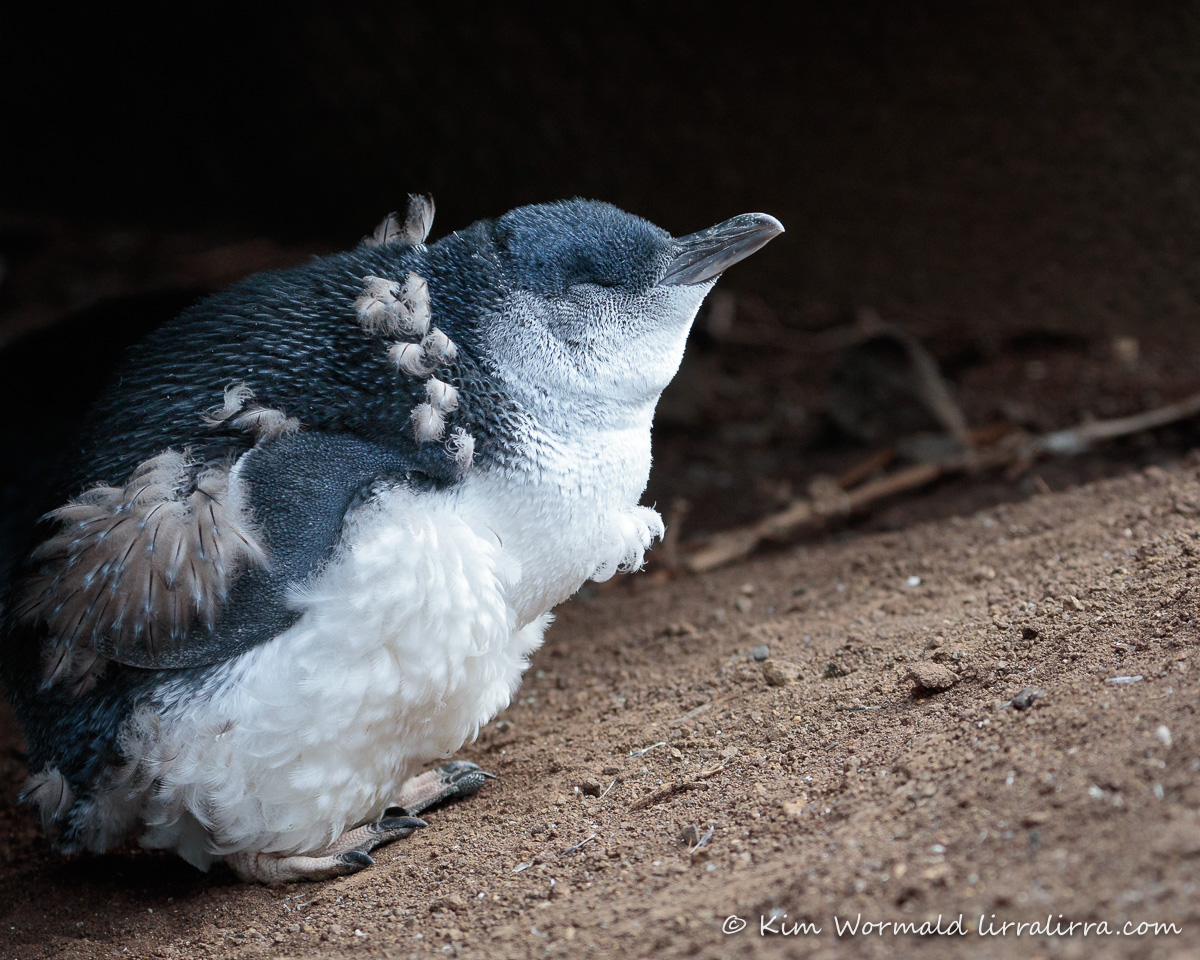
Little Penguin (Eudyptula minor)
1/800, f7.1, ISO 1600
What a little cutie! I love the tufts of blue tipped feathers coming loose on the Little Penguin’s back, and the fluffy white underbelly feathers that will soon be lost as the new pin feathers continue to develop. I find their feet fascinating too, pastel pink toes and webbing with strong black claws.
Little Penguins are about 33cm tall and weigh about 1kg – they are the smallest penguin species. The largest species is the Emperor Penguin that are about 122cm and weigh up to 45kg.
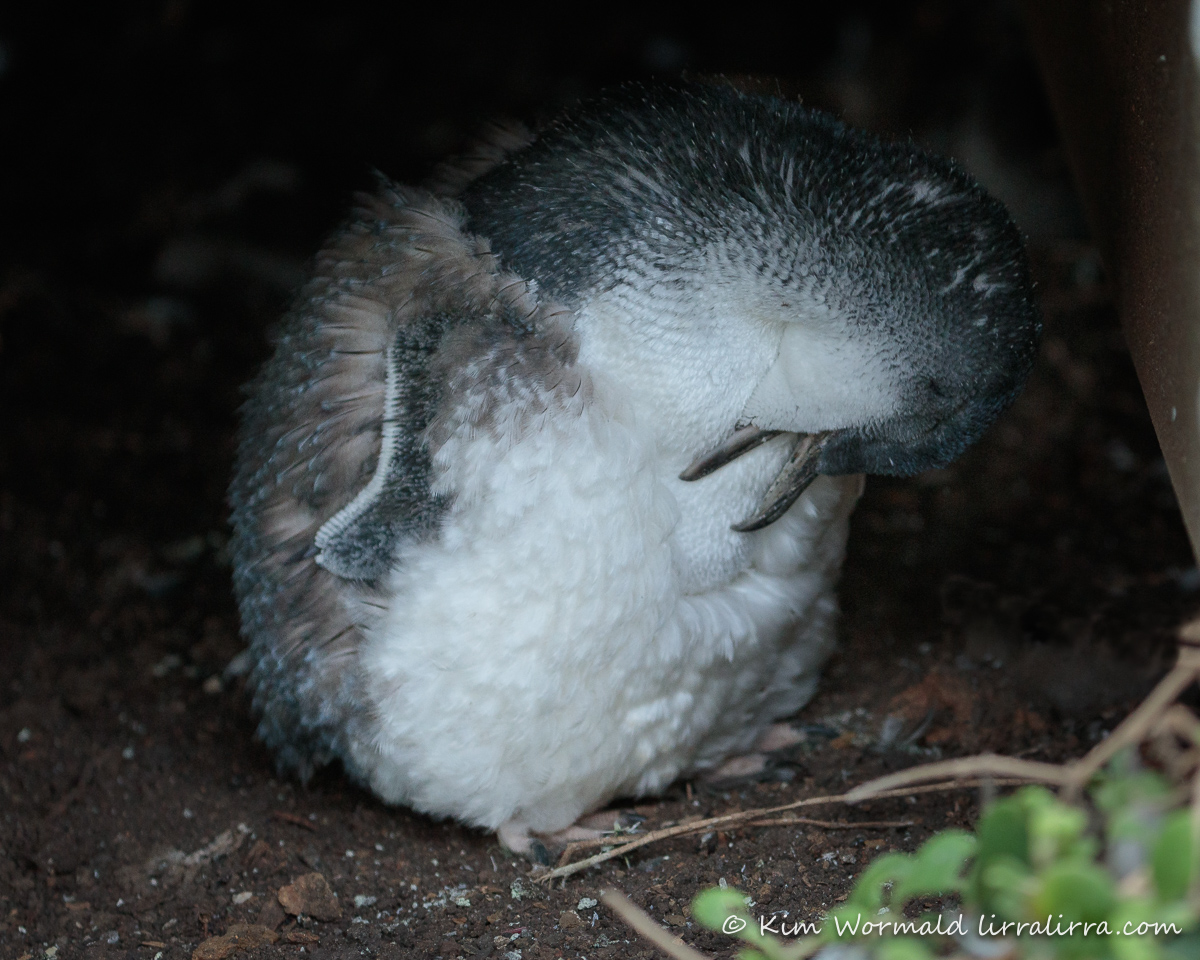
Little Penguin (Eudyptula minor)
1/800, f7.1, ISO 1600
Flying birds often moult in stages so they don’t lose the ability to fly but penguins have what is called a catastrophic moult during which they replace all their worn feathers. For Little Penguins this happens from February through to April. They are unable to swim while moulting, which takes about two and a half weeks. During this time they are itchy, uncomfortable and hungry. Before starting to moult they double their weight to cope with the extended period without food.
I spotted the first penguin during March and the second one a few days ago; both were huddled beneath the boardwalk at The Nobbies. Using a focal length of 560mm I was able to photograph them even though they were a fair way from the path.
Did you know that Little Penguins are white below and dark above to help keep them safe from predators? For airborne predators, like petrels, the penguins’ dark backs blend with the darkness of the ocean. For predators such as seals, the penguins’ light underparts blend with the brightness of the sky. Little Penguins spend most of their lives at sea but when they do come back to their burrows they do so at night, to help avoid land-based predators.
Happy birding
Kim
NB If you have a spare moment please call or email your local MP, or write to a newspaper, or support the Coalition Against Duck Shooting to help prevent 100,000s of our native waterbirds being shot – thank you
~ thank you for visiting and commenting
~ if you would like to join the subscribers receiving a weekly email when lirralirra is updated, please use the ‘subscribe’ box above right
