It was sensational to see this secretive little rail dash from the darkness and run along the edge of the water.
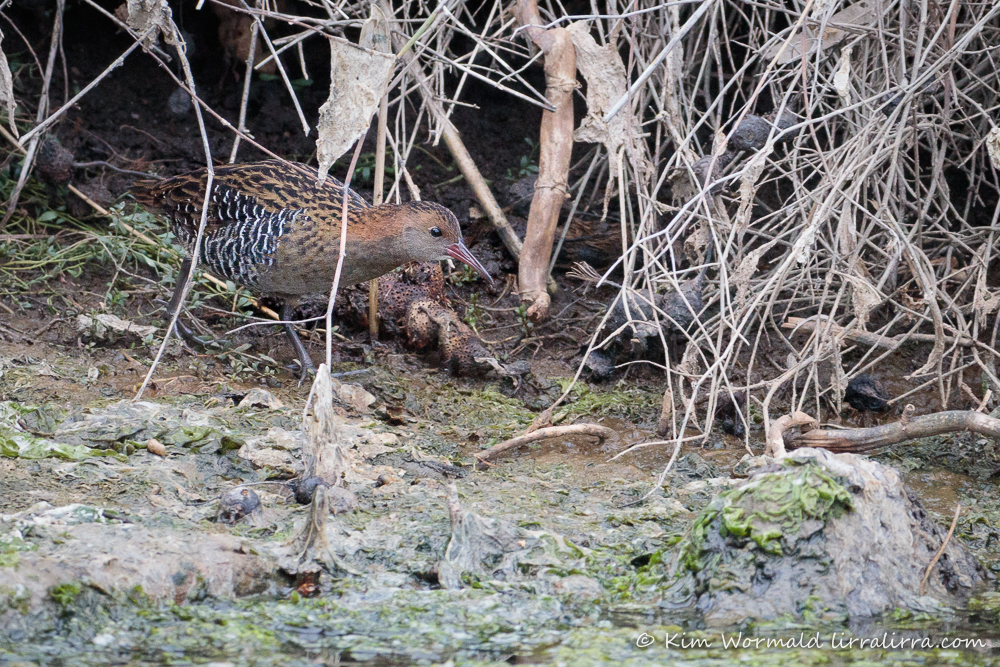
Lewin’s Rail (Lewinia pectoralis)
1/640, f/5.6, ISO 2000, focal length 560mm
I was taking a friend to the Western Treatment Plant and he’d heard that a Lewin’s Rail had been sighted near the Little River ford in the special permit area of the plant. There were other birders watching from their vehicle, on the far side of the path. They kindly made room for us to park beside them – our vehicles were effective mobile hides.
I stared at the dark spaces beneath the lignum vegetation for ages before there was any movement – talk about exciting! Lewin’s Rail are smaller than the more commonly seen Buff-banded Rail but move just as rapidly. I took photographs in little bursts as the rail dashed along the edge of the water. Continuity of the shots can be seen in the first three photographs if you look closely.
Lighting was poor so I was concerned my ISO would make the images horribly noisy and my shutter speed was relatively slow which made me worry that the rail would be an unrecognisable blur. I feel incredibly lucky to have captured this little flurry of shots to share with you.
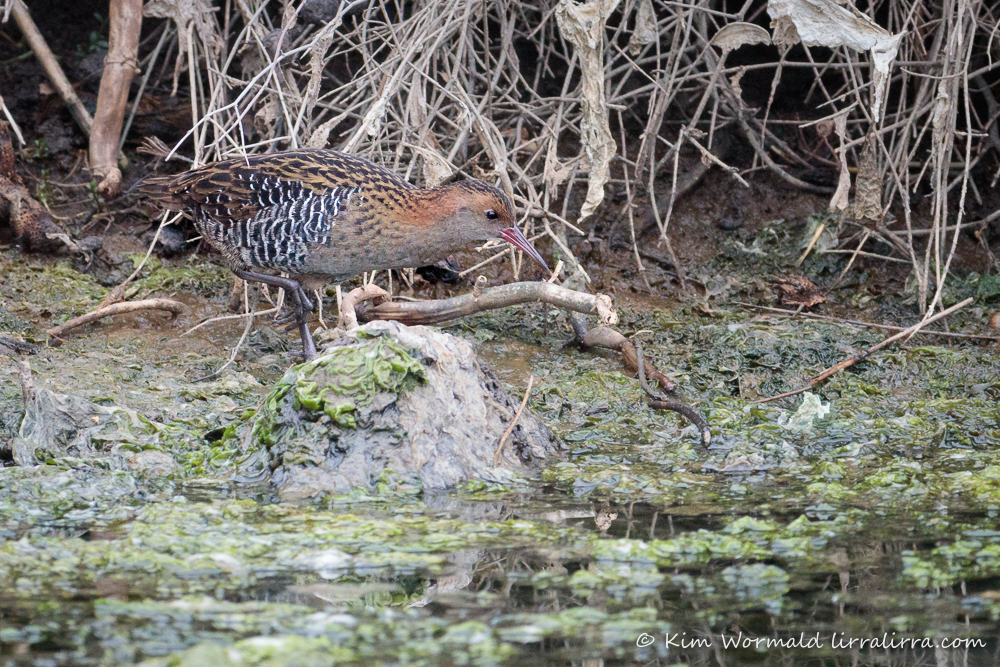 Lewin’s Rail (Lewinia pectoralis)
1/640, f/5.6, ISO 2000, focal length 560mm
The markings of Lewin’s Rails are quite stunning with their beautiful rufous heads and napes, brown/black streaking on their backs, white spots and barring on parts of their wings, and black and white barring on their lower underparts. Their long bills are a deep pinkish colour with a dark tip and a slight downturn.
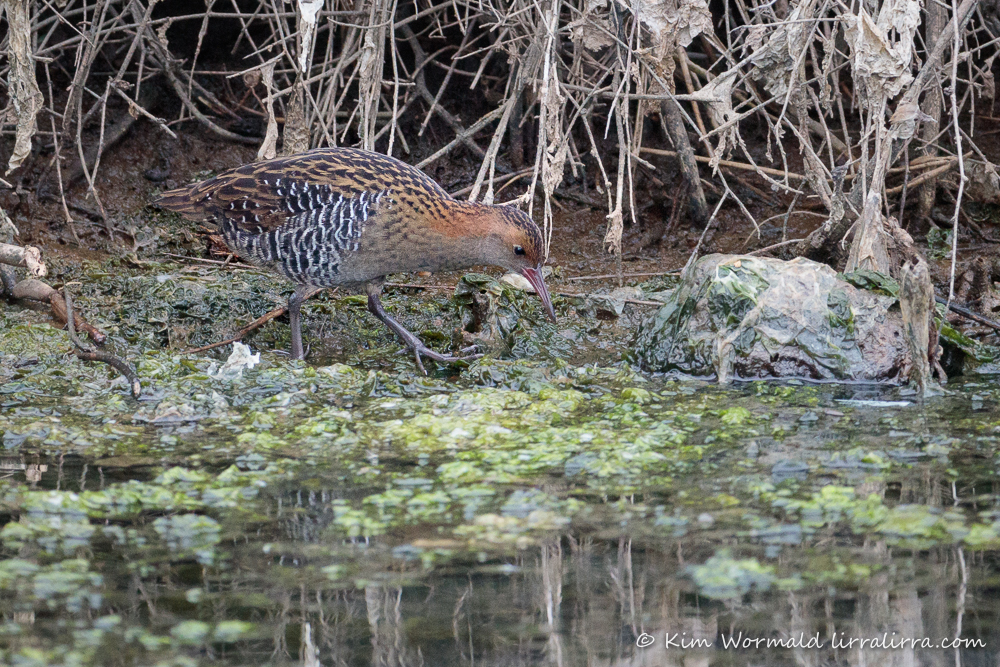 Lewin’s Rail (Lewinia pectoralis)
1/640, f/5.6, ISO 2000, focal length 560mm
Lewin’s Rails don’t often forage if they know they’re being watched so seeing this behaviour was pure joy. They eat invertebrates that they generally find in shallow water or mud. Their long toes help them to navigate across floating vegetation.
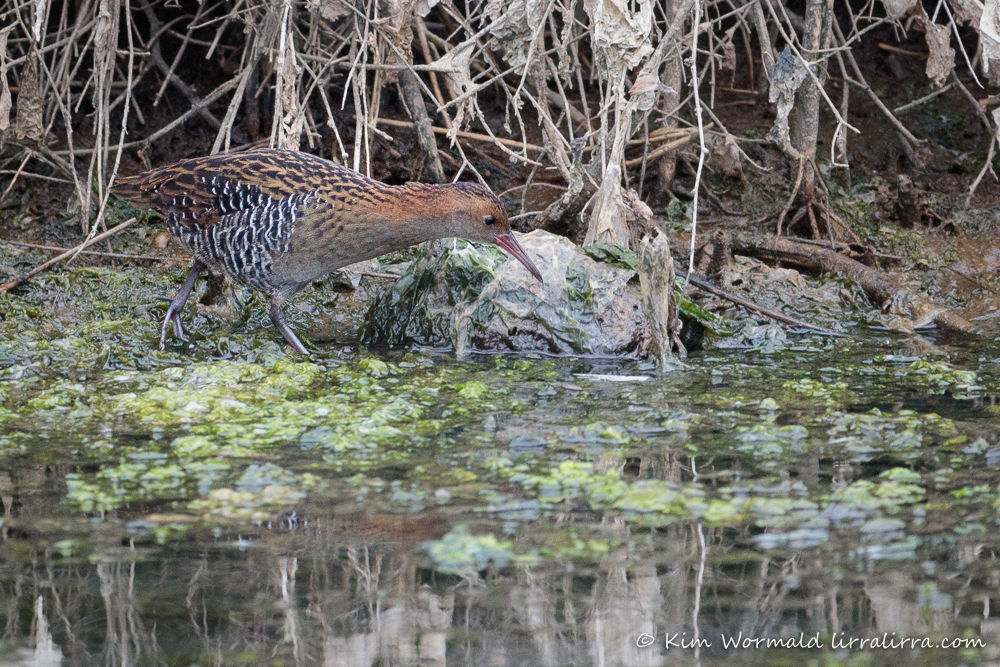 Lewin’s Rail (Lewinia pectoralis)
1/640, f/5.6, ISO 2000, focal length 560mm
Lewin’s Rails are only about 21-27cm long which means that this one was very small in the viewfinder as we were about 30m away.
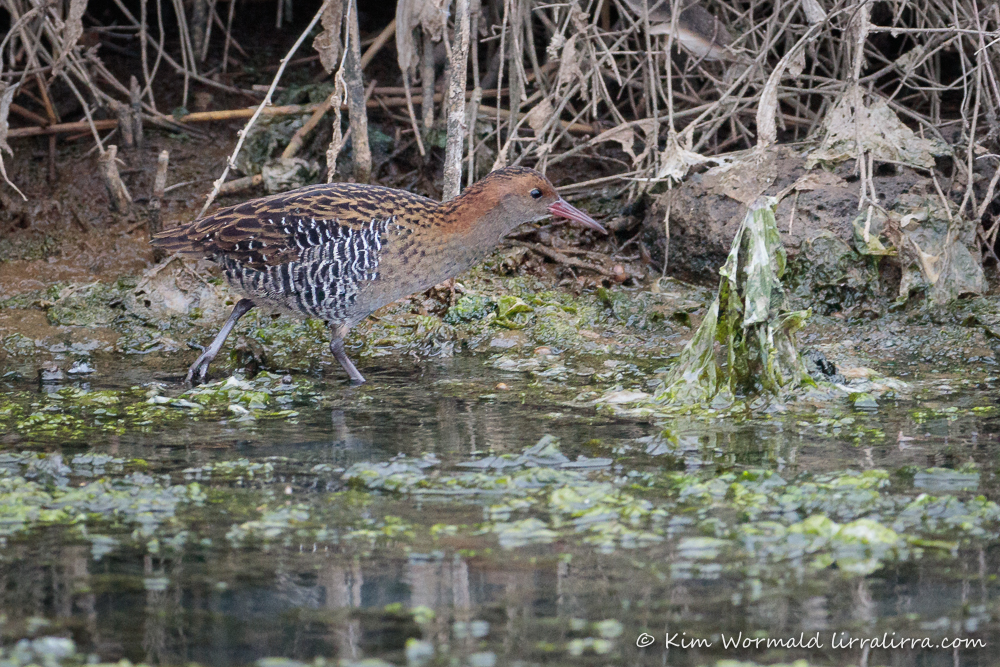 Lewin’s Rail (Lewinia pectoralis)
1/640, f/5.6, ISO 2000, focal length 560mm
Just after I took the image above the rail dashed back under cover – there were 15 seconds between the first and last photograph. About forty minutes later the rail briefly emerged again, considerably further away and only visible for a couple of seconds.
Lewin’s Rail was the second lifer for me on the day when I saw the Arctic Jaegers – the two species could hardly be more different.
My thanks to my nearly skinny friend who knew to look for the rail and to the kind birders who made us welcome beside them.
Happy birding
Kim
~ thank you for visiting
~ if you would like to join the subscribers receiving a weekly email when lirralirra is updated, please subscribe above right
