A heart-warming story for the first week of summer, with some super cute baby kookas as the stars of the show.
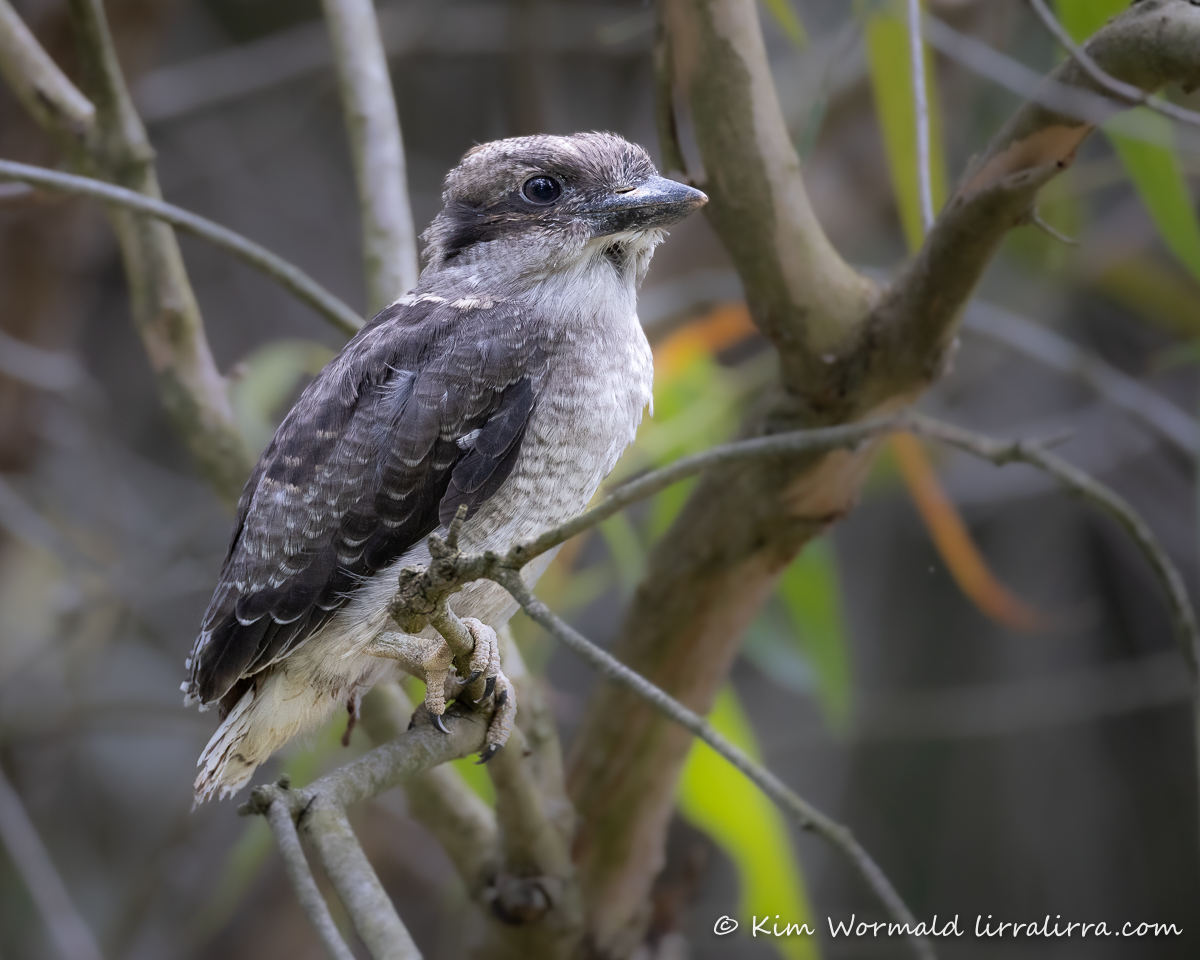
In the middle of a hectic week I was called about a fledgling Laughing Kookaburra that was sitting on a pathway frequented by dog walkers. It’s common for fledglings to overestimate how well they can fly but this can end in tragedy, especially if they land somewhere so unsafe.
Phil and Helen, neighbours as the ravens fly, had found it and were making sure it stayed safe from passing dogs. I wasn’t available until later in the day and they did a fabulous job of ensuring that this little fledgling was well cared for. They took it for a quick vet check to ensure it was well before placing it in an open box that Phil attached to a nearby tree. Helen took a video of it flying from the box and nestling itself into the tree above. It was well hidden. I was using f/4.0 which blurs the foreground and background, and makes the bird stand out from the tree much more than it did when trying to spot it with the naked eye.
When I managed to get there they had already spent several hours watching and hoping that a parent, or previous year’s sibling, would find it. We stood back, watching from a distance, and eventually an adult kookaburra flew across the path. The youngster reacted immediately. It was a beautiful sight.
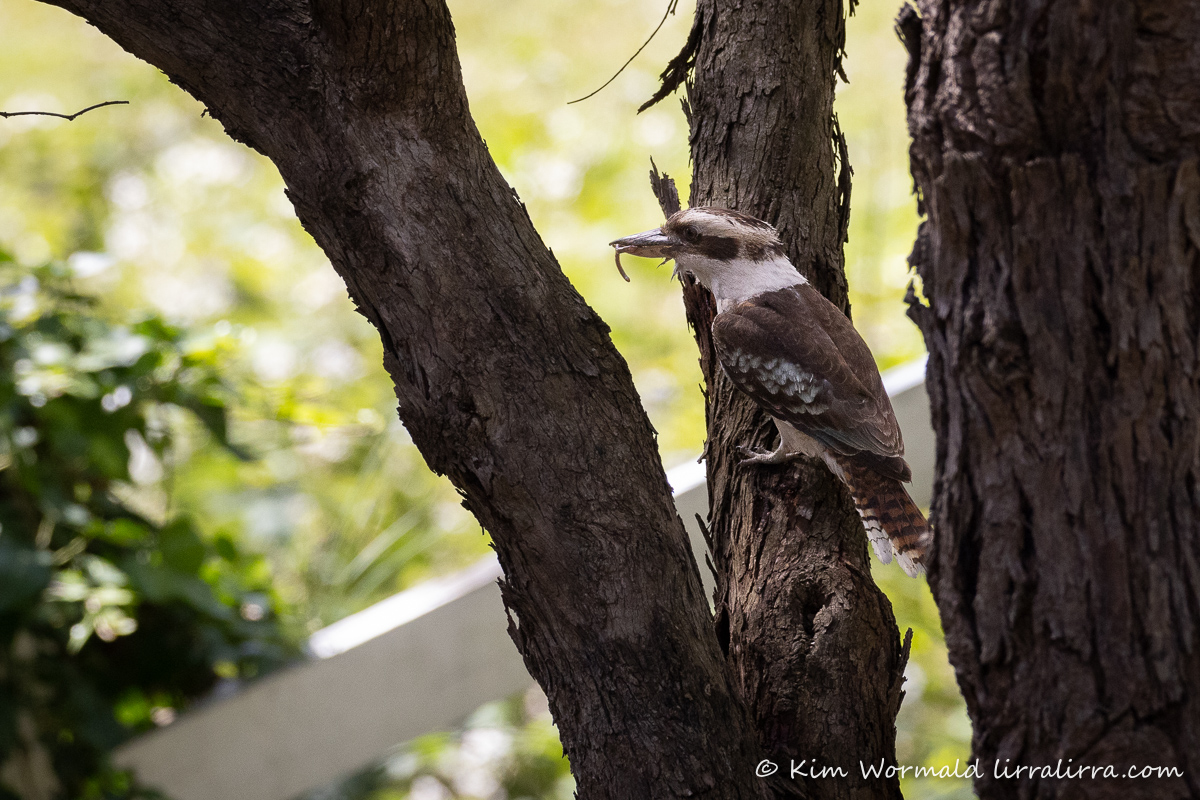
It wasn’t long before the adult kooka returned with a juicy worm in its bill. It looked around briefly and gave the tiny fledgling its first feed of the afternoon.
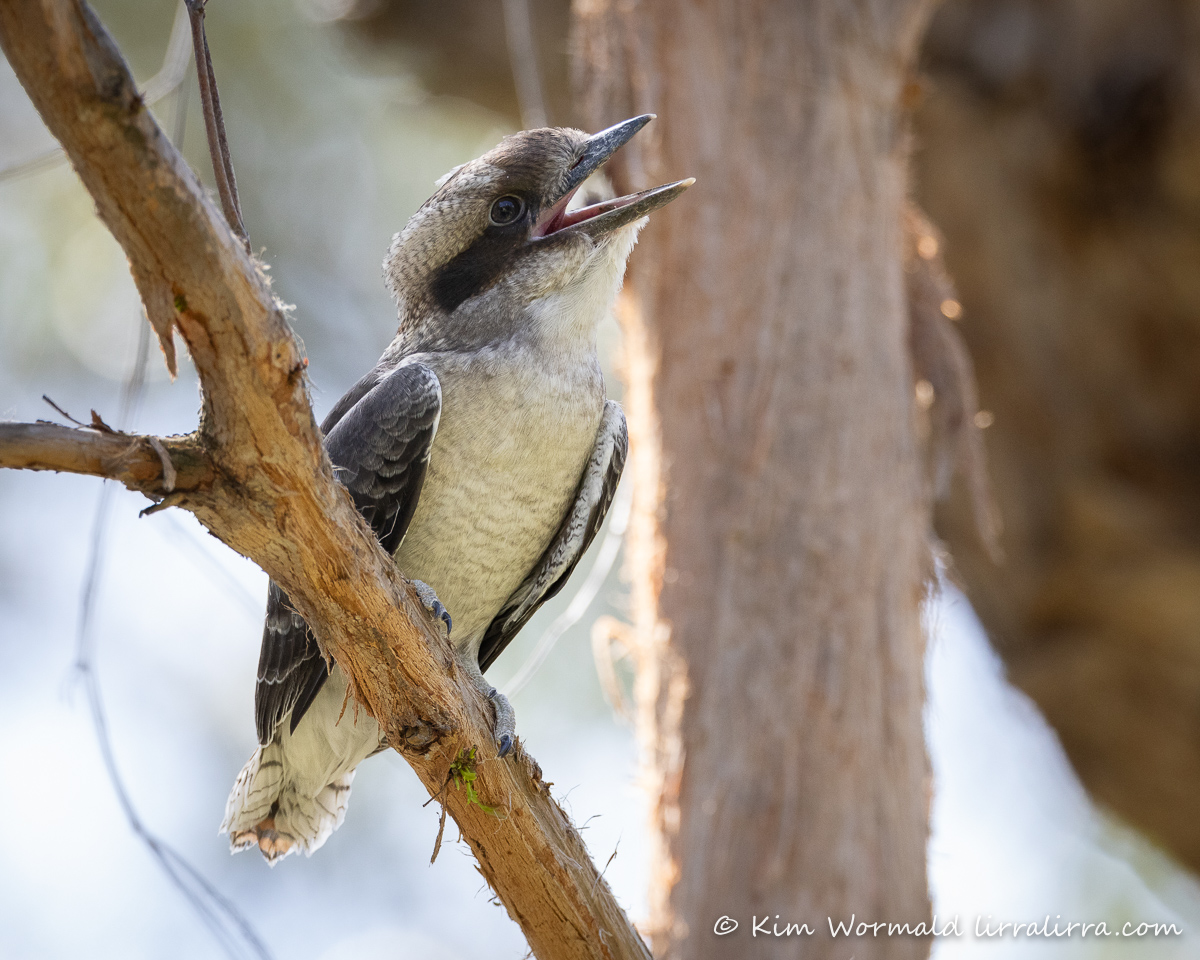
We crossed the road as we didn’t want to flush the fledgling towards traffic. Although it had flown strongly for a couple of metres its tail was still short and we weren’t sure whether it would be able to fly much further. As we were crossing the road two more fledglings flew to nearby trees. The one above perched quite close to us and made the gorgeous gurgling noises that baby kookas make before they learn to laugh.
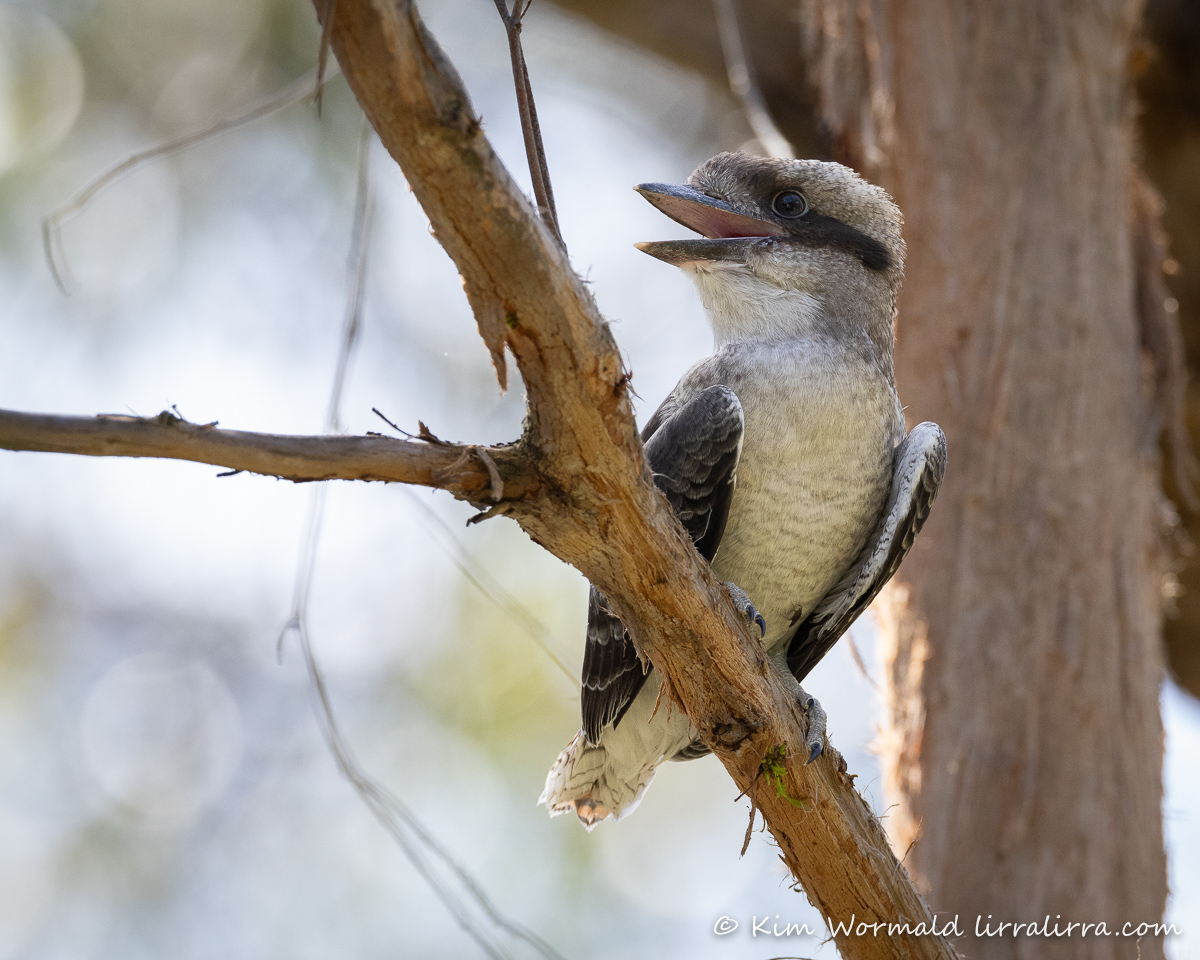
Young kookaburras have dark upper and lower bills. Their lower bills gradually become bone coloured as they grow. If you look back at the first fledgling you’ll see that its tail is slightly shorter than its siblings’ tails. Laughing Kookaburras nest in tree hollows and lay three eggs, each egg is laid a day apart. The chicks can hatch within the same 24 hour period, or over three days. I definitely think the stranded youngster is a little younger than the bird above and the one in the next two photographs.
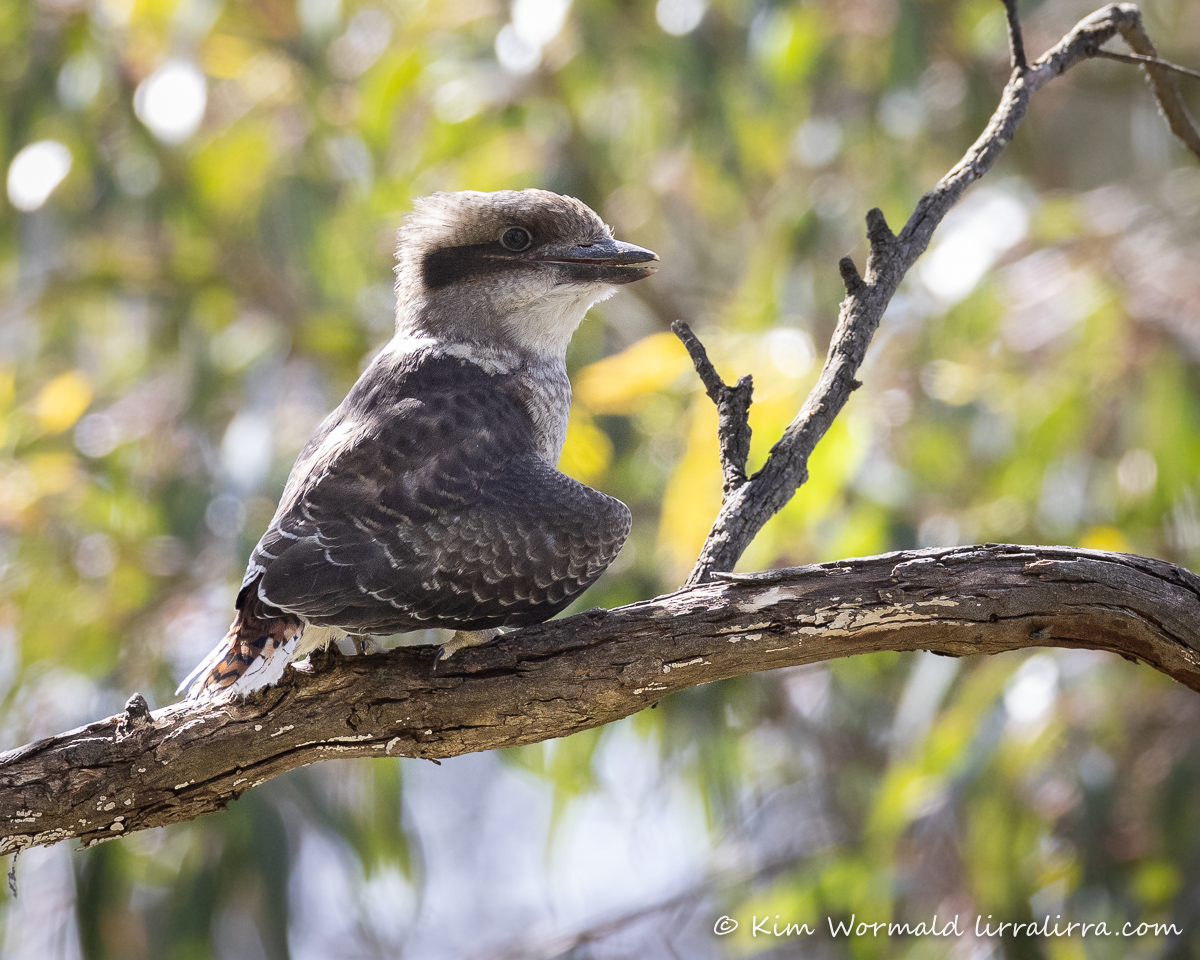
This fledgling flew across the road and held its wings in what looked to me like a concord pose. It was also calling softly to the adults.
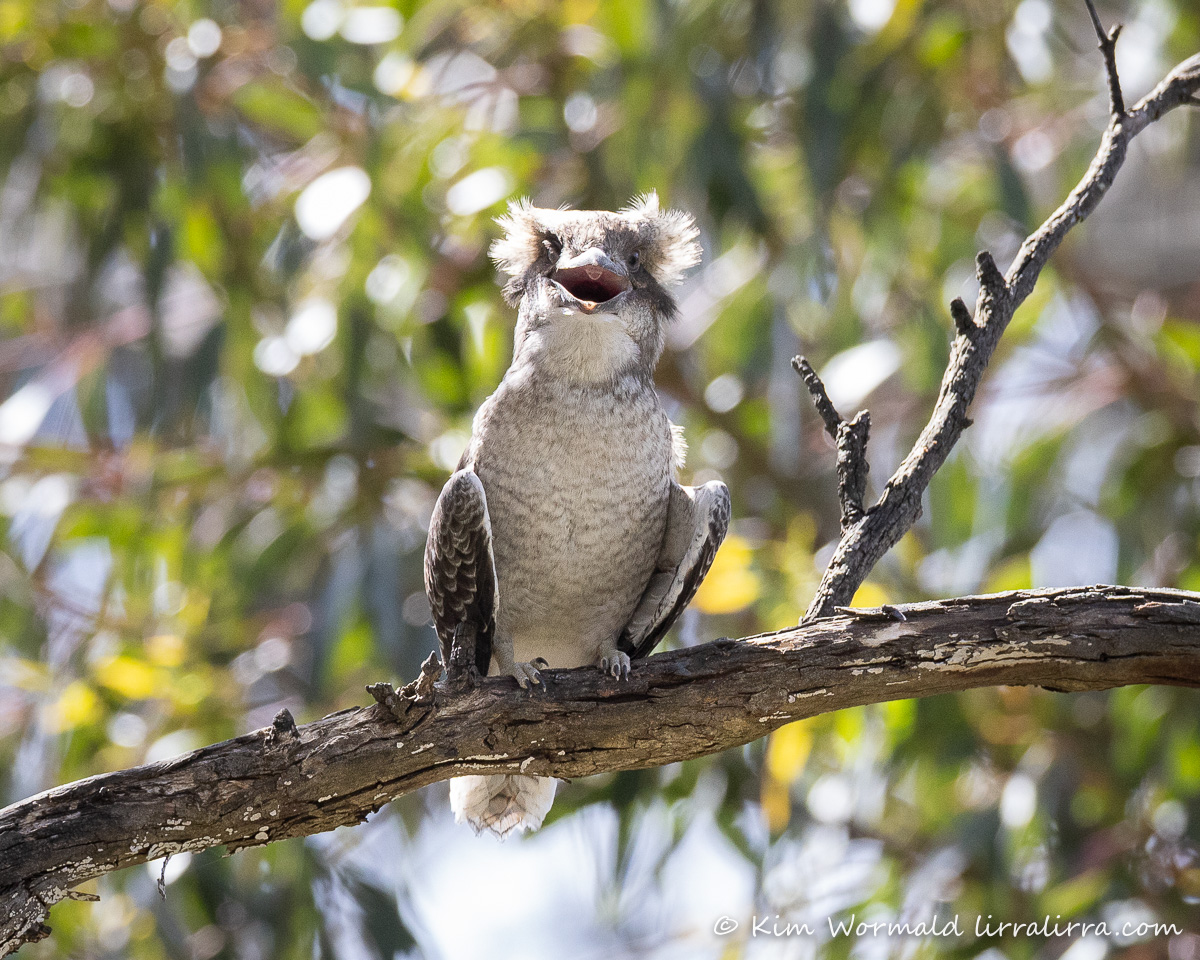
Then it seemed to decide that the soft calling wasn’t getting results quickly enough so it called much more loudly. With its tufty head feathers sticking out so wildly I didn’t know whether it looked like a mad professor or a koala!
A few years ago I wrote a post about diseases that can be spread by feeding parrots and cockatoos, it is still one of my most visited posts and can be found here: Crimson Rosellas – to feed or not to feed
At some stage I will write a similar post about feeding birds like kookaburras and magpies. For now I’ll just write a quick reminder about some of the dangers. Many bird lovers don’t realise that they may be causing birds harm when feeding them, which is definitely not their aim. The best option is generally to create a garden space where you offer clean water and places where birds can forage for their own food. Feeding bread, meat or mincemeat to birds like magpies, butcherbirds and kookaburras is sadly a common choice but those ‘foods’ don’t contain essential nutrients like calcium and cause serious deficiencies in developing youngsters and adults, affecting their bones and causing deformities like angel wing and beak deformities. Mincemeat can get trapped in birds’ bills where it rots and becomes infected leaving the birds unable to feed.
If you feel the need to supplement their diet it is best done rarely so it doesn’t affect their natural foraging skills. Live mealworms and crickets can be bought from many pet shops and are a much safer and more nutritious option.
It was a lovely experience to see the little kooka be given the worm and to know that it was in the safest hands (wings) possible. It was also lovely to see the care and attention that Phil and Helen devoted to this gorgeous fledgling. It’s a lucky little bird.
Happy birding, Kim
~ Facebook page Kim Wormald – lirralirra – 10K+ followers
~ Facebook group Ethical Bird Photography
~ Etsy – Kim Wormald lirralirra
~ Browse prints and gifts Lirralirra Shop or contact me directly

Thanks for another “must read” post Kim!
I’m glad you liked it Ann. I’ve seen them a couple of times since and they’re all looking well
Excellent outcome to this story and loads of thanks to Phil and Helen for taking the time to make sure the little fellow was ok.
I agree Mark, they were fantastic!
This is a sensational story Kim!!! It must of been super worrying until you knew the baby had been fed.
It was really lovely when the adult arrived Tess. And hearing those funny little baby kooka calls was delightful.
what a beautiful story Kim – thank you 🙂
It was seriously lovely Fiona. We were so lucky to see it being fed so we could stop worrying about it.